Vila Real Market Crawl: What to Buy and Skip
Cristas de galo from a nearly century-old pastry shop, oak-smoked salpicão, chestnut honey: a morning route through Vila Real's markets, with honest opinions on what's worth buying and what to skip.
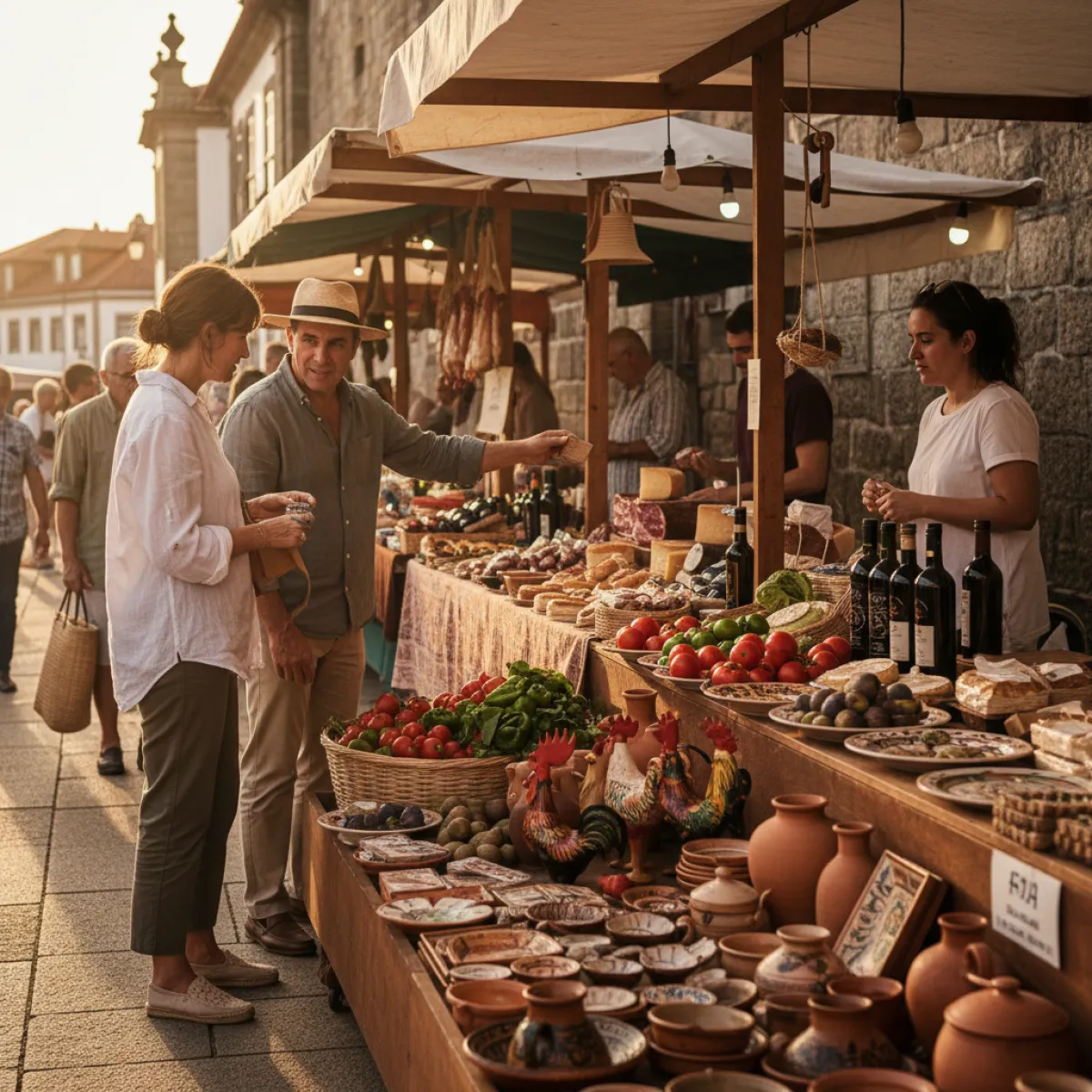
Vila Real doesn't market itself as a food destination. It doesn't have Porto's reputation or Lisbon's tourist infrastructure. But that's precisely why its markets work: they sell to locals, not to visitors clutching guidebooks. And when a market serves its own town before it serves outsiders, the prices are fair, the products are real, and nobody tries to sell you "artisanal" olive oil in a designer bottle for fifteen euros.
This guide covers one morning. A well-spent morning with strategic stops, a few purchases worth the suitcase space, and a couple of mistakes I'll save you from making.
First stop: the Municipal Market
The Mercado Municipal de Vila Real sits on Rua de Santa Sofia, in the upper part of the city. The building has a granite facade and occupies an entire block between Rua de Santa Sofia and Rua Gonçalo Cristóvão. It's open Monday to Friday from 8am to 7pm, and Saturday from 8am to 1pm. If you go on Saturday, arrive before 10am. After that, the best stalls have already packed up.
Inside, the market is divided into classic sections: butcher, fishmonger, greengrocer, grocery. Don't expect a renovated food hall with street food stalls and gin cocktails. This is the market of a northern Portuguese city of 50,000 people. It's exactly what it should be.
What to buy
Start with cured meats. Trás-os-Montes is, without argument, Portugal's best region for smoked and cured products. Look for salpicão and alheira. Good salpicão from this region has a firm texture and a smoked paprika flavour you won't find anywhere else. Alheira, which everyone in Portugal knows, is made properly here: with rye bread, poultry and pork, smoked over oak. Buy directly from producers who bring their goods to market. If the vendor can tell you which village the sausage comes from and what wood they used in the smokehouse, you're in the right place.
Chestnut honey. Dark, dense, with a slightly bitter edge that isn't a flaw, it's character. The Vila Real and Trás-os-Montes region produces exceptional honey, especially from chestnut and heather. A small jar costs a few euros and travels well.
Olive oil. Transmontano olive oil has Protected Designation of Origin status, and frankly, once you've tasted good oil from this land, supermarket olive oil tastes like motor oil. Look for simple bottles without award-winning design. Good oil doesn't need marketing.
Chestnuts, when in season (October to December). Outside the season, you'll find dried chestnuts and chestnut flour, both excellent to take home.
What to taste at the market
If any stall has bôla de carne by the slice, stop. The Transmontano bôla is a kind of bread stuffed with cured meats and pork, sealed and baked in a wood oven. It's not elegant, it's not photogenic. It's probably the best thing you'll eat that morning.
What to skip
Industrial-brand tinned goods. You'll find them cheaper at any supermarket. Don't be the tourist who buys a tin of sardines for three euros at the market because "it's more authentic." It's not. It's the same tin.
Cheese without clear identification. Trás-os-Montes is not Serra da Estrela. There are good cheeses in the region, but if they can't tell you the producer's name or exact origin, move on. Anonymous cheese is risky at any market.
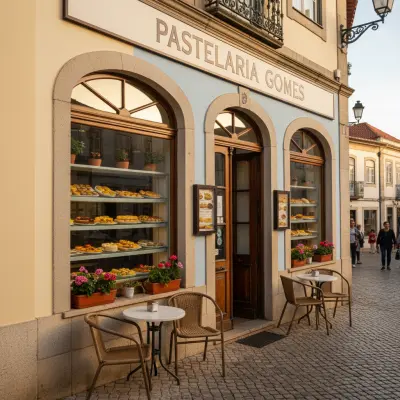
Second stop: Pastelaria Gomes
Leave the market and walk to Pastelaria Gomes. This is not a suggestion. It's an obligation.
Gomes opened in 1925 and is now in its third generation, with the fourth already involved. Nearly a hundred years of doing the same thing, every day, everything by hand. Fourteen people in production. Even the fondant coating the pastries is made from scratch.
Order cristas de galo. They're Vila Real's most iconic conventual sweet, created by the nuns of the Convent of Nossa Senhora do Amparo, of the Order of Santa Clara. Half-moon shaped with scalloped edges resembling a rooster's crest, filled with egg and almond, with an outer pastry of flour, lard, egg and salt. They were named one of the Seven Wonders of Portuguese Pastry, and deservedly so.
Also order covilhetes, a kind of meat empada with a distinctive shape. Savoury, compact, perfect for mid-morning.
What not to order: the coffee. Not that it's bad. It's just the same as any other café in Portugal. Order it, of course, but don't expect revelations. The revelation is in the pastry display.
If you want to take cristas de galo home, Gomes will box them for travel. They keep for a couple of days if you don't crush them in your suitcase. Check at the counter.
Third stop: beyond the market
Vila Real has a tradition of street commerce and regional product shops scattered around the centre. It's worth exploring the streets around Avenida Carvalho Araújo, the city's main axis. You'll find shops selling honey, liqueurs, conventual sweets and crafts. Some are good, others are tourist traps. The rule is simple: if the shop has more fridge magnets than food products, leave.
Look for cavacórios, another traditional Vila Real sweet you'll find in various pastry shops and stores around the centre. And pastéis de Santa Clara, made with paper-thin pastry and almond filling, another conventual legacy the city keeps alive.
Douro wines
Vila Real is, geographically, the gateway to the Douro wine region. You'll find Douro wines practically everywhere, from the market to specialist wine shops. If you don't know much about wine, ask for help. Say what you like, how much you want to spend, and let them recommend. A good Douro red for six to ten euros is perfectly achievable and will be better than many bottles costing triple in Lisbon.
If the Douro piques your curiosity beyond the bottle, consider a Douro Valley photo tour departing from Vila Real. It's a different way to see the terraced vineyards without falling into the coach tour circuit.
What to take home (practical list)
- Salpicão and alheira from the market (vacuum-packed if possible)
- Chestnut honey, small jar
- Transmontano PDO olive oil, half-litre bottle
- Cristas de galo from Pastelaria Gomes, boxed for travel
- A Douro red between €6 and €10
Total suitcase weight: under two kilos, if you're sensible. Gastronomic value: immeasurable.
What's not worth buying
- Ginja in plastic bottles with generic labels
- "Handicrafts" made in China with a Portugal sticker
- Cheese with no name or origin
- Industrial tinned goods at inflated prices
Context: Vila Real beyond the markets
Vila Real deserves more than a morning. The city is a starting point for the Douro, the Alvão and Marão mountain ranges, and Transmontano villages where time works differently. If you're interested in traditional crafts and textiles, there's a linen weaving workshop in Limões worth the trip.
If you came from Porto, you already know that Vila Real is one of the best day trips from the city. The motorway gets you there in just over an hour. And if you're planning a route through the North, Braga is another essential stop, with a completely different personality.
Practical information
The Mercado Municipal de Vila Real is at Rua de Santa Sofia, 10. Open Monday to Friday, 8am to 7pm, and Saturday 8am to 1pm. Closed Sundays. For the best experience, go early in the morning, especially on Saturdays.
Most vendors accept cash. Bring small notes and coins. Some now take cards, but don't count on it at every stall.
Vila Real has reasonable parking in the city centre. If you're coming by public transport, Rodonorte runs regular services between Porto and Vila Real.
A market morning in Vila Real won't change your life. But it'll change what's in your pantry. And honestly, sometimes that's enough.