Vila Real de Santo António with Kids: The Honest Guide
A Pombaline town, a river that doubles as a border, and a square where kids can get lost safely. The honest guide to a family week in VRSA, with a mandatory stop at Cacela Velha and a sunset boat ride on the Guadiana.
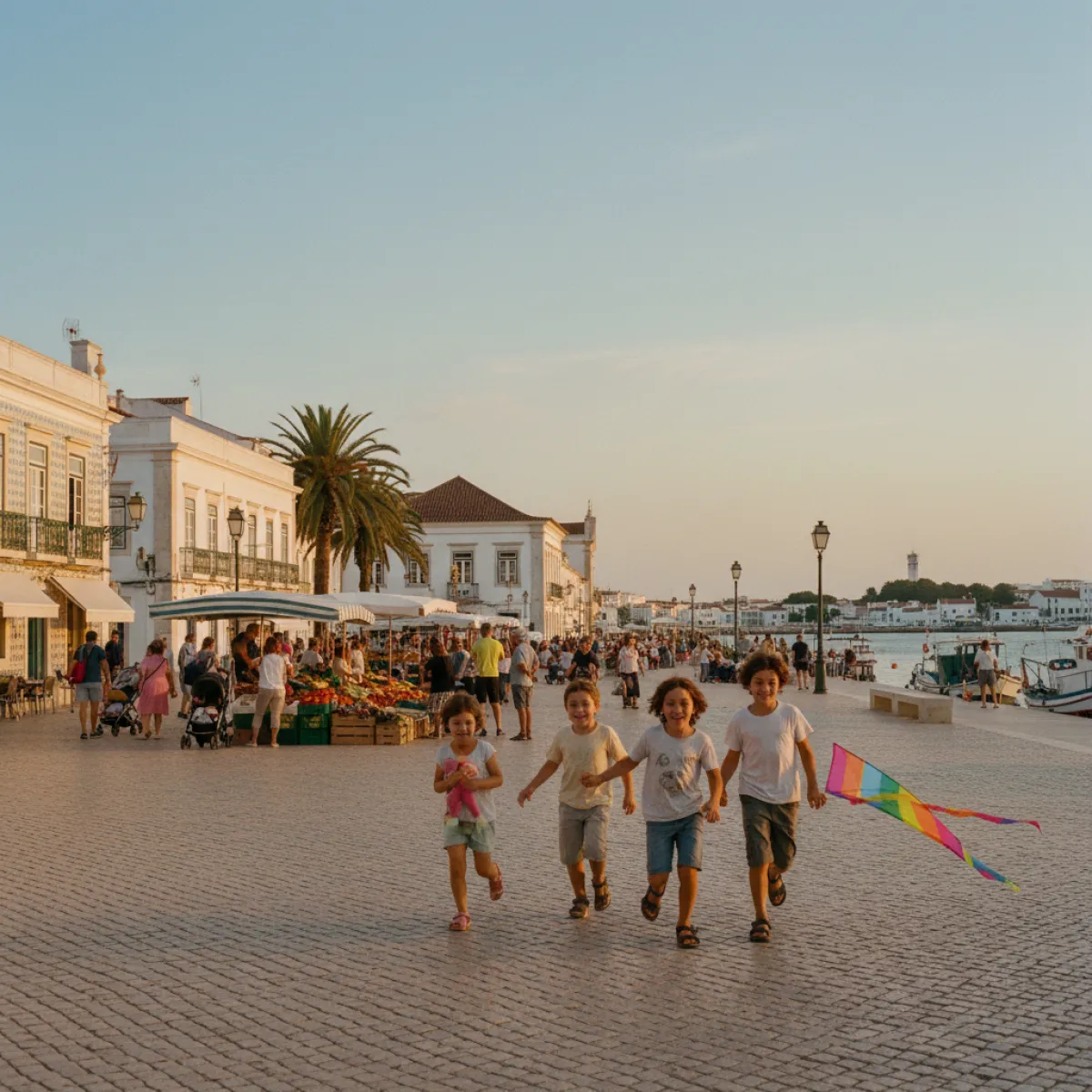
Let's be direct: nobody brings their kids to Vila Real de Santo António expecting a theme park. Good thing too. This Pombaline town, leaning against the Guadiana river and staring across at Ayamonte on the Spanish side, was drawn with a ruler in the 18th century and still keeps a human scale that most other Algarve towns lost decades ago. For a family, that translates to something simple and rare: streets where kids can run without paranoid surveillance, short walking distances, and the option of doing little but doing it well, instead of much and badly.
I'm writing this after several trips here with small children in tow, some grumpy, all exhausted by dusk. What follows is what works. And, more importantly, what is not worth attempting.
Why VRSA, not Tavira or Faro
The legitimate question any informed parent asks: why this corner of the eastern Algarve and not the more talked-about alternatives? The answer has three parts.
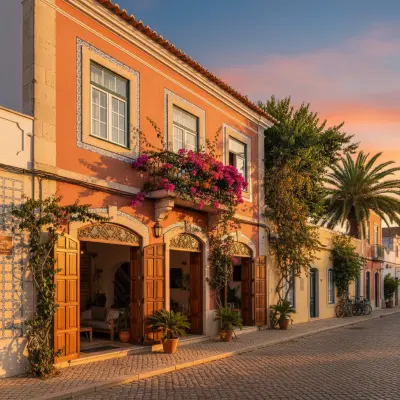
First, the Praça Marquês de Pombal. It's an almost perfect square framed by low buildings painted white and yellow, with palm trees in the middle and shaded benches. For a four-year-old, it's a giant playground where they can chase pigeons while parents drink coffee. For a ten-year-old, it's the orientation point from which they navigate alone. Parents who have tried this stunt in Lisbon or Porto know what that's worth.
Second, the river. The Guadiana changes everything. It's not the sea, no waves, and on the day your middle child refuses to enter the cold Atlantic, that's a blessing. The riverfront is flat, there's shade from jacaranda trees, and the ferry to Ayamonte runs several times a day. Crossing an international border by boat in 12 minutes is, for any kid over five, better than any toy.
Third, the scale. VRSA has no traffic nightmare, no zones where you'd feel uneasy at night, and most things worth seeing sit within a 15-minute walk of the center. That saves broken strollers, parking arguments, and kids passed out on a parent's shoulder mid-stroll.
Where to sleep without financial panic
The Algarve in July and August is expensive. There's no escaping that. But VRSA remains one of the zones where a family can sleep well without mortgaging the next decade. For travelers with teenagers, or backpacker-style with grown children, The Sun Hostel is an option worth considering seriously. The private rooms with bathrooms work for a family of three or four, there's a shared kitchen (saves on breakfasts), and the location saves on car rental.
If you're traveling with smaller kids, you may prefer a holiday apartment with a kitchen. There are several in the historic center, on streets parallel to Avenida da República. Look for ground-floor units or buildings with elevators, because the Pombaline blocks have narrow steep stairs that, with a stroller, become an exercise in patience.
The ideal day: slow, with calculated breaks
Forget the idea of "seeing it all". In VRSA with kids, the rule is: one thing in the morning, long lunch, nap or downtime, one thing in late afternoon. Five useful hours, max.
Morning: beach or river
Praia de Monte Gordo is three kilometers from the center. You can walk along the boardwalk if the kid can manage it (about 40 minutes) or drive in seven. It's white sand, with warmer water than the rest of the Algarve because it faces south-southeast, and there are blue-flag zones with lifeguards. Beach concessionaires rent umbrellas for somewhere between 12 and 18 euros, depending on the season. Check locally.
If you want to skip the August Monte Gordo crowd (you'd be wise to), head upriver. Praia Fluvial de Alcoutim is 40 minutes by car but worth it on a very hot day. The kids swim across to Sanlúcar de Guadiana, in Spain, life jacket on and parents watching. It's the only beach in Europe where you cross an international border for fun.
Lunch: where to eat without pretending kids don't exist
VRSA suffers from the classic Algarve problem: too many restaurants surviving on distracted tourists, plasticized menus, and tinned tuna posing as fresh. But there are exceptions, and the trick is to escape the boardwalk and look for restaurants where local Portuguese people actually have lunch.
Grilled fish, when done properly, is the most kid-friendly meal that exists. A whole sea bream shared, boiled potatoes, salad, and the kids eat what they want without dramas about kid menus full of frozen nuggets. Always order fish by weight, not from the menu, and look it in the eye in the ice display before agreeing.
Afternoon: the viewpoint that justifies the drive
Here I pause for a strong opinion. If you have one contemplative moment to offer your kids during the trip, spend it at Miradouro de Cacela Velha. It's about 20 minutes by car from VRSA, in the same municipality, but the village feels like another century.
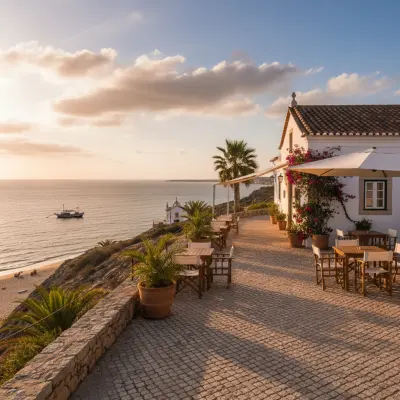
Cacela Velha is four streets of whitewashed houses, a fortified church from the 16th century, and a low cliff over the Ria Formosa lagoon. Down below, at low tide, sandbars and clam beds form, which is why this stretch is known as Portugal's clam capital. Kids love running through the empty streets while parents stand still staring at the blue water. There's a café with a terrace, a few stone benches, and almost nothing else. That's the point.
Bring water, bring sunscreen, and bring time. Cacela Velha is not a ten-minute stop. If the tide is low, walk down to the beach (steep but short path) and let the kids dig holes for an hour.
Late afternoon: the river again
VRSA's great luxury is that sunset happens over the Guadiana, with Ayamonte lighting up on the other side, and you can witness this from any café terrace on the riverfront. But if you want to turn the moment into a memory the kids actually keep, get on a boat. The Sunset Boat Tour in Vila Real de Santo António is, in my opinion, the one truly unmissable experience in the area.
Honest warnings: very small children (under three) may find the time long. The tours run between an hour and a half and two hours. Bring light jackets, even in July, because the wind on the river is deceptive. And check schedules locally, since they shift with the season.
The day you need to change scenery
Four straight days in the same place with kids is a recipe for collapse. So on day three, change the backdrop. Two obvious options.
Castro Marim, 10 minutes away
The Castro Marim castle is one of the best castles for kids in the Algarve, and I say that with conviction. It has wide ramparts where they run safely, views over the salt pans and salt marsh, and in August it fills up with the Medieval Days (a historical reenactment with knights, falconers, traders). Ticket usually cheap, but check locally.
For the parents who survived the medieval pageantry, there's a reward: Craft Beer Tasting at Senescal Brewery, Castro Marim. It's a small local brewery, hours to confirm, but ending a castle morning with a craft beer made 200 meters from the salt marsh is the kind of program that justifies a Portugal holiday over any all-inclusive resort.
Tavira, 25 minutes away
Tavira is prettier than VRSA. There's no point pretending otherwise. But it's also more touristy, more expensive and harder to park in. Go for a day, have lunch, cross the Roman bridge, walk up to the castle (free entry, has a garden), and head back to your VRSA base before dinner. Don't try to switch hotels. The logistics with kids don't pay off.
Things you won't do (and that's a good thing)
I'll save you time by listing what I don't recommend:
- Water parks. Yes, there's one in the area. No, you're not going. The August queues are humiliating, the prices absurd, and the kids come back burned and exhausted. Got a pool at the accommodation? Use it.
- Jet ski rentals. For families it's unnecessary and dangerous. Dozens of operators offer them and most run with debatable safety margins.
- Restaurants showing plasticized photos of dishes at the door. Without exception, they're a trap.
- Buying gas in Spain "because it's cheaper". It used to be. Five years ago. Today the difference doesn't make up for the time on the ferry with tired kids.
Useful comparisons with other guides
If you're staying a week in the Algarve and want to combine VRSA with other zones, some combinations work. Parents who like medieval history and castles will get on well with our honest family guide to Silves: an interior town, cooler in August, with a huge castle and a cathedral worth visiting.
If you want more cultural density and less beach, read what we wrote about local culture in Faro, away from the touristified traditions. Faro works better with teenagers than with pre-schoolers, but the old town inside the walls has charm.
For families with older kids who want low-key nightlife and a town with personality split into distinct zones, there's our Lagos neighborhood guide. Livelier than VRSA, pricier too, and with spectacular cliffs that VRSA doesn't have.
Logistics you'll want to know
How to get there: the A22 motorway takes you from Faro to VRSA in about 50 minutes, with tolls. The Algarve train line runs to VRSA, slow but cheap, and the station is in the center. From Faro airport, direct bus around 90 minutes.
When to go: May, June, and the first half of September. July and August have everything open but the heat (35 degrees in the shade is normal) destroys any plan involving children and movement. In October the sea is still around 20 degrees and prices drop.
How much it costs: for a family of four, count 800 to 1500 euros a week in high season, without flights, sleeping in an apartment and cooking some breakfasts. In June or September, the budget drops 30 to 40 percent.
What you'll take home
It won't be an epic photograph or a spectacular story. It'll be something quieter: the memory of slow mornings on a Pombaline square, of kids chasing pigeons while you sip the second coffee, of the boat to Ayamonte with the salt-air smell and the childish thrill of stamping passports nobody stamps anymore.
VRSA doesn't impress at first glance. That's why it works. Towns that try to impress leave families exhausted. This one leaves them rested. And by the end of a week, that's the luxury nobody is selling.