Vila Real Beyond Mateus: Secret Gardens and Viewpoints
Everyone knows Mateus Palace, but Vila Real hides 130 hectares of free botanical garden, an 1871 viewpoint that's almost always empty, and the best covilhetes in Trás-os-Montes. Leave the main avenue and walk down to the river.
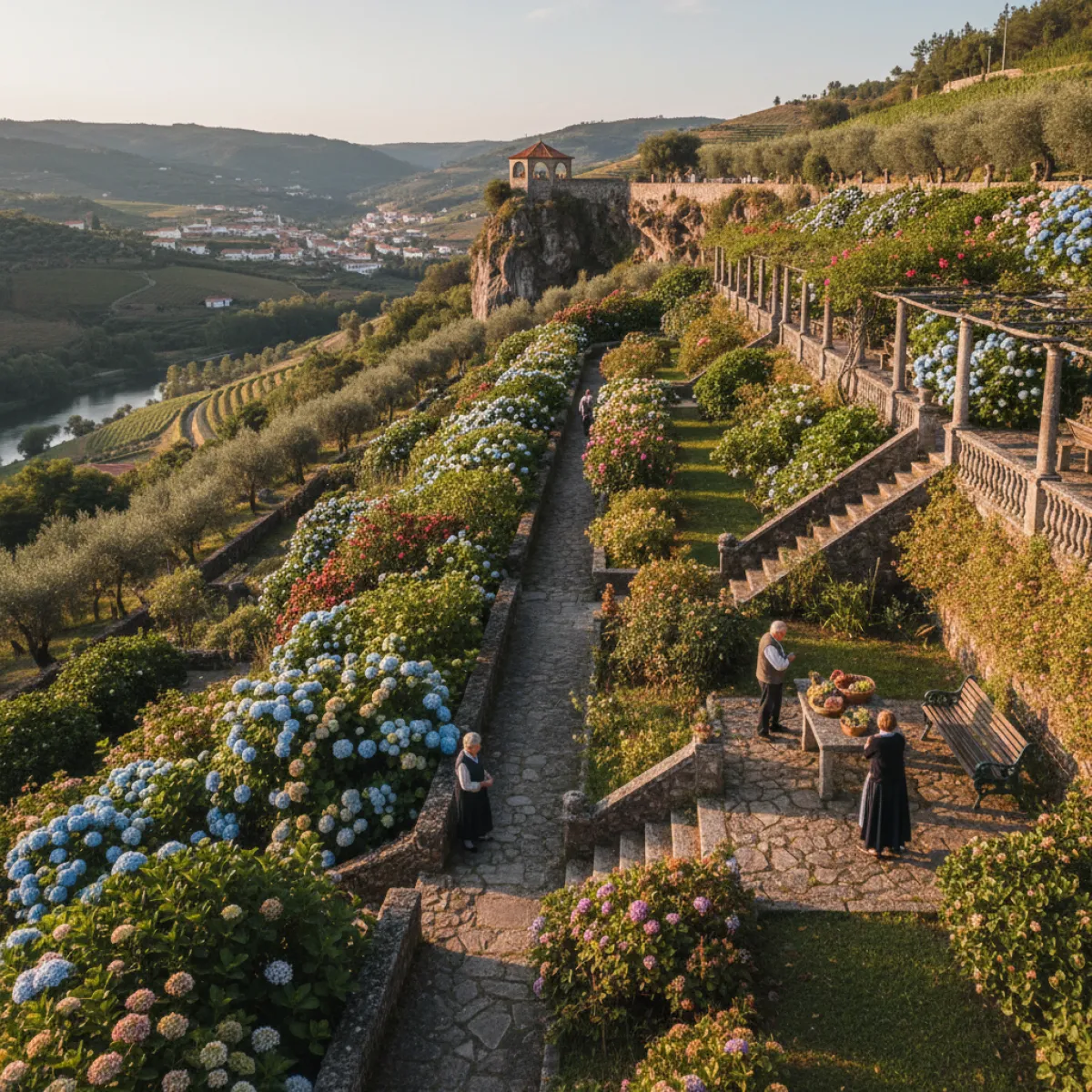
Everyone knows Mateus Palace. It's on the rosé bottle, on the postcards, in the collective imagination of people who've never actually set foot in Vila Real. And it deserves the visit, it does. But if your Vila Real experience begins and ends at the palace gates before you drive back to the motorway, you're missing a city built on a dramatic ledge between two rivers, with century-old gardens, one of Europe's largest botanical gardens, and viewpoints that outshine any palace garden.
Miradouro da Vila Velha: Where It All Started
Start at the beginning. Vila Velha is Vila Real's oldest neighbourhood, and at its edge, where the land drops into a deep ravine, there's been a public garden since 1871. The Miradouro da Vila Velha is one of those places that locals have known since childhood and visitors rarely find, because they get stuck on Avenida Carvalho Araújo without realising you just need to walk a few streets downhill.
What you'll find: centenary trees forming a kind of green cathedral, a statue of the writer Camilo Castelo Branco in the centre (he was born nearby, in Sabrosa), and a view that explains exactly why someone decided to build a city on this precise spot. From here you look down at the confluence of the Corgo and Cabril rivers, cutting through the landscape in a deep green valley. In the late afternoon, with the light turning the opposite slopes gold, it's one of the best viewpoints in northern Portugal. And it's almost always empty.
Practical tip: go at the end of the day, bring something to drink, and stay. There's no café at the viewpoint, but the walk down from the centre is short. Free entry, always open.
Parque do Corgo: 33 Hectares in the Heart of the City
If there's one thing that sets Vila Real apart from other northern Portuguese cities of its size, it's Parque do Corgo. Thirty-three hectares of green space along both banks of the River Corgo, opened in 2005, completely transforming the city's relationship with its river. Before, the Corgo valley was a kind of no-man's-land between two halves of the city. Today it's where everyone goes to run, walk the dog, or just sit.
The park has walking paths that wind along the water, restored old mills, picnic areas with barbecue grills (yes, that's allowed), open-air municipal swimming pools in summer, and cafés with terraces. But the real highlight is the riverside trail, where you go from urban landscape to dense woodland in five minutes. Early morning, before nine, the park belongs to you and half a dozen joggers.
Parque do Corgo connects to the Parque Florestal, established in the 1960s, adding another 38,000 square metres of forest. The combined loop through both parks easily fills an hour and a half of walking without retracing your steps. Wear comfortable trainers: the riverside paths can be uneven.
UTAD Botanical Garden: The Giant Nobody Visits
This is possibly Vila Real's worst-kept secret. The Botanical Garden of the University of Trás-os-Montes and Alto Douro covers 130 hectares. One hundred and thirty. For perspective, Lisbon's Botanical Garden covers seven. Spread across this vast territory are around a thousand plant species, including collections of native Portuguese species that serve as European reference collections.
Admission is free. Read that again: 130 hectares of botanical garden, free admission. It's open every day except Sundays. There's a Welcome Centre where you can pick up maps and route information. Group visits can be booked in advance through the UTAD website.
Don't expect a formal garden with symmetrical flower beds. This is closer to a nature reserve inside a university campus. There are areas of native forest, thematic collections, and corners where you can spend an hour without seeing another person. For photography enthusiasts, it's a paradise. Speaking of which, if you want to take the experience further, the Douro Valley Photo Tour near Vila Real is an excellent way to explore the surrounding landscape with a professional eye.
Getting to the Botanical Garden
It's at Quinta de Prados, the UTAD campus, about a 10-minute drive from the city centre. You can take the local bus, but a car is more practical for exploring the full garden. Free parking on campus.
Avenida Carvalho Araújo and Its Secrets
Vila Real's main avenue isn't exactly a garden, but it deserves mention because it's the axis around which everything revolves. Wide, with traditional cobblestones and 16th-century houses with Manueline windows on one side, the Cathedral on the other. The Sé, originally the Church of São Domingos, was founded in 1421 and only became a cathedral in 1922, when Vila Real gained its own diocese. The exterior is sober, almost severe. Inside, the Gothic capitals are worth your attention.
Further along, the Capela Nova, also known as the Church of the Clergy, was designed by Nasoni, the same architect behind Porto's famous Clérigos Tower. The Baroque facade is unmistakable. If you're planning day trips from Porto, Vila Real is an option many people overlook, just over an hour via the A4 motorway.
Eating in Vila Real: Covilhetes and Everything Else
You can't write about Vila Real without talking about covilhetes. These meat-filled pastries, traditionally baked in black clay moulds from Bisalhães (a local pottery tradition now classified by UNESCO), are the city's signature food. The tradition is linked to the festivals of Santo António and Senhor do Calvário, but today you can eat them year-round.
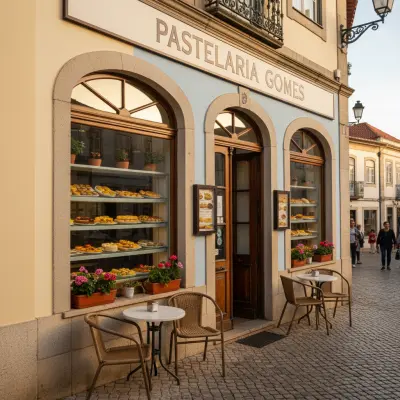
Pastelaria Gomes is the essential reference. It was here that Dona Maria da Conceição de Sousa Magalhães Gomes had the idea of replacing the traditional dough with puff pastry, creating the version everyone knows today. The result is a light, crispy pastry with well-seasoned veal filling. Order the covilhetes and a coffee. That's the Vila Real breakfast.
Beyond covilhetes, don't ignore the conventual sweets: Cristas de Galo (a kind of toucinho do céu pastry with a thin, crispy crust, inherited from the Convent of Santa Clara) and Pitos de Santa Luzia, filled with the traditional Transmontano pumpkin jam. If you're lucky, you'll find cavacórios, another local classic.
For savoury dishes, Vila Real is the land of roast kid with oven-baked rice, Maronesa beef, and charcuterie that needs no introduction. The alheiras and salpicões from this area are among the best in Trás-os-Montes, which is saying something.
Beyond the City: Alvão and the Fisgas de Ermelo
Less than 20 kilometres from Vila Real, the Alvão Natural Park is a natural extension of any visit to the city. The Fisgas de Ermelo, a cascade that drops 450 metres over stepped rock formations, is one of the most impressive natural spectacles in northern Portugal. You can see it from above and below, depending on which trail you choose. In winter and spring, when the water runs at full force, the visual impact is extraordinary.
Access is by car to the village of Ermelo, then on foot. The trails are reasonably well-marked, but bring proper hiking boots. Check locally for trail conditions, especially in wetter months.
And if local traditions fascinate you, the linen weaving workshop in Limões is a genuine immersion in Transmontano craftsmanship, a short distance from Vila Real.
Practical Information
Getting there
Vila Real is about 100 km from Porto, via the A4 motorway. The drive takes just over an hour. There are also regular bus connections from Porto and other northern cities. The nearest train station with frequent services is Porto (Campanhã).
When to go
Spring (April and May) is ideal for the gardens and Alvão, with vegetation at its peak and the waterfalls running strong. Summer can be very hot in Vila Real (this is the interior, remember), but mornings at Parque do Corgo are fresh. Autumn brings spectacular colours to the UTAD Botanical Garden. Winter is cold, but the city has its own energy in the shorter months, especially around Christmas.
How long to stay
A full day covers the historic centre, Miradouro da Vila Velha, Parque do Corgo, and Pastelaria Gomes. Two days let you add the UTAD Botanical Garden and Alvão Natural Park. If you're exploring the north, Vila Real pairs well with a visit to Braga or the Douro wine region.
Parking
In the centre, there are paid car parks at reasonable rates (check locally). Weekends are easier for street parking. For the Botanical Garden and Alvão, parking is free.
Vila Real doesn't compete with Lisbon or Porto for the tourist spotlight, and that's exactly why it works. It's a city that rewards those who leave the main avenue and walk down to the river, who climb to the viewpoint at the end of the day, who order the right pastries in the right place. Mateus Palace is beautiful, no question. But the city next door is better.