Viana do Castelo in Summer: Cold Sea, Strong Wind
While the south simmers tourists, Viana do Castelo keeps its secret: an Atlantic that freezes and a wind that cools everything. From the ferry to Cabedelo to the natural pools of Praia Norte, the honest guide to a cool northern summer.
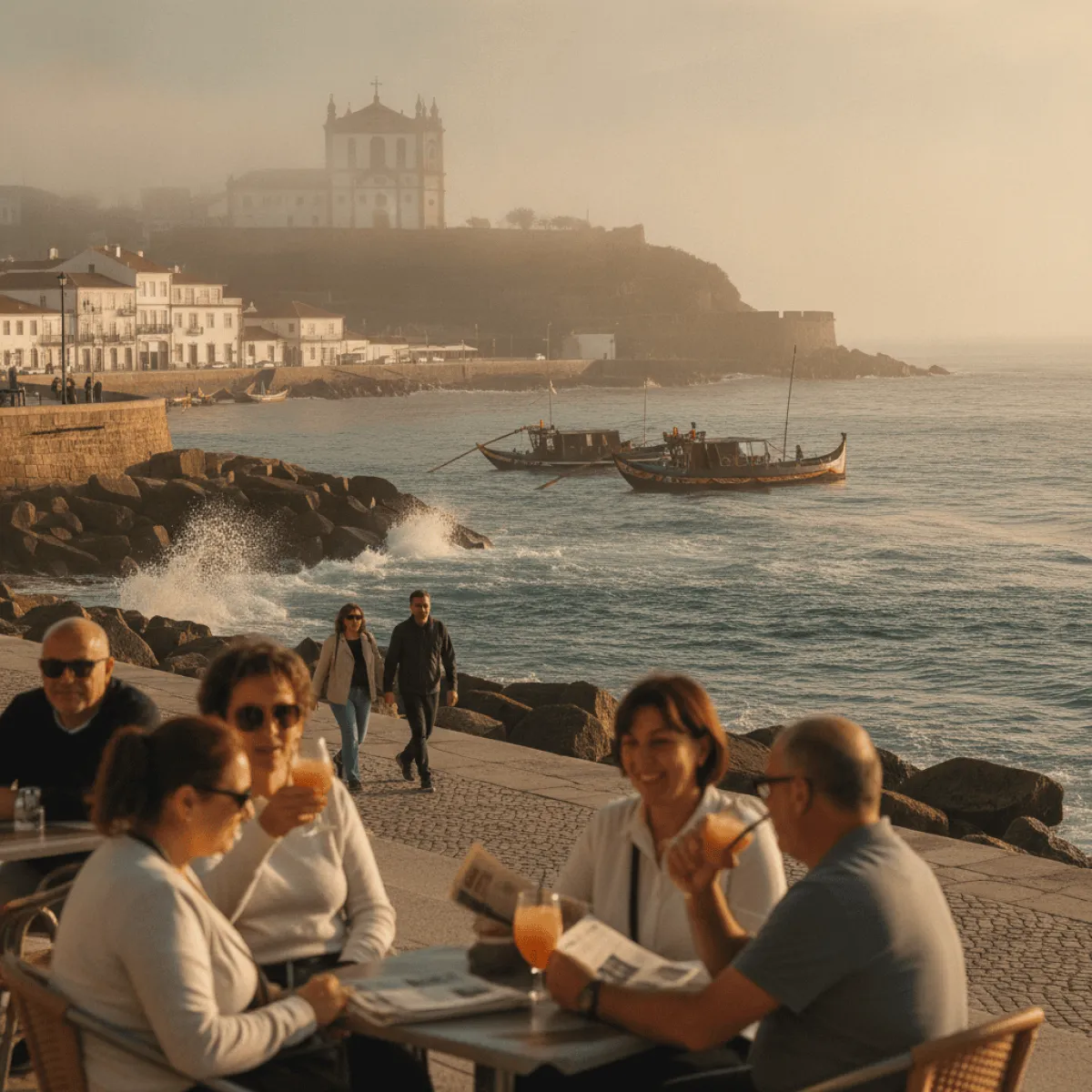
Here is a truth about summer in the Minho that no brochure prints: the Atlantic in Viana do Castelo does not refresh you, it freezes you. In the middle of August, with 30 degrees baking the sand, wading into the sea here is a shock that makes your heart skip and your lungs forget how to work. And that, precisely, is why you come. While the Algarve simmers its tourists in a broth of sunscreen and the Costa Vicentina fills up, Viana keeps its northern secret: the wind that cools, the current that bites, and beaches where you can still throw down a towel without asking the neighbour's permission.
Forget the idea that a Portuguese summer is a heat sentence to be endured. Here, a few kilometres from the Lima river, the nortada wind does the job air conditioning does in the big cities. It blows in from the north by late morning, kicks up the sand, ruffles the sea and turns the coast into a playground for anyone who loves wind. For everyone else, it is an excuse for a long lunch and a nap in the shade. Both plans are correct.
The ritual of crossing to Cabedelo
Viana's best-known beach sits on the far side of the river. Praia do Cabedelo is a tongue of sheltered sand at the mouth of the Lima, and the right way to reach it is not by car. It is by boat. A small ferry links the city centre to the south bank, and making the crossing on foot, board or beach basket tucked under your arm, is half the experience. Check times locally, since they shift with the season, but the trip itself takes a few minutes and costs cents.
Cabedelo is the windsurf and kitesurf capital of northern Portugal for a simple reason: the wind is reliable and the bay is relatively sheltered from the big swell. If you have never tried, this is one of the best spots in the country for a first lesson. If you already know how, you will understand why the sky fills with sails from mid-afternoon onward. And if you want to do none of that, the sand is wide, the water is calmer than on the exposed beaches, and there is grilled fish to be had without fuss. The golden rule: go in the morning for calm water, go in the afternoon for the show of sails.
Praia Norte: the natural pool the city pretends to forget
Here is my favourite beach in Viana, and it is not the famous one. Praia Norte is a few minutes on foot from the centre, pressed up against the city, and it has a trick many people ignore: natural pools carved into the rock, filled with seawater, that stay warmer and calmer than the open ocean. For families with small children, or for anyone who finds the open Atlantic too aggressive, this is the practical paradise.
It is also the beach for the end of the day. The sun sets over the water, the terrace fills with people who came to watch, and the wind usually drops at dusk. Bring a jumper: even in July, the evening breeze in Viana reminds you that you are in the north. This is not a beach for lying down all day, it is a beach for short swims and walks along the seafront. Use it that way.
Afife: for those who want to escape a little further
If central Viana feels too busy at the peak of August, head a few kilometres north to Praia de Afife. The landscape changes here: dunes, low scrub, a long stretch of sand and waves the surfers know well. It is wilder, windier and, frankly, more beautiful. The water is colder still, if that is even possible, but the beach is so vast you can always find a corner sheltered from the wind behind a dune.
Afife is not a beach for cocktail bars and loud music. It is a beach for a morning walk, a picnic and the feeling that you are somewhere not everyone has found yet. Bring water and food, because there is little on offer. Drive there, park early, and stay the whole morning.
When the heat turns serious: the hill and the shade
There are days when even the freezing sea is not enough. On those days, the strategy is to flee uphill. Monte de Santa Luzia, crowned by the basilica visible from across the city, offers shade, cooler air and one of the most celebrated views in the country over the mouth of the Lima and the coast. You can climb on foot through the woods, drive, or take the funicular that links the city to the top. In the afternoon, with the heat hammering the centre, the temperature drop up there is real and very welcome.
To make sense of the city spread out below, it is worth doing it with someone who knows it. The guided historical walking tour in Viana do Castelo takes you through the narrow streets of the lower town, past the Manueline and Renaissance buildings and through the story of a city that turned to the sea long before it turned to tourism. Do it early in the morning, before the heat, when the stones are still cool and the streets empty.
What to eat when you come out of the sea starving
Coming out of freezing water creates a specific hunger, the kind only shellfish can solve. Viana sits on the right coast for that. The fish is fresh, the seafood is serious, and the Minho tradition of the table does not mess around. The best way into that world without falling into the tourist traps is with a guide who knows where the locals eat. The seafood and heritage food tour in Viana do Castelo does exactly that: takes you to the right places and spares you the mistake of ordering the wrong thing in the wrong spot.
As a practical rule: trust the catch of the day, always order what is chalked on the board, and be suspicious of menus translated into four languages with photographs. The Minho is vinho verde country, and a fresh, slightly sharp green wine is the obvious match for a beach lunch. Drink it very cold. In August, it is almost a medical necessity.
The night sounds like fado
After a day of salt and wind, the night in Viana slows down. If you want to close the day with something other than another noisy terrace, look for a night of fado. Amália em Viana brings to the northern city what is usually associated with Lisbon and Coimbra, and does it with conviction. It is a way of remembering that summer is not only beaches: it is also the culture that stays alive when the sun goes down and the wind finally stops.
A day out: the Barcelos excuse
If the weather turns, and in the north it always turns when you least expect it, keep a plan B inland. Barcelos is half an hour by car and offers a whole day away from the beach. If you are travelling with family, the honest family guide to Barcelos sorts out the logistics with children. If you happen to be passing through in May, the Festa das Cruzes is the best the town has to offer. And if you are one of those people who needs a decent coffee to function, the café-by-café order guide to Barcelos tells you exactly where to stop.
The summer plan that actually works
Put it all together and the perfect summer day in Viana assembles itself. Morning at Praia Norte or on the crossing to Cabedelo, with a quick swim before the nortada picks up. A lunch of seafood and ice-cold vinho verde. A nap, or a climb up Monte de Santa Luzia to escape the peak of the heat. Late afternoon at Afife if you want space, or on the seafront if you want the city. And a night of fado to close.
- When to go: July and August have the best weather, but they bring the crowds. June and September are the sweet spot: still-cold water, but fewer people and more civilised prices.
- What to bring: serious sunscreen, a jumper for the wind and the dusk, and shoes that can handle sand and rock.
- Getting around: the centre is walkable. For northern beaches like Afife, you need a car. For Cabedelo, the boat crossing is half the fun.
- Honest warning: the nortada is real. If strong mid-afternoon winds annoy you, plan your beach time for the morning.
Viana do Castelo does not ask to reinvent itself for summer. It stays a city of work, of sea and of granite, and the heat does not slow it the way it slows the south. That is exactly the advantage. Here, summer cools off, and anyone who arrives quickly understands that this is no flaw at all. It is the city's best argument.