The Solitude of the High Sierras: A Guide to the Granite Shepherd Huts of Gerês
Discover the timeless world of shepherd huts in the Peneda-Gerês National Park, where granite and solitude tell the story of human survival. A guide for those seeking radical disconnection in Portugal's high sierras.
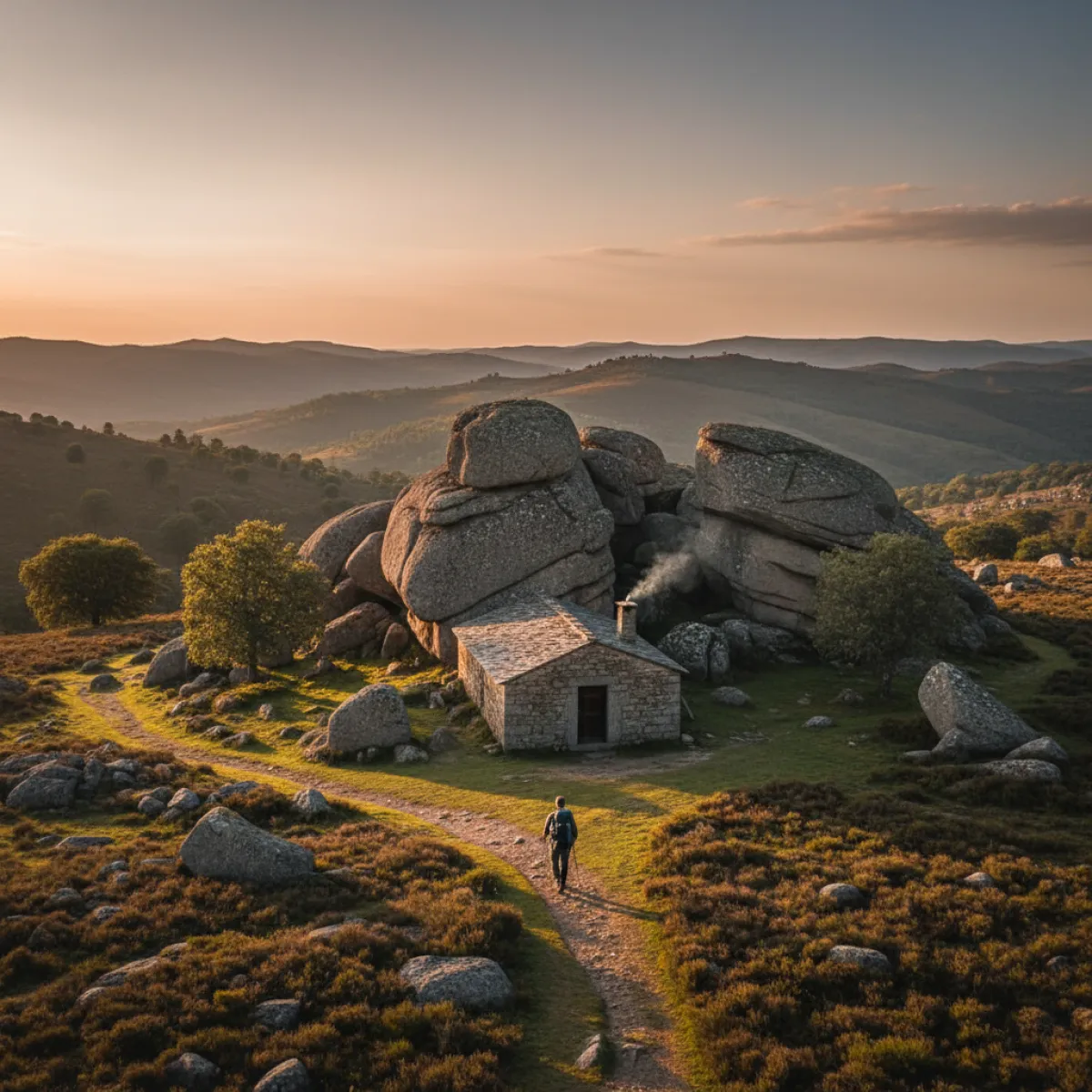
The Granite Sentinels of the High Plateaus
There is a specific quality of silence that exists only above a thousand meters, where the air thins and the granite seems to swallow any sound that doesn't belong to the mountain. In the Peneda-Gerês National Park, Portugal's only National Park, this silence frames a centuries-old architecture of survival: the shepherd huts, or 'abrigos.' These are not leisure structures or vanity projects for hikers; they are monuments to human resilience, built stone upon dry stone to withstand the most unforgiving winters of the Iberian Peninsula. To traverse these high plateaus is to step into a world governed by the ancient laws of transhumance, where the rhythm of life is still dictated by the needs of the herd and the temperament of the sky.
The journey into the high sierras typically begins in the periphery, starting from granite-hewn villages like Ermida or Cabril. The ascent is a test of both stamina and equipment. The terrain is technical, polished granite slabs, loose scree, and narrow trails that disappear into thickets of gorse and heather. As one gains altitude, the landscape sheds its soft edges. The dense oak forests of the valleys give way to a lunar plateau where the dominant color is the mottled grey of the rock. It is here, in these exposed, windswept heights, that one finds the 'currais', complexes of small, low-slung shelters that have served as the summer homes for shepherds for generations.
Dry Stone and Survival: The Vezeira Tradition
Understanding these huts requires an understanding of the 'vezeira.' This communal grazing system, a social contract that survives to this day, requires shepherds to take turns guarding the village's collective cattle on the high pastures during the summer months. The abrigos were their base of operations. Constructed entirely of local stone without a drop of mortar, these huts feature double walls and roofs of massive stone slabs, designed to support heavy snow loads and deflect the gale-force winds of the Atlantic. Inside, the space is monastic: a floor of tamped earth or stone, a corner for a small fire, and a ledge for a bed of dry ferns. There is a profound honesty in this architecture; every stone has a purpose, every angle is a response to the wind.
The Curral da Teixeira stands as a prime example of this isolation. Tucked into a natural granite amphitheater overlooking the Rio Homem valley, it offers a view that feels unchanged since the Neolithic. Here, the sense of solitude is total. There is no cellular signal, no hum of traffic, only the distant, rhythmic clinking of cowbells or the sharp cry of a golden eagle. For the modern traveler accustomed to constant connectivity, this silence can be unsettling at first, but it eventually reveals itself as a rare luxury, the luxury of undisturbed thought.
The Contrast of the Minho: From Peaks to Valleys
The transition from the raw power of the Gerês peaks to the civilized comforts of the surrounding Minho region is one of the most rewarding aspects of a journey through northern Portugal. While the high sierras demand grit, the nearby valleys offer a softer, more indulgent perspective on history. For those seeking a transition from the mountain's edge to a more refined heritage, the slow rhythm of Ponte de Lima provides an ideal counterpoint. In this ancient town, the granite that serves as a shield in the mountains is transformed into elegant bridges and manor houses, reflecting a pace of life that is measured and deliberate.
The weather in the Gerês is notoriously fickle. A morning of crystalline blue can, within minutes, be replaced by a dense, rolling fog that erases the horizon. This meteorological drama is part of the region's soul. That same mist, which can be treacherous on a high-altitude trail, becomes a source of culinary inspiration in the lowlands, as seen in the fog and the feast that defines the winter culture of the Minho. It is a reminder that the people of this region have always known how to turn the severity of the elements into a celebration of warmth and abundance.
Wild Encounters and Ancient Crafts
Walking the high trails of the Gerês is also a rare chance to encounter the wildlife that still thrives in this protected enclave. The Garranos, the hardy, small-statured wild horses of the region, are a constant presence. They move with an effortless grace over the treacherous rock, their manes tangled by the wind, largely indifferent to the passing hiker. More elusive is the Iberian wolf. While sightings are rare, their presence is felt in the watchful eyes of the shepherds and the occasional howl that pierces the night. It is a reminder that this is one of the few places in Europe where the wild and the pastoral still coexist in a delicate, often tense, balance.
This tactile relationship with the earth, the constant shaping of stone and soil to meet human needs, is a thread that runs through the entire region. The same patience required to build a shepherd's hut from mountain granite is mirrored in the valley's artisanal traditions. This connection to the raw material is beautifully articulated in the living craft of Minho, where the red clay of the valleys is transformed into iconic symbols of Portuguese identity. Both the stone hut and the clay vessel are products of the same fundamental drive to create something enduring from the land itself.
Practical Logistics: Planning Your Expedition
An expedition into the high abrigos of the Gerês should not be undertaken lightly. Budgeting for such a trip should include high-quality technical gear and, ideally, a local mountain guide. Expect to pay between €100 and €140 per day for a professional guide who can navigate the unmarked paths and provide historical context. Navigation is the primary challenge; a GPS with updated topographical maps is non-negotiable, as the 'mariolas' (stone cairns) can be misleading in low visibility. Water management is also critical; while the mountain is full of springs, many are used by cattle, so a reliable filtration system is essential.
In terms of clothing, the three-layer system is your best defense against the mountain's mood swings. Even in the height of summer, nighttime temperatures in the abrigos can drop toward freezing. A pair of sturdy, broken-in mountain boots (Grade B/C) is mandatory for the uneven granite surfaces. The best windows for exploration are late spring (May and June) when the broom and heather are in bloom, or September, when the summer heat has dissipated, leaving behind a sharp, golden light and cool, manageable air.
The Ethics of the High Country
When visiting an abrigo, a hiker must adhere to a strict code of ethics. If you choose to sleep in one of these structures, remember that they are first and foremost functional spaces for the local shepherds. Leave no trace, do not dismantle walls for fire pits, and never leave trash behind. These huts are the last bastions of a Portugal that remains unmanicured and wild. The solitude found here is not a lack of presence, but a fullness of being that forces a confrontation with one's own scale against the backdrop of geological time. In the Gerês, among the granite sentinels, we find that the most profound travel experiences are often those that require the most effort to reach.
