The Granite Rite: Lamego and the Performance of Douro Identity
Discover Lamego through its Baroque granite and ancient traditions. From monumental stairways to the Great Pilgrimage, explore the Douro's spiritual capital and its unique gastronomic rituals.
The Gravitas of a Courtly City
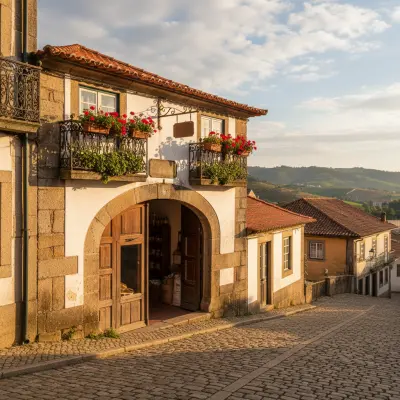
Lamego does not reveal itself with the haste of conventional tourist destinations. There is an intrinsic sobriety to this locale, which claims the title of one of Portugal’s oldest cities, where granite is not merely a building material but a state of mind. The city exhales an ecclesiastical elegance, a legacy of its millennial bishopric that has shaped both its layout and the conduct of its inhabitants. Unlike the commercial energy of Porto or the viticultural hedonism found on the lower slopes of the Douro, Lamego remains faithful to a certain aristocratic austerity, where time is measured by celebrations dating back centuries.
Walking through the historic center is to traverse a chronology of power. From the Cathedral, with its façade blending Gothic and Renaissance styles, to the castle observing everything from the hilltop, the city commands silent respect. Here, local culture is not a product for export but a daily experience. It is the habit of buying a meat bôla still warm from a corner bakery, or the heated discussion over sparkling wine vintages that defines the rhythm of the afternoons. This is the spiritual capital of the Douro, and its rituals are performed with almost liturgical seriousness.
Baroque Ascension and the Theology of Movement
To understand Lamego, one must face its architectural spine. The Sanctuary of Nossa Senhora dos Remédios is not just a place of pilgrimage; it is a monument to Baroque excess and human resolve. For the visitor, the challenge lies in ascending The 686 Steps of Lamego: A Baroque Stairway to Heaven, a journey that is as much physical as it is contemplative. Each landing offers a fresh perspective on the city and the surrounding landscape, adorned with fountains, statues, and azulejo panels narrating biblical and historical passages.
This upward journey is the perfect metaphor for Lamego’s culture: a constant ascent toward the divine, anchored by the hardness of the stone. The Baroque here is not light or frivolous; it possesses the weight of granite and the authority of the Church. Upon reaching the top, the reward is a vista that explains the city’s strategic location: an enclave protected by mountains, yet always connected to the trade and faith routes that crisscross Northern Portugal.
The Great Pilgrimage: The Calendar's Zenith
If there is a moment when Lamego’s soul manifests in all its complexity, it is between late August and early September, during the Romaria de Nossa Senhora dos Remédios. Often called the "Pilgrimage of Portugal," this celebration transcends the purely religious. It is a festival of colors, sounds, and traditions that mobilizes the entire region. The climax is the Procession of Triumph, where triumphal carts, pulled by yokes of oxen, carry live figures recreating biblical scenes. This is a form of sacred theater that has survived modernity, maintaining an authenticity rarely found in events of this scale.
For those visiting during this time, rigor is essential. Your budget should account not only for accommodation, which reaches premium prices, but also for the culinary experience in the temporary taverns that pop up across the city. Expect to spend around 40 to 60 euros per person for a festive dinner where Lamego ham and local sparkling wine are mandatory. The atmosphere is one of controlled euphoria; there is a discipline in how the crowd organizes itself to watch the Virgin pass, a silence broken only by the crackle of fireworks and the philharmonic bands occupying the bandstands.
Gastronomy: The Rigour of the Palate
Lamego’s culture is also read at the table. The bôla de Lamego is, perhaps, the most identifying element. Far from being a mere stuffed bread, it is a work of technical precision where the dough must be thin and the filling, whether ham, marinated pork (vinha-d'alhos), or cod, must be of superior quality. We recommend visiting the traditional bakeries early in the morning when the scent of yeast and cured meats fills the narrow streets. The cost is modest, about 15 euros for a whole bôla, but the cultural value is immense.
Pairing this delicacy with a traditional method sparkling wine (espumante) is the mandatory ritual. Lamego is the birthplace of sparkling wine in Portugal, and the cellars dotting the city’s periphery offer tours that explain the patience required to tame the bubbles and acidity. It is a rural sophistication that defines the Lamego middle class: pride in local production coupled with a cosmopolitan palate.
The Duality of Seasons
Lamego transforms radically as the leaves turn. During the heat of summer, the city serves as a refuge from the valley’s swelter, where one seeks The Inland Coast: River Escapes and the Luxury of Stillness in Lamego. The nearby riverbanks and natural pools offer a necessary contrast to the severity of the urban granite. It is the time for terrace cafes and social life extending late into the night under the shade of chestnut trees.
However, some argue that the city’s true essence only emerges when temperatures drop. In Lamego in Winter: The Geometry of Comfort and the Silence of Granite, the mist that frequently descends upon the Sanctuary lends it a mystical aura. It is the ideal season to appreciate the heavier gastronomy, roasts from wood-fired ovens, and the ever-burning fireplace in rural tourism houses. The silence of the city in winter is profound, interrupted only by the cathedral bell or the wind blowing from the Serra de Montemuro.
The Resonance of Sound
The identity of a city is also heard. In Lamego, Fado takes on a distinct tonality, influenced by the melancholy of the mountain landscape and the echo of the stones. In exploring The Resonance of Granite: Fado and the Sonic Identity of Lamego, one realizes that music here is not just entertainment, but a way of preserving collective memory. In the small bars of the historic center, local voices sing of the land’s hardship and the beauty of our Lady of Remedies, creating an atmosphere of intimacy rare in commercial circuits.
Where to Stay and How to Live
For total immersion in this culture of granite and tradition, your choice of accommodation should reflect local architecture. Casa do Pó exemplifies this fusion between the historical and the contemporary, offering a strategic base to explore the city on foot. It is a space where comfort does not compromise authenticity, allowing guests to feel the weight of history in the stone walls while enjoying modern design.
Living Lamego requires time. It demands mornings spent at the municipal market, afternoons exploring the Lamego Museum (unmissable for its collection of Flemish tapestries and panels by Vasco Fernandes), and nights of slow conversation with a glass of espumante in hand. It is a city for those who value substance over spectacle, tradition over trend. A short day trip barely scratches the surface of this Baroque capital; Lamego deserves your lingering presence.