Tavira Beyond the Bridge: The Side Nobody Visits
Most visitors to Tavira stick to the Roman bridge and the island ferry. But the south bank of the Gilão, the salt pans at dusk, and the inland vineyards tell a different story, more honest and considerably more interesting.
Most visitors to Tavira follow the same script: cross the Roman bridge, climb to the castle, photograph the Gilão River at sunset, catch the ferry to Ilha de Tavira. It's a fine day out. But it's half the city, and honestly, the less interesting half.
The other side of Tavira, literally, the south bank of the Gilão, plus the salt pans and the immediate hinterland, is where the city stops being a postcard and starts being a place where real people live, work, and eat remarkably well. That's where this guide is headed.
The forgotten bank: beyond Praça da República
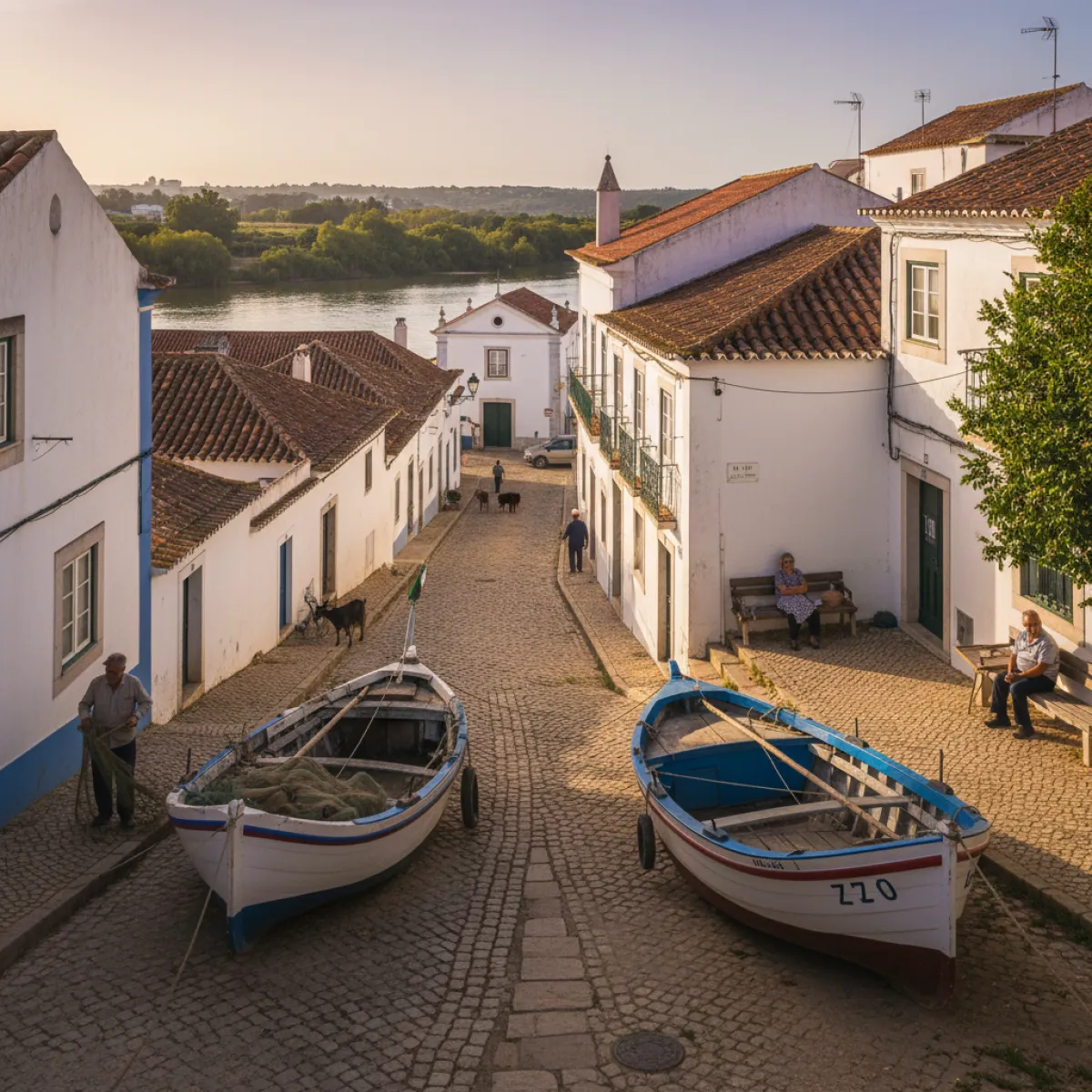
Nearly everyone stays on the north side. The riverside terraces, the restaurants with menus in four languages, the market area. All fine, but predictable. Cross the bridge and turn right instead of heading for the ferry dock, and you'll find the Rua de São Pedro area and the lanes climbing toward the Igreja de Santiago, streets where laundry hanging from windows is still the main decorative element.
This is the part of town where the waiter recites the menu rather than handing it to you. The daily specials change based on what came off the boats that morning. Tuna in cebolada sauce, oven-roasted octopus, grilled cuttlefish, the things the Algarve does better than any other region in Portugal when nobody's trying to impress tourists.
An important note: Tavira was for centuries a tuna capital. The armação de atum, traditional fixed-net tuna fishing, has largely disappeared, but the legacy is everywhere: in the tiles, in the collective memory, and most relevantly for you, on the menus. If you come across atum de estupeta (shredded preserved tuna with onion, tomato, and olive oil), order it without hesitation. It's the most honest petisco Tavira has to offer.
The salt pans: the Algarve before tourism
A short walk from the centre, or by bicycle, which is how locals get around, the salt pans of Tavira are a landscape that seems to belong to another century. Rectangular tanks where water evaporates slowly under the sun, turning into flor de sal. It's a process that hasn't changed significantly since the Romans, and it remains an actual economic activity, not an Instagram set.
Tavira's flor de sal is genuinely excellent and can be bought at several points around town, including at the Mercado da Ribeira. If you're going to take one thing home from Tavira, make it a bag of flor de sal, it costs a few euros and beats any fridge magnet.
In the salt pans, particularly in the late afternoon, you can spot flamingos. It's not guaranteed, but between autumn and spring, it's fairly likely. You don't need special binoculars or a guided tour, just walk along the paths that border the pans. If you want to understand the salt pan ecosystem better, the Centro de Ciência Viva de Tavira, near the centre, has a permanent exhibition on the subject.
Tavira's hinterland: vines and silence
This is where things get genuinely interesting. Tavira's interior, the Serra do Caldeirão, the rolling hills, the villages that time forgot, is a completely different world from the coast. Fifteen minutes by car and you trade beaches for cork oaks, different accents, and a quiet you won't find anywhere else in the Algarve in August.
One of the most genuine surprises is the revival of winemaking in the area. Tavira had vineyards for centuries, the Moors may have banned alcohol, but the grapes were here before and after them. The wine experience at Al-Lagar is the best way to understand this history and taste wines that most people don't know exist. Don't expect the Douro, expect something different, more Mediterranean, with grape varieties you won't find elsewhere.
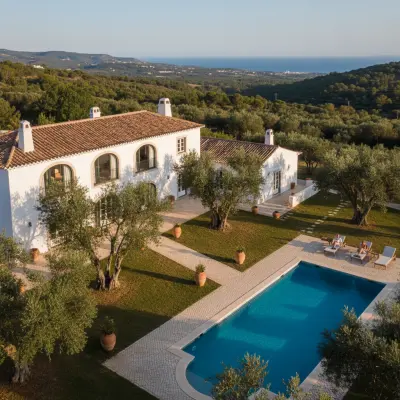
For those wanting to stay in this part of the hinterland, Fazenda Nova Country House is one of the finest options the Algarve has to offer: a restored rural property with a pool, surrounded by countryside, minutes from town but in an entirely different world. It's the kind of place where you wake to birdsong rather than suitcase wheels on tarmac. Book ahead, those who discover it tend to come back.
The market, and when to show up
The Mercado da Ribeira, by the river, is handsome and well-restored, but it functions mainly as a modern food hall these days. The municipal market, the other one, the real one, is where you should go early in the morning, especially on Saturday. Fish stalls, fruit, herbs, serra cheeses. It's not staged. It's where Tavira's grandmothers do their shopping.
The best time to visit Tavira, generally speaking, is before 10am or after 5pm. Not because of the heat (though in summer that's reason enough), but because the city operates differently at those hours. The cafés haven't switched into tourist mode yet, the fish is still being unloaded, and the shopkeepers still have patience for conversation.
What's not worth the hype
Let's be honest: the Câmara Obscura, inside the castle tower, is a technical curiosity, a rotating mirror that projects a 360-degree image of the city. It's interesting for about five minutes but doesn't justify a queue. If it's empty, go in. If there's a wait, climb the castle through the garden and get the same view for free, without the need for an optical device.
Ilha de Tavira is beautiful, no question, but in summer it's a mass experience. If you want a beach with fewer people, consider Praia do Barril, accessible via a small tourist train that crosses the ria, where you'll also find the famous Anchor Cemetery, a spontaneous memorial to the old tuna fishing operations. Off-season, the island is a different story: empty, windswept, and genuinely beautiful.
Tavira in the context of the Algarve
Tavira makes more sense when you understand what it isn't. It's not Lagos, with its nightlife energy and spectacular cliffs, if that's what you're after, see our Lagos neighbourhood guide. It's not Albufeira, where local traditions coexist with mass tourism in sometimes surreal ways. And it's not Faro, though it shares with the district capital a certain dignity of a city that exists beyond tourism, something we explore in our guide to Faro's local culture.
Tavira is the Algarve city that tries the least to please, and perhaps that's exactly why it pleases so much those who discover it slowly.
Practical information
Tavira is about 30 minutes by car from Faro and is connected by regional train (Algarve line), with frequent departures. The station is a 10-minute walk from the centre. By bus, Vamus (formerly Eva) runs services from Faro and other Algarve towns.
For parking in the centre, the car park near the market is the most practical option, but it fills quickly in summer. The streets around the castle have free parking spots, but be prepared for hills.
One day is enough for the historic centre. Two days let you include the salt pans, the hinterland, and a beach without rushing. Three days is ideal for anyone who really wants to understand the city and its rhythm, and in that case, staying inland, such as at Fazenda Nova, changes the experience entirely.
Budget-wise: lunch at a local restaurant with a daily special runs between €8 and €12 including a drink. The ferry to Ilha de Tavira is around €2 per trip (check locally, prices vary by season). Flor de sal can be bought from around €3-4 per bag.
Tavira doesn't need to be told it's beautiful, it knows. What it needs is for someone to go beyond the bridge, turn the corner, and find out what's on the other side.