Skip the Algarve in July: Setúbal Has Better Beaches
While half the country sweats in traffic on the road to the Algarve, Praia dos Galapinhos, named Europe's most beautiful beach in 2017, sits 45 minutes from Lisbon waiting for anyone willing to walk ten minutes. Here is how to trade July in the Algarve for the Arrábida and never look back.
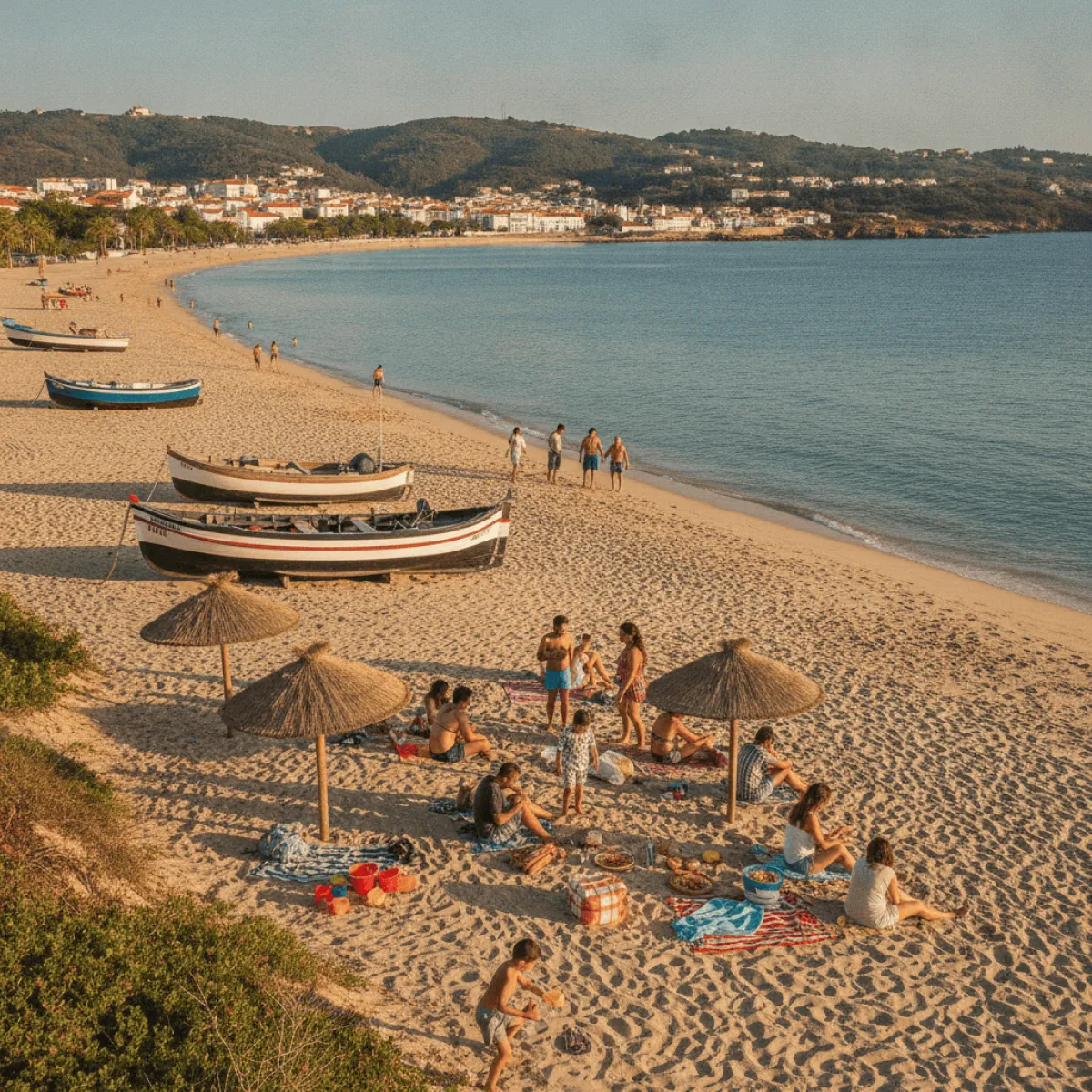
Every June, the same conversation happens at dinner tables across Lisbon. Someone asks "so, Algarve this year?" and everyone at the table exhales slowly. Because everyone knows what that means: three hours on the A2 motorway in stop-and-go traffic, the EN125 coastal road functioning as a very long car park, sunbeds at 25 euros a day, and your towel landing forty centimetres from a family from Madrid. The Algarve in July is not a holiday. It is an endurance event with sunscreen.
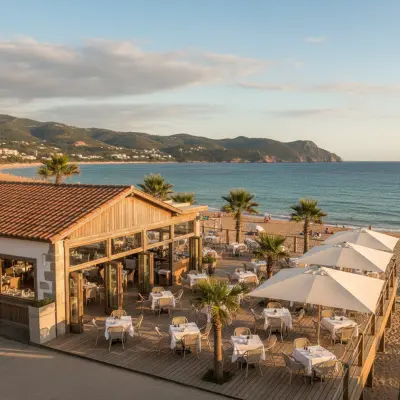
Meanwhile, 45 minutes from Lisbon, across the 25 de Abril Bridge, a limestone mountain range drops straight into water so turquoise it looks colour-graded. It is called the Arrábida, the beaches belong to Setúbal, and the only reason they are not completely overrun in July is that most people keep making the annual pilgrimage south without ever questioning it. This article is about profiting from other people's habits.
The problem is July, not the Algarve
Let's be fair: the Algarve has extraordinary beaches. The problem is that in July, all of Europe knows it. The question is not whether the western Algarve is beautiful. It is whether it is worth sharing with that many people at once. The arithmetic of Portuguese summer is brutal: the month when the most people can go to the beach is precisely the month when the beach is least worth going to.
The Arrábida solves part of the equation. Not because it is empty, it is not, and anyone who tells you otherwise has never been there on an August Saturday. But because access is controlled, the scale is smaller, and above all because you can do it as a day trip. Leave Lisbon at seven in the morning, have your feet in the water by eight, and by evening you are eating fried cuttlefish in Setúbal instead of queueing an hour for a table in Albufeira.
A mountain that falls into the sea
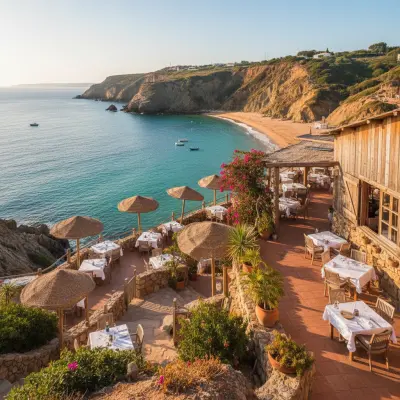
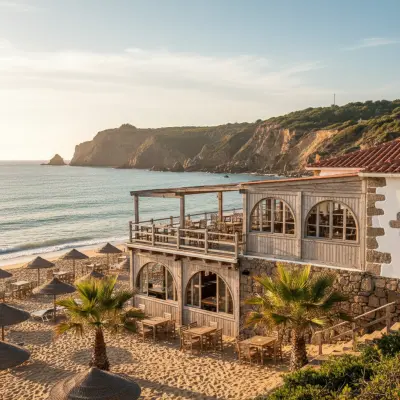
The Arrábida Natural Park is a limestone ridge covered in Mediterranean scrub that ends abruptly in the Atlantic. The result: coves sheltered from the north wind, water that is unusually calm and clear for Portugal's west coast, and strips of sand wedged between white cliffs. Visitors who know the Algarve will recognise the colour palette. Visitors who know Costa da Caparica will not believe their eyes.
Praia da Figueirinha: the easy one
Praia da Figueirinha is the most accessible and the most family-friendly of the three. It is also the largest, with a generous stretch of sand and, at low tide, a sandbank that pushes out into the bay and creates a natural pool of warm, shallow water where children can wade dozens of metres out and still touch the bottom. It has a beach bar, lifeguards in season, and parking relatively close by when car access is allowed. It is the obvious choice if you are travelling with kids, and the wrong choice if you want quiet at noon on a July Sunday. Figueirinha at nine on a Tuesday morning and Figueirinha at three on a Saturday afternoon are two different places. Choose the first one.
Praia dos Galapinhos: the reward for walking
Praia dos Galapinhos is a different proposition entirely. In 2017, the travel site European Best Destinations named it the most beautiful beach in Europe, and for once the internet did not oversell it. It is a small cove pressed against the cliff, with the clearest water in the whole Arrábida and pine and scrub running down almost to the sand.
The price of admission is effort: you arrive on foot, via a trail from the neighbouring beaches, and there are no facilities whatsoever. Three practical consequences. First, carry water, more than you think you need, because the walk back is uphill and the July sun is merciless. Second, bring your own shade, a parasol or a low beach tent, because the cliff only shelters the sand late in the afternoon. Third, carry your rubbish out with you. There are no bins and you are inside a protected natural park. The upside of zero infrastructure is that it filters the crowds automatically. People unwilling to walk stay at Figueirinha, and Galapinhos is grateful.
Praia do Creiro: the smart middle ground
Between those two, Praia do Creiro is the choice of people who have done their homework. It has a wide stretch of sand, water as calm as its neighbours, and easier access than Galapinhos, yet it draws fewer people than Figueirinha. A bonus for history nerds: just behind the beach sit the remains of a Roman archaeological site connected to fish salting, proof that someone worked out two thousand years ago that this stretch of coast was special. Creiro also serves as the starting point for walking to Galapinhos, which makes it ideal for a two-beach day: morning at Creiro, then the trail and the afternoon at Galapinhos.
How to actually avoid the crowds
Now the logistics, because this is where most people get it wrong. In summer, car access to the road serving the Arrábida beaches is restricted, precisely to prevent the chaos these small coves cannot absorb. Instead of fighting the system, use it:
- Go early. Before nine, on any day of the week, you get parking, sand to yourself and that low morning light on the water that justifies the trip on its own. At noon on a Saturday, you get none of it.
- Use the summer shuttle. During the bathing season there is usually a bus service from Setúbal to the beaches, created precisely because of the traffic restrictions. Check schedules and stops locally before you go, as they change from year to year.
- Pick weekdays. Obvious, but the difference between a Wednesday and a Saturday in July on the Arrábida is not a matter of degree. It is a different universe. If weekends are your only option, go Sunday morning and leave the beach at 1pm, just as everyone else arrives.
- Consider arriving by sea. Operators in Setúbal run boat trips along the Arrábida coast. Seeing the cliffs from the water solves the parking problem and gives you the best view of the mountain anyway.
When the sun drops: dolphins, fried cuttlefish and a proper drink
Here is Setúbal's real advantage over the Algarve: what happens after you leave the beach. The Sado estuary is home to one of the few resident bottlenose dolphin populations in Europe, and dolphin watching on the Sado, on a boat departing from central Setúbal, is the kind of experience that usually requires long-haul flights and resort prices, not a free afternoon an hour from Lisbon. Book ahead in July and confirm prices with the operator.
If you prefer binoculars to dorsal fins, the estuary is also one of Portugal's great birding territories, flamingos included at certain times of year. Birdwatching in the Sado estuary works best in the early morning or late afternoon, which slots neatly around a beach day.
As for food, the rule is simple: in Setúbal you eat choco frito, fried cuttlefish, the city's signature dish, fried to order and served with chips and lemon. Any honest tasca near the Mercado do Livramento does it well, and the market itself deserves a morning visit: the fish hall is among the most impressive in the country. For dessert and for your glass, the region answers with Azeitão cheese, tortas de Azeitão and moscatel de Setúbal, the fortified wine the local wineries have been making for generations.
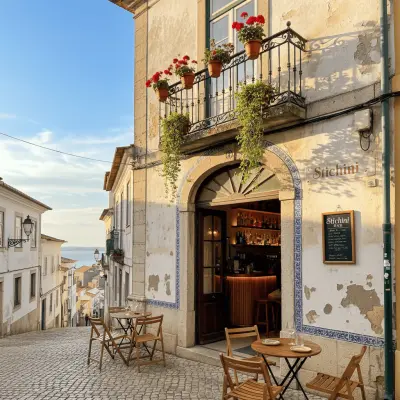
And when you want to sit down with a drink after the shower and the salt, head to Stichini Bar to close out the day. An early evening drink in Setúbal, skin still warm from the beach, beats any overcrowded Algarve rooftop in July.
The plan, in short
Drive or train to Setúbal the night before, or leave Lisbon before eight in the morning. Morning at Creiro, or Figueirinha if you have children in tow. Walk to Galapinhos carrying water and a hat. Off the beach by mid-afternoon, then dolphins on the Sado or the market and choco frito, and a drink at Stichini as the light goes. If this escape is part of a longer stay around Lisbon, take the time to explore the capital properly too. Our guide to local culture in Lisbon is a good place to start.
The Algarve is still there, and in September, when the crowds vanish, it will be worth every kilometre again. But in July, run the numbers: less driving, fewer people, water just as good or better, dolphins at the end of the day. Setúbal does not need to beat the Algarve at everything. In July, it just needs to beat it once.