Skip the Algarve in July: Chaves and Its River Beaches
The Algarve in July is a logistics operation of traffic and inflated prices. 500 km away, Chaves offers free river beaches, cool fresh water, and grilled posta with no booking required. The contrarian bet worth the trip.
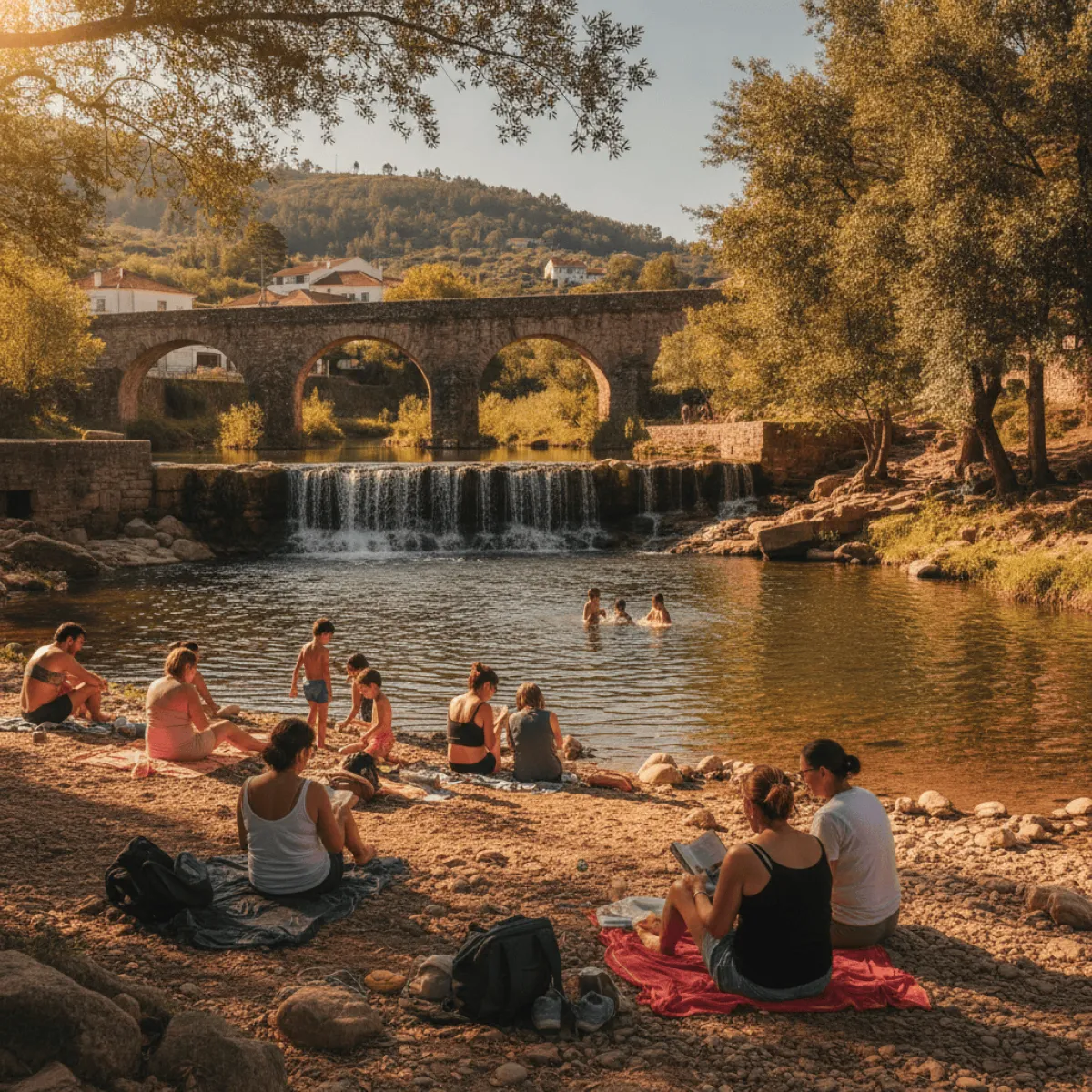
Let's get the awkward part out of the way in the first paragraph: if you came here looking for Algarve beaches in July, you're in the wrong place. Chaves sits more than 500 kilometres from Praia da Marinha, pressed up against the Galician border, and the only tide that rises here is the dry summer heat of the Trás-os-Montes interior. But here is my argument, and stay with me to the end: in July, the best beach in Portugal might not have any sea at all. It might be a freshwater weir, ringed by willows, where the temperature hits 35 degrees at one in the afternoon and nobody charges you eight euros for an umbrella.
The Algarve in July is a military logistics operation: queues on the A2, sand fought over by the centimetre, restaurants tripling their prices, and a permanent traffic jam between Albufeira and Lagos. Chaves, in the same month, offers you a river, shade, and the chance to sit down to a grilled posta without booking three weeks ahead. Do the maths.
The river beach concept, explained for sceptics
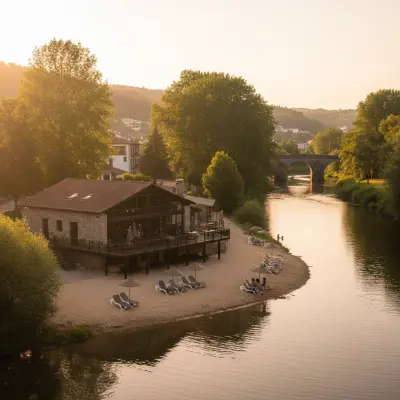
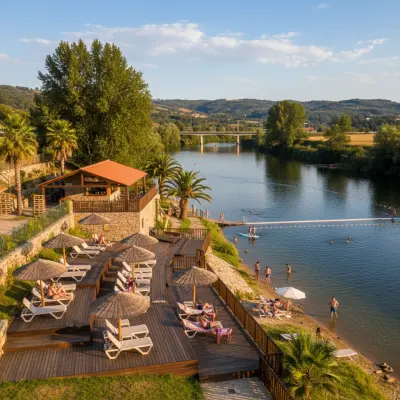
Anyone raised beside the Atlantic tends to wrinkle their nose at the idea of a river beach. Mistake. The Trás-os-Montes river beach is a summer institution, and Chaves has two worth the detour. The first is Praia Fluvial de Segirei, on the river Tâmega, with running water, grassy banks to lay your towel on, and the kind of calm that only exists in places where mobile signal is a struggle. It's the sort of spot where you arrive at eleven in the morning and leave at seven in the evening without noticing the day go by.
The second, and my personal favourite, is Praia Fluvial do Açude de Vila Verde da Raia, right by the border. The weir holds back the Tâmega and creates a broad mirror of water, ideal for anyone who actually swims and isn't satisfied with paddling at the edge. Bring water shoes, because the bottom is stony, and bring your own food: there's no luxury terrace here, just tree shade and quiet. In July, go early. Not because of the crowds (there aren't any), but because the best shade disappears after two.
When to go and what to bring
- July and August are the only months with genuinely inviting water. Outside that, the Tâmega is cold even at the peak of the day.
- Arrive before noon to claim natural shade. Don't count on bars; bring water, fruit and sunscreen.
- Water shoes at both beaches. The bottom is stone and pebble, not fine sand.
- Free entry at both. The luxury here is paying nothing.
Where to sleep, because one day isn't enough
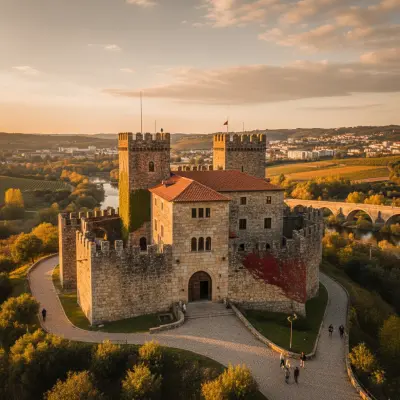
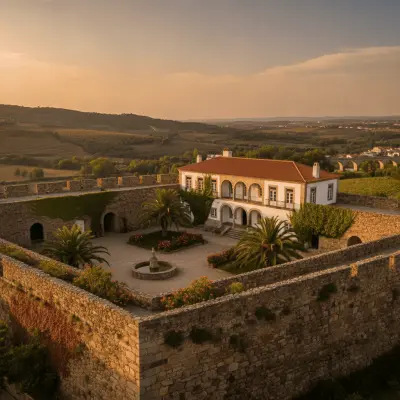
Chaves isn't a quick stopover. It's worth staying, and the town has accommodation with character. The Forte de São Francisco Hotel Chaves is the obvious choice for anyone who likes sleeping inside history: a converted 17th-century fort with real walls and a view over the town. It isn't the cheapest hotel in the region, but the relationship between what you pay and what you get is honest. For something more central and practical, the Castelo Hotel puts you a few minutes' walk from the historic centre and the thermal baths, which on a 35-degree day is a blessing: you can retreat to your room for a siesta between lunch and your second swim.
My advice: use the town as a base and alternate. Mornings, the river. Afternoons, a nap. Late afternoon, the old centre and dinner. It's a summer rhythm that the Algarve, with all its bustle, no longer allows.
The midday break: what to eat in Chaves
Talking about Chaves without talking about food would be fraud. This is smoked-meat country: the presunto de Chaves carries a protected geographical indication and is, without exaggeration, one of the best cured hams in Portugal. Alheira and salpicão complete the trio. In July, with the heat, skip the heavy lunch and save the smoked meats for a platter in the late afternoon, with a glass of regional red.
But if you want the full experience, there's a ritual worth a whole evening. The seafood feast in Chaves is one of those delicious geographic surprises: fresh shellfish in the heart of the mountains, hundreds of kilometres from the sea, served with the solemnity of a celebration. It's the kind of thing you don't expect to find this far inland, and precisely for that reason it stays with you.
Golden rules at the table
- Order presunto de Chaves sliced thin, by hand. If it comes machine-cut, change restaurants.
- Folar de Chaves, with its layers of meat, is more lunch than snack. Share it.
- Hydrate. The interior in July dries you out faster than the coast, because there's no sea breeze to fool your body.
Between swims: what to do out of the water
A river beach won't fill a whole day, and that's a good thing, because Chaves has things to see. For late afternoon, before the light goes, climb up to the Miradouro de São Lourenço. The view opens over the Tâmega valley and the town, and in July, with the sun sinking slowly around nine in the evening, it's the best place to understand why this region is worth the trip. Bring a light jacket: once the sun drops, the temperature falls fast on the plateau.
For those who can't sit still, there are wheels. The Ecovia do Tâmega by electric bike is the smart way to explore the valley without dying in the heat: the electric assist handles the climbs and you get the scenery, the river always close, and tree shade on the best stretches. Ride it early in the morning or late in the afternoon, never at midday.
Stretching the trip: the plateau around you
If you've already made the effort to reach Trás-os-Montes, don't stop at Chaves. The region is vast and almost empty, in the best sense. Half an hour's drive away, Montalegre and Barroso offer serious mountains. The guide to Montalegre beyond Barroso covers the castle, the hill forts and a mountain kitchen that is anything but light: ideal for a cooler or cloudier day, the kind that turns up even in July on the plateau.
Further east, if photography moves you, the sunset viewpoint circuit in Mogadouro is worth it. The end-of-day light on the plateau, especially in these months, is one of the most underrated things about a Portuguese summer. And for anyone returning out of season, a note: the winter photography itinerary in Montalegre proves this region has four distinct seasons, each with its own reason to come.
How to get there and what it costs
From Lisbon, allow around four and a half hours via the A1 and A24. From Porto, it's much closer: a little over an hour and a half via the A4 and A7. A car is practically essential, because the river beaches and viewpoints aren't well served by public transport. Parking in Chaves is easy and cheap, unlike any Algarve town in August.
On budget, Chaves is one of the most honest destinations in the country. The beaches are free. A proper lunch costs a fraction of what you'd pay at an Algarve marina. Accommodation, even at the hotels with the most character, is reasonable outside the absolute peak. In short, you spend less and get more space, more quiet and more authenticity.
The verdict
I won't lie to you: if your heart is set on Atlantic waves, golden cliffs and the ritual of the Algarve beach, go to the Algarve and pack your patience for the traffic. But if your idea of July is escaping the crowds, plunging into cool fresh water, eating well for little money and still having guaranteed shade, Chaves is the contrarian bet worth making. The beaches at Segirei and Vila Verde da Raia won't replace the sea. They'll just make you forget you needed it.