Setúbal Sea Guide: Arrábida Peaks, Secret Coves, and Cuttlefish
Forget the Algarve crowds; in Setúbal, the sea is served with a side of mountains and fried cuttlefish. From the turquoise of Galapinhos to the surf at Figueirinha, here is how to navigate the Arrábida coast.
The Approach: Where Concrete Yields to Green and Blue
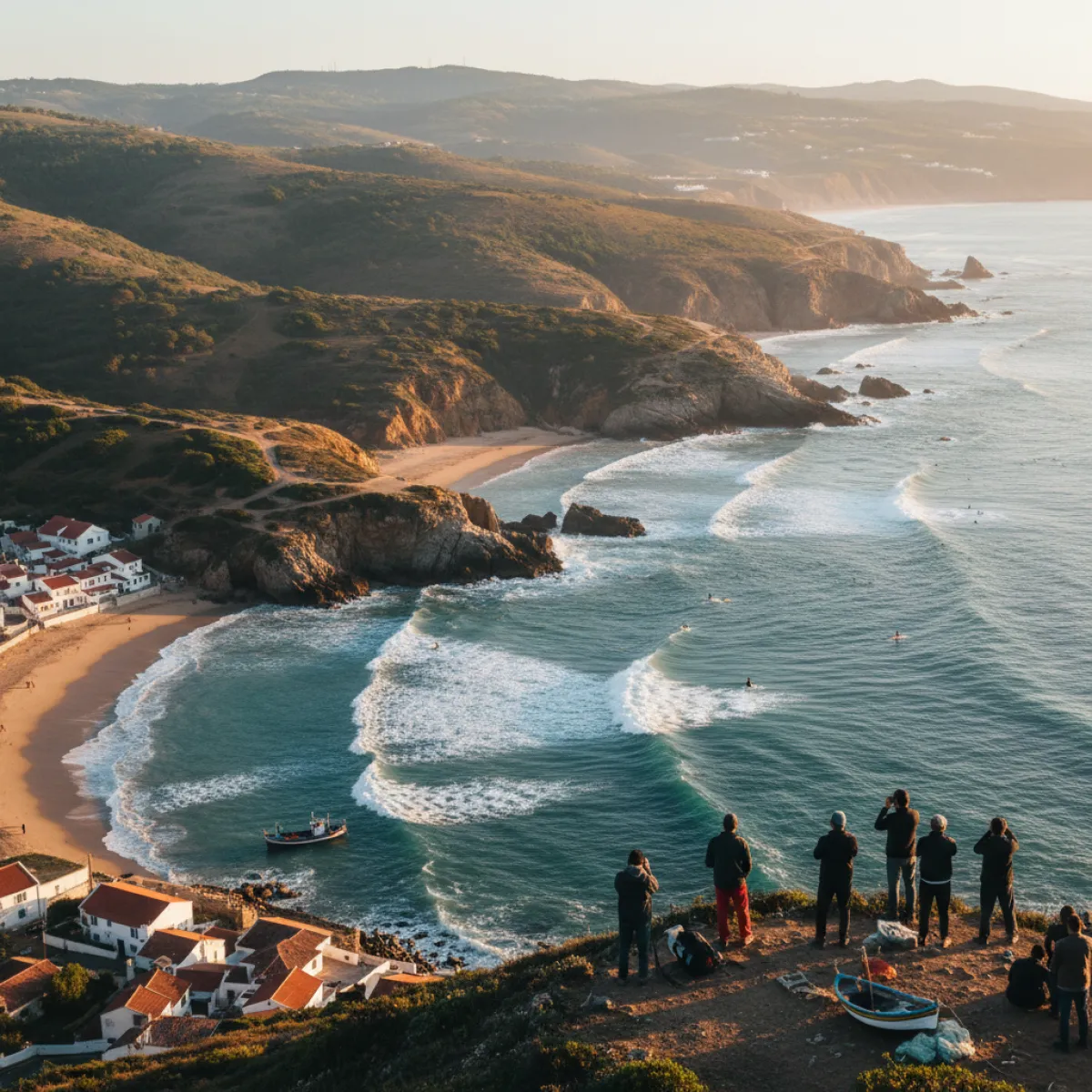
Forget the image of Setúbal as just a grey industrial port seen from the 25 de Abril Bridge. To truly understand this land, you must cross the riverfront, pass the docks where fishing boats unload their catch at dawn, and climb the Arrábida road. It is here, on the N379-1, that the magic happens. To your right, the limestone mountain rises like a wall of dense vegetation; to your left, the Sado estuary merges with the Atlantic in a palette of blues that would make any Mediterranean island jealous. If you are planning the best day trips from Cascais: unmissable destinations, know that Setúbal demands more than a glancing visit. It is a place felt in the smell of sea spray and the taste of salt.
First Stop: Praia da Figueirinha
The Praia da Figueirinha is the gateway to this paradise. It is the most accessible, with the most generous parking lot (though in summer, that's a relative concept), and a favorite for families. But don't dismiss it as "just for tourists." When the tide goes out, a sandbar emerges, allowing you to walk almost into the middle of the channel, creating a natural pool of crystal-clear water where the wind barely touches. It's the ideal spot for those wanting to learn how to read the sea. If you're looking for waves to surf, Figueirinha rarely delivers them consistently, but for paddleboarding or simply watching the boats cross to Tróia, it's unbeatable. The secret here is to arrive before 9 AM. After that, the fight for a square meter of sand becomes a contact sport.
The Cult of Galapinhos: Between Hype and Reality
A few years ago, Praia dos Galapinhos was voted the best beach in Europe. The result? An invasion of cameras and influencers. But, putting the visual noise aside, the beach remains a spectacle. Access is not for everyone, prepare your knees for the descent (and ascent) via steep trails. There are no bars, no sun loungers for rent, and that is precisely what makes it special. It is the place you go to ignore your phone and read a book to the sound of waves gently hitting the rocks. It's a stark contrast to the bustle of local culture in Lisbon: traditions, neighborhoods and the city's soul, where the rhythm is dictated by cobblestones and fado. In Galapinhos, the rhythm is dictated by the tide.
Creiro: Where History and Sea Intersect
Continuing along the coast, we reach Praia do Creiro. Here, the experience is complete. It has the Pedra da Anixa, a rocky islet that is a paradise for snorkeling (if you have the stomach for the cold water), and the Roman Ruins of Salga just above the sand. Imagining the Romans producing garum (a fermented fish paste) with this view helps contextualize the historical importance of this coastline. For lunch, ignore the sandwiches you brought from home and go to 'O Farol.' Order the fish of the day, grilled with the mastery of someone who has been doing this for decades. Expect to spend about €25-30 per person for a meal that is worth every cent for the freshness of the product.
The Sea as a Stage: Where to Surf and What to Watch
Setúbal is not Ericeira or Peniche, but it has its secrets. Surfing here depends heavily on swell direction. When the sea is too big at Costa da Caparica, Arrábida acts as a shield, offering cleaner, more manageable waves at spots like Praia do Albarquel or, with the right wind and tide combo, near Figueirinha. But if you want serious waves, your best bet is to catch the ferry to Tróia and head down to Comporta. There are miles of open beach where the crowd is almost non-existent. However, in Setúbal, the sea is primarily for watching. The Sado Bottlenose Dolphins, the only resident community of dolphins in a European estuary, are the true masters here. Several operators in Setúbal port organize trips to see them (around €35 per adult), but sometimes, if you're lucky and have binoculars, you can spot them from the São Filipe Fort while having a coffee.
The Ethics of Choco Frito: A Practical Guide
You cannot write about Setúbal without mentioning Choco Frito (fried cuttlefish). It's more than a dish; it's a rite of passage. Avoid the restaurants with plasticized photos at the door on Avenida Luísa Todi. Go to 'Rei do Choco' or 'Leo do Choco Filho.' The cuttlefish should be tender, the batter should be crispy and not greasy, and it should be accompanied by fries and a lettuce salad that serves only to ease your conscience. Pair it with a cold 'mini' (small beer). If the restaurant doesn't have paper tablecloths and a deafening noise of overlapping conversations, it's probably not the right place. This is the raw and authentic side of Setúbal, far from the sophistication of Sintra which you can explore in the Sintra neighborhood guide: discover every corner of the enchanted town.
Logistics and Survival
Setúbal in summer requires planning. The 'Arrábida sem Carros' program restricts private vehicle access to the beaches between June and September. The solution? The bus leaving from the train station and Alegro Setúbal (about €4 round trip). It's efficient and avoids the headache of finding a parking spot on the narrow mountain roads. If you prefer total freedom, rent an electric bike in the city; the climb is tough, but the descent with the sea in view is one of the best experiences you can have in Portugal. If coming from Lisbon, the Fertagus train is the most sensible option (about a 50-minute journey), dropping you a ten-minute walk from the Mercado do Livramento, possibly one of the best fish markets in the world. Go there by 10 AM, see the marble stalls filled with sea bass, octopus, and bream, and buy an Azeitão cheese for a beach snack.
Setúbal doesn't apologize for what it is. It's a mix of natural luxury and port-town reality. It's the place where you can spend the morning in a cove worthy of the Caribbean and the afternoon discussing football with a fisherman in a tavern. And it's this duality that makes it the most interesting sea destination less than an hour from Lisbon. Always check the ferry schedules to Tróia locally, as they change depending on the season, and prepare to fall in love with a city that doesn't try to be pretty for others, it's just magnificent by nature.