Setúbal on a Budget: Fried Cuttlefish and Arrábida Secrets
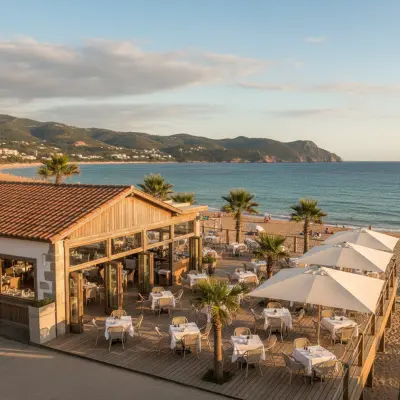
Setúbal doesn't dress up for guests, and that's exactly where its value lies. Discover how to eat the best fried cuttlefish in Bairro do Troino and access the crystalline waters of Arrábida without spending a fortune on parking or luxury tours.
Salt, Diesel, and First Impressions
Arriving in Setúbal by train is an exercise in patience and observation. Forget the triumphal entrance into Lisbon or the scenic charm of the Cascais line. Here, the Fertagus train crosses the Tagus, but then dives into a landscape of salt marshes, industrial cranes, and warehouses that make no apologies for existing. Setúbal isn't a city that combs its hair to receive guests. It’s a city that smells of salt, boat diesel, and, invariably, fried cuttlefish (choco frito). And it’s precisely this raw honesty that makes it the perfect destination for those who want a real Portuguese experience without having to sell a kidney to pay for lunch.
While in many destinations "budget" means eating stale sandwiches on a park bench, in Setúbal, a tight budget is the local identity. If you know where to look, you can spend an entire day eating like a king, swimming in waters that would make the Caribbean jealous, and feeling the pulse of a fishing community that hasn't been sanitized by mass tourism. Unlike what happens when you plan the Best Day Trips from Cascais: Unmissable Destinations, where the final bill usually rises as fast as the tide, Setúbal allows you to keep your wallet closed and your spirit satisfied.
The Cathedral of Fish: Mercado do Livramento
Your day must start at the Mercado do Livramento. Forget the hotel breakfast. By 8 AM, Avenida Luísa Todi is already wide awake, but the heart beats strongest inside this 1930s building. Don't just get distracted by the tile panels telling the story of the fishing trade; focus on the ice. Setúbal has, without much room for debate, one of the best fish markets in the world. This isn't travel-brochure hyperbole; it’s the geographical result of having the Sado river on one side and the Atlantic on the other.
The hack for the budget traveler? Don't just look. Find the local bread stalls, Setúbal bread has a hard crust and a crumb that can hold whatever you put on it, and buy a small Azeitão cheese. For less than five euros, you have a feast. Watch the fishmongers; the spectacle of flying knives and the colorful local slang is part of the experience. If you want a souvenir you can actually enjoy, the local canned fish is cheap and infinitely superior to any fridge magnet made in China.
Arrábida Logistics: The Car is Your Enemy
This is where most tourists go wrong and spend money they don't have. Trying to take a car to the Arrábida beaches in the summer is a refined form of torture and an assault on your budget (parking fines are the dish of the day). The smart solution, and the only one I recommend, is the Carris Metropolitana bus. For just over two euros, bus 448 or 444 whisks you from the city center and drops you right on the sand.
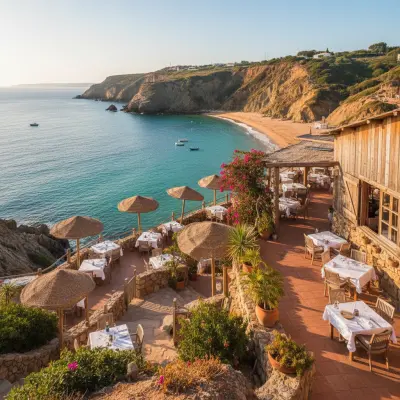
The first mandatory stop is Praia da Figueirinha. It’s the most accessible and the largest, meaning you have space to spread your towel without having a neighbor's foot in your ear. The water is an impossible blue, protected by the mountain range, which means there are no waves. It’s a saltwater lake. If you have the energy, you can walk at low tide to the sandbanks. It’s free, and the view of the Tróia Peninsula is better than any postcard.
For those who prefer something more secluded, Praia dos Galapinhos was once voted the best in Europe, and though that brought crowds, it’s still worth the steep descent. The secret is to go early, before 10 AM. The cost here is only the physical effort of your legs. Bring water and food from the market; beach bars in Arrábida charge Saint-Tropez prices for a mediocre ham sandwich.
Lunch: The Dogma of Choco Frito
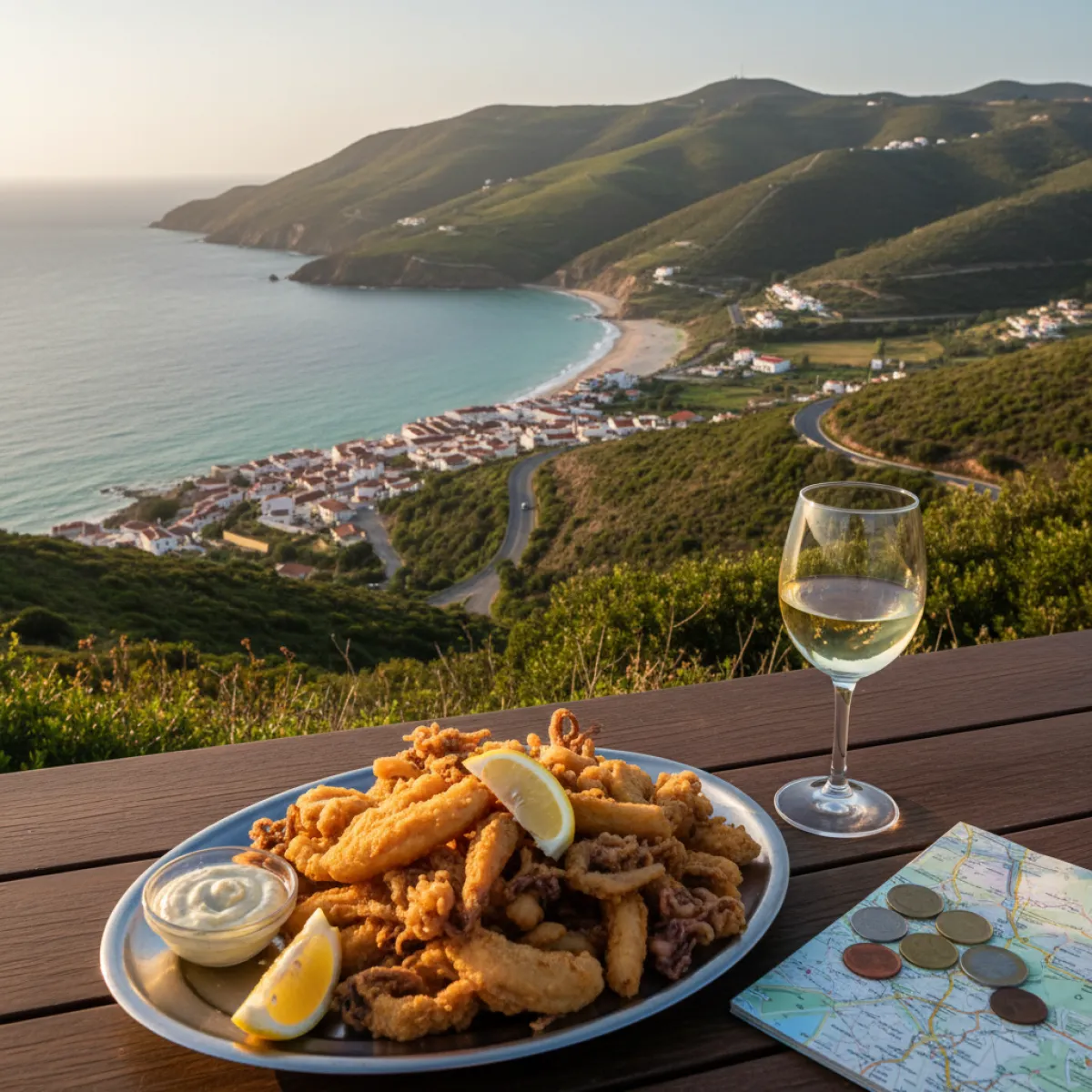
You cannot come to Setúbal and not eat fried cuttlefish. It would be like going to Rome and ignoring the Pope. But there are rules. Steer clear of the restaurants with food photos at the door on Luísa Todi. The real Setubalense heads for the narrow streets of Bairro do Troino. Look for places with paper tablecloths and where the house wine comes in a clay jug.
A portion of choco frito for two, accompanied by fries and a lettuce salad with oregano, shouldn't cost more than 25 euros including drinks. The cuttlefish should be tender, not rubbery, and the batter should be dry and crispy. If they serve you something that feels like fried eraser, get up and leave. Finish with a Moscatel de Setúbal. It’s sweet, strong, and summarizes the region’s sun in a small glass. Comparing this to Local Culture in Lisbon: Traditions, Neighborhoods and the City's Soul, where Fado and snacks have sometimes become an expensive stage play, in Setúbal the service is direct, fast, and devoid of unnecessary pleasantries.
Free Culture and Million-Dollar Views
After lunch, the body asks for inertia, but your wallet appreciates movement. Head up to the Fortaleza de São Filipe. You can walk if you're fit, or catch a cab for about 5 euros. Entrance to the fortress is free. The view from the top, with the silhouette of Arrábida plunging into the sea and the city spread at your feet, is the best deal in town. There’s a small chapel lined with tiles inside that is a silent treasure.
If you prefer to stay at sea level, Casa da Baía is a cultural center housed in an 18th-century former refuge. The inner courtyard is one of the most pleasant places in the city to read a book or simply watch time pass. This is where you realize the difference between this city and what you find in the Sintra Neighborhood Guide: Discover Every Corner of the Enchanted Town. In Sintra, everything is vertical and Gothic; in Setúbal, everything is horizontal, maritime, and bathed in a white light that blinds if you don't have sunglasses.
The Sado and the Ferry Trick
Many people spend 40 or 50 euros on boat tours to see the Sado bottle-nosed dolphins. It’s a great experience, but if your budget is tight, here’s an insider trick: the ferry to Tróia. For less than 10 euros (round trip), you cross the estuary on a large, slow boat. Keep your eyes on the water; the dolphins don't know you didn't pay for the luxury tour and frequently pop up next to the ferry. Even if they don't appear, the view of Praia do Creiro in the distance and the mountain profile is worth every cent.
On your return, get lost in Rua Álvaro Castelões. It’s the street of traditional commerce, where shops still survive selling buttons, threads, and leather shoes that last a lifetime. It’s the perfect antidote to generic shopping malls. Setúbal doesn't need gimmicks to convince you. At the end of the day, with your pockets still heavy and your skin tasting of salt, you’ll realize that luxury here isn't what you buy, but the freedom of not having to buy anything to feel part of the place.
Practical Tips for the Budget Traveler:
- Transport: Use the Navegante pass if you have it (it covers the train and Carris Metropolitana buses). If not, buy the bus ticket on board, though it's cheaper to load a reusable card.
- When to go: Avoid August weekends if you hate crowds. Setúbal in May or September is paradise on earth.
- Eating: In Bairro do Troino, look for restaurants like "Adega do Zé" or similar. If there’s a queue of locals, it’s good.
- Water: Tap water in Setúbal is perfectly drinkable. Fill your bottle before heading to Arrábida and save 2 euros per bottle.