Setúbal: Fried Cuttlefish and the Raw Truth of the Sado
Setúbal doesn’t apologize for its grit. From the scent of grilled sardines in the Baixa to the fascinating chaos of the Livramento Market, this is the perfect antidote to touristy Lisbon. Bring an appetite for the world’s best fried cuttlefish and a camera for the stunning blue vistas of Arrábida.
The Arrival: Where the Tagus Yields to the Sado
Forget the triumphal entries past the Jerónimos Monastery or the gentle descents through Alfama’s hills. Arriving in Setúbal requires a different mindset. If you come by train, crossing the 25 de Abril Bridge, the landscape transforms: Lisbon’s dense housing dissolves into the pine forests of the South Bank until, suddenly, the horizon opens up to the Sado Estuary. To your left, the industrial zone with its chimneys and cranes; to your right, the absolute green majesty of the Arrábida Mountains. It is this contrast, productive brutalism meets raw natural beauty, that defines the city’s character. Setúbal is not a scenic village for tourists; it is a working city that smells of diesel and brine, proud of every scar time has left on it.
While many travelers use the city merely as a boarding pier for the beaches of Tróia or a quick pit stop before heading to the Algarve, those who choose to stay discover an urban density lacking in many "cleaner" destinations. It’s an environment that stands in stark contrast to the romanticism found in the Sintra Neighborhood Guide. In Setúbal, romanticism is replaced by a disarming honesty. Here, luxury isn't found in gold leaf, but in the freshness of a horse mackerel straight from the net.
Mercado do Livramento: The Altar of Fish
Any serious exploration of Setúbal must begin, by law of common sense, at the Mercado do Livramento. Forget Time Out Market or any other modern attempt to gourmet-ize the market experience. The Livramento, opened in 1930, is a functional cathedral. As you enter, your eyes are drawn to the massive tile panels narrating the region’s agricultural and fishing history, but your nose quickly takes charge. The scent is of living sea. Hundreds of stalls display the best the Sado and the Atlantic have to offer: cuttlefish with fresh ink, silver sardines, massaged octopuses, and deep-sea species that look like they crawled out of a sci-fi flick.
The dynamic here is noisy. Setúbal’s fishwives are legendary for their volume and caustic wit. If you stand around blocking the way, expect a dry comment. It’s in this daily theater that you understand the difference between visiting a monument and living a city. At Livramento, food is serious business. If you want to take a piece of Setúbal with you, look for Azeitão cheeses or Arrábida honey at the side stalls, but the true spectacle happens in the central aisle. The market closes on Mondays, a common mistake for those who plan poorly, and the best time is between 8 AM and 10 AM when the selection is vast and the energy is at its peak. A quick coffee at one of the peripheral counters, accompanied by a Pastel de Setúbal (a local orange-sweet variant), will cost you little more than 2 euros and gives you a front-row seat to this organized chaos.
The Baixa and Fonte Nova: Backstreets with History
Leaving the market and walking east towards Avenida Luísa Todi, you enter the Baixa. It’s an area that has undergone slow renovation but maintains a precarious balance between traditional hardware stores and new specialty coffee shops. Unlike Local Culture in Lisbon, which sometimes feels besieged by gentrification, Setúbal keeps its neighbors chatting through windows in streets like Rua Arronches Junqueiro. Here, the architecture is a mix of 18th-century buildings and modernist interventions, often with tile facades that deserve more attention than they get.
Further north, the Bairro da Fonte Nova offers a glimpse of the city’s seafaring past. It’s a labyrinth of narrow streets where fado is casually heard coming from a radio in an open kitchen. Don't look for big museums here; the interest lies in the small details, like makeshift shrines on facades or pots of geraniums that survive the summer heat. It’s a place for slow walking, observing how light reflects off the limestone cobblestones. If you’re hungry, avoid the tourist menus with food photos on the Avenida and look for the hidden taverns in these backstreets. A plate of clams or cockles, shared over a cold beer, is the perfect prelude to the main course that defines the city.
The Ritual of Fried Cuttlefish
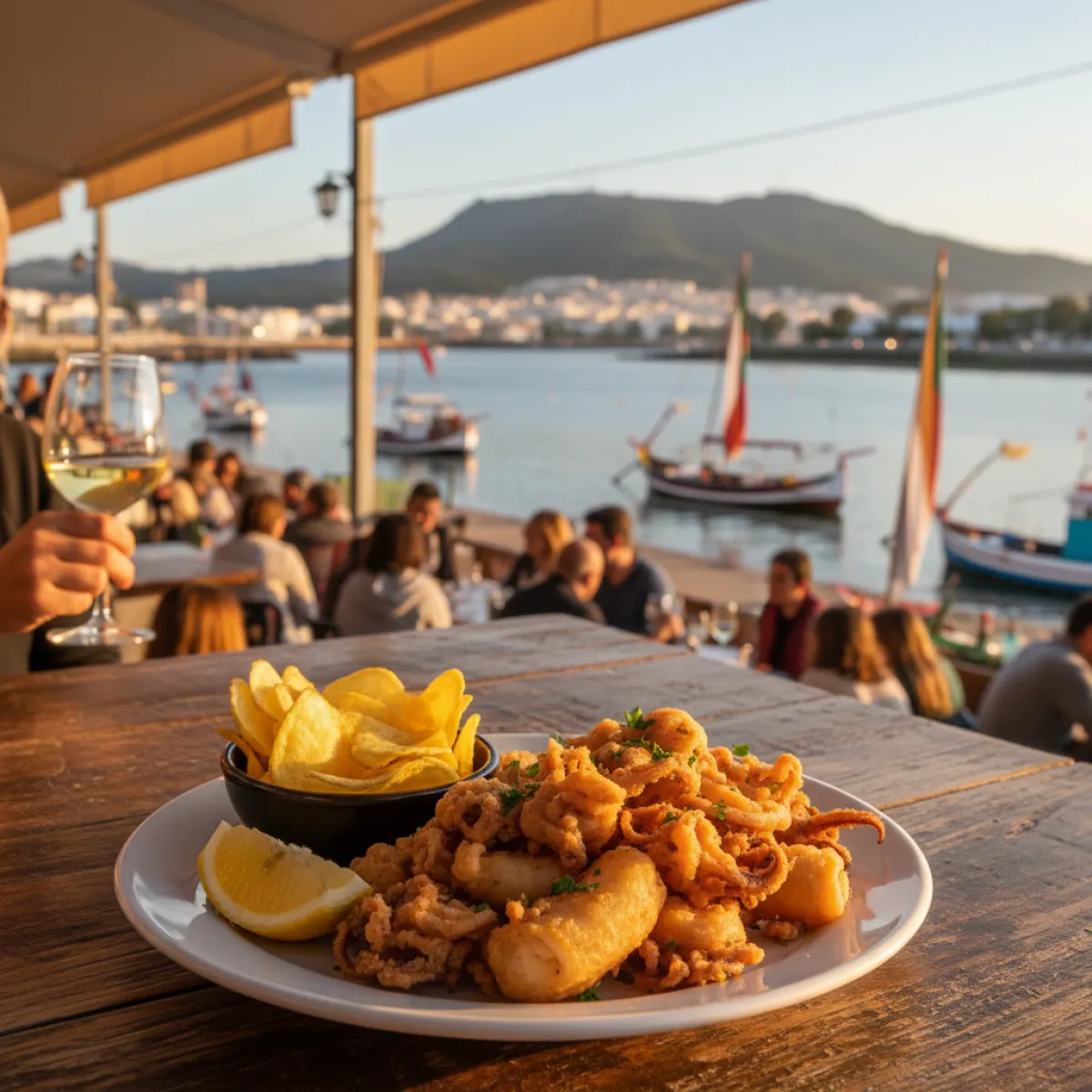
You can't talk about Setúbal without talking about Choco Frito. It’s more than a dish; it’s a religious institution. But beware: not all fried cuttlefish is created equal. The secret lies in the mollusk’s freshness, the batter’s thickness, and the oil’s temperature. The cuttlefish must be tender inside, with no trace of rubberiness, and the crust must be crispy and non-greasy. Places like Leo do Choco or Adega Leo do Petisco are points of pilgrimage. Expect to wait for a table, especially on weekends. The service is fast, efficient, and often brusque, it’s part of the charm. A serving for two, accompanied by fries and a tomato salad with oregano, runs around 25 to 30 euros in the most authentic spots.
To accompany it, the only logical choice is a local wine. Moscatel de Setúbal is world-famous, but save it for the end of the meal or to accompany a dessert. During lunch, a dry white from the slopes of Arrábida, with its vibrant acidity and mineral notes, perfectly cuts through the cuttlefish's fry-up. It’s in these moments that you realize Setúbal's gastronomy doesn’t try to impress with molecular techniques; it relies on the brutal quality of the raw material.
The Blue Counterpoint: Arrábida
After diving into the city’s urban energy, the Arrábida Mountains act as a balm. It’s Setúbal's vertical garden. The road winding up the slope offers some of the country’s most dramatic views, where Mediterranean green meets a sea alternating between turquoise and deep emerald. Many arrive here from other directions, as suggested in Best Day Trips from Cascais, but those coming from Setúbal have the advantage of immediate proximity.
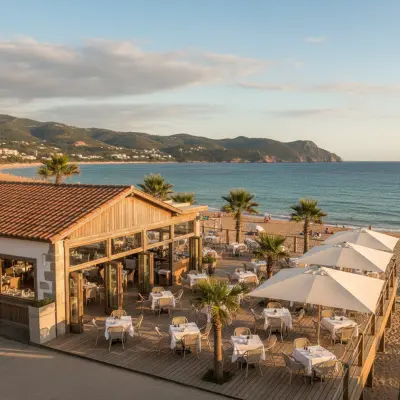
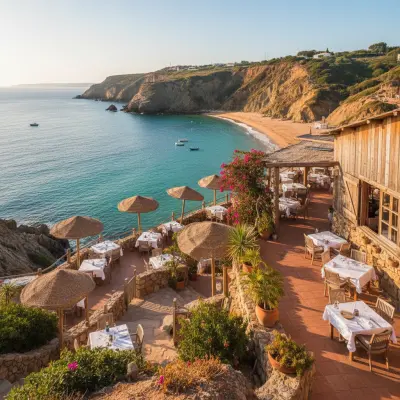
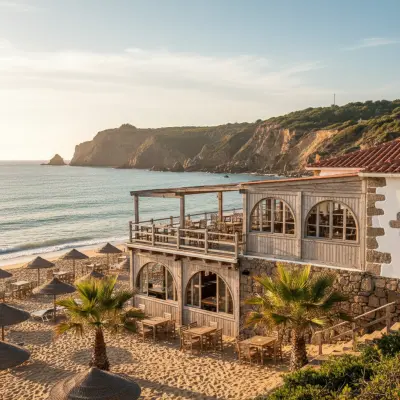
The Praia da Figueirinha is the most accessible and popular, ideal for those traveling with family due to its vast sands and calm waters. However, if you prefer something more secluded (though rarely empty in summer), Praia dos Galapinhos was once elected Europe’s most beautiful beach, and you only need to look at the water's transparency to see why. Access is via steep trails, which discourages the less prepared. A little further along, the Praia do Creiro offers not just a stunning bay, but also the Anixa Rock and archaeological remains of a Roman fish-salting factory, reminding us that this region’s connection to the sea is millennia-old. In summer, car access is restricted; use the shuttle buses from Setúbal to avoid heavy fines and parking headaches.
Setúbal: The Expert’s Verdict
Setúbal is not for everyone. It’s not for those looking for immaculate streets and uniform luxury shops. It’s a city for those who enjoy uncovering layers of history beneath a sometimes decaying facade. It’s for those who appreciate charcoal-grilled fish in the middle of the street, for those who want to see the resident Sado dolphins playing near the ferry, and for those who know the best view isn't from a paid viewpoint, but from the Forte de São Filipe at sunset, with a glass of Moscatel in hand.
The city is changing, yes. There are new design hotels and restaurants trying to elevate regional cuisine. But as long as the Mercado do Livramento continues to dictate the morning rhythm and fried cuttlefish remains the national dish of the Setúbal peninsula, the city’s identity is secure. Come with an appetite, bring comfortable shoes for the cobblestones, and leave your prejudices in Lisbon. Setúbal doesn't need to convince you; it simply exists, raw and beautiful, waiting for you to see it.
Practical Info:
- How to get there: Fertagus train from Sete Rios or Roma-Pragal (about 50 min) or direct bus from Lisbon (Praça de Espanha or Gare do Oriente).
- Best time: April to October for the beaches, but winter has the advantage of no lines for fried cuttlefish.
- Average cost: A day in Setúbal, including transport, a hearty lunch, and some snacks, costs around 40-50 euros per person.
- Don’t miss: The Convento de Jesus, a magnificent example of the Manueline style, often overlooked in traditional itineraries.