Serra da Estrela Escape: Trading Albufeira's Heat for Rivers
When Albufeira hits 35 degrees, there's an escape nearly 500 kilometres away that's worth every hour on the road: glacial rivers, ice-cold pools and sheep's cheese made with thistle flower. A practical guide for trading the warm Atlantic for the cold of Serra da Estrela.
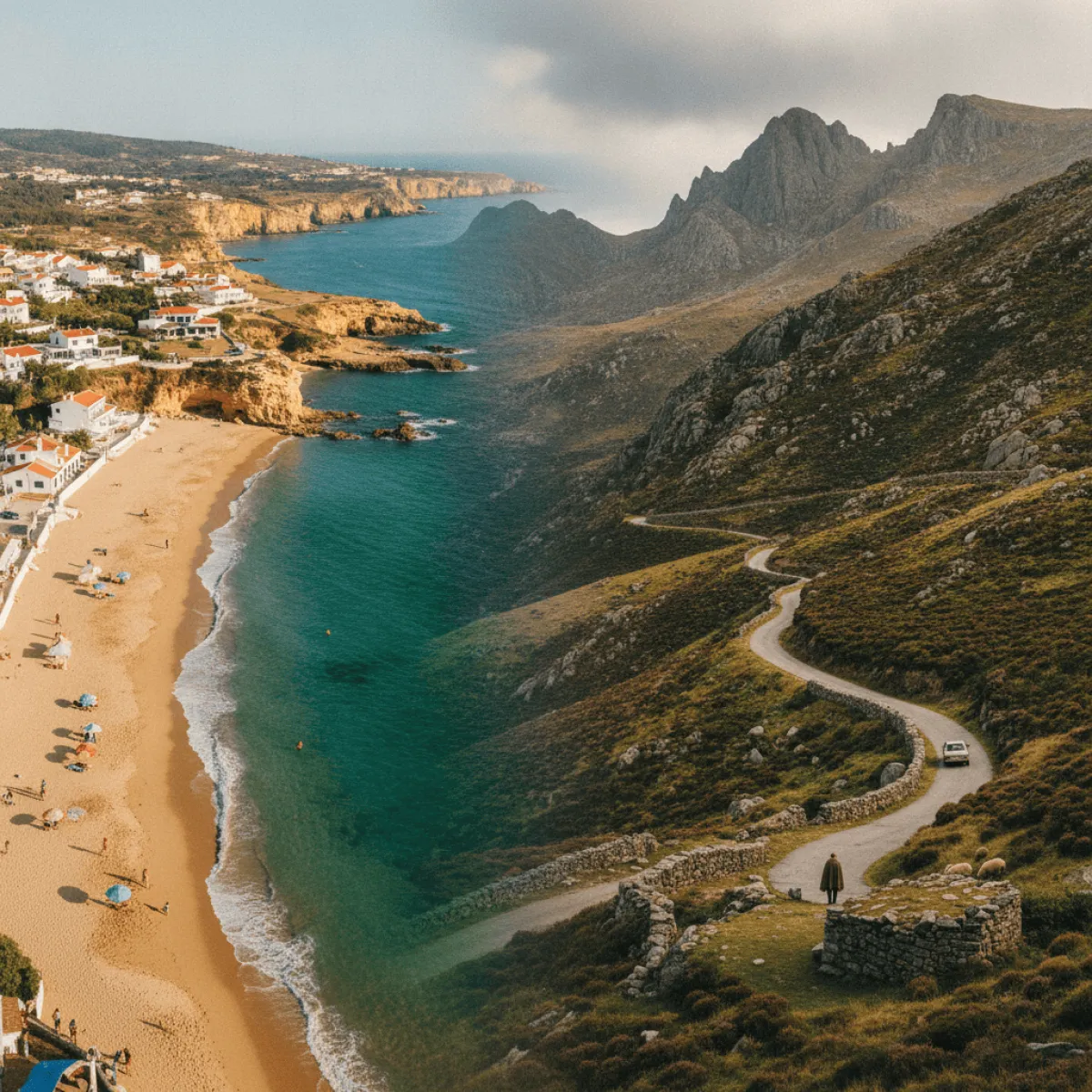
There is a moment every August, usually around three in the afternoon, when Albufeira stops being a town and turns into a sauna with sun loungers. The air doesn't move, the tarmac on Avenida da Liberdade gives back all the heat it soaked up that morning, and any decent patch of shade has been claimed for hours. That is exactly when the most irrational, most correct idea of the summer shows up: get in the car and drive roughly four and a half hours, about 480 kilometres, to a place where the river water actually hurts with cold. It's called Serra da Estrela, and yes, driving that far in the middle of a beach holiday sounds unhinged. It is also, without exaggeration, one of the smartest calls you can make once the sea stops cooling anyone down.
It's not the same water. The Atlantic off Albufeira in August sits around 21 or 22 degrees, pleasant, almost warm by late afternoon. The water coming down from Torre, the highest point in mainland Portugal at 1,993 metres, is born ice cold and stays that way for kilometres. Stepping into a natural pool in Serra da Estrela in peak summer is a proper shock, the good kind: your whole body tightens, your breath catches for a second, and then comes that fully-awake feeling no Algarve hotel pool can fake.
One last day in Albufeira before you go
Nobody should drive five hours on an empty stomach or with the car boot a mess. If you're leaving before dawn, it's worth closing out the Algarve chapter properly the day before. A proper, unhurried lunch before the road makes a real difference, and Restaurant Atrium is the right call for it, a meal that won't leave anyone driving hungry or stuffed. If you still haven't really seen the town you're about to trade for granite and pine trees for a week, an e-bike ride with Bikesul through Albufeira's cliffs, beaches and old town covers in two hours what would otherwise take an entire day on foot.
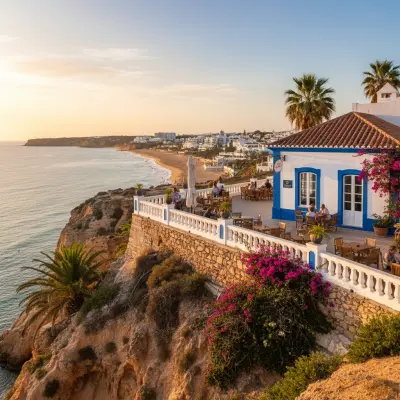
Some people prefer to close their Algarve chapter with their hands in the dough, literally: the Portuguese cooking class at MIMO Algarve teaches you to make at home what usually only shows up on a restaurant terrace, which is useful, because in Serra da Estrela the food changes register entirely, from grilled fish to cured cheese and smoked sausage. And before locking the door behind you, climb up to Miradouro do Pau da Bandeira for one last sunset over the Atlantic before you trade a horizon of water for one of mountains.
The drive itself
No point pretending otherwise: it's a long haul. From the Algarve coast to Manteigas or Seia, count on a solid four and a half to five hours on the road with one coffee stop, most of it on motorway until you hit the mountains of the interior centre. The last stretch, once you're inside Serra da Estrela Natural Park, is where the drive stops being a chore and becomes part of the trip: tight mountain curves, granite outcrops in every direction, and in peak August, a temperature that visibly drops as you climb.
It's worth not doing the whole thing in one sitting. Leave Albufeira early enough and, with a bit of luck and no major detours, you can still get a swim in by mid-afternoon. If you'd rather take it slow, split it over two days and sleep somewhere along the way.
Where the water actually earns the detour
Serra da Estrela doesn't have a river beach on every corner, but the ones it does have are among the best in the country, and it pays to choose carefully because not all of them earn the stop.
Loriga River Beach
This is the only river beach in Portugal set inside a glacial valley, which already tells you plenty about the landscape around it. It sits in the municipality of Seia, holds a Blue Flag, and the clear, cold waters of the Loriga stream form small natural pools and small waterfalls that practically beg for a jump. It's the one I'd send anyone making just one stop: arrive in the morning, before the families shrieking about the cold water take over, and Loriga is at its absolute best.
Poço do Inferno
The name sounds scarier than the place. This waterfall near Manteigas, reached off the road linking the town to the EN232, is one of the most photographed spots in the mountains, and deservedly so. The water drops into a pool ringed by rock and dense vegetation, cold all year round, but in August it's here that you really understand the point of driving all this way from the Algarve: the temperature climbs a good five or six degrees the moment you step out from the tree shade around it.
Valhelhas River Beach
Less known than Loriga, this river beach sits between Manteigas and the motorway access, right on the EN232, which makes it a convenient stop for anyone just passing through. It's smaller, quieter, and usually less crowded even in peak August.
Covão da Ametade
At around 1,420 metres, inside the municipality of Manteigas, this is where the Zêzere glacial valley begins, the same river that's born near Torre. It isn't quite a river beach in the traditional sense, but the clear pools along the river, set against the wide open valley, make this one of the most beautiful spots in the entire range. Go early: by late morning the parking simply runs out.
Practical notes for the trip
- Layers: it can hit 28 degrees in Seia and 14 at Torre on the same day.
- Footwear that can handle wet, slippery rocks; flip flops won't cut it.
- A towel and dry clothes: the water is cold and nobody wants to drive home in a wet swimsuit.
- Some cash for the smaller villages, where not every café takes cards.
What to eat once you're up there
Forget grilled fish for a few days. Up here it's all about Queijo da Serra da Estrela DOP, made from raw ewe's milk from the Bordaleira breed, curdled with thistle flower instead of animal rennet, an old technique that gives the cheese its runny, faintly acidic character right at the point of ripeness, unlike anything else in the country. Try it in Manteigas or Seia, ideally with cornbread and a local red wine. Sabugueiro, the highest village in Portugal, is where you buy it straight from the people who make it, no middlemen involved.
And if you can't get away
Not everyone has five free days in the middle of August to trade the Algarve for Serra da Estrela, and that's fine. If the escape has to wait until next year, the Algarve interior has its own version of quiet: Silves with kids delivers river, castle and shade without leaving the region, a full day away from the coastal noise without spending a cent on tolls. And for anyone curious about the Algarve that never makes the postcards, it's worth reading about local culture in Faro, a town that still moves at its own pace, far from the August rush in Albufeira.
But if you can pull it off, even for three or four days, do it. Coming back to Albufeira with the memory of goosebumps from a swim in the Zêzere or the Loriga stream changes how you experience the rest of the summer. Suddenly the three o'clock heat on the terrace feels manageable, because you now know that a few hundred kilometres away there's water that still hurts with cold in August, and honestly, that's worth more than any hotel pool.
Mentioned Places
Miradouro do Pau da Bandeira
Albufeira
Miradouro Rossio
Albufeira
Miradouro Rua Latino Coelho
Albufeira
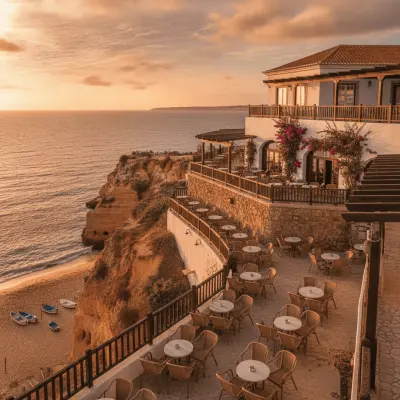
Miradouro do Pau da Bandeira
Albufeira
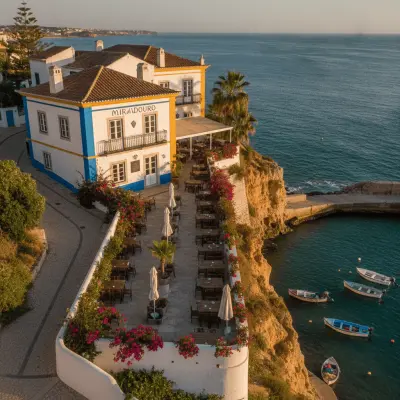
Miradouro Porto De Pesca
Albufeira
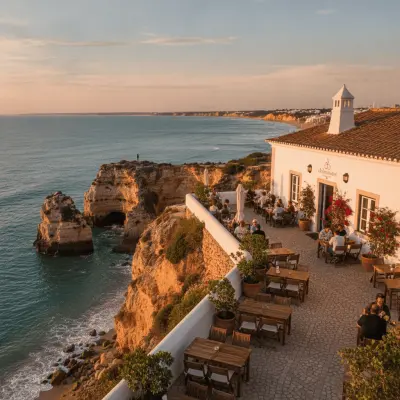
Miradouro da Praia do Castelo
Albufeira
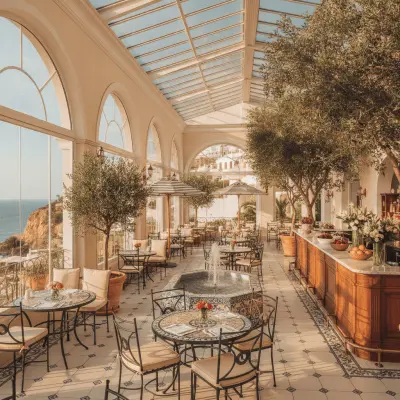
Restaurant Atrium
Albufeira
