Santarém's Regional Dishes: What to Eat and Where
Santarém claims the title of Portugal's gastronomy capital, and between the sopa da pedra, morcela de arroz, and pastéis de feijão, it's hard to argue otherwise. A practical guide to what to eat, when to visit, and what to expect to pay.
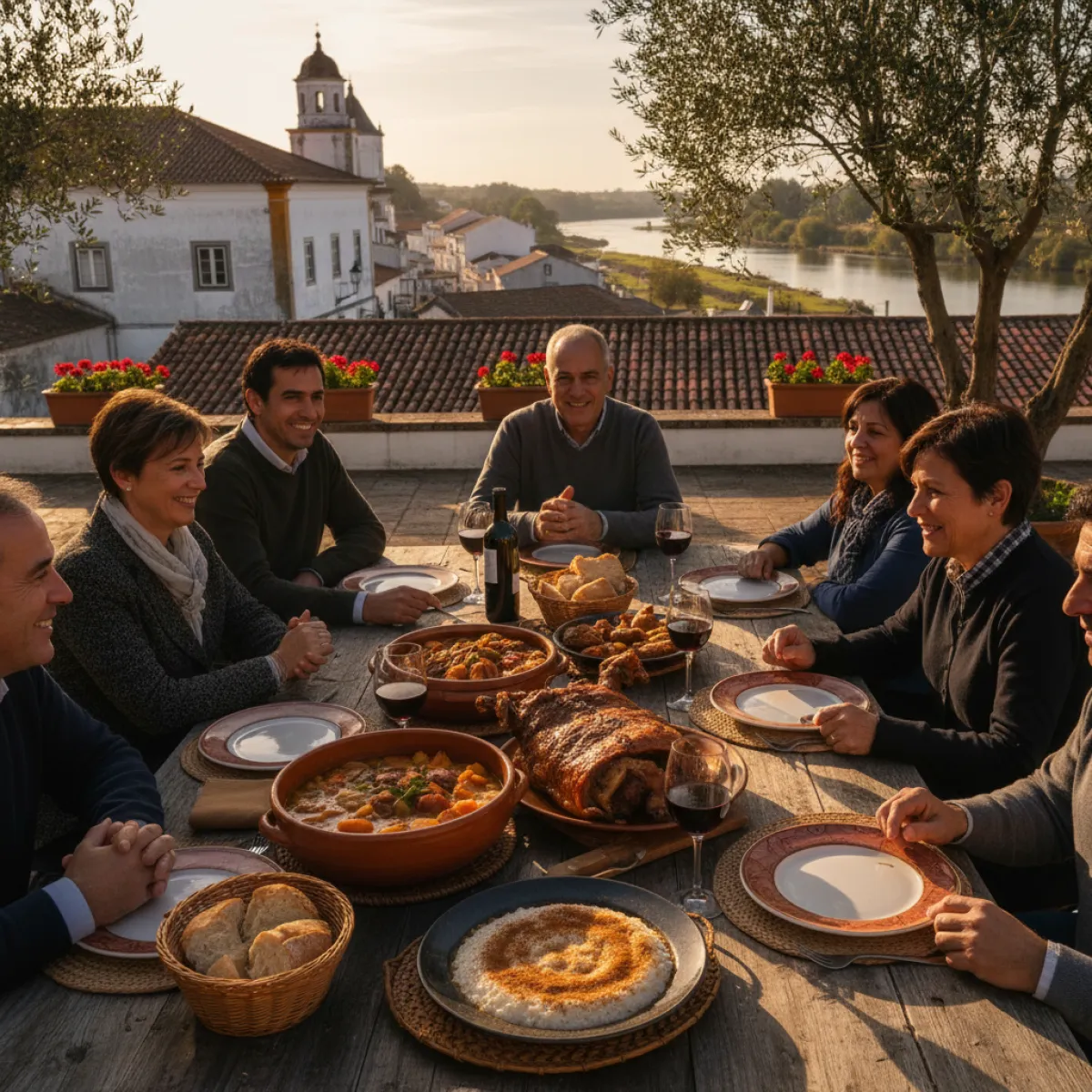
Santarém holds a title that few Portuguese cities can claim without starting an argument: capital of Portuguese gastronomy. And the most annoying part for the competition is that it's actually true. The city sits on a plateau overlooking the Lezíria do Tejo, a vast, fertile floodplain that has fed orchards, rice paddies, vegetable gardens, and livestock for centuries. The cooking here doesn't need tricks. It needs good ingredients and people who know what to do with them.
If you're planning a few days in the area, Santarem Hostel is a practical base in the city center, within walking distance of the restaurants that matter. But before you book a table, you need to know what to order, and what to skip.
Sopa da Pedra: The Dish That Defines the Region
Let's start with the obvious. Sopa da pedra (stone soup) technically belongs to Almeirim, the neighboring town, about fifteen minutes by car. But across the Santarém area, you'll find versions of this dense, rich, almost stew-like soup. Red kidney beans, cured meats (chouriço, morcela, pig's ear), potato, coriander, and yes, a symbolic stone sitting in the bowl. Legend has it that a begging friar convinced villagers to contribute ingredients to a soup that started with nothing but a stone and water.
The legend is charming. The soup is better. A proper sopa da pedra needs to be thick, if the spoon doesn't almost stand up on its own, be suspicious. The coriander should be generous and freshly chopped. The chouriço must be quality, not the industrial kind that tastes of liquid smoke. In Almeirim, entire restaurants are dedicated to this single dish. In Santarém, you'll find it at virtually any self-respecting tasca.
Don't order sopa da pedra in summer. Not because they won't serve it, they will, but because it's a dish for days when the Tagus brings damp and cold. October to March is when it makes sense, and it's also when Santarém hosts the Festival Nacional de Gastronomia, usually in October or November. Check dates locally, as they vary year to year.
Morcela de Arroz: The Sausage That Deserves Your Respect
Portugal has extraordinary cured meats from north to south, but the Ribatejo's morcela de arroz (rice blood sausage) is something else entirely. Don't confuse it with the northern morcela, here, the rice absorbs the blood and spices during cooking, creating a texture that's simultaneously creamy and grainy. Comfort food in the most literal sense.
In Santarém's restaurants, morcela appears as a starter or side dish. Grilled over charcoal is the best version, the skin crackles, the interior stays soft. With a piece of the region's wheat bread and a glass of Tejo red wine, you've got an honest lunch for under ten euros in many places.
A note: if you're the kind of person who flinches at blood sausage, don't force it. But if you're open to the experience, Ribatejo's morcela de arroz is one of the best possible introductions to the genre.
Açorda and the Southern Influence
Santarém sits on the border between Ribatejo and Alentejo, and you can taste it in the cooking. Açorda, that bread soup with garlic, coriander, olive oil, and a poached egg, shows up frequently on menus here. It's not a Santarém dish in the strict sense, but the geographic proximity means you'll find very competent versions.
Good açorda is made with stale bread (never fresh), garlic crushed in a mortar with coarse salt, plenty of good olive oil, and an egg that's barely set. It sounds simple because it is simple, and that's exactly why it's so hard to do well. If the olive oil is bad or the bread is industrial, you'll notice immediately.
Order it as a starter before a meat course. Or, if the heat hits, ask for açorda de marisco, a richer version with shrimp and clams that some regional restaurants serve very well.
Roast Kid and Ribatejo Veal
Ribatejo is cattle country. The Lezíria pastures feed cows and goats, and the meat from here has a recognized quality. Cabrito assado (roast kid), whole or in pieces, with potatoes and garlic, is an Easter classic that you'll find year-round in Santarém's restaurants.
Vitela à Ribatejana also deserves attention: thick-cut steaks, simply grilled with salt, served with tomato rice or homemade fries. No elaborate sauces, no complications. The quality of the meat does all the work.
If you're interested in the food traditions of the Lisbon and Tagus Valley region, our guide to local culture and traditions in Lisbon offers context on how gastronomy intersects with cultural identity across this part of Portugal.
Pastéis de Feijão: The Pastry Nobody Expects
Santarém has its own contribution to Portugal's convent-born pastry tradition, and pastéis de feijão are the star. Yes, they're pastries made with white beans. No, they don't taste like bean stew. The beans are cooked, mashed, and mixed with sugar, almond, and egg yolk, then wrapped in thin puff pastry. The result is a creamy, slightly grainy pastry with a flavor that doesn't resemble anything else.
You'll find them at pastelarias in central Santarém. They're cheap, usually under two euros each, and pair well with an espresso after lunch. Don't try to eat more than two in a row: they're richer than they look.
If regional sweets interest you, our guide to Easter sweets in Mafra shows how the convent pastry tradition extends across the region north of Lisbon.
Arroz Doce and Celestes de Santa Clara
Arroz doce (sweet rice pudding) in Santarém is served generously, entire platters dusted with cinnamon in decorative patterns. It's the same arroz doce eaten across Portugal, but here the tradition is taken seriously. At festivals and fairs, it appears in industrial quantities.
Less well-known are celestes de Santa Clara, a convent sweet made with eggs, sugar, and almond. Not every place has them, but when you find them, try them. They're the kind of dessert that justifies the detour.
The Wine: Tejo, Not Ribatejo
The wine region changed its name, from Ribatejo to Tejo, some years ago, but the wines keep their character: fruity, approachable, well-priced. The reds pair perfectly with the local cooking, and a bottle of Tejo wine at a Santarém restaurant rarely exceeds fifteen euros.
Look for wines made from Castelão (red) and Fernão Pires (white). These are the region's grapes, and they make honest wines, unpretentious but with personality. If you have time for winery visits, there are several in the area, check visiting hours locally.
Where to Eat: Practical Notes
Santarém isn't a big city, and the good restaurants cluster in the historic center, in the upper part of town. Rua Serpa Pinto and the surrounding streets have several options. Avoid restaurants with menus in six languages near the viewpoints, they're tourist traps, same as in any Portuguese city.
Lunch is the main meal in the region. Between 12:30 and 2pm, restaurants fill with locals, good sign. Daily specials usually cost between seven and twelve euros, and almost always include soup, main course, drink, and coffee. It's probably the best value-for-money deal in Portuguese dining.
At dinner, restaurants are quieter, and some close on Sunday evenings or Mondays. Always confirm before you go.
Pairing Food With the Regional Experience
A proper meal in Santarém demands proper digestion. Walking meditation at Quinta Carvalhas is an unexpected but effective way to burn calories and clear your head after a generous Ribatejo lunch. The quinta is in the Santarém area and offers an experience that contrasts nicely with the intensity of the table.
For those wanting to explore the wider region, Sintra is just over an hour's drive away. Our Sintra neighborhood guide helps you plan the day if you want to combine a food-focused visit to Santarém with a side trip to the serra.
When to Go
Santarém is good for eating year-round, but autumn is the perfect season. The Festival Nacional de Gastronomia, usually held between October and November, draws chefs, producers, and visitors from across the country. During the festival, the city transforms into a showcase for Portuguese regional cooking, not just from Ribatejo, but from every region. It's the best time to compare, taste, and decide whether Santarém truly deserves the title of gastronomy capital.
Spoiler: it does.