Porto’s Event Calendar: From São João Chaos to Indie Film
Porto isn’t a city for passive observation; it’s a place to be navigated through sardine smoke and the squeak of plastic hammers. Learn when the city truly wakes up and which weekends to skip if you value your personal space.
The Restless Pulse of a City that Never Sits Still
Porto isn’t a city to be visited; it’s a city to be negotiated. Anyone arriving here expecting a static, silent postcard is in for a loud surprise. The Porto event calendar isn't guided by tourist convenience, but by a very specific pulse that blends religious devotion, academic benders, and a refined taste for obscure cinema and music that nobody’s heard on the radio. If you want to understand Porto, forget the monuments for a second and look at the calendar. It’s there that the city sheds its granite metropolis cloak and shows what’s actually in its blood: an almost pathological capacity for celebration.
February: Fog, Rain, and Fantasporto
February in Porto is for the resilient. The wind blows off the Atlantic with an aggressiveness that makes any umbrella disposable, and the humidity seeps into your bones. But it’s precisely here that Fantasporto happens. Porto’s International Film Festival is an institution. Forget the red carpets of Cannes; here the atmosphere is in the Rivoli Theatre, with people dressed in black, dark circles under their eyes from watching three horror films in a row, and a genuine passion for genre cinema. Fantasporto is the perfect antidote to the grey winter. It’s bizarre, it’s cultish, and it’s deeply Portuense. If you’re in town during this time, buy a day pass, grab a quick ham sandwich on Rua do Bonjardim, and dive into the darkness of the Rivoli. It’s a much more authentic experience than any Douro cruise under drizzling rain.
May: The Academic Chaos of Queima das Fitas
If in February the city belongs to the cinephiles, in May, Porto is taken over by a black tide of capes and gowns. Queima das Fitas (Burning of the Ribbons) isn’t just a student party; it’s a phenomenon that alters traffic, noise levels, and local patience. The highlight is the Cortejo (Parade) on the Tuesday of Queima week. Thousands of students descend from Rua de Camões to the Aliados in floats that are, essentially, mobile nightclubs powered by cheap beer. Is it loud? Yes. Is it chaotic? Absolutely. But there’s a raw energy there that’s hard to ignore. If you hate crowds, this is the day to avoid the city centre. If you want to see the city in its most tribal state, stay in Aliados and try to decipher the war cries of each faculty. For those who prefer something less... alcoholic, this is the ideal moment for a Porto Historic Centre Walking Tour with Living Tours. While the students are busy with their beer, the backstreets of the Cathedral and Miragaia gain a rare quiet that allows you to appreciate the architecture without groups of fifty people blocking the way.
June: The Collective Madness of São João
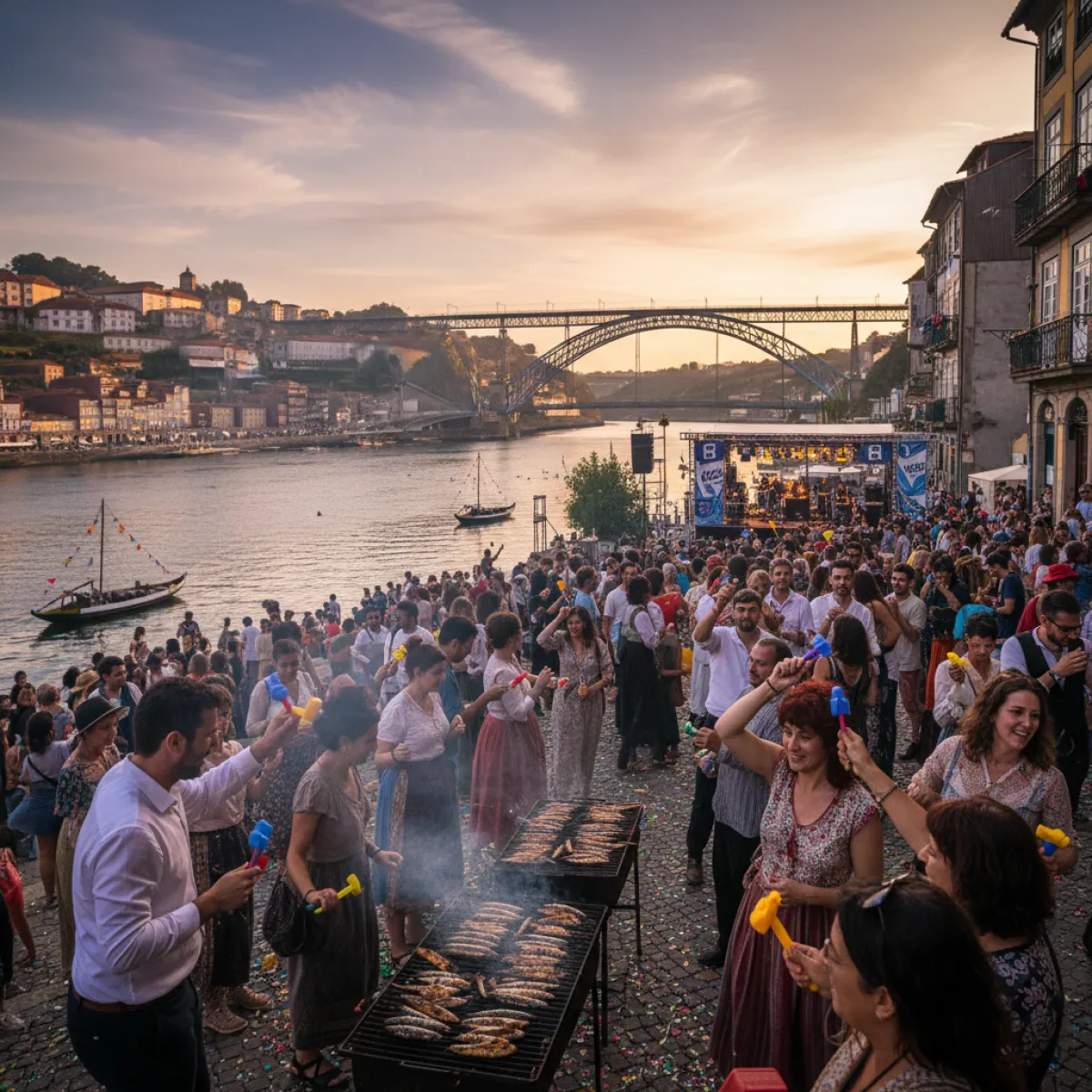
We’ve reached the epicentre. Porto’s São João is, without exaggeration, one of the biggest street parties in Europe, but with a touch of surrealism involving plastic hammers and leeks. On the night of June 23rd to 24th, Porto does not sleep. And I mean it. The smell of grilled sardines and basil dominates every corner, from Fontainhas to Massarelos. The rule is simple: everyone is everyone’s friend and everyone has the right to hit you over the head with a squeaky plastic hammer. If this sounds strange to you, it’s because you’ve never tried to cross the Luís I Bridge on foot at 2 AM, amidst paper balloons rising to the sky and fireworks exploding over the river. It’s controlled chaos at its best. Pro tip: don’t try to have dinner in a conventional restaurant. Go to the neighbourhood associations (colectividades), order a bifana or a plate of sardines, and eat standing up with a plastic cup in hand. That’s where São João happens. The next day, the city wakes up with a collective hangover and a silence only broken by the sound of brooms sweeping up the remains of the revelry.
Primavera Sound: The Cool Side of the City Park
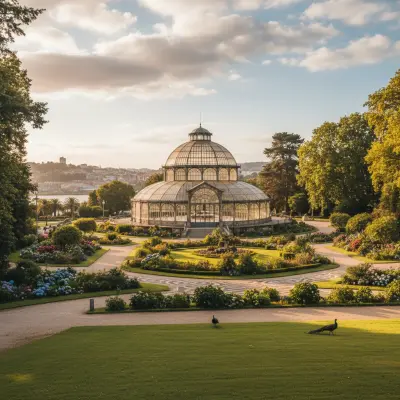
Also in June, but with a totally different vibe, we have Primavera Sound. Forget the mud and the despair of other festivals. Here, the setting is the impeccable lawn of the Parque da Cidade, with the sea right next door. It’s the festival for music lovers who prefer a good white wine to a warm beer. The lineup is always curated with surgical precision, mixing indie legends with the next big things. It’s Porto’s most cosmopolitan event. If São João is raw tradition, Primavera is the Porto that looks outward, modern and sophisticated. And speaking of green spaces, if you need a break from the sonic intensity, the Jardins do Palácio de Cristal are the perfect refuge. They are, in fact, the stage for the Book Fair later in the year, an event I highly recommend for anyone who likes to browse rare editions while chickens and peacocks wander freely across the paths.
September and October: The Calm After the Storm
When the summer tourists begin to vanish, Porto enters a golden phase. It’s harvest time in the Douro, and although the heart of the action is upriver, the city vibrates with the arrival of new wines. It’s the best time to explore the caves in Gaia without having to book three weeks in advance. It’s also the moment when you start looking outside the city. Porto is an excellent base, but the North is vast. If Porto’s event calendar has given you a hunger for more northern culture, check out A Guide to Braga: Portugal's Quietly Radical Northern City to see how religiosity and youth intersect on another scale. Or, if you prefer historical solemnity, A Guide to Guimarães: The City Where Portugal Learned to Be Itself is essential for understanding where all this northern stubbornness came from. To plan these strategic escapes, our guide to the Best Day Trips from Porto is your best ally.
The Verdict: When to Come to Porto?
If you want total party and don’t mind smelling of sardine smoke for three days: June. If you want indie culture and a relaxed vibe: June (but in the City Park). If you want to see the real Porto, stripped of artifice and surrendered to its own melancholy: February. Porto is not a city of half-measures. Choose your poison, accept that you might get a little wet or a hammer on the head, and let yourself go. At the end of the day, there’s always a francesinha waiting to cure all ills.