Porto Rooftops and Terraces: Where to Drink in Summer
Skip the Praça da Ribeira tourist traps and follow the three-level rule: aperitif at the Palácio de Cristal kiosk, dinner in the Baixa, last drink up high. An honest guide to drinking well in Porto from June to September, without paying airport prices.
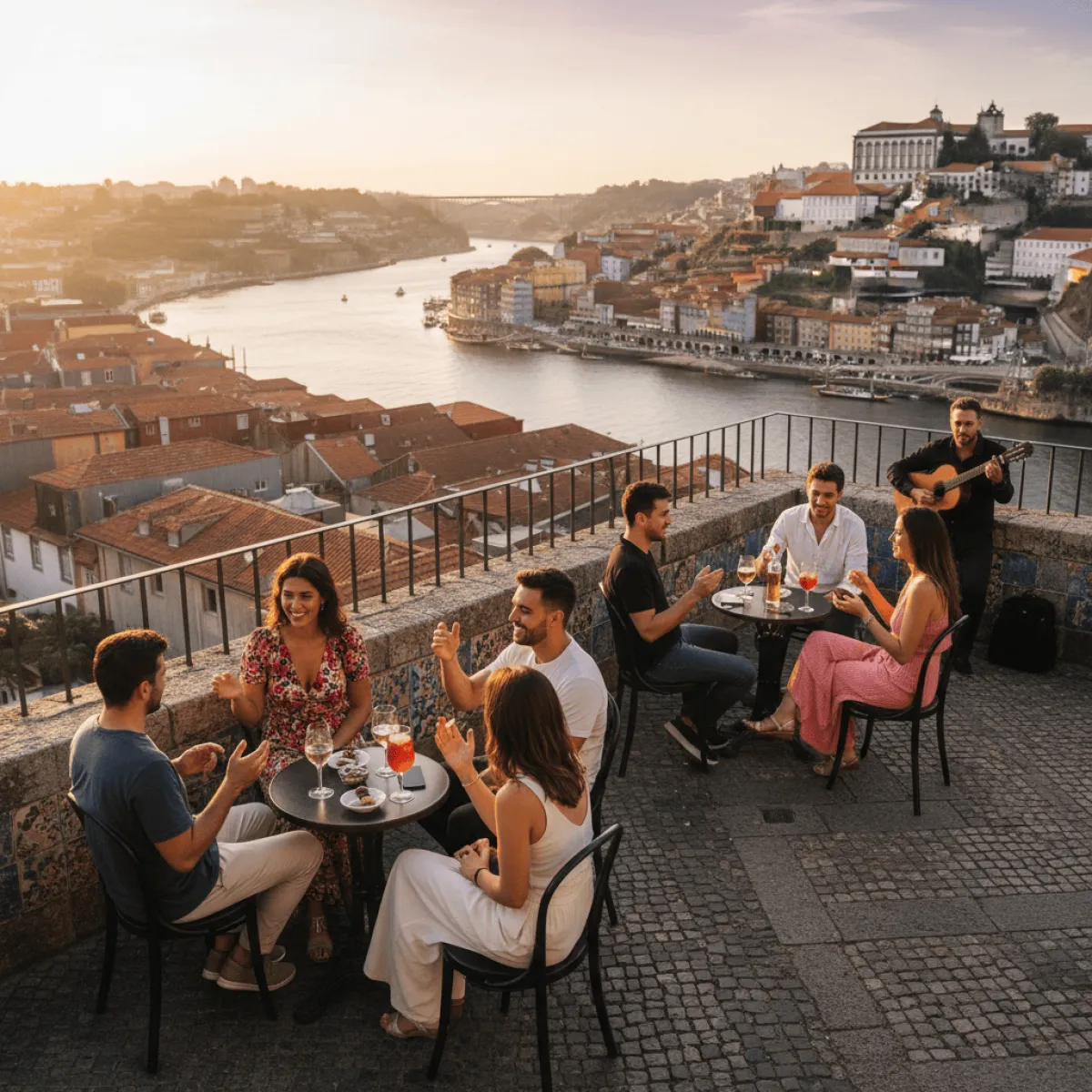
There is a moment, around seven in the evening in July, when Porto changes colour. The granite of the Ribeira warms into an orange that looks painted by an Italian set designer, the Douro stops being a river and becomes a mirror, and the seagulls go silent for exactly fifteen minutes. It is the hour when locals do what they do best: they pick a terrace and stay there until the vinho verde runs out.
The problem is Porto has too many terraces. Many are tourist traps with reheated francesinhas and industrial sangria. Others are genuinely excellent but tucked into corners that Google Maps cannot quite explain. This guide is for people who have neither the time nor the patience to figure it out alone. Skip the terraces on Praça da Ribeira (good view, bad food, airport prices) and come with me.
The three-level rule
Porto is built in vertical layers, and its terraces follow that logic. There are the low ones, by the river, where the heat is humid but the light is cinematic. There are the mid-level ones, in the Baixa, where you drink between Pombaline buildings and tiled façades. And there are the high ones, on rooftops or elevated gardens, where the wind moves and you see the whole city. My summer rule is simple: aperitif up high, dinner mid-level, last drink down by the river. It always works.
Up high: where summer makes sense
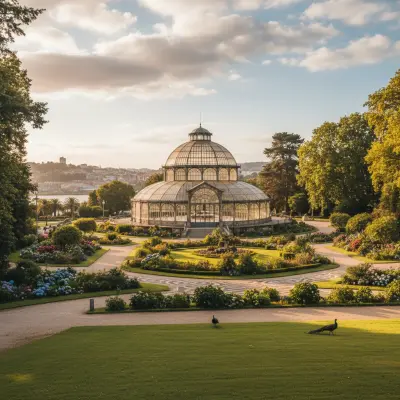
Let us start with the obvious one everybody forgets. The Jardins do Palácio de Cristal are not strictly a terrace, but there is a kiosk hidden among the peacocks (yes, peacocks) that pours chilled vinho verde for under three euros. Find a spot on the wall facing the Douro around 6:30pm. The view stretches from Foz all the way to the Serra do Pilar, and on June and July afternoons there is almost always someone playing classical guitar near the camellia garden. Entry is free, the garden closes around 9pm in summer, and it is the best place in town to start your night for less than the price of a coffee in Lisbon.
If you are doing a walking circuit of the city, this is the kind of stop that changes the whole evening. A Porto Historic Centre Walking Tour with Living Tours often ends near this part of the city, and the smarter guides suggest exactly this kiosk for the final toast.
The detail nobody mentions
The kiosk at Palácio de Cristal does not have its own toilet. Use the pavilion before you settle in. Sounds trivial, but I have watched plenty of tourists sprint down Rua de Dom Manuel II for this exact reason.
Mid-level: the Baixa, without the traps
The Baixa has more terraces per square metre than anywhere else in the city, and most are mediocre. There are, however, exceptions worth defending.
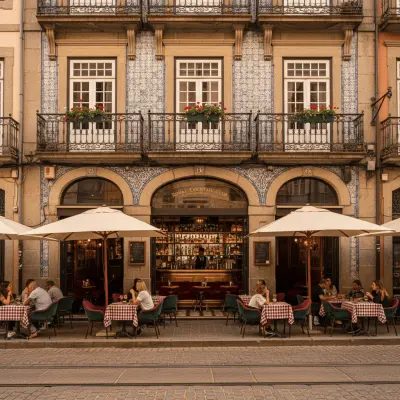
Praça de Carlos Alberto, with those tall plane trees filtering the light like a Japanese blind, is where younger locals sit in the late afternoon. Prices are fair (a small draft beer runs around €1.80, a glass of vinho verde €2.50 to €3.50), and nobody will try to sell you a Ronaldo jersey. Sit facing the statue and order whatever the locals are ordering.
For something more structured, the terrace at Café Guarany on Avenida dos Aliados remains a solid afternoon choice, especially when there is live fado (it happens some evenings, check locally). The view over the Aliados on lit-up nights is worth the slightly higher price.
When hunger enters the equation
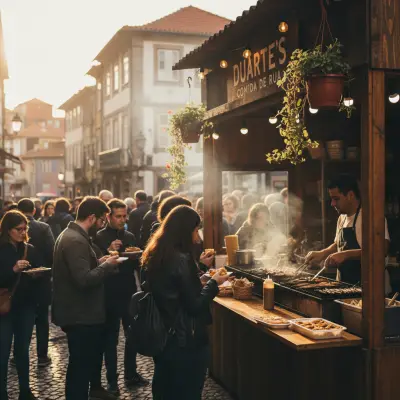
If hunger strikes between drinks, and it always does, there is one mandatory stop. Duarte's Comida de Rua is where I send everyone who asks me for the cliché "a real place where locals eat". The food is rooted Portuguese, generous, and the prices will not force you to cancel tomorrow's dinner. It is not a terrace with a panoramic view, but it is the perfect counterweight to an afternoon spent drinking up high. Go before 8pm if you want to avoid the wait.
Down low: the Ribeira without the trap
The Ribeira is Porto's postcard, which is why it also hosts the worst tourist traps in the city. The rule is simple: never sit at a terrace where the waiter calls you in from the street. If he needs to convince you, the food cannot.
The trick is to walk down Rua dos Mercadores and slip into the side streets. Several small bars have little tables facing the river and serve white port with tonic (the quintessential local summer aperitif) for around €4 or €5. Ask for a Croft Pink or a Niepoort Dry White Port with tonic, an orange slice, plenty of ice. It is the Portuguese answer to the Italian spritz: drier, more elegant, and infinitely cheaper than anything served on the visible terraces.
For a genuinely good glass, cross to the other bank. Vila Nova de Gaia has several port cellars with rooftop terraces where you can taste Vintage and Tawny while the sun drops over the Ribeira. It is a cliché, but it is a cliché that works, particularly on weekdays before 7pm, once the tour buses have gone.
The last drink: cocktails, no excuses
After dinner, Porto splits into two kinds of people: those who head to the noisy terraces around the Clérigos, and those who know there is a much more civilised alternative. For the second group, there is The Royal Cocktail Club. It is not a terrace in the strict sense, but the balcony onto the street and the dim interior make it the right place to end the night with something more interesting than yet another glass of vinho verde.
Order a cocktail built on Portuguese gin (there are now over a hundred distilleries in Portugal, and almost nobody tells you this) or an Old Fashioned with a serious whisky. The menu rotates and the bartenders know what they are doing. Expect to pay between €9 and €14 for a properly made cocktail, which by European standards remains fair value for a place of this calibre.
The view question: where to see what
This is the question everybody asks and few answer honestly. Here is the version without the spin:
- To photograph the Ribeira at sunset: Jardim do Morro in Gaia. Take the funicular or walk across the upper deck of the Ponte Luís I. No terrace, but a kiosk with cold beer.
- To see the entire city: Jardins do Palácio de Cristal, no contest.
- To see the river without seeing other tourists: the Massarelos waterfront. A couple of small café terraces nobody knows about.
- To see the Foz: the Pergola da Foz at sunset. Bring a bottle of vinho verde and plastic cups. The terraces are forgettable, but the seawall is not.
The local summer calendar
June is the month of the popular saints. São João, on the night of 23 to 24 June, is the biggest party of the year in Porto, and on that night every terrace is packed, every price rises, and the city literally burns with street bonfires. Go, but do not expect free tables, peace, or silence.
July and August are the fullest and hottest months, but nights rarely climb above 24°C. September remains the locals' best-kept advantage: perfect temperatures, terraces with room, prices a touch lower. If you can choose when to come, choose September.
To stretch the itinerary
If Porto wears you out (it happens to everyone by day three), there are obvious escapes. The guide on the best day trips from Porto covers the usual options and a few less obvious ones. My own pick in summer is almost always Braga, 50 minutes by train, with its own terraces that justify the detour. If you happen to be travelling in March or April next year, the Holy Week in Braga 2026 guide is worth reading too: it is one of the most intense experiences you can have in northern Portugal.
Honest logistics
Porto's metro runs until about 1am, taxis and Bolts are abundant even at 3am, and a typical ride from the centre to Foz runs €8 to €12. You do not need to book a table at almost any of the terraces mentioned, with the exception of the port cellars in Gaia for formal tastings.
Wear comfortable shoes. Porto is a vertical city, and even the best terrace involves an uphill or downhill that nobody warns you about. Bring a light layer for after 10pm, even in August, because the Atlantic wind pushes up the Douro and drops the temperature in minutes. And please, do not order sangria. Locals do not order sangria. They order vinho verde, white port with tonic, or a cold beer. Do the same and the terrace will treat you better.
Summer in Porto is not seen from inside an air-conditioned restaurant. It is seen from a terrace stool with a chilled glass in your hand, the granite still warm from the day under your feet, and that light that only exists between seven and nine at night. Pick your spot carefully. It makes all the difference.