Porto Moniz: Where the Light Hits Right for Photos
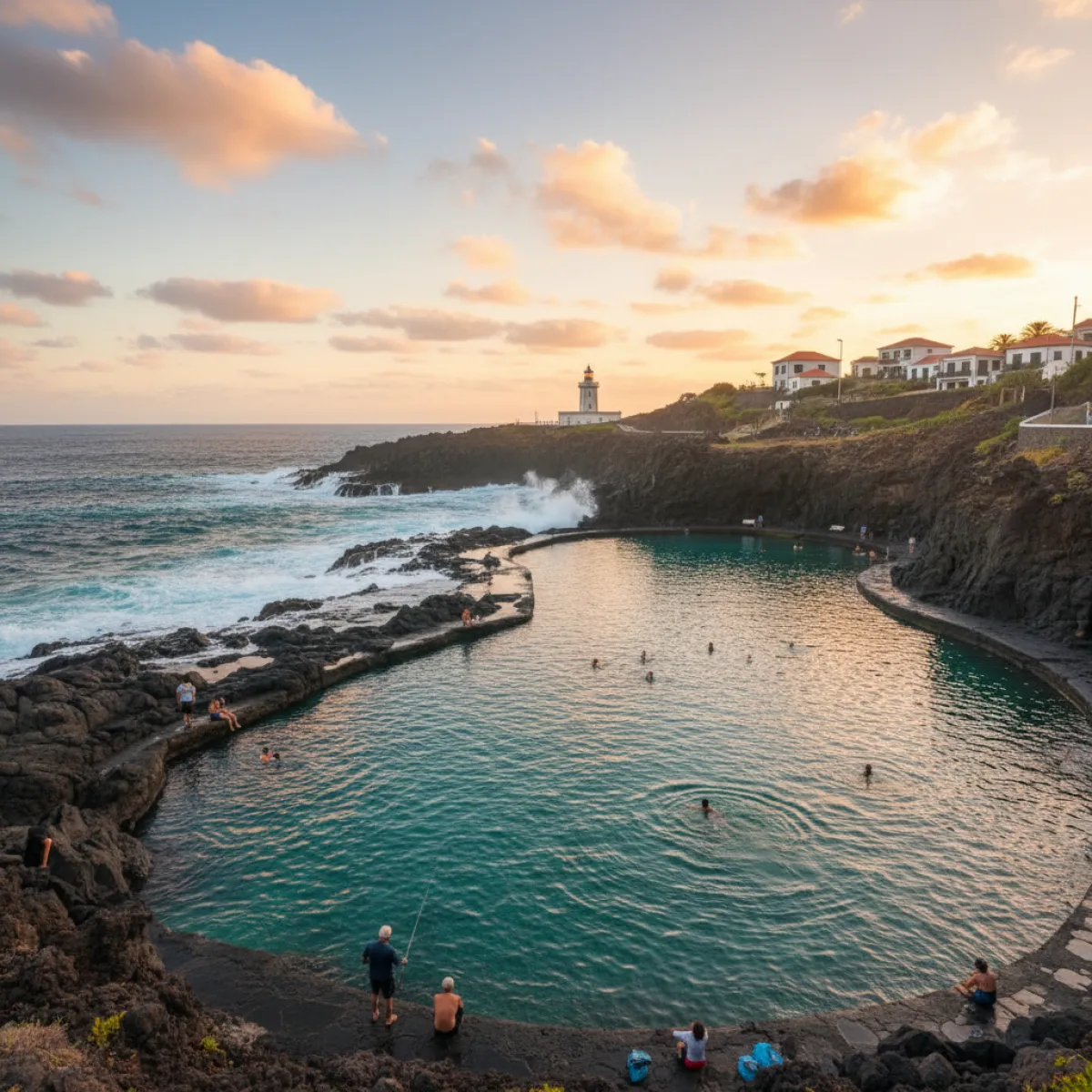
In the morning, sunlight turns Porto Moniz's natural pools into gold against black basalt. At sunset, Ponta do Tristão is the only north coast spot where the sun drops directly into the Atlantic. Knowing when to be at each viewpoint makes all the difference.
Madeira's north coast doesn't reward lazy photographers. The sun rises behind mountains, vanishes behind ridges early, and in between there are windows of light that turn wet basalt into gold. Porto Moniz, at the island's far northwest corner, packs more viewpoints per square kilometre than any other municipality on the island. But having a viewpoint isn't the same as getting a good photograph. The difference comes down to knowing when to show up.
Miradouro da Santa: the postcard that actually delivers
Driving up the ER101 toward Santa do Porto Moniz, there's a viewpoint that appears on half the postcards sold on the island. Miradouro da Santa sits right beside the road, with easy parking and full accessibility. From here you see everything: the natural pools below, the volcanic coastline, and Ilhéu Mole rising from the Atlantic as if it were placed there purely for compositional purposes.
The question is timing. Between 8am and 10am, the sun illuminates the front of the pools and the ocean turns that deep blue that looks good on any camera. At noon, forget it: the light goes harsh, shadows disappear, and everything looks flat. By late afternoon the sun has already ducked behind the mountains, and the viewpoint falls into shade well before actual sunset. Morning, then. No debate.
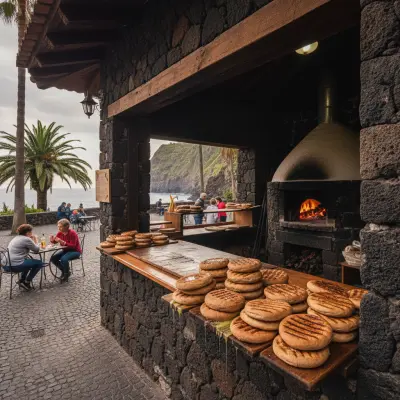
If you're already up at dawn, head down into the village afterwards for breakfast. There are cafés open early near the pools, and Porto Moniz at 9am is the opposite of the tourist chaos at 2pm. For a proper lunch, Bolo do Caco delivers the house specialty that gives it its name: the garlic-rubbed flatbread that in Madeira is practically a religious experience.
The natural pools: shoot from above, not from inside
Everyone photographs the Porto Moniz pools. Almost nobody photographs them well. The classic mistake is walking down to water level and shooting at eye height. The result is a flat image that conveys neither the scale of the volcanic formations nor the contrast between black rock and ocean.
The best angle on the pools is from above: the elevated walkway near the Madeira Aquarium offers a generous perspective that reveals the organic pattern of the pools carved into the rock. The ideal light is the same as for Santa: early morning, when the sun is still low and raking, creating shadows that define the basalt texture. When the tide is coming in, waves breaking against the outer walls create white foam that works particularly well with long exposures if you have a tripod.
After the photography session, if you want something more intense than contemplation, consider canyoning at Ribeira da Laje. It's not for everyone, but it's Porto Moniz seen from an angle no viewpoint can offer: from inside the ravines, with water crashing over you.
Véu da Noiva: the waterfall worth the detour
Technically, the Véu da Noiva viewpoint sits in the parish of Seixal, but it belongs to Porto Moniz municipality and is an obligatory stop for anyone taking the old road between São Vicente and Seixal. The Véu da Noiva (Bride's Veil) waterfall drops from a cliff straight into the sea, and the name isn't an exaggeration: the veil of water is narrow, tall, and theatrical.
The viewing platform is accessible, parking is free, and there's even a souvenir shop with toilets. No excuses for not stopping. But there's one rule for photography: go in the morning. Sunlight hits the waterfall and cliff face directly in the early hours. After midday, mountain shadows cover the cascade and you lose all contrast. Arrive at 7:30am on a spring morning and you'll have low-angle sun illuminating water against green rock, with virtually no one around.
The waterfall is most impressive in winter and spring, when rain feeds the Ribeira de João Delgado. In summer it can shrink to a trickle. Check conditions before making a dedicated trip.
Ponta do Tristão: sunset without the audience
Here's the one worth the effort. Ponta do Tristão is the northernmost point of the entire island of Madeira, and unlike the paved, railed viewpoints in the south, this one is completely wild. No barriers, no pavement, no café with a terrace. Just grass, earth, and a sheer drop into the Atlantic.
Because it sits at the far northwest, Ponta do Tristão has an orientation that most north coast viewpoints lack: you can actually watch the sun set over open ocean. On the north coast, the sun typically disappears behind mountains before touching the horizon. Not here. The sun drops directly into the sea, and in summer that moment happens around 8:30pm, with golden hour starting at 7pm.
Access requires some care. The narrow road to the point is drivable, but the last stretch is on foot along an unmarked trail. Wear shoes with grip, leave the flip-flops behind. And respect the wind, which at this corner of the island can be strong and sudden. The reward is a sunset with dramatic cliffs, without a single selfie stick in frame.
Miradouro da Ponta da Ladeira: the sunset alternative
If Ponta do Tristão sounds too adventurous, Miradouro da Ponta da Ladeira is the more accessible version of the same concept. Located on the northwest coast, it offers sweeping views over green cliffs and terraced slopes falling to the sea. The sunset from here is spectacular on clear days, with the sun painting clouds orange while the green vegetation progressively darkens.
The difference from Ponta do Tristão is that this viewpoint is easier to reach and has proper parking. It's the ideal compromise between accessibility and visual impact. If you only have time for one sunset in Porto Moniz, choose between the adventure of Ponta do Tristão and the convenience of Ponta da Ladeira based on your appetite for walking back to the car in the dark.
Miradouro da Santinha: the quieter alternative
Further down the ER101, before reaching Miradouro da Santa, there's Miradouro da Santinha. It's more understated, marked by a religious figure of Nossa Senhora dos Caminhos, and offers a slightly different perspective on Porto Moniz and Ilhéu Mole. The advantage? Fewer people. The disadvantage? The view is somewhat more enclosed by lateral vegetation.
For photography, Santinha works better as a complement to Santa than as a replacement. Hit both on the same morning, compare angles, and decide which composition you prefer. They're five minutes apart by car.
What to do between the good light
Porto Moniz isn't only viewpoints. Between the morning session and sunset, there are hours to fill. If you like walking, Madeira is famous for its levada trails, and our guide to Funchal's levadas is a solid starting point for planning routes on the island. If you'd rather explore the north coast at a slower pace, Santana is an hour's drive and worth at least half a day: our 24 hours in Santana itinerary has concrete suggestions for anyone who doesn't want to rush. And if you're looking for something to take home, Santana's craft scene goes well beyond the usual fridge magnets.
Practical tips for photographers in Porto Moniz
- Bring protection for your gear. Sea mist and wave spray are constant on the north coast. A microfibre lens cloth is essential, not optional.
- Morning fog is common, especially at viewpoint altitudes. If it's socked in at 7am, wait: it often clears within 30 to 45 minutes once the sun warms the air.
- The old road viewpoints (like Véu da Noiva) are the most photogenic, but the new road is faster. Plan the outbound trip on the old road and the return on the new one, or vice versa.
- For sunsets at Ponta do Tristão, arrive at least 45 minutes early. You'll want time to find the best angle without rushing.
- If it rains, and on the north coast it's not rare, waterfalls become more dramatic and clouds create compositions that clean blue sky never will. Don't put the camera away.
Porto Moniz is one of those places where the light does the heavy lifting, but only if you're there at the right time. The difference between a forgettable snapshot and a photograph that actually impresses is, almost always, having woken up earlier than most tourists.