Porto in the Rain: Best Museums and Wine Cellars
When the north wind blows and the riverside darkens, Porto reveals its most authentic side within granite walls and centuries-old cellars. Discover how to trade the street puddles for the silence of Serralves and the warmth of a 30-year-old Tawny in Gaia.
Porto and the Art of Surviving the 'Nortada'
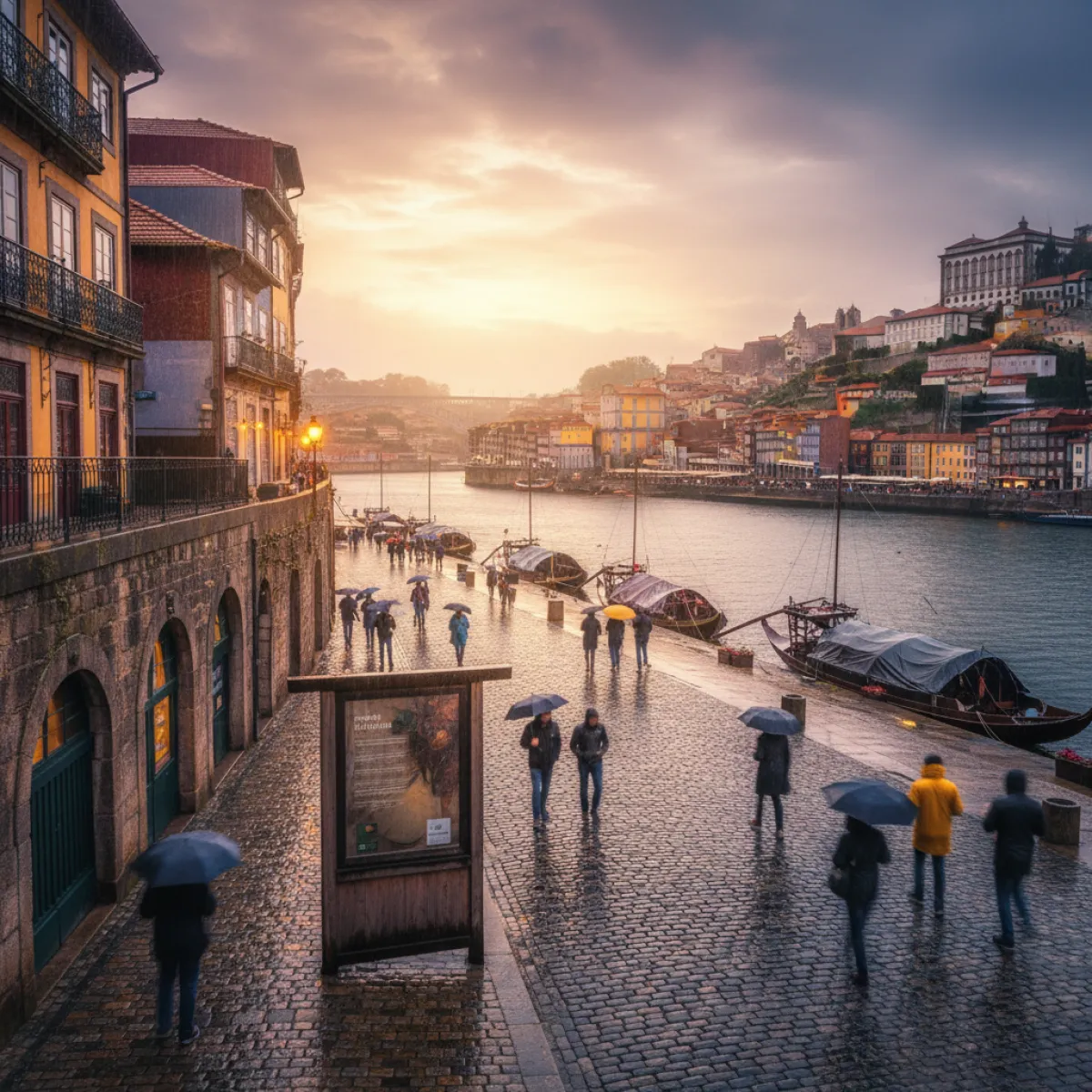
They say Porto is a city of work, but on rainy days, it is a city of refuge. When the 'nortada', that fierce north wind, blows in from the Atlantic and heavy grey clouds settle over the Douro, the Ribeira waterfront loses its postcard shimmer and becomes a stage for local resilience. If you bought one of those five-euro umbrellas from a street vendor near São Bento Station, let me disabuse you of any hope: its life expectancy is approximately three minutes before the wind turns it into a useless wire sculpture. In Porto, rain isn't an invitation to stay in your hotel; it’s the perfect excuse to step inside the buildings where the city’s true density is hidden.
Forget your plans for a Porto Historic Centre Walking Tour with Living Tours if the puddles on Rua das Flores already look like small lakes. Save the outdoor wandering for when the sun decides to grace us with its presence and focus on what Porto does best behind closed doors: museums that are more than just repositories of objects, and wine cellars where time isn't measured in hours, but in decades of oak and oxidation.
Serralves: Where Siza’s Minimalism Meets the Water
Start your day at the Serralves Foundation. If it’s truly pouring, the park, usually the star of the show, becomes an exercise in patience. However, it’s on these days that the Contemporary Art Museum, designed by Pritzker-winner Álvaro Siza Vieira, shines with a different intensity. The northern light, filtered through thick clouds and Siza’s signature skylights, gives the white walls and sharp angles a depth that direct sunlight often flattens. Don’t try to understand everything at once; walk through the galleries and let the museum’s silence drown out the sound of the rain outside.
A ticket costs around €20 (covering the museum, the Art Deco house, and the park), which might seem steep until you step into the Casa de Serralves. This pink building is arguably the most extraordinary example of Art Deco in Portugal. If the rain breaks for ten minutes, make a run for the Jardins do Palácio de Cristal, just a short bus ride or Uber away. Even when soaked, these gardens offer views over the Douro that explain why locals refuse to live anywhere else. But don’t linger: the goal here is to stay dry.
Soares dos Reis: The Weight of History and 'The Exiled'
For those who prefer the classical to the contemporary, the Museu Nacional Soares dos Reis is the mandatory destination. Housed in the Palácio dos Carrancas on Rua D. Manuel II, this museum is the antithesis of mass tourism. It is a place of gravitas. The highlight here is the sculpture 'O Desterrado' (The Exiled) by António Soares dos Reis, a work that personifies Portuguese melancholy in a way no guidebook can explain.
Entrance is a modest €5, and unless there’s a major temporary exhibition, you’ll rarely find crowds. It’s the ideal spot to spend two hours observing the paintings of Aurélia de Sousa, one of 19th-century Europe’s most underrated artists, while listening to the constant drumming on the palace windows. It’s a museum that demands time and a certain readiness for silence, something sorely lacking in many of the city’s newer Instagram-bait spots.
The Sacred Ritual: Francesinha as a Defense Mechanism
At lunch, the rain dictates the menu. This is not a day for salads or light petiscos by the river. This is a day for the Francesinha. Forget the endless debates about which one is the best; if you’re near the centre, Café Santiago or Brasão are solid bets. The secret isn’t the meat or the cheese, but the sauce, which must arrive at the table boiling. The Francesinha is Porto’s caloric response to the humidity that seeps into your bones. Pair it with a well-poured 'fino' (yes, in Porto we call it a fino, not an imperial) and ignore the calorie count. You’ll need the energy for the river crossing.
Crossing the Douro: The Pilgrimage to Gaia
Crossing the Luís I Bridge on foot during a rainstorm is either an act of bravery or madness. The smart solution is to take Metro Line D from São Bento to the Jardim do Morro stop. You’ll be in Vila Nova de Gaia in a minute, protected by metal and glass. Gaia is technically a different city, but for any wine lover, it is the sanctuary. The Port wine cellars are the best buildings to be in when the weather outside is miserable: they are cool in summer and cosy in winter, with a scent of old wood and fortified wine that soothes any restless spirit.
The Cellars: Graham’s and the Triumph of History
Avoid the more tourist-heavy cellars right next to the lower deck of the bridge, where lines are long and the experience can feel industrial. Head up the hill (or grab a taxi) to the Graham’s 1890 Lodge. It is one of the few cellars still owned by a single family (the Symingtons), and the quality of the visit reflects that. The lodge is immense, with granite walls that maintain the perfect temperature for the oak vats.
A basic tasting starts at €20, but if you want to truly understand why Port is one of the world’s most complex wines, invest in a flight of aged Tawnies. Sipping a 20 or 30-year-old Tawny while looking out the window at the mist covering the Porto skyline is one of the most authentic experiences you can have. It’s here that you realise Port isn't just a drink; it’s the result of centuries of patience and a constant struggle against the elements.
The Escape Hatch: When the Rain Won't Quit
Sometimes, Porto decides it doesn't want to stop raining for three days straight. If claustrophobia starts to set in, use the city’s excellent rail network. Checking the Best Day Trips from Porto might give you the inspiration needed for a change of scenery. Often, what is heavy rain in Porto is just a cloudy sky in Braga or Guimarães.
The A Guide to Braga: Portugal's Quietly Radical Northern City is an excellent starting point. Braga has a density of churches and museums per square metre that allows you to hop from door to door without getting too wet. Alternatively, A Guide to Guimarães: The City Where Portugal Learned to Be Itself takes you to the birthplace of the nation, where the Palace of the Dukes of Braganza offers vast halls and historic tapestries that will keep you dry and culturally satisfied.
Practical Tips for Grey Days
- Transport: The Porto Metro is your best friend. São Bento Station is a museum in itself with its tile panels, and it’s the perfect starting point for any direction.
- Footwear: Porto is a city of inclines. Non-slip shoes are mandatory. The wet granite of the pavements turns into an ice rink for anyone wearing leather soles.
- Reservations: On rainy days, everyone has the same idea. Book your cellar tours and restaurants at least 24 hours in advance.
- Average Cost: A day of museums and cellars, including a decent Francesinha and transport, will run you about €60 to €80 per person.
Porto doesn't need the sun to be interesting. In fact, some argue the city only reveals its true face when it is grey, melancholic, and covered by the fog rising from the river. It’s a city that prides itself on its endurance. So, close that useless umbrella, step into the first cellar you find, and let Porto tell you its stories through the glass of a Port wine.