Portimão Beyond Praia da Rocha: Port and Canneries
Forget Avenida Tomás Cabreira for an hour. Portimão is a port city with thirty former canneries, a municipal museum that rivals any other in the Algarve, and serious kitchens far from the cruise circuit. An honest guide for travellers who want more than the beach.
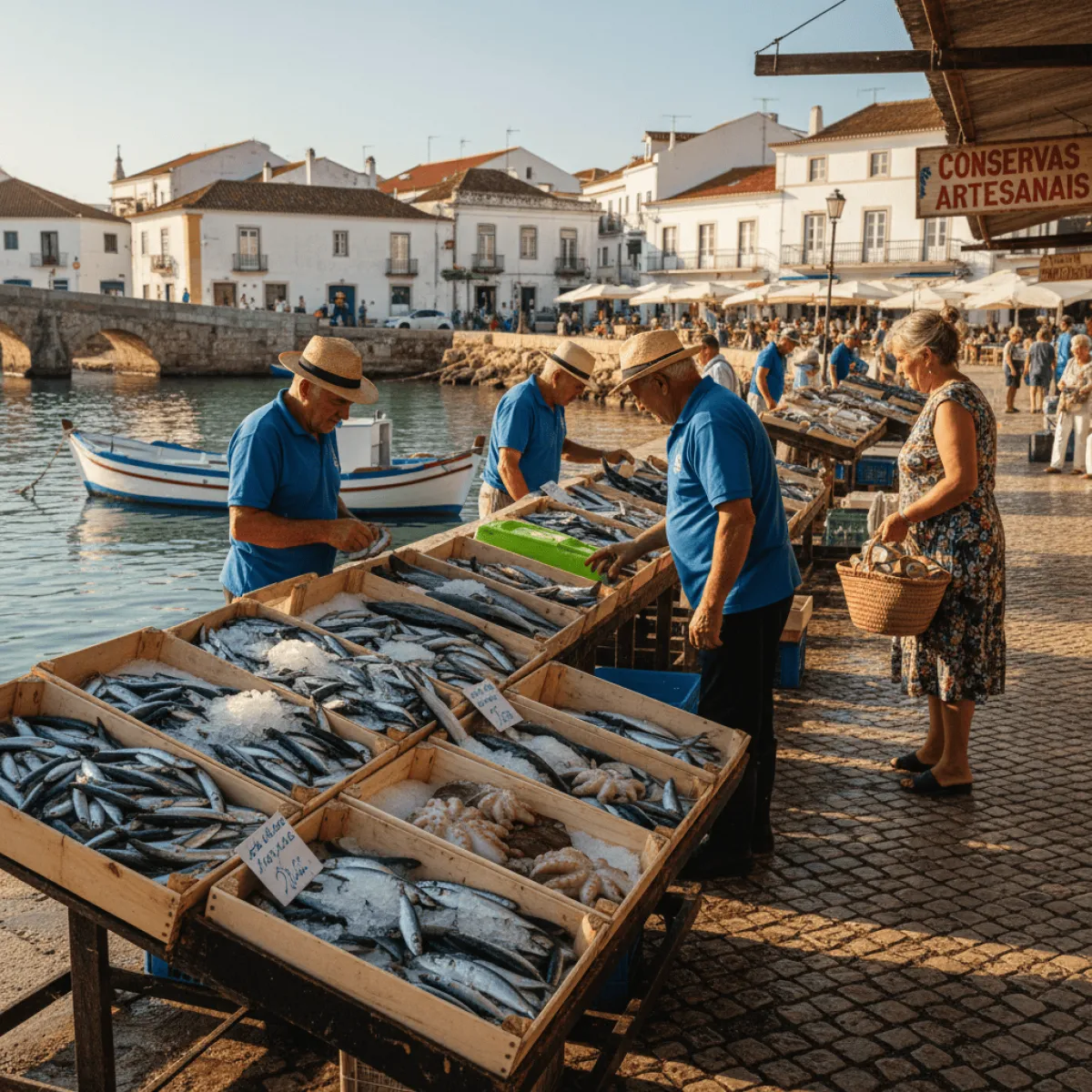
At six-thirty in the morning at Portimão's fishing dock, the smell is not romantic. It's iodine, diesel, ice melting over blue plastic crates, and the sweat of men who've been awake since three. The trawlers come in from the night and unload mackerel, sardines, octopus, cuttlefish. A skinny cat waits next to a crate of mackerel sliding off the quay. This is the Portimão the Praia da Rocha buses never see, and it's exactly where the city starts to make sense.
Praia da Rocha has its merits. It has the ochre cliffs, the expensive cocktail bars, and that view that justifies coming to the Algarve once in a lifetime. But if you stay up there on Avenida Tomás Cabreira, you'll go home convinced Portimão is a resort. It isn't. Portimão is a port city that, for nearly a century, fed half of Europe with canned sardines, and that history is still written on the walls, in the alleys, and on the plates of the restaurants that know what they're doing.
The Cannery City: A History of Smell
Between 1880 and 1980, Portimão was Portugal's canning capital. There were more than thirty factories operating simultaneously at the peak in the 1950s. Women from neighbouring villages walked to work in shifts that started when the fish arrived and ended when the fish ran out. They were paid per case canned. They smelled of sardines for weeks after leaving the factory, and the children played at the workshop doors opening bottle caps with their teeth.
The last major factory, Feu Hermanos, closed in 1988. Today the building is the Museu de Portimão, and it's probably the best municipal museum in the Algarve, with no close rival. Entry is 3 euros (free on Sunday mornings, check locally), open Tuesday through Sunday. Allow two hours minimum. The permanent exhibition shows the original production lines, the autoclaves, the sardine-heading tables, and includes video interviews with former workers who still live in the streets of Hortinha and Pé da Cruz. It's oral history, unfiltered, and some of the women laugh recounting episodes that could fuel a film. Leave through the terrace over the Arade river. Look at the port that paid for all of this.
Where to Find the Real City
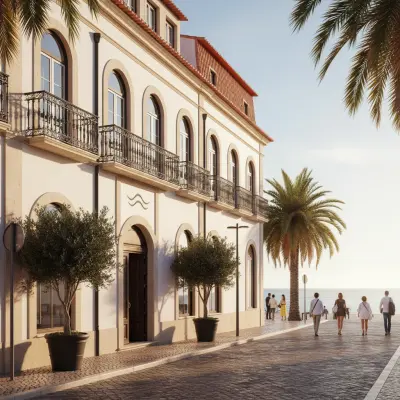
To understand Portimão away from the Rocha, start at Praça Manuel Teixeira Gomes in the historic centre. From here Rua Direita stretches out, with the prettiest facades in the city, some early twentieth-century azulejos, and two or three taverns where lunch is better than dinner. The Igreja Matriz, with the Manueline portal that survived the 1755 earthquake, is a five-minute walk. It's not spectacular, but it's honest.
Then walk down to the riverside, before the new marina. It's here, by the old stone steps and the converted warehouses, that you can still see the industrial bones of old Portimão. Walk along the quay. Cross paths with fishermen mending nets, vendors of clay cataplana pans at the shop doors, and confused tourists trying to figure out why their river cruise is half an hour late.
Eating Like Someone Who Knows
Portimão's grilled sardine is famous for good reason. In July and August, any grill house near the dock serves sardines that were in seawater four hours ago, with Alentejo bread and a pepper salad. The popular classics are the houses on the streets parallel to the old riverside zone. Expect to pay between 12 and 18 euros per portion, depending on the hour and the place, and nobody takes reservations, so arrive before 1pm or after 2:30pm.
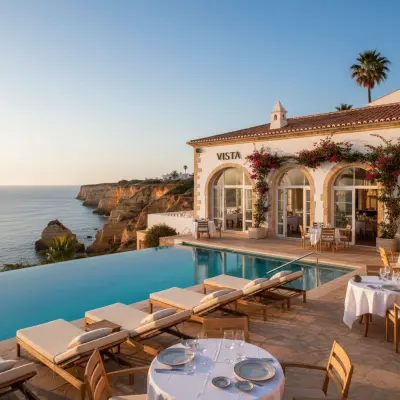
But Portimão now has a more ambitious dining scene than it lets on. For a serious meal with river views, Vista at the Bela Vista Hotel plays in a different league. It's among the best menus in the Algarve for fine dining without having to drive to Almancil. Book ahead, dinner is expensive, and it's worth it if you're marking a special date.
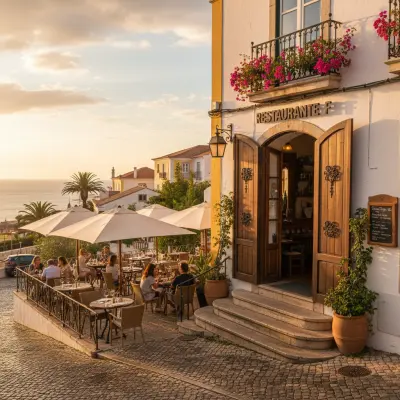
For something more casual but with the same kitchen seriousness, NUMA has an interesting proposition: more relaxed, more contemporary, with dishes built for sharing. It's the kind of place that works for a date dinner without being pretentious. And there's also Restaurante F, which has become one of the year-round addresses for people who actually live here, not just for the high-season crowd.
Want a practical suggestion? To try several places at once in a single afternoon, do the guided Tastes of Portimão experience. It's the most efficient way to get into the right kitchens with someone who knows the owners.
What to Order and When
A few simple rules that will spare you disappointment:
- Grilled sardines: only from June to October. Outside that window, they're frozen or imported. Not worth it.
- Seafood cataplana: it's an Algarvian dish but it's not a Portimão dish specifically. If you want it, order it in Olhão or Alvor. In Portimão, ask instead for octopus rice or caldeirada (fisherman's stew).
- Carapau alimado: the forgotten starter of every Algarvian tavern. Cold mackerel in olive oil and vinegar with onion. Pair with house white wine, painfully cold.
- Conventual sweets: the Algarve has Dom Rodrigos, fig cheeses, and morgados de amêndoa. The best houses are in Lagos, Tavira and Loulé, but a few Portimão bakeries sell them too.
Drink Algarve wine. The region has done extraordinary work over the past fifteen years. The Lagoa whites, the Cataventos reds, the Quinta dos Vales rosés, these are wines that no longer embarrass anyone. Order them instead of the usual Vinho Verde.
The Arade River: Leaving the Quay
Most visitors never look at the Arade river. That's a mistake. The Arade empties out here, separates Portimão from Ferragudo (which sits 800 metres across the water, and is one of the prettiest villages on the coast), and has a rich estuarine ecosystem. There are tourist boats up to Silves; there are more serious boats that enter the estuary at dawn.
If you like cycling, the best way to understand the geography of this area is to do the e-bike route between the Alvor Lagoon and Santa Catarina Fortress. It's about three hours, done in the morning before the heat, and shows you what's hidden behind the coastline. The Alvor Lagoon especially is a protected natural area that alone justifies a trip to the Algarve, and almost nobody visits it.
The Santa Catarina Fortress, at the eastern end of Praia da Rocha, is where the Instagrammers go for the sunset shot. It has its place. But go there at 9am instead of 7pm, with a coffee in one hand, and you'll have the fortress to yourself, with a clean view of the Arade and the commercial port where the fishermen are coming in.
A Day That Makes Sense
A 24-hour itinerary in Portimão that avoids the traps:
Morning
Get to the fishing dock by 8am. Have breakfast at the nearest pastelaria, ask for buttered toast and a galão (milky coffee), spend 3 euros. Walk the quays to the Museu de Portimão, be there when it opens at 10, stay until noon. Leave through the terrace over the Arade, take the photos you need to take.
Lunch
Find a casa de pasto in the Rua João de Deus area or the old centre. Sardines if it's summer, fried mackerel or caldeirada if it's winter, Alentejo bread, house wine, melon for dessert. Total: 20-25 euros. Optional nap.
Afternoon
Take the boat across to Ferragudo, or rent a bike to Alvor Lagoon. Come back to Portimão at the end of the day, climb up to Praia da Rocha from the eastern side, avoid the main avenue, head straight to the Santa Catarina Fortress at sunset. Here a touch of melodrama is allowed, because the sunset in Portimão really is good.
Dinner
Back to the centre. Book at NUMA if you want contemporary cooking, at Restaurante F if you want something more classic done well, or at Vista if you're celebrating. You'll spend between 35 and 90 euros per person with wine, depending on the choice.
Getting There and Where to Stay
Portimão has a train station with direct connections to Lisbon (Alfa Pendular, about 3 hours, from 25 euros if booked ahead) and the rest of the Algarve. The station is a 20-minute walk from the centre or a 5-minute taxi.
For accommodation, there are three zones: Praia da Rocha (resort, convenient for beach holidays), the historic centre (more authentic, better for understanding the city), and the marina area (intermediate, with river views). I recommend the centre if you're in Portimão for two or three days and want to understand the place. Rocha if you're here for the beach and nothing else.
June and September are the best months. June still has the sardine festival, September has warm water and falling prices. August is packed, expensive, and chaotic. January and February are silent, some restaurants close, but the air is clean and the light is the best the Algarve offers.
If You Have More Time in the Algarve
Portimão is an excellent base for getting to know the Algarve without falling into the same traps. Silves, 15 km away, is the former Moorish capital with its red sandstone castle, and works very well with families. Have a look at our Silves family guide before you go.
For something more sophisticated and with decent nightlife, Lagos is 20 minutes away and has a fascinating urban structure. Our Lagos neighbourhood guide helps you figure out where to start. And if you want to understand the less touristy, more cultural Algarve, Faro is an hour away and has a life of its own that most visitors never see: our Faro cultural guide shows the way.
Portimão is not a postcard. It's a working city, with a heavy industrial past and a present in transformation. Whoever comes looking for aesthetic symmetry will leave disappointed. Whoever comes looking for a city that still smells of fish, diesel, and grilled sardines at 1pm sharp will leave understanding why the Algarve is still the Algarve, even after so many years of trying to be something else.