Penafiel: Black Pottery and the Wine Worth Packing
Forget the Barcelos rooster magnet. In Penafiel, the good souvenir is a black clay roasting dish pulled from a smoke pit in Galegos da Serra, or a hand-picked bottle of vinho verde from Quinta da Aveleda. An honest guide to taking home something that lasts.
There is a question every traveler eventually asks, usually on the last day, with the suitcase nearly zipped: what do I take home from here? The easy answer is a fridge magnet shaped like a Barcelos rooster that wasn't even made in Barcelos. The right answer, in Penafiel, is dirtier, heavier and infinitely more interesting. It involves clay fired in holes in the ground and wine that tastes of wet granite.
Penafiel doesn't sell itself well. It's a working town in the Tâmega valley, half an hour from Porto, that for centuries lived off two things that fit perfectly into a suitcase: vinho verde and black pottery. If you come looking for the souvenir shops of downtown Porto, you'll leave disappointed. If you come looking for things made by real hands, with a story you tell rather than a barcode you scan, you're in the right place.
Black pottery: the souvenir nobody can steal
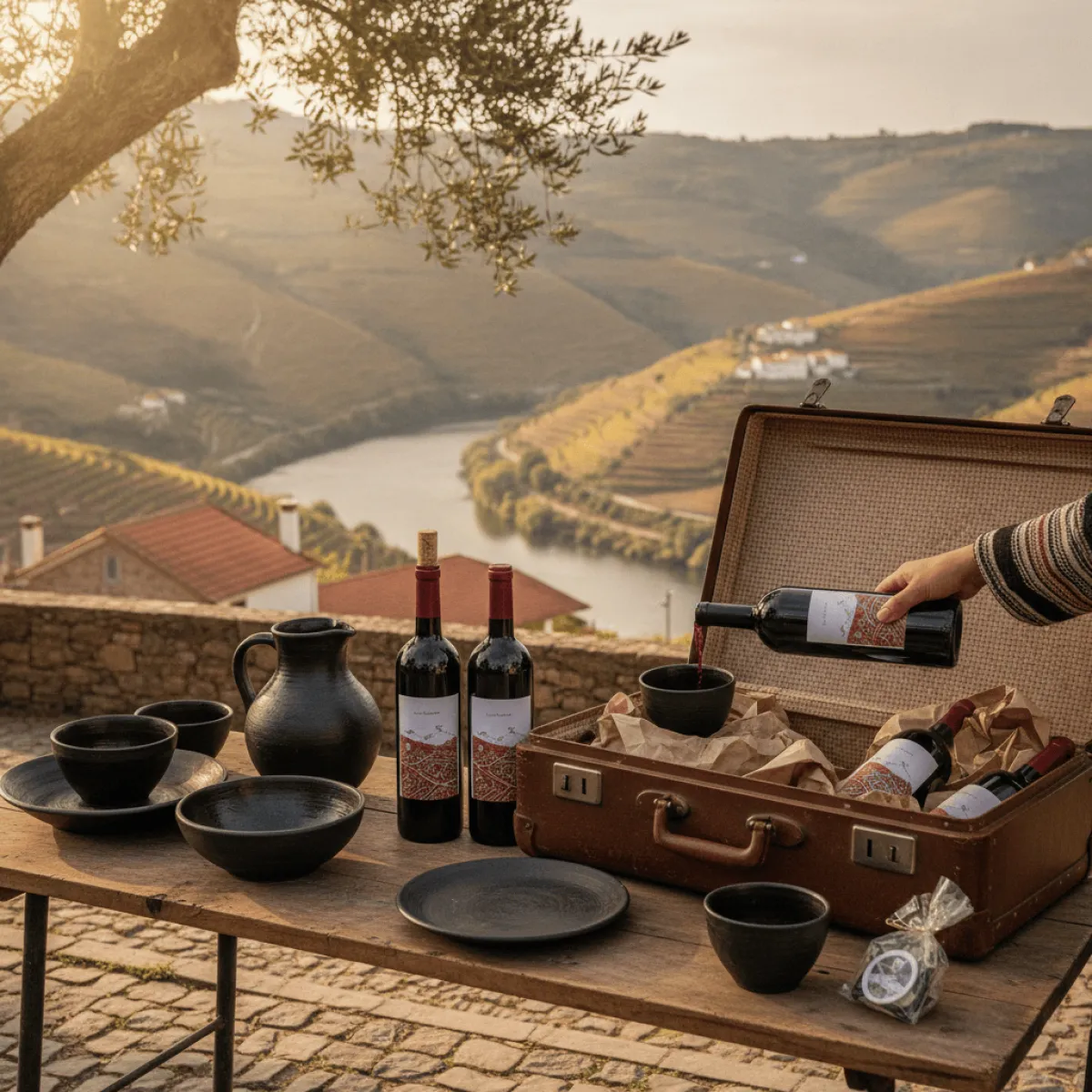
Let's start with the clay, because it's the most authentically Penafiel thing that exists. The tradition of black pottery centers on Galegos da Serra, a parish a few kilometers from the center, where the dark ware has been made for generations. The secret is in the firing: the pieces are baked in a pit in the ground, covered, with no oxygen. That trapped smoke gives the clay its deep, matte black color, which is no paint at all. It's smoke.
What do you buy? Roasting dishes, jugs, bowls, pitchers. Kitchen things, not shelf things. And here's the test that separates a good souvenir from junk: does it actually do anything? A black clay roasting dish from Penafiel goes into your oven and stays there for twenty years, roasting lamb and gaining character with every use. A fridge magnet goes in the bin at the first house move. Buy the clay.
Practical advice: don't buy the first piece you see at a tourist stall. Look for the workshops around Galegos, where the prices are honest (a medium roasting dish runs roughly 15 to 25 euros, but check locally) and where, with luck, you'll see the piece come out of the pit. Always ask whether the piece can take a hot oven and direct flame, because not all of them can. And wrap it well for the journey, because clay cracks when knocked about.
How to know it's the real thing
- The color isn't uniform. Genuine black pottery has variations, lighter and darker patches, because the smoke is never perfectly even.
- The base is rough, not glazed. If it shines like plastic, be suspicious.
- It has weight. Real clay is heavy. If it feels too light, it probably isn't the right article.
The wine that fits in a bottle and a memory
The second great souvenir of Penafiel doesn't hang on a wall: you drink it. And the name to remember is Quinta da Aveleda, the best-known vinho verde house in the region and one of the oldest in the country. The estate has belonged to the same family for generations and produces that fresh, slightly fizzy wine that is the national drink of the Portuguese summer.
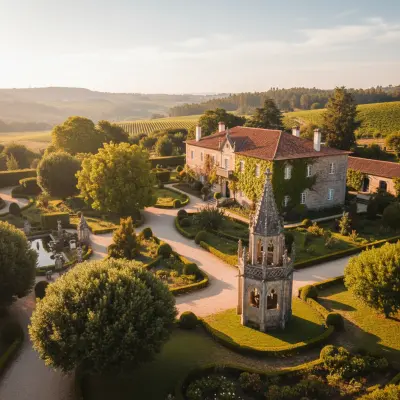
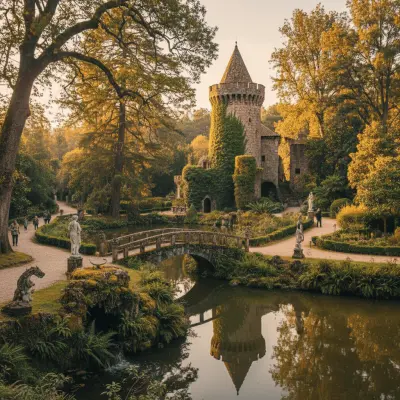
But Aveleda isn't just a supermarket label. It's a place to visit, and perhaps the most surprising one in the whole town. The romantic gardens of Quinta da Aveleda are a 19th-century masterpiece, with giant camellias, fountains, a tea house and even a tower that looks lifted from a fairy tale. Walking in there makes you realize that vinho verde, before it was a cheap bottle, was the luxury of a wealthy family.
What I genuinely recommend is booking the wine and cheese tasting at Quinta da Aveleda. It's the right way to buy wine: taste first, slowly, and take home the bottles you actually liked, not the ones marketing chose for you. Try the fresher whites, but also ask to sample the more serious cuvées, because Aveleda makes wines that age better than vinho verde's reputation suggests. A well-chosen bottle costs little more than that rooster magnet and lasts exactly one memorable dinner.
Timing tip: go in the morning, especially in spring, when the camellias are in bloom and the light in the gardens is at its best. Confirm opening hours and tasting bookings ahead, because the guided visits run at fixed times and fill up on weekends.
Food you carry: the souvenir you eat on the train home
Not every good souvenir lasts. Some are meant to be eaten within the week, and there's nothing wrong with that. In the Minho and the Douro Litoral, the tradition is to take home what the land gives: cured meats, corn bread, honey, jams. In Penafiel you'll find all of it in the traditional shops of the center and, above all, at the markets.
Broa is the most serious case. A dense, dark corn bread with a thick crust that keeps for days and is the perfect partner for that cheese you tasted at Aveleda. Buy from a bakery that still uses a wood-fired oven, ask for the day's broa, and resist the temptation to cut into it before you get home. The region's cured meats, alheiras and smoked chouriços, are another suitcase classic, but check the transport rules if you're flying out of the country.
The general rule is simple: buy food made close to where you're buying it. Honey from a local producer is worth ten times more, as a keepsake and as a flavor, than an industrial jar bought at the airport.
Where to breathe between purchases
Buying souvenirs can't be a military exercise from shop to shop. Penafiel has room to slow down. The Parque da Cidade de Penafiel is the green lung where locals run in the morning and where you sit with a coffee after a morning of haggling over clay. It's large, it's quiet, and it's free, which is the best price there is.
For a better view, climb up to the Jardim do Sameiro, officially Parque Zeferino de Oliveira, a wooded lookout from which the valley spreads out below. It's the spot to understand the geography of everything: the river, the estates, the parishes where the pottery is made. Bring the broa and the cheese and have your picnic there. It's a souvenir you don't keep, but one that stays in your head.
The Romanesque: the souvenir you photograph
Penafiel is one of the anchors of the Route of the Romanesque, the cluster of medieval churches, monasteries and bridges scattered across the Sousa and Tâmega valleys. These low, sturdy stone churches, with their carved portals, have a rough beauty that photographs very well. If your favorite souvenir is a good image, consider the photography tour of Penafiel's Romanesque heritage, which takes you to the best hours of light and the angles you'd never find alone. You'll leave with full memory cards, which is the lightest and cheapest way to carry an entire town.
How to get there and how to make a day of it
Penafiel sits about 35 kilometers from Porto. By car, it's half an hour on the A4. By train, the Douro line stops at Penafiel and it's a pretty ride, especially after Marco de Canaveses, though the station is a little outside the center. For anyone based in Porto, this is one of the best half-day escapes, and it slots neatly into a broader itinerary of day trips from Porto.
The ideal souvenir-hunter's day? Start early at the workshops in Galegos, with the clay still smelling of smoke. Head back to the center for broa and cheese. Have something simple and regional for lunch. In the afternoon, go up to Aveleda for the tasting and the gardens, and finish at Sameiro watching the sun drop over the valley. You'll leave Penafiel with a black clay roasting dish, three hand-picked bottles of vinho verde, a loaf that lasts the week and not a single fridge magnet. That's what bringing something home from a trip should mean.
The golden rule of a good souvenir
If there's one thing to take from this piece, beyond the clay, it's this: a good souvenir isn't proof that you went somewhere. It's a way for the place to keep going with you. The roasting dish from Galegos will be in your kitchen ten years from now, reminding you of the morning you watched the pottery come out of the pit. The bottle from Aveleda will open on a winter dinner and carry you back to the camellia gardens. The photograph of a Romanesque church will live on a wall.
The rooster magnet reminds nobody of anything. Penafiel has no big shops, no big signs, no queue of tourists outside anything. It has clay, wine and bread. And, frankly, it's hard to ask for better.