Monchique in March: High-Altitude Rebirth and the Vernal Equinox in the Algarve
Discover why March is the most intriguing month to visit the Monchique mountains. A guide on how to dress for the mountain microclimate, where to find the best traditional gastronomy, and how to experience the awakening of spring far from the coastal crowds.
The Mountain Awakening: Why Monchique in March
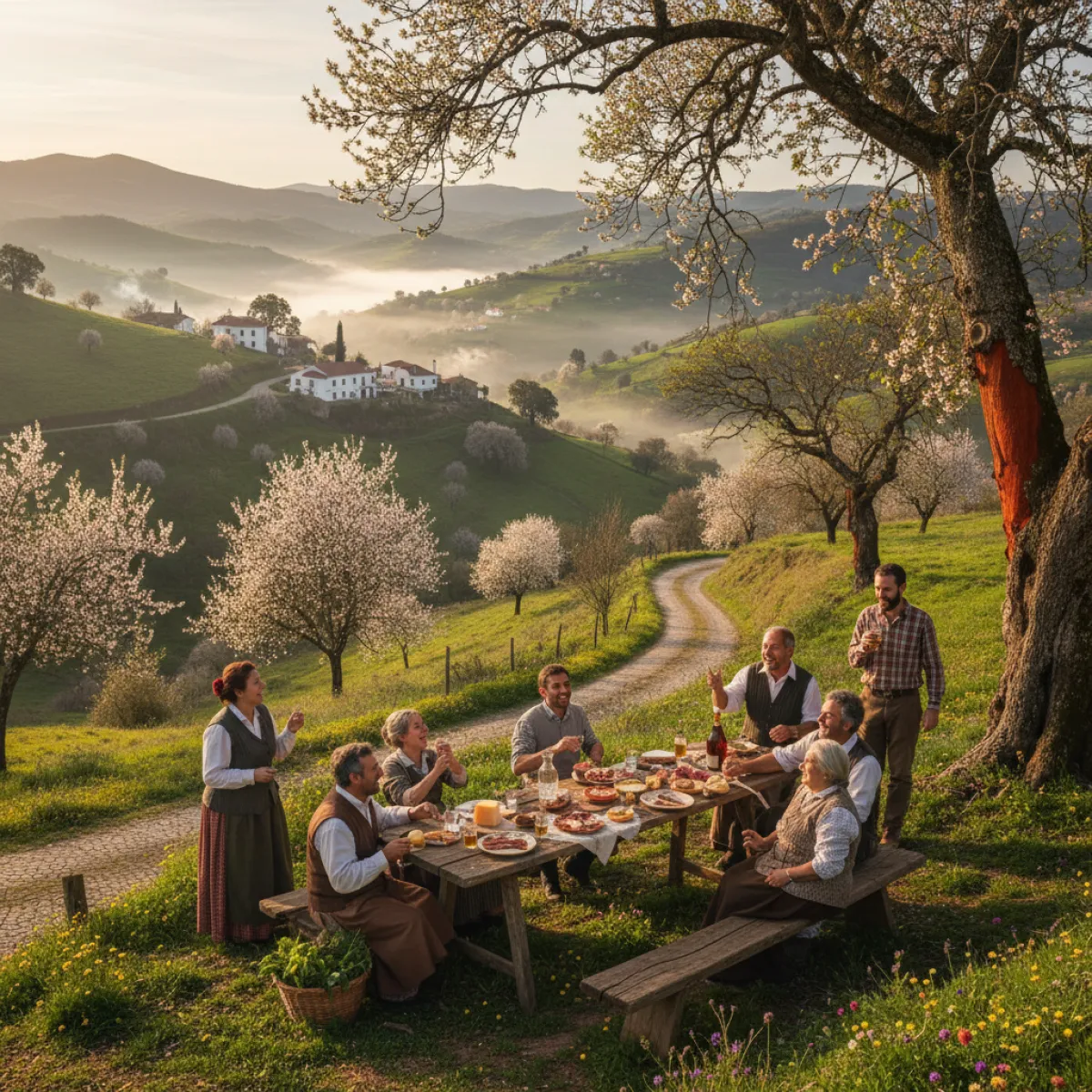
March in Monchique is not for those seeking the saturated postcards of the Algarve or the regimented rows of beach loungers. Instead, it is the moment when the Serra sheds its damp winter lethargy to embrace a spring that arrives here with a distinct texture. While the coast begins to rehearse its first swims, the mountain, the highest point in the Algarve, at Fóia, prefers to remain wrapped in morning mists that lend the landscape a cinematic drama. This is the season of camellias, which find in this acid soil a climate that makes them explode in colors that defy the grey of the syenite granite.
Traveling to Monchique at this time of year requires a paradigm shift. The pace slows down. The focus turns inward, toward the fireplaces that still crackle at the end of the day and the eucalyptus resin that scents the air after the quick March rains. It is an Algarve of silences, of dirt tracks, and an authenticity that is often lost in the bustle of coastal towns. To understand this duality, it is worth contrasting mountain stillness with the Local Culture in Faro: Traditions and Experiences of the Authentic Algarve, where historical heritage manifests in a more urban but equally rooted way.
The Microclimate and What to Expect from the Weather
The Monchique mountains act as a condensation barrier. In March, this means you can encounter four seasons in a single day. The morning might start with a thick fog that barely lets you see the "skirt chimneys" typical of the village, evolving into a radiant midday with temperatures around 18°C, and ending in a cool night where the thermometer drops to 8°C. It is not uncommon for clouds to get trapped in the valleys, creating a "sea of clouds" effect when viewed from the peaks of Fóia or Picota.
This instability is precisely what makes the region so fertile. The valleys are green, the orange trees are heavy with fruit, and water flows abundantly from the fountains scattered throughout the mountains. It is the ideal time for hiking the Via Algarviana, without the scorching summer heat that makes these routes impractical for the unprepared. The light in March is soft, perfect for photography, avoiding the harsh shadows of the August sun.
The Strategic Wardrobe: What to Pack
Forget the flip-flops and light linen clothes. Monchique in March demands a technical and layered approach. The keyword is "layers." A high-quality windbreaker is indispensable, preferably waterproof, as March rains are frequent and sudden. Underneath, opt for fine merino wool knits or synthetic fabrics that allow for breathability during the steep mountain climbs.
Footwear is the most critical element. Monchique's cobblestone streets, made of irregular stones, become slippery with humidity. Hiking boots with good traction are mandatory if you intend to explore the trails connecting Caldas de Monchique to the mountain summit. For the evening, a wool scarf and a more robust coat are necessary to dine comfortably on protected terraces or to walk the narrow streets after sunset. If you plan to extend your trip to the western Algarve, consult the Lagos Neighborhood Guide: Discover Every Corner of This Algarve Gem to adapt your style to a more cosmopolitan and maritime environment.
The March Table: Comfort Flavors and Tradition
Monchique's gastronomy is a celebration of the earth. March is the ideal month to taste 'assadura' (grilled pork loin with garlic and coriander) or 'feijão com couve' (beans with cabbage), dishes that warm the soul on cooler days. It is also the time when 'medronho', the famous local firewater, is distilled on many family estates, filling the air with the sweet, fermented aroma of the wild fruit.
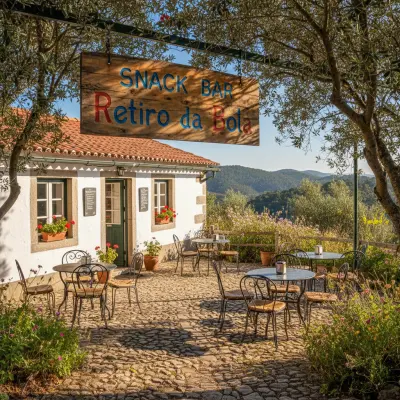
For a truly local experience, without tourist artifice, the Snack Bar Retiro da Bola is a mandatory stop. Here, simplicity is elevated to a standard of excellence, serving dishes that reflect the mountain diet in an honest way. Order the Monchique ham, cured in the cold mountain air, and pair it with local rye bread. It is the kind of place where time seems to have stood still, offering an authentic refuge far from commercial routes. This search for the Algarvian soul can be complemented by reading about Local Culture in Albufeira: Traditions, Festivals and the Algarvian Soul, which shows how the region's identity persists even in centers of high tourist pressure.
Exploration and Itineraries: From Village to Peaks
The village of Monchique, with its white houses arranged like an amphitheater, deserves thorough exploration. Start at the Main Church, with its Manueline portal decorated with motifs referencing ship ropes, reminding us that even at the top of the mountain, the sea is never far from the Algarvian mind. Lose yourself in the craft workshops, where "scissor chairs" (a Roman heritage) are still handmade from chestnut wood.
Then head up to Caldas de Monchique. In March, the thermal gardens are in a state of botanical luxury. The alkaline waters, famous since Roman times for their healing properties, flow between the valleys in a constant murmur. It is a place of spiritual retreat, where the microclimate allows for the growth of species found nowhere else in the Algarve. It is the perfect contrast for those coming from the hustle of other places, serving as a reminder that luxury, in March, is defined by space, silence, and the quality of the air you breathe.
Budget and Practical Logistics
March is considered low season, allowing access to charming accommodations and rural tourism at significantly more inviting prices than in summer. A daily budget of 80 to 120 euros per person allows for a comfortable stay, including meals at good local restaurants and a rental car, essential for exploring the region with freedom. Be aware that the mountain roads are winding and require attentive driving, especially when fog appears without warning.
Monchique is not a destination to pass through; it is a destination to stay. Reserve at least three days to absorb the rhythm of the mountain. March offers the advantage of no crowds and no need for reservations weeks in advance, allowing for a spontaneity that is rare in the Algarve of July or August. It is the time to talk to honey producers, to taste cured meats in small grocery stores, and to feel that the Algarve does, in fact, have a green and mountainous heart that beats with surprising strength.