Monchique at the Table: Where Locals Actually Eat
Forget the decorative medronho bottles and the three-hour lunches. The real Monchique is eaten at the counter, paid in cash, and closes by nine. An honest guide to finding the mountain locals never post on Instagram.
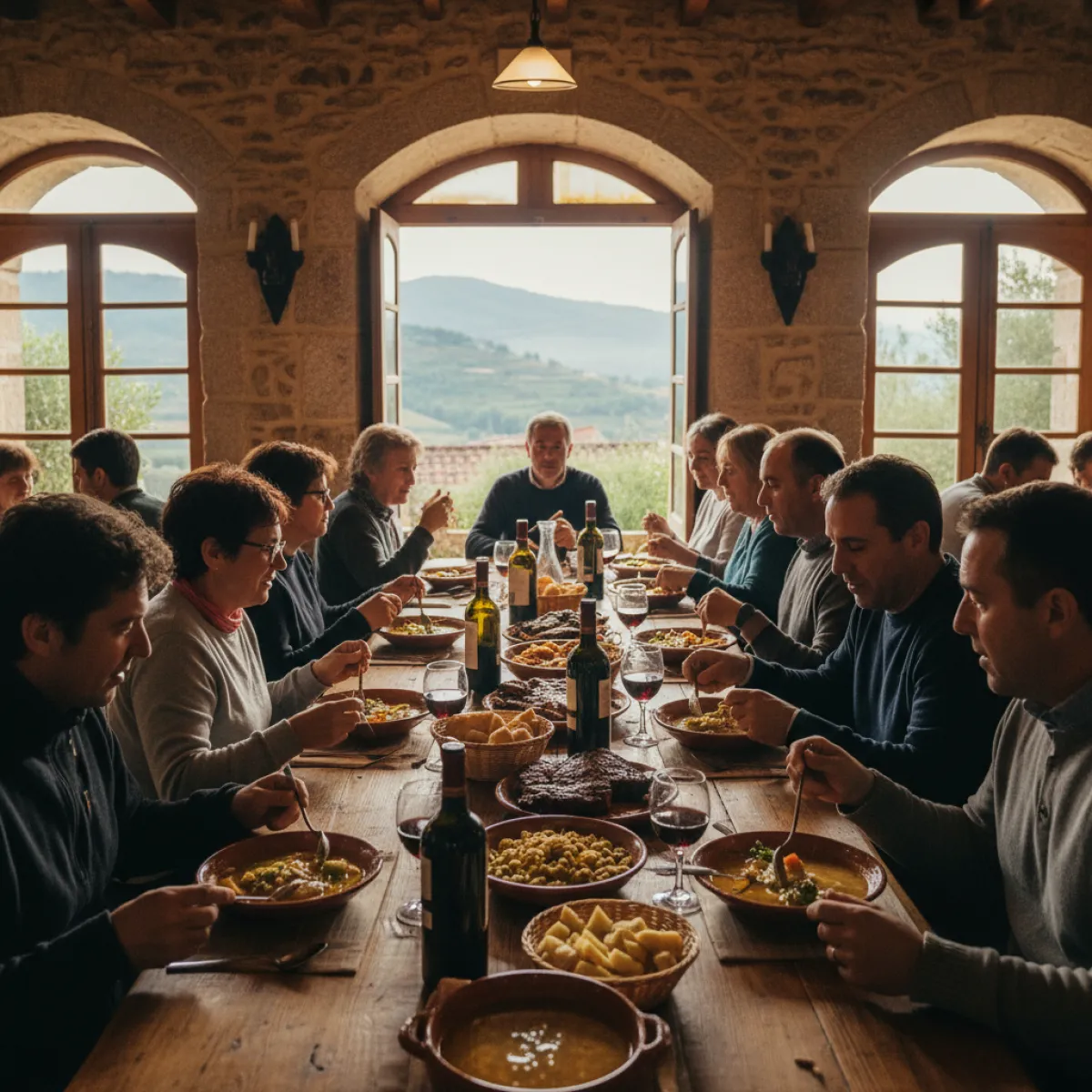
There are two Monchiques. The first is the one in the brochures: medronho in decorative bottles, terraces with views, three-hour lunches that cost a week's salary. The second is the real one, and it starts around seven in the morning, when grey-haired men park their Toyota vans on the main street, walk into a nameless cafe, order a galao and a piece of toast, argue about the price of black pork, and then drive up into the hills. This guide is about that second Monchique. The one with tables where you eat for under fifteen euros, taverns where the menu is handwritten on a chalkboard, bakeries that open before sunrise because that's how it has always been done.
A warning: Monchique is not Lagos or Albufeira. The mountain sets the rhythm here. Restaurants close early, many shut on Sunday nights, and in January you'll find locked doors that not even Google Maps can predict. Coming to Monchique to eat well requires patience, some flexibility, and the humility to accept that the best dish of the day might be yesterday's stew, reheated and somehow better than it was the night before.
Breakfast: where everything starts
Forget the hotel buffet. In Monchique, breakfast happens at the counter, in cafes with no Instagram-friendly name, with the television tuned to SIC and the smell of buttered toast clinging to your jacket. The rule is simple: if you see men in work boots and women with shopping bags, you're in the right place. Order a galao (not a latte), a torrada mista (cheese and ham, plenty of butter) and, if you're brave, a still-warm bola de Berlim. You'll pay two to three euros for all of this.
One thing sets Monchique apart from the rest of the Algarve: the bread. Here they still make corn bread baked in wood-fired ovens, dense, with a thick crust, perfect for dunking in coffee or pairing with mountain goat cheese. In Alferce, the village next door, communal ovens are still in use, and anyone who wants to understand why this bread tastes different can book a traditional bread-making class that ends, of course, with the loaf coming out of the oven and being eaten with olive oil and coarse salt. It's one of the best ways to spend a morning in the mountains.
Lunch: working people's food
Lunch in Monchique is not a performance. It's fuel. Most places serve the so-called "prato do dia" between noon and two-thirty, then close the kitchen until evening. Arrive at one-thirty and you'll still get a table. Arrive at three and you'll be eating a sandwich.
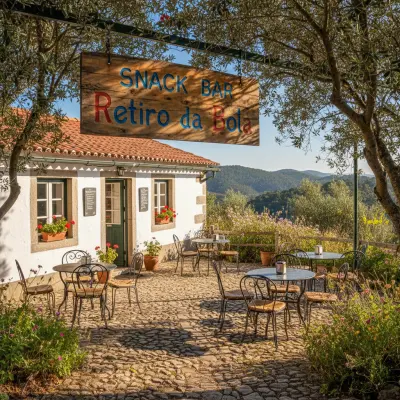
The Snack Bar Retiro da Bola is the perfect example of this philosophy. It isn't pretty, there's no curated decor, and the menu changes depending on what showed up at the market. But this is where you actually have lunch. Check the chalkboard before sitting down: if there's cuttlefish stew, or rojoes a minhota (rare here but they appear), or simply carne de porco a alentejana done properly, sit down. Order a small beer, a glass of house red that doesn't even need a label, and prepare to leave with that pleasant drowsiness of someone who ate well for ten or twelve euros, coffee included.
Practical tip: bring cash. Many of these places still have temperamental card machines, and more than once I've seen embarrassed tourists hunting for ATMs through the narrow streets. The most reliable cash machine is near the main square, by the parish church.
What to order, what to skip
The temptation is to order what looks most touristy: cataplana, wild boar, peri-peri chicken. Resist. In a mountain village, the real dishes are different ones:
- Chestnut soup: classic in autumn and winter, thick, with chourico and cabbage. If you see it on the menu between October and February, don't hesitate.
- Migas with Aljezur sweet potato: the protected sweet potato from the western coast makes its way up to Monchique and gets turned into migas with pork. Sweet and savoury, exactly as it should be.
- Mountain ham and goat cheese: order a sharing board before the main course. It costs six to nine euros and justifies the trip.
- Black pork: raised in the hills, fed acorns and medronho berries. The difference compared to industrial pork is enormous.
What to skip? Seafood. We're in the mountains, forty-five minutes from the nearest coast. Ordering tiger prawns in a Monchique restaurant is like ordering codfish at a beach kiosk: it might be fine, but that's not why you came up here.
The afternoon stop: medronho, cheese, and the art of doing nothing
There's an institution in Monchique that nobody explains to you but everyone practises: the mid-afternoon stop. Around five, the cafes fill up again. Order a galao and a pastel de nata (yes, they exist here, and they're honest ones, even if they're not from Belem), or, if you want to go full local, a small glass of medronho with a slice of cheese and some black olives.
Monchique medronho is different from what you'll be served in Lisbon. Here, it's still made in private stills, sold in unlabelled jugs, and every producer swears theirs is the best. The rule: don't trust anything in a decorative bottle with a gold label. That's tourist stuff. Real medronho is transparent, burns on the way down, and costs three euros a glass in the right places.
Dinner: when the mountain goes to sleep
Monchique closes early. Even in summer, you'll struggle to find a kitchen open after ten. In winter, you'll be lucky if anywhere is still serving by nine. Adapt: dinner at seven-thirty or eight isn't lazy tourist behaviour here, it's the only way to eat hot food.
For those who want to extend the night, there's Bar Travessa, an unpretentious place where you have a drink, hear conversations from people who actually live here year-round, and realise that Monchique has a small but real nightlife. Don't expect signature cocktails: order a beer, a simple gin and tonic, or, if you're curious, a shot of medronho. The atmosphere does the rest. It's the kind of bar where you can walk in alone, sit at the counter, and walk out two hours later with an invitation to go mushroom hunting next Sunday.
The day you escape the bubble: Aljezur, Arrifana, and the coast
Visitors make one common mistake: thinking Monchique is a closed destination. It isn't. The mountain is twenty minutes from Aljezur, thirty from Arrifana, forty from Silves. Anyone staying in Monchique for more than two days will inevitably head down to the coast, and that's where things get interesting.
The classic combination: morning in the mountains, lunch in Aljezur (grilled fresh fish, rule of thumb is "whatever they have today"), afternoon at the beach. If you like the sea, some travellers pair their stay in Monchique with surf lessons at Arrifana: the contrast between the cool mountain and the Atlantic coast is one of the best things the Algarve offers, and very few tourists think of doing both in the same day.
For those travelling with kids, our honest Silves family guide is worth a look: twenty minutes by car, it's the perfect alternative to a rainy day in the mountains, with the castle, the cork factory, and restaurants that serve proper child portions, not those tiny eight-euro plates.
The market and the producers: for those who cook
If you're staying somewhere with a kitchen, and you make it to Monchique market on a Saturday morning, you'll understand why this mountain produces some of the best ingredients in the Algarve. Medronho honey, fresh goat cheese, smoked eel, ham cured in winter months: it's all there, with no theatrics, sold by the people who made it.
Practical tips:
- Go early, before ten. The best stuff goes first.
- Bring your own bags and small change.
- Ask to taste before you buy. Producers expect you to.
- If you see someone selling artisanal medronho in a plastic bottle, that's the good stuff. Presentation is inversely proportional to quality here.
Getting there and getting around
Monchique is forty minutes by car from Portimao and about an hour from Lagos or Faro. There are buses, but they're infrequent and the timetables serve locals more than tourists. If you really want to explore the range (Foia, Picota, Alferce, Marmelete), you need your own car. The roads are narrow and twisting: if you get carsick, take it slowly and crack the window open.
Parking in Monchique is generally easy. There's a large free car park at the entrance to the village, and from there it's a five-minute walk uphill. Avoid driving into the historic centre: the streets are one person wide, and any manoeuvre can pin you down for half an hour.
When to come, and when not to
There are two excellent windows for eating in Monchique: October to December, when chestnuts arrive, the new sausages are ready, and cabbage soup is on every menu; and April to June, when mountain vegetables are at their peak and terraces open without the suffocating heat of summer. July and August are hot, crowded, and restaurants run in survival mode. January and February have the opposite problem: much is closed, and some weeks the wind will rearrange your hair permanently.
The best moment, for those who want to eat well and have a real conversation? A Tuesday in October, after the wine harvest. Cafes are full of men arguing about what they produced, chestnut soup is on every chalkboard, and the tourists have already left.
What to take from this guide
Eating in Monchique isn't a luxury experience. It's an experience of continuity. The same families have produced the same ham for three generations. The same cafes serve the same galao at the same hour. Anyone who wants to understand the Algarve beyond the beach gets an intensive course up here. To complete the picture, our guide to local culture in Faro and our Lagos neighbourhood guide tell the other half of the story: the coastal Algarve, with all its complexity.
If there's one final piece of advice, it's this: ignore the automated suggestions of travel sites, talk to whoever is sitting next to you at the counter, ask what they had for lunch yesterday, and follow that lead. In Monchique, the best meal is almost always the one you find by accident.