Mértola in July: River Beaches While the Algarve Burns
Mértola has no Algarve beaches, and that is exactly why you should go in July. Warm fresh water at Mina de São Domingos, boat trips down the Guadiana and tasca dinners with no tourists: the perfect antidote to a coast bursting at the seams.
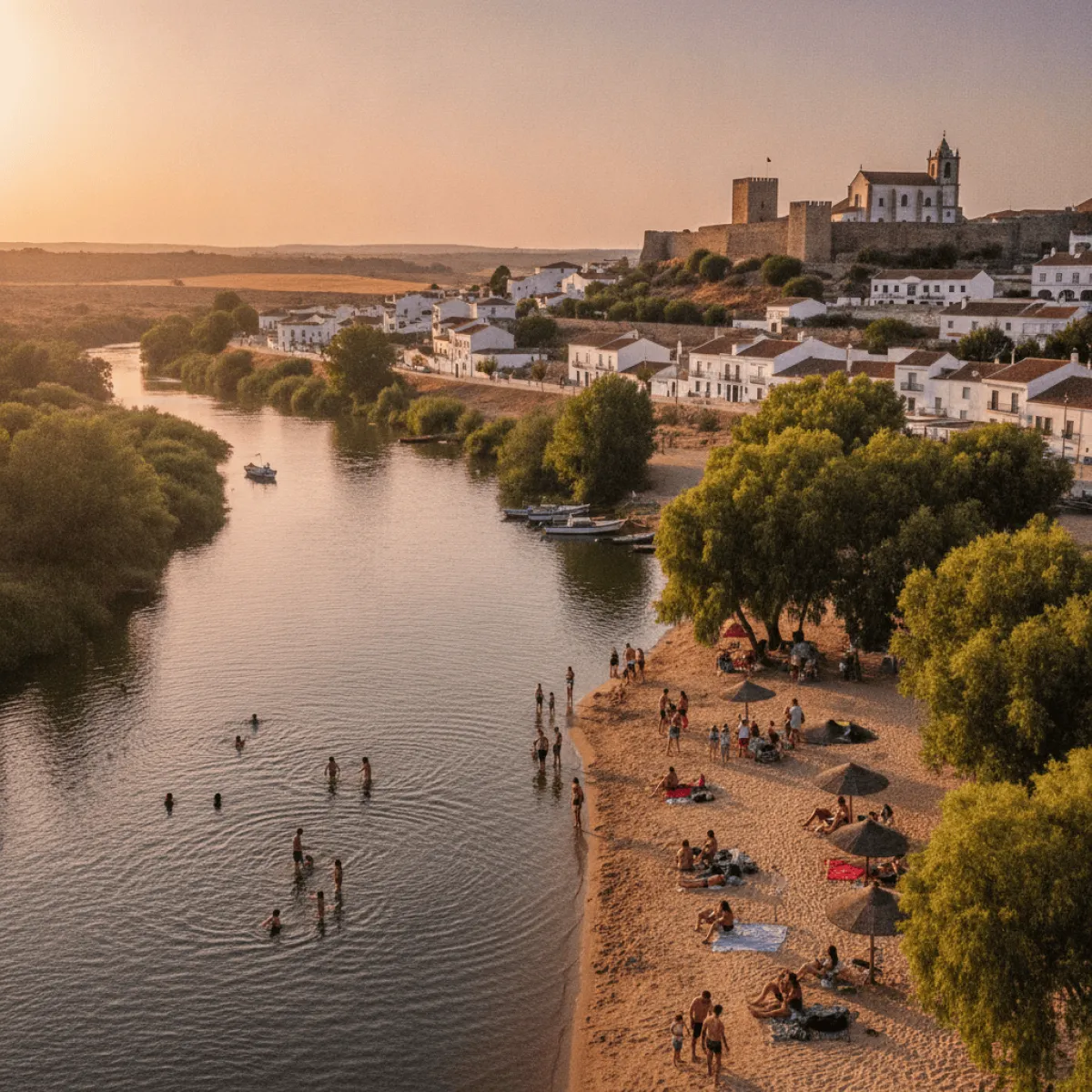
Let us start with a confession that is going to annoy half the search engines on Earth: Mértola has no beaches in the Algarve. Mértola has no sea beaches at all. It sits an hour and a half inland from the coast, pressed up against the river Guadiana in the Baixo Alentejo, in a place where July temperatures clear 40°C with the indifference of somewhere that has done this a thousand summers in a row. If what you want is a towel lined up with two hundred others on Praia da Rocha, close this tab and good luck with the parking.
But if the real question behind "best beaches in the Algarve for July" is actually "where can I get into the water without paying eight euros for a parasol and listening to the bloke next to me play music at full volume," then stay. Because Mértola and its surroundings deliver exactly that: river beaches, fresh water, proper shade, and the kind of silence that the Algarve in July no longer sells at any price.
Why an Alentejo valley solves your summer problem
The Guadiana is the second longest river in the Iberian Peninsula, and at Mértola it swings in a wide curve beneath the Moorish castle that crowns the town. The town itself is one of those places that seem designed to disorient new arrivals: narrow whitewashed streets spiralling uphill, cats asleep on stone steps, and a parish church that, if you look closely, still keeps the mihrab from the mosque it was for centuries. Mértola was a Roman city, an Islamic river port, a mining capital. It is one of those places where history is not in a museum, it is in the wall of the house next door.
To understand all this before you hit the water, it is worth booking the walking route through Mértola's Moorish legacy, which links the old mosque, the castle and the Islamic core of the museum in a way that finally makes sense of the place. Do it early, before 11am. In July afternoons nobody wants to be climbing hills in the sun.
The river beach that replaces the sea: Mina de São Domingos
Mértola's big answer to the heat sits about 17 kilometres away at Mina de São Domingos, a former pyrite mine that in the 19th century was one of Europe's largest mining complexes, run on British money. Today it is a haunting, fascinating village with English-built houses, a flooded open pit the colour of red wine that looks like another planet, and, most important for our purposes, the Tapada Grande river beach.
It is a reservoir with sand, eucalyptus shade, fresh water that in July sits as warm as a bath, and lifeguarded zones at the peak of summer. No waves, no tide, none of that brutal Atlantic cold that leaves half the bathers in the Algarve only wetting their feet. Here you walk in and you stay in. Bring water shoes for the stones, bring serious sun cream, and bring drinking water, because the bar may or may not be open depending on the season, so check locally. Entry to the beach is free.
My honest advice: go on a weekday. On a July weekend the locals know perfectly well that this is the best swimming spot in the district, and Tapada Grande fills up. Monday to Thursday, before 11am or after 5pm, it is practically yours.
The Guadiana by boat, which is how it should be seen
Some people come to Mértola and never actually get the river. That is a mistake. The Guadiana here is not scenery, it is the reason everything happened. The right way to understand it is from the water, and the boat trip from Mértola down to Pomarão does exactly that: it carries you downstream to an old fishing village and mining port, between banks where you can spot storks, herons and, with luck, an osprey.
It is one of those experiences where the destination matters less than the journey. Pomarão itself is small, a handful of houses and a quay where ore was once loaded onto boats. But the trip down the Guadiana, with the heat settling onto the water in late morning, is among the loveliest things you can do in this corner of the country. Book ahead, especially in July, because the boats are small and the seats run out.
If you prefer solid ground and have the legs for it, there is the famous Pulo do Lobo, the most spectacular waterfall on the Guadiana, where the entire river squeezes through a schist gorge with a roar you hear before you see it. It is not a swimming spot, far too dangerous, but as a sight it has no equal. Go very early, bring water, and never, under any circumstances, go near the edge of the gorge.
Where to stay: three options for every temperament
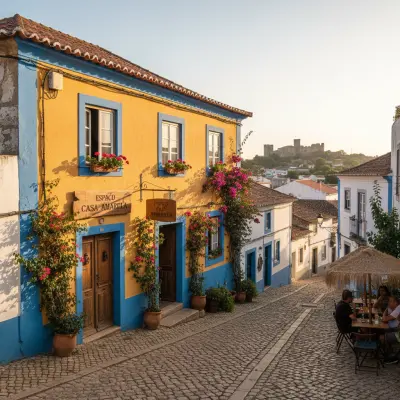
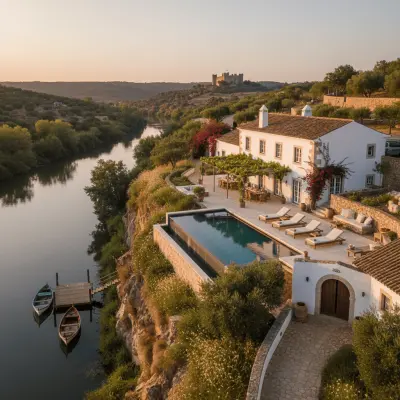
Mértola is small and you sleep well here, provided you book ahead in summer. For those who want to be inside the old town, a few steps from the castle and the alleys, Casa Amarela Alojamento Local is the obvious choice: characterful local accommodation in the heart of the village, ideal for waking up already in the middle of everything without needing a car for breakfast.
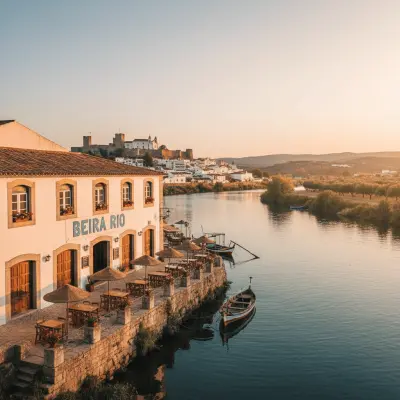
If your priority is the river, then the name says it all: Beira Rio puts you exactly where you want to be on the hot days, right by the water with the historic town across the way. And if you are travelling by car and prefer some quiet with views over the valley, Paraíso D'el Rio is the pick for turning Mértola into a multi-day base to explore Mina de São Domingos, Pulo do Lobo and the river without rushing.
A practical word on dates: Mértola fills up in late July and August, and in alternating years there is the Islamic festival that books out everything. If you are coming in July, reserve now. There is no plan B twenty kilometres down the road.
Eating and drinking without falling into traps
The cooking here is Alentejo to the bone, with the river's twist. Look for grilled black bass from the Guadiana, ensopados, migas, pork, and the convent sweets that turn up all over the region. Skip the laminated menus with photographs near the obvious sights and find the places where locals eat lunch in their work clothes. As always in the Alentejo, the best dish is usually the one of the day, written in chalk, with no English translation.
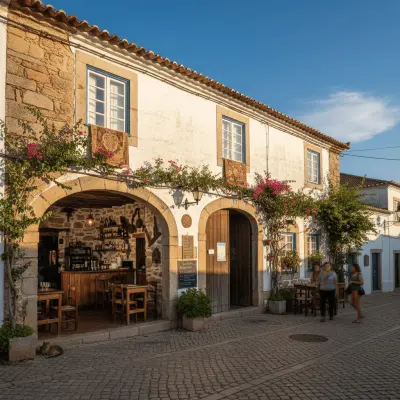
At the end of the day, when the heat finally lets go and the stone starts handing back its coolness, the meeting point is Lancelote Bar, the right spot for a cold beer or a gin while the sky over the Guadiana does that orange thing no photograph ever catches properly. Do not expect a wild night: Mértola runs on slow conversation and a drink that lasts, and that is precisely the charm.
There is one more card up the sleeve that few visitors know about: fado. At Espaço Casa Amarela you can hear live music on an intimate scale, the kind where the guitarist is three metres away and the silence between songs has weight. In a town so bound up with the Islamic and mining worlds, hearing fado feels almost like an act of cultural stubbornness, and it works. Check the programme locally, because the times shift with the season.
Honest logistics: how to get there and what to expect
Mértola is roughly 50 minutes from Beja and a little over two and a half hours from Lisbon, always by car, because without one this area is practically impossible to explore properly. The IP2 and IP8 get you close; after that it is national roads across plains of cut wheat and cork oak groves.
- When to go: July is hot, very hot. The trick is to live like the locals: active mornings until 11am, a siesta or the river in the bad hours, and street life from 6pm onwards.
- What to bring: a hat, high-factor sun cream, shoes for the stones of the river beaches, and plenty of water. Pharmacies close at lunch.
- What it costs: the river beaches are free; the boat trips and guided routes cost money, so book ahead; accommodation rises in July, so booking early saves you cash.
- Cash: always carry some. Not every village bar and tasca takes a card happily.
If you have time to spare: the rest of the inland Alentejo
Mértola works very well as a gateway to an Alentejo that few coastal visitors ever see. If your trip extends north and you want to combine plains with mountains, it is worth planning a few days around Portalegre and the Serra de São Mamede, and our weekend guide to Portalegre without the tourist traps sorts out the essentials without sending you to the obvious, expensive spots.
In the end, this is the trade Mértola offers you. You give up the Atlantic waves and the terraces with a sea view. In return you get warm, calm water to swim in without crowds, a river with a thousand years of stories, tasca dinners with no tourists, and nights where the loudest thing in earshot is fado. In July, with the Algarve bursting at the seams, that is not a consolation prize. It is the best beach you will find.