Leiria: The Museums Worth Your Time and Those to Skip
Forget the quick highway pit stop. In Leiria, the real movement isn't in the traffic, but in a unique collection of magic lanterns and a 15th-century paper mill that still hums along the banks of the Lis.
Leiria is More Than an A1 Pit Stop
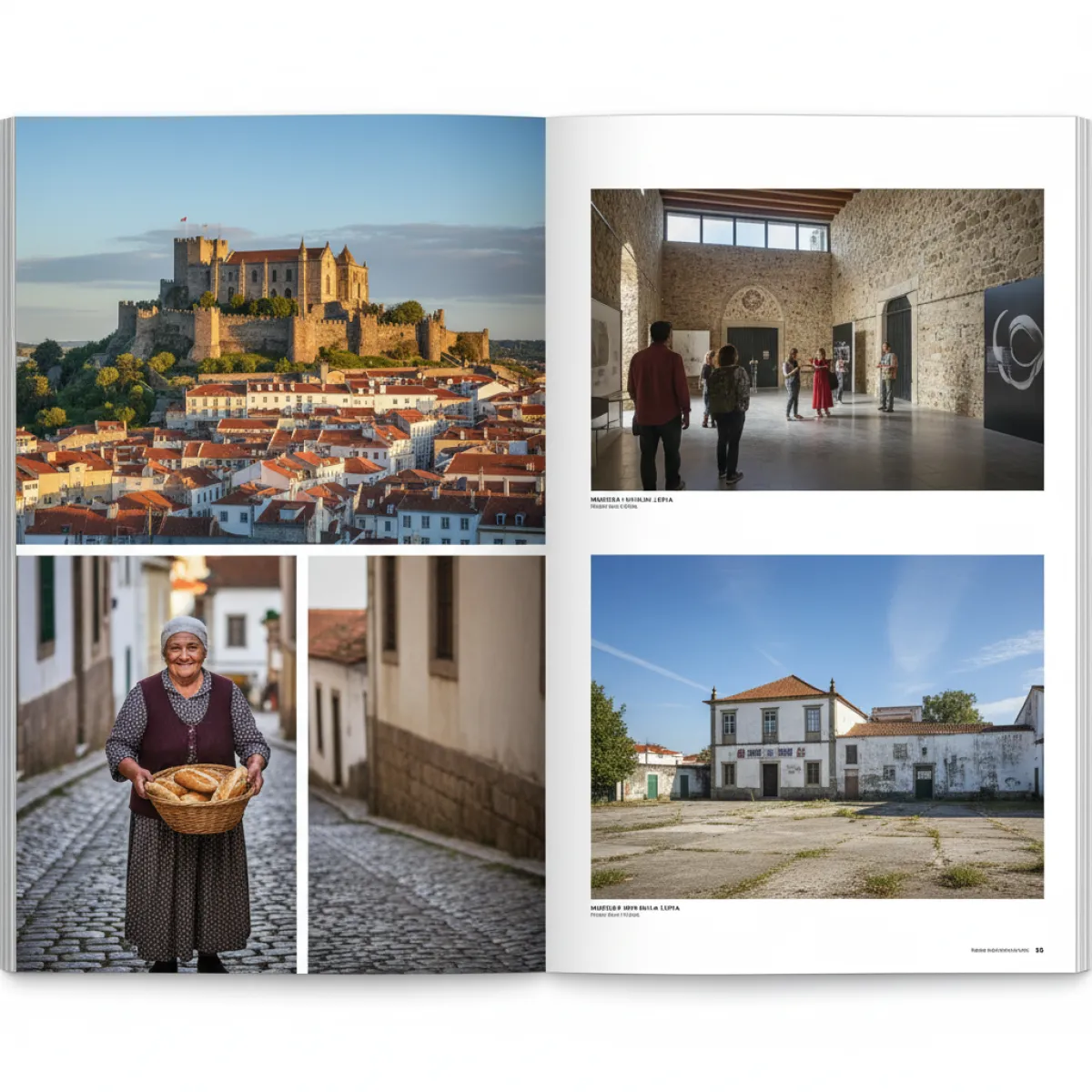
For decades, Leiria has been a victim of its own geography. Perched halfway between Lisbon and Porto, the city became, in the mind of the rushed traveler, little more than a visual landmark, that castle silhouette on the horizon, or a place to stretch your legs and grab a coffee before heading to Fátima or Coimbra. But those who choose to descend the slope and park by the River Lis discover a city pulsing with a rare cultural intelligence, far from the mellow excessive vibe of mass tourism. Leiria has a sharp identity, molded by an enlightened bourgeoisie and a deep connection to both the arts and industry. Here, museums aren't just warehouses for dead objects; they are attempts, sometimes brilliant ones, to explain how a provincial town became a vanguard center.
The Castle: Between Fantasy and the Loggia
Let’s start with the obvious, but with a warning: Leiria Castle is not a museum in the conventional sense. It is a monument that has been reinvented. If you expect an intact, dusty medieval fortress, you will be disappointed. What we see today is largely the result of the vision of Ernesto Korrodi, the Swiss architect who, in the early 20th century, decided to 'complete' the ruins with a romantic sensibility. It’s an architectural Frankenstein that, miraculously, works.
What truly makes the ticket (about €2.10) worth it is the Gothic gallery, the loggia. It is one of the most photogenic spaces in Portugal. From the top, the city spreads out beneath your feet: the Municipal Stadium on one side, the narrow streets of the historic center on the other. It’s the perfect spot to grasp the city’s layout before venturing down the stairs toward Praça Rodrigues Lobo. Is it worth it? Yes, for the view and the spatial structure, but don't spend hours reading the information panels if your time is short. The real history of Leiria is down here, at river level.
m|i|mo: The Museum for People Who Hate Museums
If you have to choose only one museum in Leiria, make it m|i|mo - Museu da Imagem em Movimento (Museum of the Moving Image). Forget the solemnity of national museums. Located in the castle's former outer wall area, in the Guardian’s House, this space is a tribute to human curiosity. It’s a museum about the pre-history of cinema, about how we learned to trick the eye into creating the illusion of movement.
Inside, you’ll find magic lanterns, zoetropes, and cameras that look like they belong in a 19th-century science fiction film. It’s tactile, visual, and deeply intelligent. m|i|mo pulls off the feat of interesting both a seven-year-old and a seventy-year-old cinephile. It’s a mandatory stop that costs little more than a coffee and offers a unique perspective on Leiria’s light, that light Eça de Queirós described so well (even when he was being caustic about the town). If you are following a week-long Portugal itinerary, this is the moment where culture becomes pure fun.
The Paper Mill: Where Time Gains Texture
A ten-minute walk from the center, following the banks of the Lis, the Moinho do Papel (Paper Mill) is the true heir to the city’s industrial tradition. In 1411, this was one of the first places in the Iberian Peninsula to manufacture paper. Today, the building, restored with exemplary sobriety, continues to work.
This isn't a museum of closed vitrines. It’s a museum of sounds and smells. You hear the rhythmic thumping of the wooden pestles, feel the dampness of the stone, and smell the cotton pulp. Watching artisans produce paper sheet by sheet, using the same techniques from six hundred years ago, is a hypnotic experience. It’s here that we realize Leiria wasn't just built by kings and battles, but by craftsmen who knew how to turn water power into knowledge. It is, without a doubt, the most authentic museum in the city. If you’re looking for something deeper than the tourist surface, this is the place.
What You Can Skip (If You're in a Hurry)
The Museu de Leiria, housed in the former Convent of Saint Augustine, is a magnificent space, but it can be dense. It holds the famous 'Lapedo Child,' the skeleton of a child with Neanderthal and Cro-Magnon features that is a cornerstone of world archaeology. However, unless you’re a pre-history or sacred art enthusiast, the vast rooms might feel a bit repetitive. It’s an excellent museum, but it requires a full afternoon to digest. If your goal is to feel the 'pulse' of the city in a day, stick to m|i|mo and the Paper Mill.
Table Talk: Where the Body Refuels
No cultural visit to Leiria is complete without a strategic pit stop. For an unhurried lunch of small plates, Mata Bicho Real Taverna on Rua Direita is the city’s meeting point. Order the eggs with farinheira or the morcela de arroz (rice blood sausage), a local classic treated with the respect it deserves here. The atmosphere is noisy, cheerful, and genuinely Leiriense.
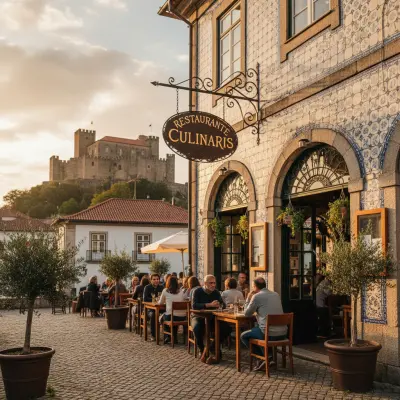
If you want a more structured dinner where the product is king, Casinha Velha is an institution. Located slightly outside the historic center, it’s where locals go for a 'serious' meal. The roasted kid is legendary, and the wine cellar is one of the best in the region. For those who prefer a more contemporary yet equally rigorous approach, Restaurante Culinaris offers technical and flavorful cuisine that reflects the city’s new energy well.
Beyond the Asphalt: Bajouca and Arrabal
Leiria doesn't end at the city limit signs. If you have a car and the will to get your hands dirty, Bajouca is an essential stop. It’s a land of potters, where clay has shaped lives for generations. Taking part in the art of clay at a traditional pottery workshop in Bajouca is the best way to understand this region's physical connection to the earth. This isn't folklore for tourists; it’s the maintenance of a craft that refuses to die.
For those seeking the opposite of urban bustle, Arrabal hides retreats that feel miles away from civilization. The private villa escape at Villa Nour is the perfect example of how rural luxury can integrate into the limestone landscape of the Serra de Aire e Candeeiros. It’s the place to process everything you saw in the museums, overlooking the olive groves.
Practical Tips
- Schedules: Most museums close on Mondays. The Castle and m|i|mo usually stay open until 5:30 PM or 6:00 PM, depending on the season.
- Cost: Leiria is remarkably affordable. With less than 10 euros, you can visit three or four of the main points of interest.
- Parking: Avoid driving into the historic center. Park near the River Lis or in the stadium lot and walk. The city is very walkable, and Rua Direita deserves to be explored with an eye for the facade details.
Leiria demands that you look beyond the obvious. It’s a city that rewards the curious traveler, the one not satisfied with just a castle postcard. If you’re coming from Coimbra, as suggested in our guide Coimbra: The Grammar of Time, you’ll notice a clear difference: here, time isn’t just academic; it’s mechanical, it’s artistic, and above all, it’s lived with an intensity all its own.