The Art of Clay: A Traditional Pottery Workshop in Bajouca, Leiria
Discover the ancestral tradition of pottery in Bajouca, Leiria, through a hands-on workshop with master potter Alcino Pedrosa. Learn to shape white clay on the wheel and explore the roots of this century-old craft in the heart of Portugal.
The Century-Old Heritage of Pottery in the Leiria Region
The Leiria region is often associated with its medieval castle and the vast Pine Forest, but in its rural heart lies a more tactile and profound tradition: pottery. Within the municipality of Leiria, pottery is not just a relic of the past, but a living practice that shapes local identity. The abundance of fine, light-colored clay in this geographical area has allowed families to dedicate themselves for centuries to creating utilitarian and decorative pieces, renowned for their durability and austere beauty.
When planning your Portugal Itinerary: A Week in the Heart of the Country, dedicating a day to the northern part of the municipality is essential to understanding how earth and water are united in the hands of artisans. Here, clay is more than a raw material; it is a legacy passed down through generations, keeping alive techniques that have changed little since the Middle Ages.
Bajouca Village: Where Clay Tells a Story
Bajouca is the epicenter of this craft. Located about 20 minutes from Leiria city center, this village is famous for its "oleiros da Bajouca" (potters of Bajouca). The tradition is so strong that the village has its own Pottery Interpretation Center, but the true magic happens inside the family-run workshops that dot the narrow streets. The soil in Bajouca is rich in "barro branco" (white clay), a high-quality clay distinguished by its exceptional plasticity.
Participating in a workshop here allows for direct contact with the community. This is not a staged tourist demonstration, but an entry into the daily lives of masters who dedicate their lives to the trade. It is an opportunity to get your hands dirty and feel the cold texture of the earth before it is transformed by fire.
Master Alcino Pedrosa and the Potter's Wheel
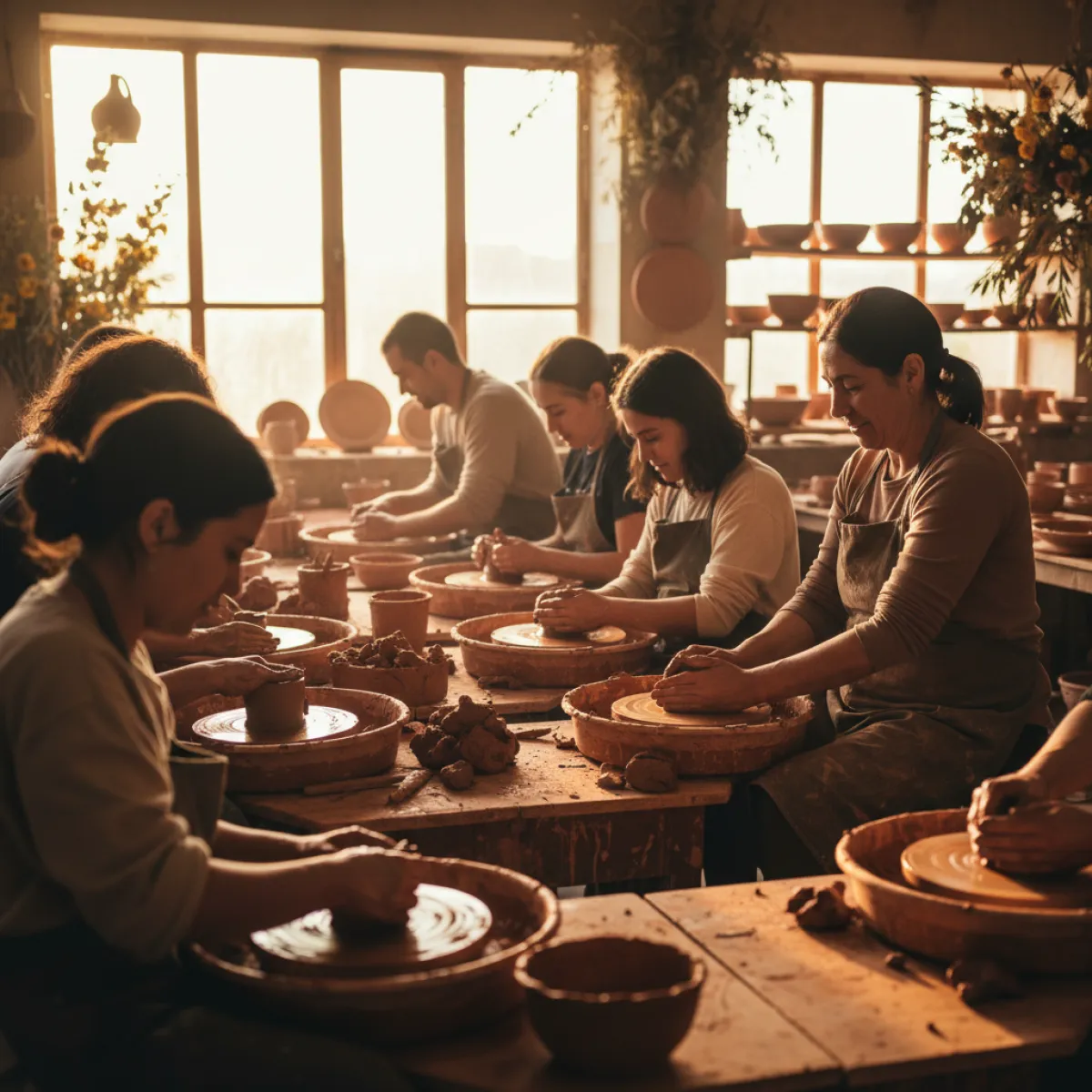
One of the most respected names in the region is Master Alcino Pedrosa. A descendant of several generations of potters, Alcino opens his workshop doors for workshops that are true lessons in history and technique. The atmosphere in the studio is one of tranquility and focus, where the only sound is the soft hum of the potter's wheel and the splashing of water.
The experience begins with an introduction to the raw material. The master explains how the clay is extracted from local "barreiros" (clay pits) and the purification process required before it reaches the wheel. Watching the master work is hypnotic: a shapeless lump of clay is transformed within seconds into an elegant jug or a perfectly symmetrical plate, guided only by the calculated pressure of his fingers.
Step by Step: From Earth to Finished Piece
The pottery workshop is structured so that anyone, regardless of experience, can create their own piece. The process is divided into several fundamental stages:
- Preparing the Clay: You will learn to knead the clay to remove air bubbles, a crucial step to ensure the piece does not crack in the kiln.
- Centering on the Wheel: This is the most demanding physical challenge. Placing the clay ball in the exact center of the moving wheel requires strength and balance.
- Opening and Raising: With the master's guidance, you will start by making a hole in the center and raising the clay walls to give the piece its shape.
- Finishing: Using traditional tools like wooden ribs (estecas), you will smooth the surfaces and define the final details.
The sensation of clay sliding through your fingers is therapeutic. The workshop focuses on the coordination between hands, mind, and foot (in the case of traditional kick-wheels), providing an immediate connection with organic material.
Practical Tips for Your Visit
To make the most of this traditional experience in Leiria, it is advisable to follow some logistical recommendations. Workshops are usually held by prior appointment, ensuring the master can give individualized attention to each participant.
What to wear: Wear old, comfortable clothing that you don't mind getting dirty. While clay washes out easily with water, the activity involves many splashes. Avoid wearing rings, bracelets, or watches, as these can mark the clay or become damaged.
Best time to book: Spring and autumn are ideal, avoiding the excessive heat of summer, which can dry the clay too quickly during handling. If you are following a route through central Portugal, Bajouca is a short distance from the A17 motorway, making it an easy stop.
Booking Details: The workshop can be scheduled through the Trilhos e Tradições organization, which coordinates cultural tours and workshops in the region. The average price is 25 euros per person, including all materials and technical guidance. The meeting point is usually at the Church Square of Bajouca, from where you proceed to the master's studio.
Preserving Heritage Through Practice
By participating in these activities, visitors contribute directly to the sustainability of the local economy and the preservation of a know-how that is at risk of disappearing. Leiria prides itself on maintaining this balance between the modernity of an industrial city and respect for its rural roots. The piece you take home with you will be more than a decorative object; it will be a physical memory of the Leiria land and the human effort required to shape it.