Lagos Architecture: A Walk Through Stone, History, and Tsunami Scars
Skip the beach for a morning and explore the architectural bones of Lagos. From the exuberant gold of St. Anthony to the Manueline windows that survived the 1755 tsunami, discover a city built on military grit and maritime wealth.
The Stone Skeleton of Lagos
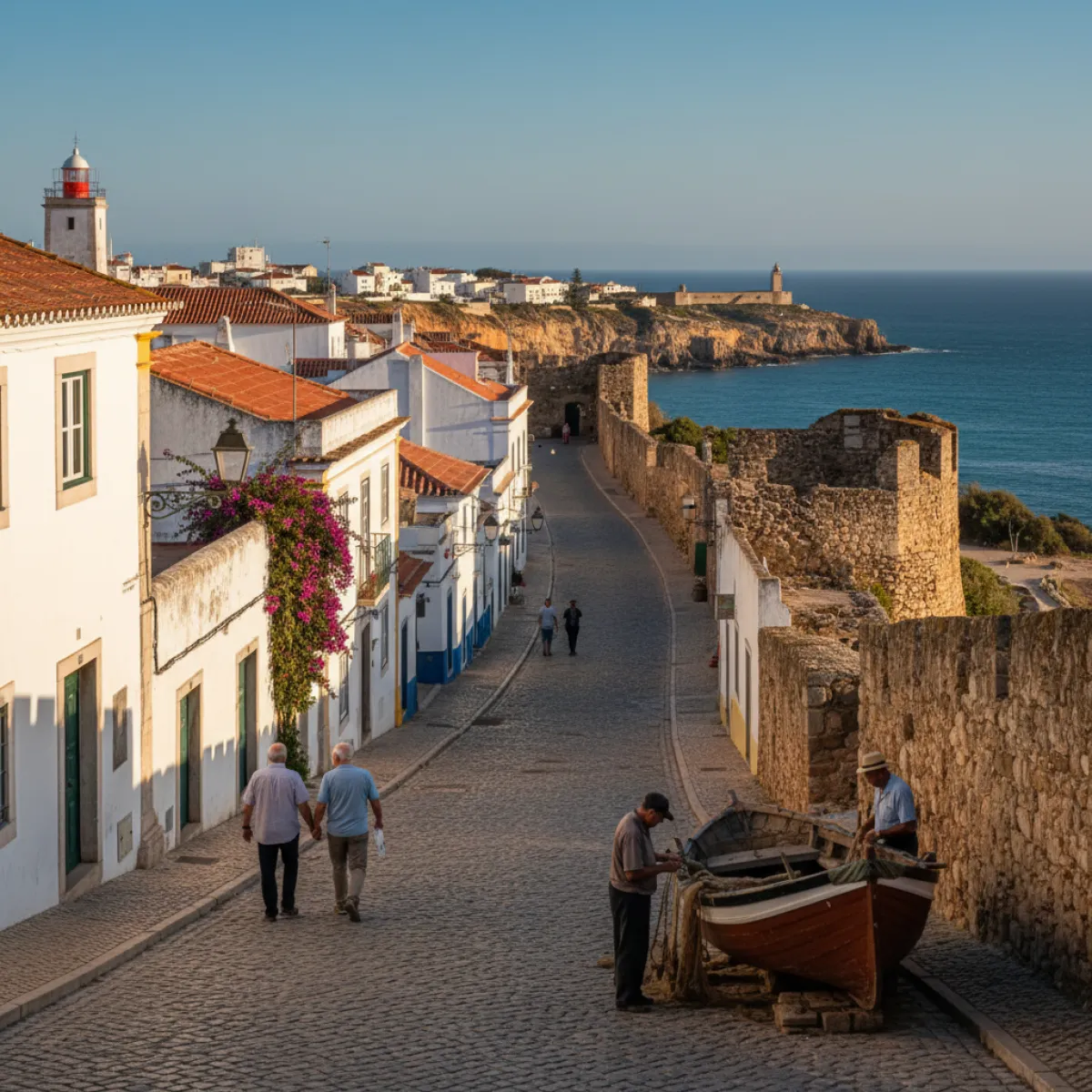
Arriving in Lagos and heading straight for the beach is a rookie mistake. I understand the temptation, the cliffs are magnetic and the water has that blue that looks professionally color-graded, but the true backbone of this city isn't made of sand; it’s made of limestone, mortar, and a historical resilience that mass tourism rarely stops to observe. Lagos was once the capital of the Algarve, the logistics hub of the Age of Discovery, and, in 1755, one of the most battered victims of the tsunami that followed the Great Lisbon Earthquake. What we see today in the historic center is a palimpsest: an overlapping of Moorish military defenses, Manueline windows that survived the chaos, and the Pombaline reconstruction that attempted to bring order to the aftermath.
To understand this city, you need to walk early, before the tourist menus with photos of frozen paella (a local culinary crime) take over the sidewalks. I recommend starting at the waterfront, by the Municipal Market. Built in 1924, this building is a magnificent example of how utility can possess elegance. Note the sober, almost Art Deco lines and the way the light pours in to illuminate the fresh catch of the day. Head up to the roof terrace for your first lesson in urbanism: the clear separation between the Lagos that looks toward the Bensafrim River and the Lagos that protects itself within the walls.
The Triangle of Power and Tragedy
Walking toward Praça do Infante, we enter the political and social heart of the old city. Here, the architecture is heavy, loaded with meaning. On one side, the Church of Santa Maria; on the other, the Old Slave Market. It is a space that demands silence. The slave market building, with its perfect round arch and four upper-floor windows, is deceptively simple. It was the first of its kind in modern Europe (15th century), and its solid structure contrasts with the lightness of the Church of Santa Maria, rebuilt after the earthquake with a Mannerist facade that, while late, maintains an austere dignity.
If you want to compare this historical density with other urban centers in the region, it’s worth looking at what we’ve written about Local Culture in Faro, where religious and civil architecture followed different paths due to less direct exposure to the immediate effects of the 1755 tsunami. In Lagos, reconstruction was more urgent and, at times, more utilitarian.
Baroque Gold and the Madness of St. Anthony
Walk three minutes to the Church of Santo António. If the exterior facade is discreet, almost shy, the interior is an assault on the senses. It is what we call the "Golden Church." Baroque gilded woodcarvings (talha dourada) cover every square inch of the walls, creating an environment that seems to bubble with wealth and devotion. Is it excessive? Yes. Is it in unquestionably good taste? Debatable. But it is, without a doubt, the most important example of Baroque art in the Algarve. The Dr. José Formosinho Municipal Museum, attached to the church, holds the puzzle pieces that the earthquake tried to erase. It’s an idiosyncratic museum, somewhat chaotic in its eclecticism, but essential for seeing models of the old city and the coins that circulated when Lagos was the most important port of the empire.
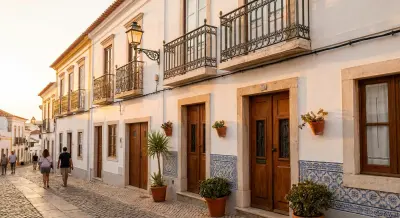
As you leave, notice the neighboring houses. Many boast what we call decorated platibandas, that decorative band at the top of the facade that hides the roof. In Lagos, these are often geometric, in tones of ochre or blue, a detail easily missed if you’re just focused on finding the next gelato shop. To understand how this identity fragments across different neighborhoods, consult our Lagos Neighborhood Guide, where we detail where the city became modern and where it still holds the scent of sea salt and lime.
Walls: The Skin of the City
No architectural route in Lagos is complete without walking the Walls (or Cerca Nova). Mostly dating from the 16th century, these defenses adapted to the evolution of artillery. The Porta da Vila bastion is the most photogenic spot, but I prefer the stretch near the Jardim da Constituição. There, the gray limestone seems to merge with the greenery. The walls weren't just for defense; they defined who was a citizen and who was an outsider. Today, they are the boundary separating the historic center, where the Traditional Shops of Lagos still resist with their wicker baskets and ancient ironware, from the bland urban expansion of the 80s and 90s.
Many of these shops occupy the ground floors of buildings with Manueline openings. Look for Rua da Barroca. It’s a narrow street that often falls off the radar, where you can find windows and doors with stone frames carved with knots and ropes, the ultimate symbol of King Manuel I's era. It is an architecture of propaganda, made to celebrate the sea, which miraculously survived total destruction.
Modern Contrast and the Sea's Perspective
For a tactical break, ignore the terraces of Praça de Gil Eanes (where João Cutileiro’s statue of King Sebastian continues to divide opinion, some think it looks like an astronaut, I think it’s a masterpiece of historical deconstruction) and head up toward the back of the castle. Have lunch at Casinha do Petisco. Order the clams or the house steak. It’s small, loud, and real. They don’t take reservations, so arrive at 12 PM or prepare to wait.
After walking the streets, the best way to understand the defensive logic of Lagos is to see it from the outside. A Boat Trip Along the Caves and Coast of Lagos isn’t just for seeing Ponta da Piedade; it’s for seeing how the walls rise above the cliffs and how the Forte da Ponta da Bandeira guarded the harbor entrance. From the boat, the city reveals itself as a compact fortress, a gem of military engineering that used geography as its first line of defense.
If you have time and want to see how other Algarve cities handled their heritage, our guide to Local Culture in Albufeira shows an interesting contrast: where Lagos is structured and military, Albufeira is labyrinthine and white, almost Moorish in its genesis, despite modern interventions.
Practical Tips for the Urban Explorer
- When to go: Start at 8:30 AM. The morning light on the limestone is unbeatable for photography and avoids the excessive heat that radiates from the stones by midday.
- Footwear: The Portuguese pavement (calçada) in Lagos is polished by decades of footsteps. It is slippery, even when dry. Forget flip-flops; wear something with traction.
- What to look for: Find the door knockers (aldrabas) shaped like hands. They are a traditional detail that still persists on many solid wood doors on Rua do Jogo da Bola.
- Cost: Most churches charge a symbolic entrance fee (€2 to €4), which usually includes access to small museum collections. It’s worth every cent for the maintenance of the heritage.
Lagos doesn't reveal itself to those in a hurry. It is a city of details: the angle of a watchtower, the color of a 19th-century pattern tile, the way Cutileiro’s Dom Sebastião seems to look with melancholy toward the sea from which he never returned. Walking here is reading a story of glory and disaster, written in stone.