July in Viana do Castelo: Sardines, Arraiais, Real Festas
The famous saints' festivals end in June and Viana's huge Agonia isn't until August, but July is when the Minho really parties: village arraiais announced by rockets, sardines on cornbread, caldo verde at midnight. Here's how to find them from Viana do Castelo, plus beaches for the days and fado for the quiet nights.
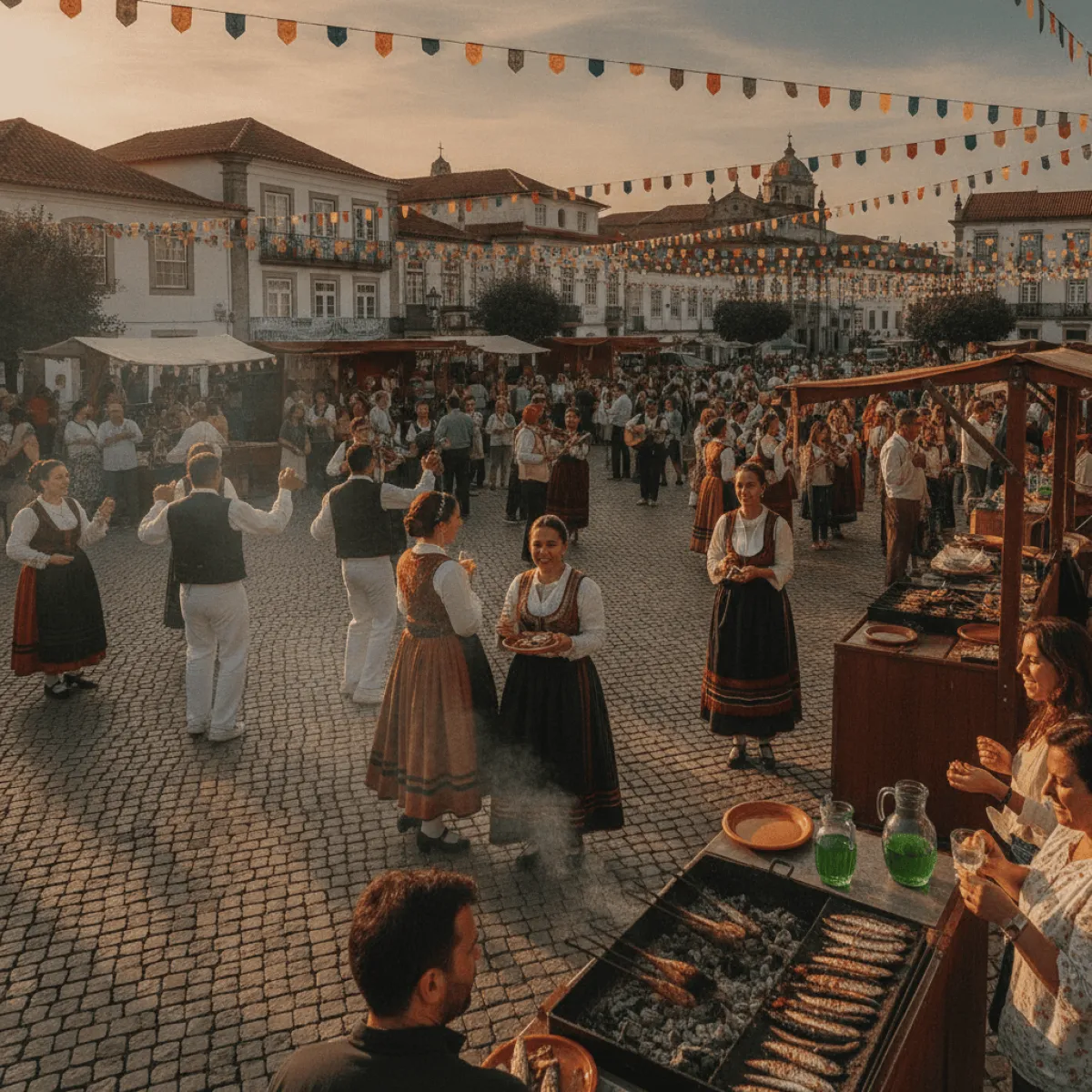
Let's get the awkward truth out of the way first: the Santos Populares, Portugal's famous saints' festivals, technically happen in June. Santo António on the 13th, São João on the night of the 23rd, São Pedro closing out the month. If you land in Viana do Castelo in July expecting basil pots and sardine smoke on every corner of the old town, you've missed that particular train. Here's why you shouldn't care: July in the Alto Minho is arraial season, the month when every parish around Viana throws its own festa for its own patron saint, organised by volunteer committees who spent all winter selling raffle tickets to pay for the brass band and the fireworks. No ticket office, no wristbands, no app. A football pitch or a church courtyard, a stage built the day before, and the near certainty that you'll end the night dancing badly to a concertina next to someone's 80-year-old grandmother.
The calendar nobody explains
Viana do Castelo has a delightful scheduling quirk. Its enormous signature festival, the Romaria de Nossa Senhora d'Agonia, happens in August: women in traditional dress wearing kilos of gold filigree, giant carnival figures, flower carpets laid by hand through the Ribeira quarter. It's spectacular, and it's also the week the city overflows, rooms sell out months ahead and prices climb accordingly. June has the saints, August has the Agonia, and July sits in between looking deceptively quiet. Deceptively, because July is when the parishes of the Lima and Neiva valleys hold their own festas. Each village has its saint, its committee, its designated weekend. The practical upshot: on almost any Saturday in July, there's an arraial happening within a twenty-minute drive of central Viana. You just need to know how to find it.
How to find an arraial: a field method
Tool number one: your ears. In the Minho, festas announce themselves with rockets fired at midday the day before and again on the morning of the feast. Three dry bangs echoing off the hills means there's a party in that direction. Tool number two: posters. Check café windows, lamp posts, the door of the parish council building. Minho arraial posters are their own art form, all yellow and red backgrounds, a photo of the band, and bold type promising a "grandioso arraial". Tool number three, the most reliable: ask. Walk into any café, order an espresso, and ask the person behind the counter where the festa is this weekend. You'll leave with directions, strong opinions about which band is better, and probably parking advice.
Etiquette exists, and it matters. Bring cash in small notes, because the pork sandwich stall does not take cards. Arrive after 9pm, since before that it's just the mass and family dinners. Don't film everything; the arraial is a gathering, not content. Dance badly, nobody is watching. And accept the cup of wine someone offers you, because refusing is considered ruder than spilling it.
The arraial menu: sardines on cornbread, caldo verde at midnight
Festa food in the Minho is a short, perfect canon that nobody has felt the need to update in decades. Grilled sardines are served on a thick slice of broa, the dense local cornbread, which works as plate, napkin and second course, because broa soaked in sardine fat is arguably better than the sardine itself. Caldo verde, the kale and potato soup, appears around midnight in ceramic bowls and will do more for your stamina than any coffee. Bifanas and grilled pork in bread handle the protein, farturas handle the sugar, and red vinho verde, served cold in plastic cups or clay bowls, handles everything else. It's rough, slightly fizzy, stains everything it touches, and by the third cup it makes complete sense. You won't spend much: a full arraial dinner costs less than a starter in a mid-range city restaurant. Exact prices vary from festa to festa, but the rule holds: if it feels expensive, it isn't a real arraial.
If you'd like to understand this food before eating it standing up in a field, start with the seafood and heritage food tour in Viana do Castelo. It's the best way to calibrate your palate, and it makes the contrast click: Viana's coastal kitchen of fish and shellfish on one side, the inland festa kitchen of pork, corn and kale on the other. Two food cultures living fifteen minutes apart.
Days belong to the ocean, nights to the festa
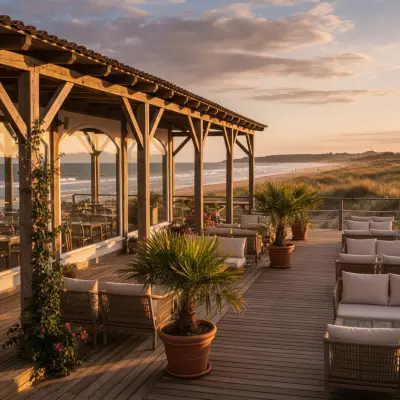
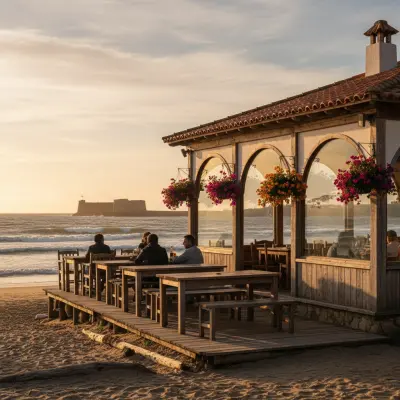
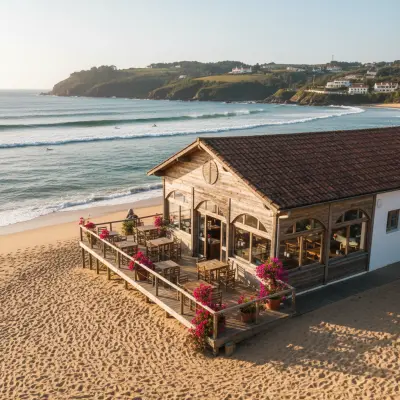
An arraial doesn't start until dark, which leaves you the whole day, and Viana solves that problem with a coastline that embarrasses destinations with triple the marketing budget. Praia do Cabedelo, across the Lima river, is the big sandy one, backed by dunes, where the afternoon north wind fills the water with kitesurfers. Go in the morning for calm, go in the afternoon for the show. Praia Norte is the urban option, walkable from the centre, rockier, with saltwater pools and the best end-of-day light in town. And Praia de Afife, a few kilometres north, is the wild one: dunes, proper surf, and the feeling that the Minho kept a stretch of coast aside for people willing to make the effort. Regional trains on the Minho line stop at Afife, though not every service does, so check timetables locally.
One honest warning about the water: this is the north Atlantic. In July the sea temperature ends conversations. You go in screaming and come out converted. Locals do it with a casualness that takes years to acquire.
Nights without a festa: fado in concertina country
Not every July night has an arraial within reach, and for those evenings there's an unlikely alternative: fado. The Minho is concertina territory, all drums and call-and-response singing, which makes a fado house in Viana something like a cultural embassy. Amália em Viana is exactly that, and it works better than it has any right to: after two nights of brass bands and fireworks, a Portuguese guitar in a closed room feels almost like a detox. Go on a Tuesday or Wednesday, when the parishes rest, and book ahead.
Decode the city before you abandon it for the villages
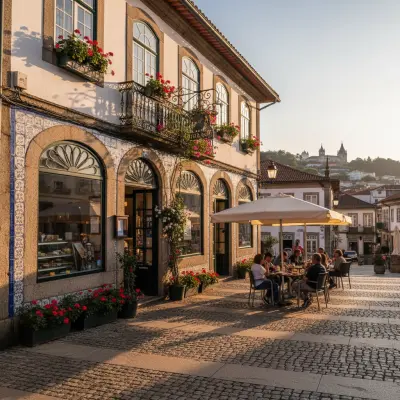
Viana deserves better than being your arraial dormitory. The historic centre is compact and dense: Praça da República with its Renaissance fountain, Manueline facades, and the Santa Luzia hill looming above it all, basilica on top and Portugal's longest funicular climbing up to it. You can do all of this alone with a map, but the guided historical walking tour of Viana do Castelo supplies the context the plaques don't, including the city's long relationship with cod fishing, shipyards and the sea, which explains why this was never a small town, just a discreet one.
If the romaria bug bites
The arraial is a gateway. After it come the big romarias, and the Minho calendar is generous year-round. Barcelos is half an hour away on the same Minho railway line and hosts one of the north's most beautiful festivals every May: read our honest guide to the Festa das Cruzes in Barcelos and put it in next year's calendar now. Travelling with children? The Barcelos family guide will fill a full day without a single meltdown.
Practical notes, no padding
- Getting there: trains run regularly from Porto Campanhã on the Minho line. The regional service is slower but cheap; check times and fares with CP, the national rail operator.
- Sleeping: July is dramatically easier and cheaper than Agonia week in August. If your goal is to actually know Viana, July is the month.
- Arraiais: free entry, cash only, late dinner, even later return. If you drive, drink accordingly or appoint a designated driver before the first cup of vinho verde.
- Fireworks: nearly every arraial ends with them. If you're travelling with dogs or noise-sensitive small children, plan your exit before midnight.
- The daily rhythm: beach in the morning, old town or Santa Luzia in the afternoon, a non-negotiable nap, arraial at night. Repeat until your body files a complaint.
June gets the fame, August gets the gold and the crowds. July gets the festas where nobody is performing for you, which is exactly why they're the best ones. Follow the rockets.