Gerês Thermal: Hot Springs and Roman Baths in Caldas
In Caldas do Gerês the water still leaves the mountain at 47°C, exactly as it did under Roman rule. An honest guide to the balneary, the real Via XVIII remains, and why October beats August every single time.
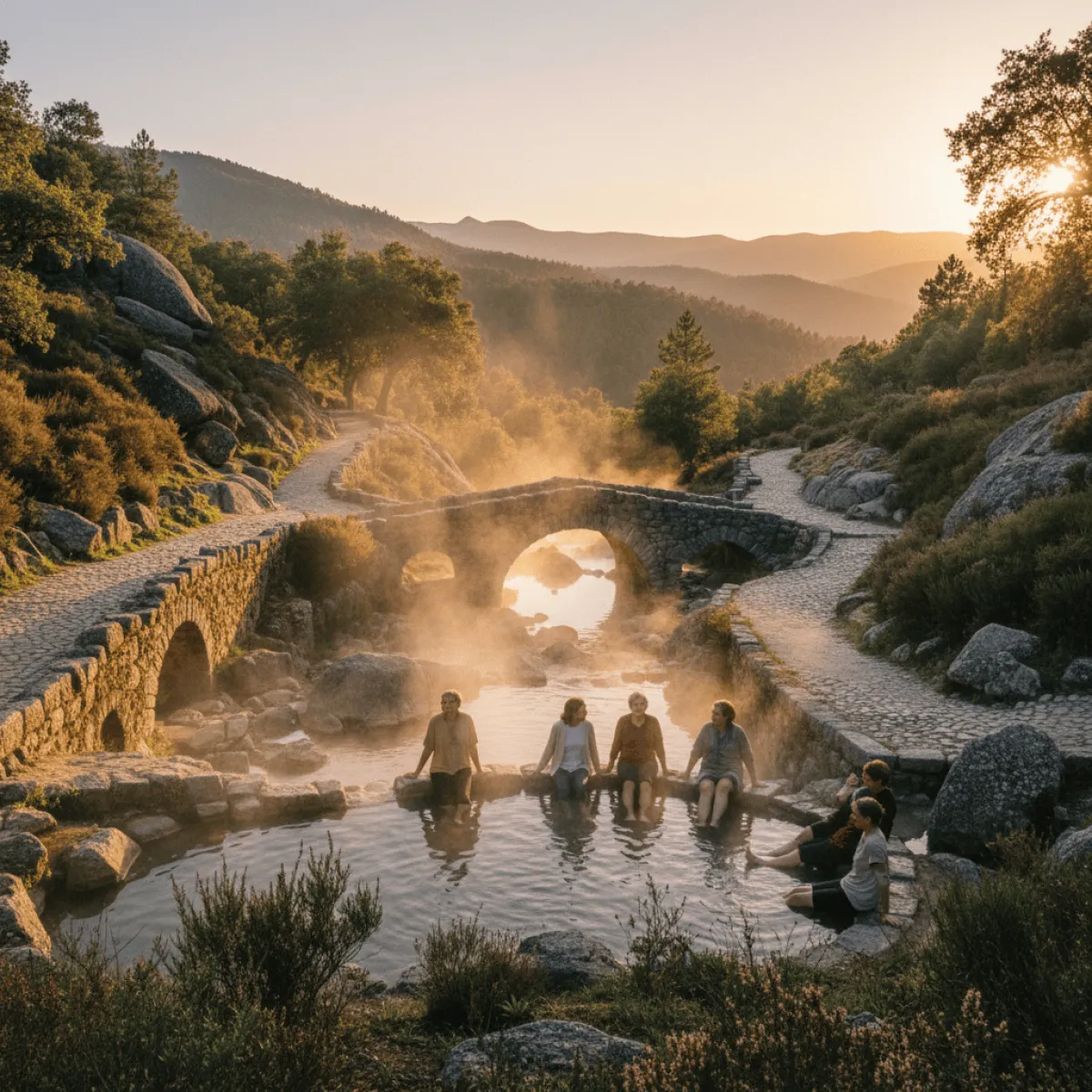
It smells of sulphur before you see anything. That is the first warning that you have arrived in Caldas do Gerês: a metallic tang rising from a drain grate beside the Hotel das Termas at around eight in the morning, when the cars are still asleep and the steam escapes in slow curls. Locals stopped noticing decades ago. For visitors, it is chemical confirmation that the mountain underfoot is, quite literally, simmering.
Thermal Gerês is not a 19th-century invention, and certainly not a product of Estado Novo tourism leaflets. It is Roman. Properly Roman. When the legions of Via XVIII, the Geira that linked Bracara Augusta to Asturica Augusta, came through this valley in the 1st century, they knew exactly what they were doing. They stopped, built bath structures, left votive altars to the water nymphs. Two thousand years later, you can still dip a foot into the same spring. This is not folklore. It is documented continuity.
Why this water is different
Before we get into pools and timetables, it helps to know what you are bathing in. The Caldas do Gerês springs emerge from the ground at around 47°C. The mineralisation is light, but the chemistry is specific: bicarbonate, sodium, sulphurous, with a fluoride trace. Translation: traditionally indicated for liver and digestive complaints, and for certain skin conditions. That is why, for the best part of a century, Gerês was the spa town for Lisbon ladies with tired livers and Porto merchants with gout.
This clinical pedigree explains something important. Thermal Gerês is not, and never was, a weekend wellness retreat with ambient music and rose petals in the water. It is a balneary. Serious, medical, with a mandatory consultation if you go for the full treatment programme. If you want aromatherapy and gold leaf, drive an hour east to Vidago. If you want to understand why the Romans stopped here, you are in the right valley.
What to do at the baths (and what to avoid)
The Balneário das Termas do Gerês sits in the centre of the village, inside the Hotel das Termas complex, and is run by the same group. There are essentially two ways to use it.
The first is the classic thermal programme: it requires advance booking, a consultation with the resident hydrology doctor, and a prescribed set of treatments. Immersion baths, hydromassage, steam, inhalations, all of it over several days, usually in cycles of fourteen. This is for people who come to actually be treated.
The second, more useful for the passing traveller, is the leisure thermal circuit. You book by the hour, it lasts about ninety minutes, and you get a heated indoor pool, a thermal bench, a sauna, and sensory showers. Prices land around 25-35 euros per person, but check locally before you travel, as tariffs shift by season. Go mid-morning, between 10am and noon, when the classic-programme patients have gone for breakfast and the afternoon crowd has not yet arrived. You will have the pool more or less to yourself.
Unpopular advice: do not go at the weekend between July and September. Gerês fills up with people who came for the Caniçada reservoir and decided, last minute, that they also wanted to try the baths. Result: queues, more bodies than minerals in the water, and the clinical atmosphere turns into a waterpark. If those are the only dates you have, aim for a Tuesday or Wednesday morning.
The Roman baths: where the real remains actually are
This is where it gets interesting, and where most visitors miss the point. The 'Roman baths' you see in brochures are not a reconstruction. They genuinely exist, partially preserved beneath the current building and in the immediate area.
Excavations over recent decades have confirmed what classical texts already suggested: there was a substantial Roman thermal complex serving both the legionaries of the Geira and the local population. Votive altars with inscriptions to water deities, funerary stones, fragments of stone piping. Some pieces are displayed in the small interpretive centre in the village. Others sit in the reserves of the Museu D. Diogo de Sousa in Braga.
To understand the Roman context you cannot just walk around the village. You have to walk the Geira itself, the military road that linked the Cávado valley to Galicia. Milestones, bridges, paved stretches: all of it is still there, hidden among oaks and ferns. Our hike along the Geira in Gerês, with Roman history explained step by step, is the obvious and, frankly, essential complement to a thermal visit. Without it, you only get the spa side. With it, you understand why this valley mattered long before Portugal existed as a country.
Where to sleep (and where not to bother)
Caldas do Gerês grew up around the springs in the 19th century, and still has the street pattern of a Belle Époque spa town: a wide main avenue, hotels with wrought-iron balconies, a bandstand in the garden, pensions whose names have not changed since 1930. Some are beautifully kept. Others, to be honest, need serious renovation.
Simple rule: stay in the village if you are doing a treatment programme, because then you walk out of your room in a dressing gown and you are at the baths in five minutes. For anything else, staying in the village means tour buses from 9am and impossible parking. If you want quiet, sleep a few kilometres out, in Vilar da Veiga or São João do Campo, and come into the village only for the bath and dinner.
Be wary of hotels that brand themselves 'five-star Gerês' without being part of the thermal programme. Almost none of them are, and the premium you pay does not show up in your stay.
Eating in Gerês: the realism of cabrito and posta
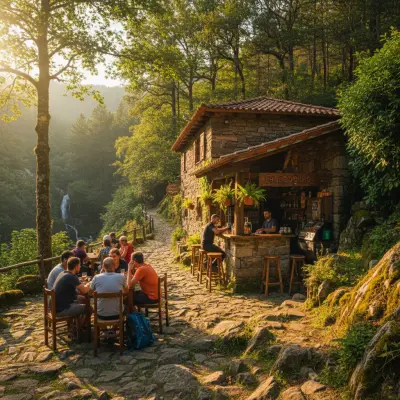
The local cuisine is mountain food, and thankfully unrepentant about it. That means cabrito (kid goat) roasted in wood-fired ovens, posta à mirandesa, bacalhau with cornbread, hearty bean stews on cold days. The village restaurants are predictable: some live off passing tourists, others maintain standards. The test is the car park. If there are coaches parked outside at noon, walk on.
Look instead at the taverns in the surrounding hamlets, particularly Rio Caldo and Ermida. There, the cabrito is still actual mountain goat rather than frozen import from Galicia, and the person serving you is the one who took the bread out of the oven that morning. Expect 15-20 euros a head with house wine. Book ahead on Friday and Saturday, because the locals know too.
For the evening, the Chamadouro Bar is the inevitable stop. It is where the day ends after the baths, with a Portuguese craft beer in your hand and conversation loosening. It is not polished. It is honest. And in Caldas do Gerês, at the end of the day, honest is what you want.
For those who want more than horizontal hot water
Thermal Gerês works as decompression. But stay more than two days, and you will notice the village is small, and rightly so. Then you leave it.
For the less lazy, I unreservedly recommend the canyoning on the Rio Arado, with our full guide to the descents and gear. It is the antithesis of the baths: icy water, adrenaline, abseiling into waterfalls. Do it in the morning before the spa appointment and you will understand why the Romans, after their forced marches, valued hot water so deeply. Thermal contrast is one of the better things you can do to a body in a single day.
For the genuinely lazy, a stroll to the Arado waterfall, or the Pedra Bela viewpoint at sunset, will do. Bring a jacket. The altitude and the wind do the rest.
When to go: not the season you would guess
Two schools of thought. The first says come in summer, when the sierra is open and the days are long. The second, mine, says come between mid-September and mid-October, or in May. Reasons: the baths run year-round (with a brief pause in January, but check), the mountain is empty, accommodation drops 20-30%, and the air has that autumn quality which makes the spa steam hang above the rooftops at dawn. In August that disappears under 28°C and tour groups.
If you come in May and want to combine with other Minho traditions, drop down to Barcelos: our honest May guide to the Festa das Cruzes in Barcelos pairs well. It is forty-five minutes by car, and gives you a very different Minho.
Travelling with kids?
The classic thermal programme is not for children. The leisure circuit, in principle, accepts children from six upwards, but check the rules before going. Either way, Gerês with small children needs flexibility: natural pools in Rio Caldo in the morning, a long lunch, a nap, and the baths reserved for adults while the kids stay with a grandparent or the other half. For a broader sense of how these Minho destinations work with children, our honest family guide to Barcelos has transferable principles: slow rhythm, early meals, and never, ever schedule more than two activities a day.
How to get there and the final details
By car from Porto, allow an hour and fifteen minutes via the A3 and then the N103 to Braga, plus another half hour on the N308. From Porto, it is the sensible option. By public transport, there are buses from Braga (Empresa Hoteleira do Gerês runs most), but frequencies drop at weekends and evenings, and there is no train line. Anyone arriving without a car becomes a hostage to timetables, which in a valley where everything interesting is scattered, gets old fast.
Parking in the village: paid, limited, and in August one of the worst driving experiences in northern Portugal. If you must go then, arrive before 9am or after 4pm.
Lastly, coffee. Village coffee is fine, nothing memorable. If you are travelling around Minho looking for proper roasts and baristas with opinions, it is worth the detour: our cup-by-cup guide to good coffee in Barcelos points to the right counters. In Gerês, take a bica at the bar and move on. The magic here is not in the espresso. It is in the water coming out of the ground at 47°C, the same way it did when Trajan was emperor.