Gerês Museums: Which Are Worth It and Which to Skip
In 1972, an entire village was submerged to build a dam in Gerês. The museum that tells its story is the best in the region, and costs just €2. But not every museum space in the serra deserves the detour.
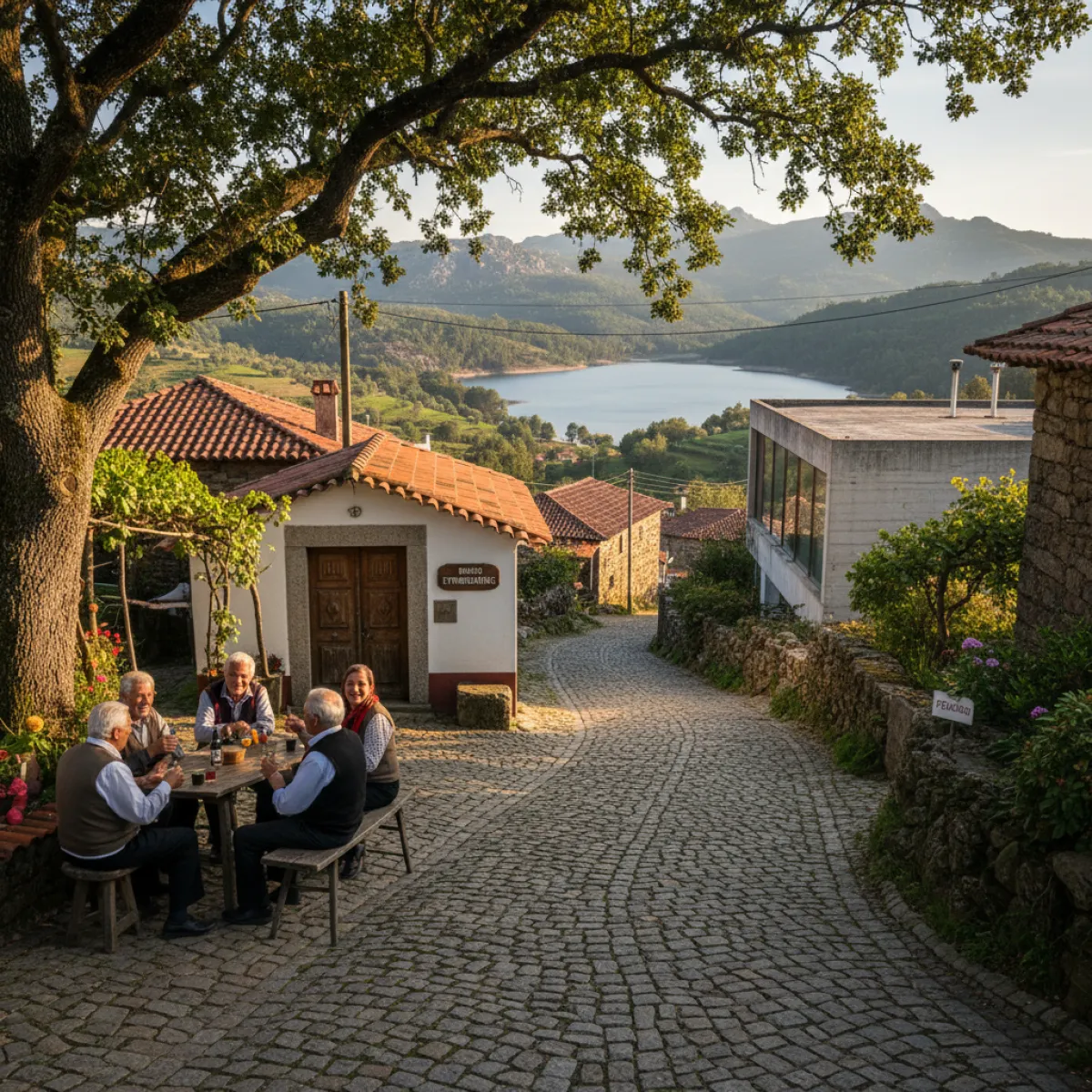
Let's be clear: nobody goes to Gerês for the museums. You go for the impossibly green rivers, the waterfalls, the trails cutting through ancient oak forests. But here's the thing, it rains in Peneda-Gerês National Park. It rains a lot. And when the fog swallows the valleys and the rain hammers your windshield with real conviction, the region's museums become a genuine option. A couple of them even deserve your time when the sun is out.
I worked through the museum spaces in and around Gerês to separate the ones worth every minute from the ones you can comfortably skip. Spoiler: there's a museum about a submerged village that's genuinely fascinating, and there's an interpretive centre that needs more interpretation than it actually provides.
Museu Etnográfico de Vilarinho das Furnas, The One You Shouldn't Miss
This is the museum that justifies the visit, rain or shine. Located in Campo do Gerês, it tells the story of Vilarinho das Furnas, a communal village that was submerged in 1972 to make way for a dam. We're not talking about a historical footnote, we're talking about an entire community, with its own laws and governance system, swallowed by water in one of those episodes Portugal would rather forget.
The museum works on two levels. The first is ethnographic: farming tools, traditional clothing, household objects. This could easily be tedious, Portuguese ethnographic museums have a reputation for being dusty warehouses of decontextualised objects, but here the curation does the work of telling an actual story. You understand how the communal land management system functioned, how the vezeira (collective herding rotation) was organised, how a village in the 20th century was still operating under medieval sharing rules.
The second covers the serra's biodiversity and includes a section on regional folk music. It's not extensive, but it rounds out the visit nicely.
Practical details: open Tuesday to Sunday, 9:30am to 12:30pm and 1:30pm to 5pm (last entry at 4:30pm). Closed Mondays. Admission is €2, a bargain, frankly. Groups of 10+ pay €1 per person. It works well with children; the story of the drowned village captures their attention. Speaking of family-friendly plans, if you're heading to Barcelos with kids after Gerês, there are good options to keep the troops entertained.
Tip: in warmer months, when the dam level drops, the ruins of the village emerge from the water. Combine the museum visit with a trip to the reservoir, the effect is extraordinary. Walking through the "streets" of a ghost village half-submerged in green water is an experience no museum can replicate.
Museu da Geira Romana, Good, But With a Caveat
Right next door, also in Campo do Gerês, sits the Museu da Geira, dedicated to the Roman road that connected Bracara Augusta (Braga) to Asturica Augusta (Astorga) and crosses through the national park. Opened in 2013, the space has four thematic rooms, an auditorium, and offices for archaeological research.
The museum explains Roman road construction techniques and the transport methods of the era, with scale models and reconstructions that help you visualise what these roads looked like two thousand years ago. It's well put together, and you'll spend about 45 minutes to an hour if you read everything carefully.
The caveat? This museum works best as an appetiser for the real thing. The Geira Romana is right there, a few kilometres away, with original milestones still in situ. Visiting the museum without then hiking the Geira is like looking at photographs of a cake without tasting it. The trail is extraordinary: Roman bridges, stretches of original paving, milestones with Latin inscriptions, all set against the dramatic backdrop of the serra.
Hours are the same as the Ethnographic Museum: Tuesday to Sunday, 9:30am–12:30pm and 1:30pm–5pm. Check admission prices locally, as both museums are part of the same Núcleo Museológico de Campo do Gerês and sometimes offer a combined ticket.
Verdict: worth it if you're combining with the Geira hike. On its own, it's a pleasant complement but not a destination.
Ecomuseu de Barroso, Montalegre, The Surprise
This one's further afield, in Montalegre, on the Terreiro do Açougue. Technically it's not Gerês proper, but it's on the park's edge and many visitors combine both destinations. The Ecomuseu de Barroso, Espaço Padre Fontes is a pleasant surprise, not least because it's free.
The ecomuseum concept works here in a more alive way than in many places: rather than just displaying objects, it contextualises the relationship between the Barroso communities and their territory. Extensive pastoralism, weaving, mountain agriculture, the Iberian wolf, traditional production methods, all presented accessibly and with obvious care for the material.
For an extra €1, they do a tasting of local honey and herbal infusions, which is absolutely worth it. Barroso heather honey is the real deal, dark, intense, nothing like the generic supermarket stuff.
Summer hours: Monday to Sunday, 10am–1pm and 2pm–6pm. Winter: 9am–1pm and 2pm–5pm. Closed Mondays except holidays. The drive from Campo do Gerês to Montalegre takes about an hour, but the road is beautiful and passes through Pitões das Júnias, where you can stop to see the ruins of the Santa Maria das Júnias Monastery.
Castelo de Lindoso, More Castle Than Museum, But Go Anyway
On the other side of the park, accessed via Ponte da Barca, Castelo de Lindoso has a small museum inside its keep. The collection splits into two permanent exhibitions: weapons from the 14th to 19th centuries, and archaeological pieces from the Lindoso territory. It's not large, it's not sophisticated, but admission is €1.50 and the castle itself is impressive.
The real spectacle, though, is next door: the concentration of espigueiros (over 50 traditional granite granaries, clustered beside the castle) is one of the Minho's most iconic images. If photography is your thing, go in the late afternoon when the raking light makes it all look almost unreal.
Verdict: go for the castle and the espigueiros, not the museum. The collection is curious but basic. The keep, at 15 metres tall with views over the Lima valley, is the real attraction.
Centro Interpretativo "Vezeira e a Serra", Fafião, Skip It
And here we enter "you can skip this" territory. The Fafião Interpretive Centre, dedicated to the vezeira and pastoral life in the serra, has good intentions but is a small space with too little content to justify a detour. If you're already in Fafião, and Fafião deserves a visit, it's a genuine village with extraordinary scenery, then step in, spend 20 minutes, no harm done. But don't make the centre the reason to go to Fafião.
The reason to go to Fafião is different: access to the Rio Arado and its waterfalls. If you want something more adventurous, canyoning on the Rio Arado is one of the best adventure experiences you can have in Gerês.
The Best Strategy for a Museum Day in Gerês
If the weather won't cooperate and you have a full day, here's my suggestion:
- Morning in Campo do Gerês: start with the Museu Etnográfico de Vilarinho das Furnas (arrive when it opens at 9:30am to beat any groups). Then the Museu da Geira. Two to three hours for both, taking your time.
- Lunch in Campo do Gerês or São João do Campo. Simple restaurants with solid regional food, arroz de cabidela, roast kid, cozido barrosão if you're lucky. Check locally what's available.
- Afternoon: if the weather clears, use it to walk a section of the Geira Romana. If it's still raining, drive to Lindoso for the castle and granaries, or to Montalegre for the Ecomuseu.
If you have more days in the region and want to explore the cultural side beyond Gerês, Barcelos is less than an hour away and has a more substantial museum offering, I've written about which Barcelos museums are actually worth your time, and it's a good complement. And while you're there, don't leave without a proper coffee in Barcelos.
The Honest Conclusion
Gerês is not a museum region. It's a region of nature, water, trails, and silence broken only by wind and the bells on Barrosã cattle. But the museum spaces it does have, especially Vilarinho das Furnas, tell stories that give the landscape depth. Knowing that beneath that reservoir lies an entire village changes how you look at the water. And that, to me, is what a good museum does: it changes how you see what's outside.
Don't waste time on underwhelming interpretive centres when the serra itself is the finest open-air museum Portugal has. But save a rainy morning for Campo do Gerês. It's worth every minute, and every cent of the €2 admission.
