Gerês: Five Day Trips That Deserve Your Detour
Gerês keeps you captive, in the best way. But within an hour's drive, Barcelos, Ponte de Lima, Lindoso, and Braga are waiting with centuries-old markets, granite granaries, and food worth arguing about. Five tested day trips, all with time to spare for dinner back at base.
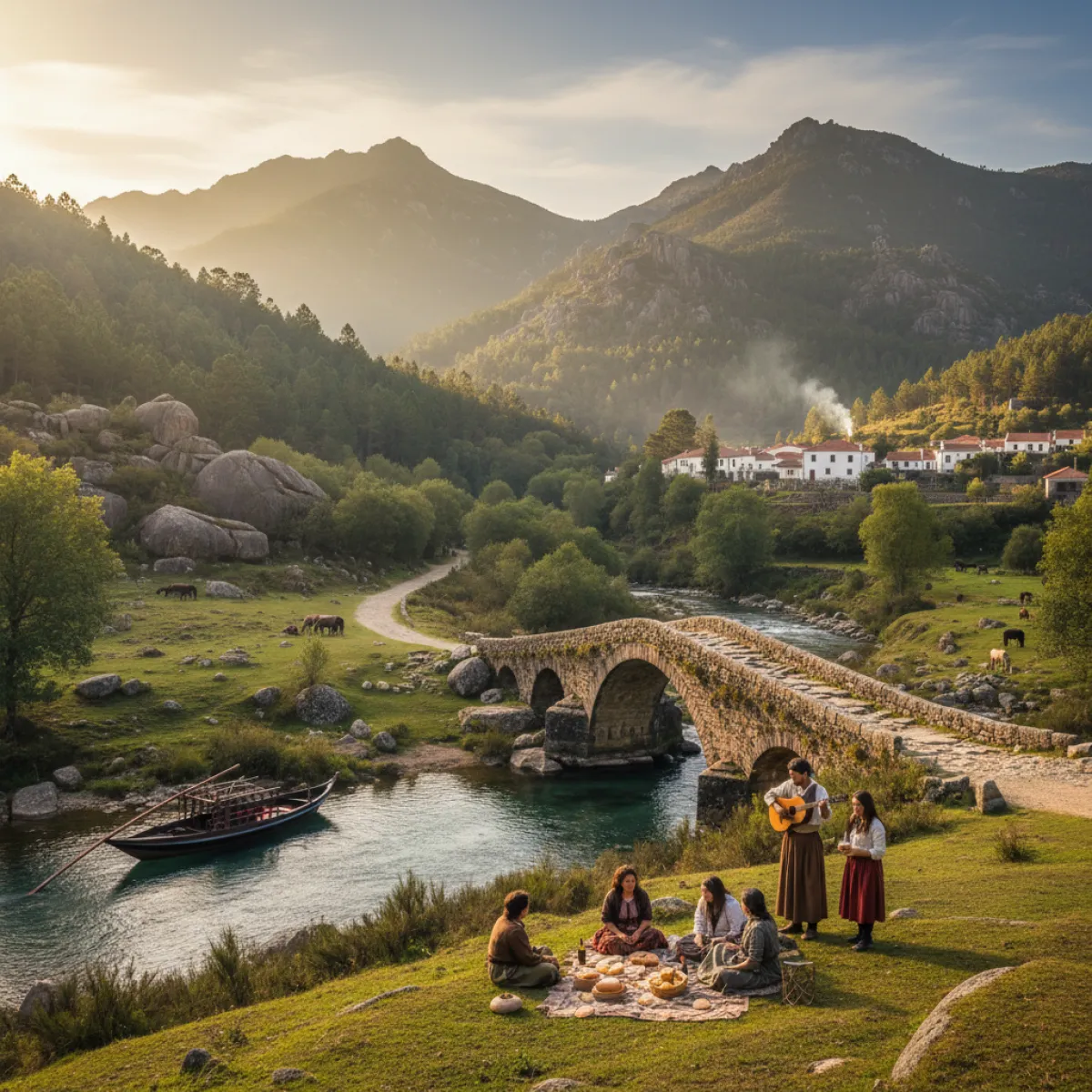
Gerês has a way of holding you hostage, the good kind. You wake up to mist rising off the waterfalls, hike a trail, jump into a freezing lagoon, and suddenly four days have passed without leaving the national park. Nothing wrong with that. But if you're staying longer than a week, or if a rainy day cancels your hiking plans, it's worth knowing that within thirty to sixty minutes of driving, there are entirely different worlds waiting.
These are five day trips I'd actually recommend, all doable as round trips with time to spare for dinner back in Termas do Gerês or wherever you're based. You'll need a car, public transport in this part of the Minho is, to put it charitably, unreliable.
Lindoso and Soajo: Granite and Granaries Inside the Park
This one doesn't technically require leaving Peneda-Gerês National Park, but it's a full day trip that many people based near the Termas never make, and they should. The road climbing toward Lindoso, past the reservoir, is one of the most beautiful drives in northern Portugal. It's not fast. It's tight curves, views over the Lima valley that force you to pull over, and a growing sense that you're traveling back in time.
Lindoso has the largest communal collection of espigueiros (stone granaries) on the Iberian Peninsula, over sixty granite structures lined up beside a medieval castle. Yes, it photographs well, but it's more than that: it's a communal grain storage system that functioned for centuries. The castle is free to enter, and it's worth climbing the battlements for panoramic views in every direction.
From Lindoso to Soajo is only ten kilometers, and Soajo has its own communal threshing floor with twenty-four granaries. The village is bigger than it looks and has at least a couple of restaurants worth stopping at, ask for roast kid goat if it's in season. Budget a full morning for both villages, and if you like trails, the Soajo area has well-marked hiking routes through the mountain.
For those wanting more adrenaline within the park itself, canyoning on the Rio Arado is one of the most intense experiences you can have in Gerês. It's not for everyone, there are jumps, rappelling, and cold water, but local operators are competent and provide all equipment.
Getting there
From Gerês (Termas) to Lindoso is about 50 minutes on the N308. From Lindoso to Soajo, another 15 minutes. Winding road but well-maintained. Free parking near Lindoso castle.
Barcelos: Far More Than the Rooster
Everyone knows the Barcelos Rooster. Almost nobody bothers visiting the actual city. That's a mistake. Barcelos has one of the oldest and most authentic markets in Portugal, the Feira de Barcelos, every Thursday, fills the entire Cávado riverbank with stalls selling clothes, tools, pottery, live animals, farm produce, and handicrafts. This isn't staged for tourists. It's where people from the region come to buy what they need.
Beyond the market, Barcelos has a compact historic center that's pleasant to explore on foot. The medieval bridge over the Cávado, the Paço dos Condes (now an open-air archaeological museum), and the baroque churches justify a morning of wandering. If you're traveling with family, our honest guide to Barcelos with kids has practical tips that save time and patience.
For your morning coffee or a mid-visit break, Barcelos has a surprisingly good café culture for a city its size. If you take your coffee seriously, our guide to Barcelos café by café maps out the best spots. And if the weather turns, the Barcelos museums are a solid backup, some surprise, others don't, and we tell you which.
Getting there
Gerês to Barcelos is about one hour by car via the A11. Parking is easy except on market day; on Thursdays, arrive early or park further out and walk. The market runs from 7am to 3pm, and the best time is morning, between 8 and 11, before the crowds build.
Ponte de Lima: The Oldest Town, the Prettiest Market
Ponte de Lima claims the title of Portugal's oldest town, and nobody argues. The Roman bridge (rebuilt multiple times, as these things go) across the Lima river is the postcard image, but what makes Ponte de Lima special is the scale. It's small enough to walk in two hours but interesting enough to fill a day.
The biweekly market, on the first and third Mondays of each month, is smaller than Barcelos but equally genuine. Outside market days, the riverside walk, the themed gardens on the south bank, and the streets lined with noble houses bearing family crests are reason enough to visit.
At lunch, look for arroz de sarrabulho or rojões à minhota, these are the regional dishes, and here they're made properly. There are several restaurants in the center; check locally for current recommendations, because in this area, quality shifts with the seasons.
Ponte de Lima is also the Portuguese base for the Camino de Santiago, the central Portuguese variant crosses the bridge, and in summer the streets fill with pilgrims heading toward Valença and Tui. If you spot a pilgrim at a café counter, ask where they started. They usually have good stories.
Getting there
Gerês to Ponte de Lima is about 45 minutes. The prettier route goes via the N304 to Arcos de Valdevez and then the N202 to Ponte de Lima, rather than the motorway. Free parking by the river.
Arcos de Valdevez and Sistelo: The Terraces of the Minho
Arcos de Valdevez is one of those towns most people drive through on the way to somewhere else, and that's a shame. The center has a lovely garden by the River Vez, an old bridge, and a calm that contrasts with the bustle of Braga or Viana. But the main reason to come here is something else entirely: Sistelo.
Sistelo got branded as Portugal's "little Tibet", an overblown comparison, but the agricultural terraces cascading down the Vez valley are genuinely striking. The Passadiços do Sistelo is a roughly two-kilometer walkway, accessible and well-built, with views over the terraces and the valley below. This isn't a mountain hike, it's a gentle walk, doable with children and grandparents. For those wanting to extend the day, the Ecovias do Vez connects Sistelo to Arcos along the river in a flat, easy walk.
On your way back to Gerês, if you still have energy and a taste for history, consider hiking the Geira Romana. This trail follows the ancient Roman road that connected Bracara Augusta (Braga) to Astorga, with original milestones along the way. It's unlike anything else you'll have done that day, and a memorable way to finish.
Getting there
Gerês to Arcos de Valdevez is about 30-40 minutes. From Arcos to Sistelo another 15 minutes on a narrow but paved road. There's a car park in Sistelo, but in summer months it fills up, arrive before 10am.
Braga: The City That Was a Capital Before Lisbon
It might seem odd to suggest Braga as a day trip when you're only an hour from Gerês, but if you didn't visit before heading up to the mountains, it deserves a full day. Braga is Portugal's oldest city, founded as Bracara Augusta by the Romans, and has a density of churches per square meter that rivals Rome (the locals love this comparison and repeat it proudly).
The Sé de Braga is essential, not so much for the cathedral itself, which is handsome but somewhat austere inside, but for the full complex: the treasury, the cloisters, and the Chapel of the Kings. The Bom Jesus do Monte, with its baroque staircase and 1882 funicular (the oldest on the Iberian Peninsula, powered by water counterweight), deserves the climb even if you're not religious. The view from the top is one of the best in the Minho.
In the center, Rua do Souto is the main artery and hums with life at any hour. For food, Braga takes the francesinha seriously, yes, it's a Porto dish, but the bracarenses have their own version and will defend it with conviction. Order one and form your own opinion.
If you have time, the Museu dos Biscainhos, housed in a seventeenth-century baroque palace, is a short but revealing visit: the ground-floor ramps were designed so carriages could drive directly into the courtyard. Details like that are the difference between seeing a city and understanding it.
Getting there
Gerês to Braga is about one hour via the N103 or the A11/A3. Parking in the center can be tricky, use the underground car parks near Avenida Central. Braga has a decent urban bus network if you want to reach Bom Jesus without driving up.
Practical Notes for All Day Trips
- Car: Essential. Renting in Braga or Porto is your best bet. National roads are prettier than motorways but slower, plan accordingly.
- Fuel: Fill up before heading into Gerês. Petrol stations inside the park are scarce.
- Opening hours: Churches and museums in the Minho frequently close between 12:30pm and 2pm. Don't be surprised, use the break for lunch.
- Cash: Bring some. The markets in Barcelos and Ponte de Lima run mostly on cash.
- Season: Spring (April to June) is ideal for these trips, long days, mild temperatures, and the villages come alive without the summer crowds.
