Festival Med Loulé: World Music in the Algarve
Four nights in June when Loulé's old town closes to cars and opens its squares to over a hundred concerts from the Mediterranean, Africa and the Arab world. Where to sleep, where to eat octopus rice before the first set, and why the small stages are always the best ones.
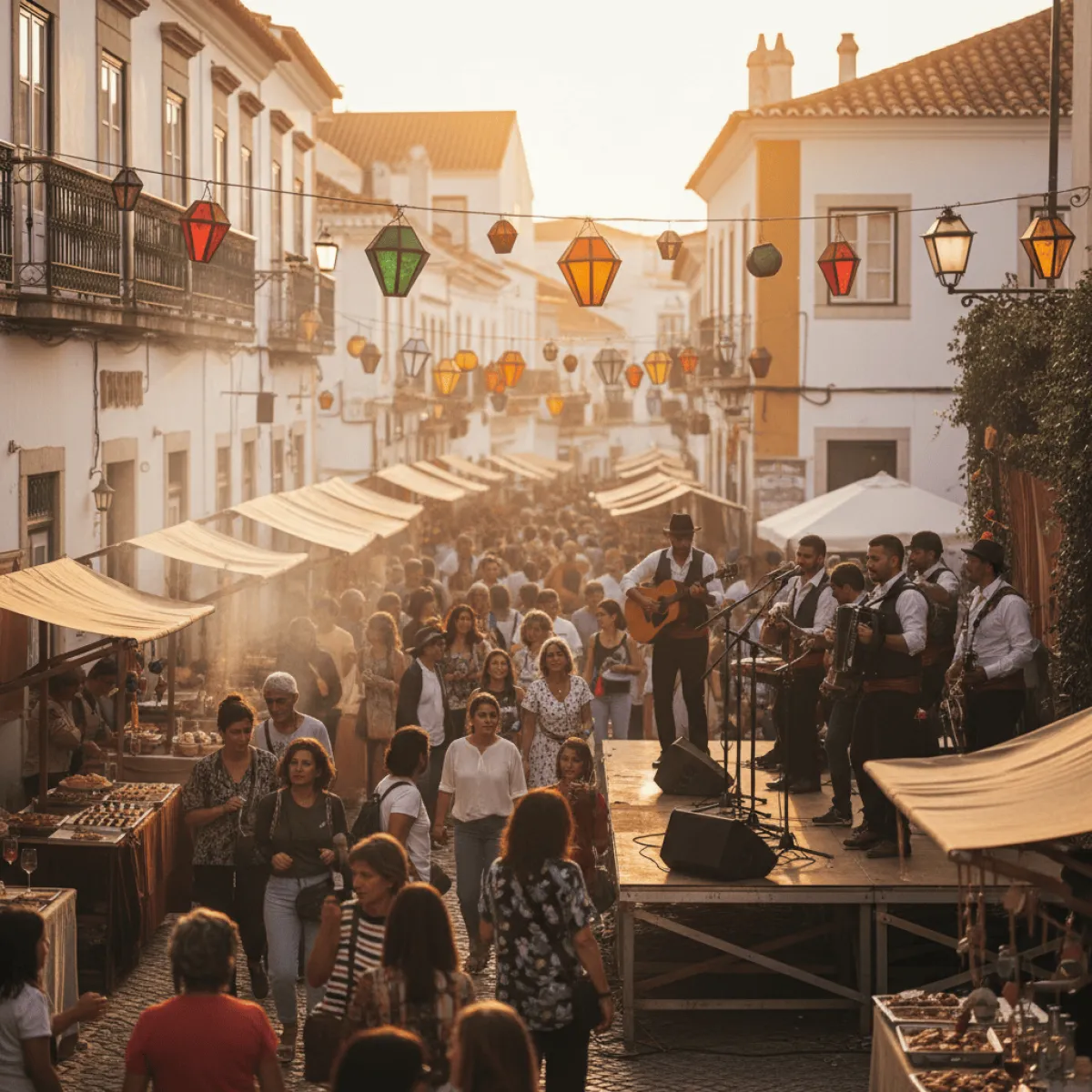
There is a moment, around eleven at night in late June, when Rua 5 de Outubro stops being a street and turns into a corridor of smells and rhythms. A Tunisian cook is shaking a pan of merguez sausages, three steps further on a local lady is selling snails in a plastic cup, and somewhere on a stage hidden behind the Espírito Santo convent a Cape Verdean singer is launching into a morna that makes the crowd freeze mid-sip. This is Festival Med. It is not Womad, it is not Boom, it is not one of those things where you go to dance in glitter until breakfast. It is an entire town turning itself into a stage for four nights, and it is, with very little debate, the best world music festival south of the Tagus.
So what exactly is Festival Med
Festival Med started in 2004, organised by the Loulé municipality, and the idea was straightforward: take the historic centre, close it to cars, fill the squares with stages, and bring in musicians from the Mediterranean, Africa, the Arab world, Latin America. Twenty years later, the thing has grown. More than a hundred concerts now happen over four nights, spread across a dozen stages, and the programme crosses fado, Moroccan gnawa, Angolan kuduro, flamenco, klezmer, Balkan electronica. It is not catalogue eclecticism. It is real curation, the kind where you can tell someone actually listened to the record before putting the act on the bill.
It happens every year in the last days of June, usually Thursday to Sunday. The exact dates shift, so check the official site. Day passes run around 15 to 18 euros and the four-day pass tends to sit around 35. For what you hear, it is a steal. For what you eat and drink along the way, it is a very good investment in happiness.
Why this is not just another festival
The difference is geography. Most festivals build a temporary city in a field. Med does the opposite: it uses a city that already exists, with 800 years on its back, and shoves the music inside the walls. There are concerts in the courtyard of the Santo António convent, in Largo D. Pedro I, in front of São Clemente church, against the old Moorish ramparts. You walk between stages in five minutes, and along the way you pass houses where locals are leaning out of windows in vests, watching the parade with the look of someone who has seen this twenty times and still finds it funny.
Where to sleep (and why you should sleep in Loulé, not Vilamoura)
Let me be blunt: many people coming to Med sleep in Vilamoura, Quarteira or Almancil, because that is where their week-long booking is. Mistake. The festival finishes around three in the morning, taxis become impossible, and the best part of the experience is precisely walking home, slightly stunned, through empty alleys with the smell of grilled chouriço still clinging to your clothes.
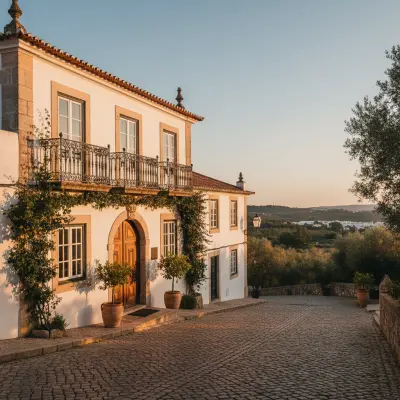
If you want to stay inside the perimeter, CASA BRAVA is the obvious pick for anyone who refuses to check into another chain hotel with a vanilla-scented lobby. A restored stone house, tastefully done, high ceilings, a kitchen where you can land in the morning with a box of pastéis de nata. Book three months ahead if you want it for festival weekend, because Loulé locals tip off their friends early.
Plan B
If you cannot get a room inside the centre, look at the inland villages. Querença, Salir, Alte. Five minutes up the road by car, cooler air at night, and you wake up to roosters instead of tourists wheeling suitcases over cobbles. For something more active, pair the trip with the Wild View yoga retreat in the Loulé mountains, which is the perfect antidote to three nights of sleeping badly because of bongo bass leaking through the windows.
How to handle the city before the festival starts
Concerts begin in the late afternoon, generally around 7pm, but the city opens up from noon. Anyone arriving early and wanting to do proper sightseeing has a good problem on their hands: Loulé is a dense town, with seven small museums scattered across the centre, and it is easy to lose your bearings trying to see everything. The smart way to handle it is to follow the museum marathon route through the seven hubs. It works like a treasure map, at the right pace, and ends just in time to walk into the festival without your feet burning.
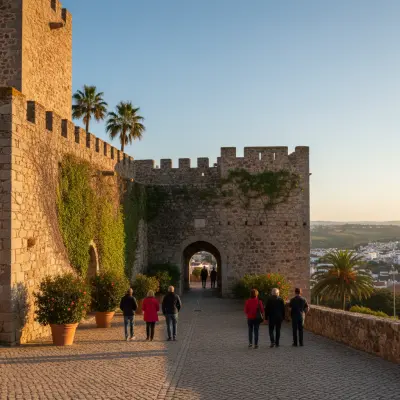
The non-negotiable stop is Castelo de Loulé. It is not Sintra, it is not Marvão, but it has what counts: a 12th-century Moorish wall, a privileged view over the festival stages, and one of the municipal galleries tucked inside. Climb the rampart in late afternoon, watch the square fill up below, and for two euros you get what people pay forty for at a viewpoint in Lisbon. Do it before 6pm, because then it closes.
What to eat (and what to avoid)
During the festival, food stalls go up in the venue: Moroccan couscous, Indian samosas, Peruvian ceviche, Syrian falafel. Some are excellent, others are mid-grade food tourism at twelve euros a plate. The rule is simple: if the stall has a queue of Portuguese people, it is good. If it only has distracted tourists photographing the plate before eating, walk away.
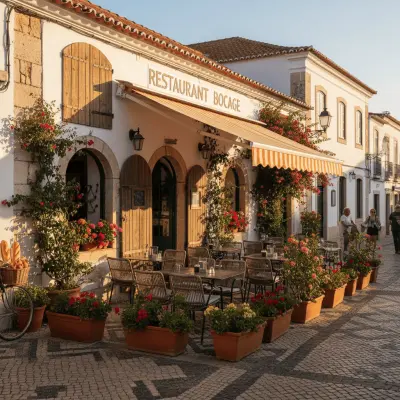
But the truth is that the best place to have dinner before the festival is still Restaurante Bocage. It is not the prettiest place in town, it has no magazine-shoot decor, and the waiter will treat you as if he has known you for twenty years even if it is your first visit. Order the octopus rice if it is on the daily board, or the grilled wreckfish, or the conch feijoada. House wine, bread with sardine butter, coffee at the end. You walk out ready to take three back-to-back bands without needing to crash into a 2am barbecue.
Survival breakfasts
Heads up: you will sleep late, and the hotel breakfast will not happen. Find a bakery on Largo Tribunal or Rua 9 de Abril, order a pastel de massa tenra (a Loulé speciality, savoury, similar to pastel de Chaves), a galão, and zero ambitions. The town takes care of the rest.
Festival logistics, with no fluff
The main stages tend to be four or five, and there is always a circuit of smaller, more intimate stages inside courtyards and cloisters. The lineup drops in mid-May. Pro tip: do not build a rigid plan for the night. Pick two must-see acts and leave the rest to chance. The best discoveries always happen when you hear bass coming out of a half-open gate and decide to go and see what it is.
- Tickets: buy online on the festival site or at the gate. Bring cash, there are always queues at the ATM on Rua da Barbacã.
- Getting around: everything is done on foot. The centre closes to traffic. From Faro, Vamus buses run until around 9pm, after that it is a taxi (around 20 to 25 euros) or Uber, when available.
- Toilets: distributed across the venue, but to skip queues step out of the main circuit, some cafes will let you use theirs.
- What to pack: comfortable shoes (Portuguese cobblestones, three days in a row, do the maths), a light jumper for after midnight, small notes for the stalls.
The morning after: how to recover
Anyone who tries all four days straight is a candidate for hospitalisation by exhaustion. The solution is to pace yourself. Use the mornings to explore the real Algarve, away from the packed beaches. If you are travelling with kids, there is an honest guide to Silves for families that covers the cultural alternative well, half an hour up the road.
For anyone wanting to understand the cultural substrate of the festival, the guide to local culture in Faro and the Lagos neighbourhood guide help to round out the picture. Med does not happen in Loulé by accident. It happens because the Algarve, far from the resort pool foam, is frontier territory, peopled by those who have always listened to what comes from across the sea. The Mediterranean music here is not imported exoticism, it is neighbourhood.
Unsolicited opinion
If it is your first time at Med, do three things: arrive on Thursday, eat at Bocage before everything kicks off, and dedicate one whole night to the small stages, without checking the programme. Skip the temptation of going to the headline concert just because everyone else is there. My best Med nights have always been in a courtyard with 200 people and a Cape Verdean band nobody had heard of, instead of a crowd of five thousand watching someone vaguely famous.
And yes, you will take photos. You will post them online. You will go home telling friends you discovered an incredible festival. But do the town a favour: come back outside June. Loulé has a Saturday morning municipal market that is a spectacle in itself, has mountain villages half an hour away, has Fonte Benémola for a Sunday walk. Med opens the door. The rest of Loulé is there for whoever chooses to stay.