Faro From Above: Best Viewpoints and Right Light
Five viewpoints, three pastry shops, and one simple rule: in Faro, the right hour matters more than the gear. An honest guide to photographing the Old Town, the Ria Formosa, and the light that shifts three times a day.
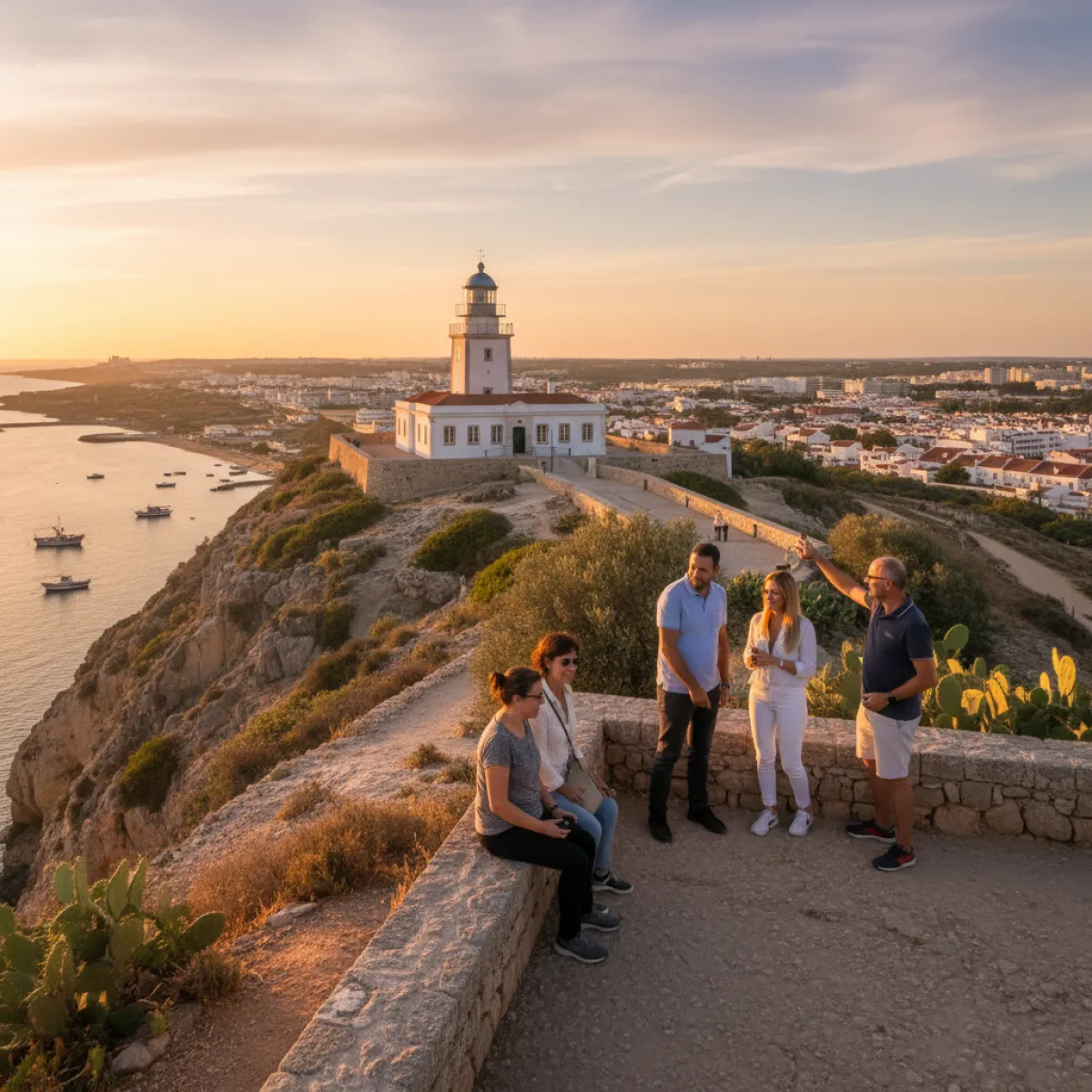
Here is something nobody tells you about photographing Faro: the light here changes personality three times a day, and if you show up at the wrong hour you will leave thinking the city is bland. It is not. It is just lazy before 8am and quick to wrap up after 6pm, like any decent person from the Algarve.
This is a guide for people who want photographs that do not look like they were taken by yet another cruise ship tourist. It is not an exhaustive inventory: it is a rotation of viewpoints, with concrete hours, specific angles, and the part that matters most of all, where to have coffee before and a drink after. Because photographing Faro without eating a pastel de nata at Pastelaria Gardy at 7:45am is like going to Lisbon and ignoring the river.
The rhythm of light in Faro: what nobody explains
Faro faces south-southeast, with the Ria Formosa working as a giant mirror. This means two practical things. First: sunrise is spectacular, but short. You have around 25 minutes of golden light before the sun climbs high enough to flatten everything. Second: sunset is less dramatic than in Sagres or Lagos, but the blue hour (the 30 minutes after the sun goes down) is, to me, the best moment of the day to photograph the city. The Ria turns the colour of polished pewter, the city lights come on slowly, and the sky settles into that cobalt tone no filter can replicate.
To keep things simple:
- 5:30am to 7:00am (summer) / 7:00am to 8:30am (winter): cool, blue light, perfect for the empty Old Town.
- 9:00am to 11:00am: high, hard light. Run away. Go have breakfast.
- 5:30pm to 7:30pm (summer) / 4:00pm to 6:00pm (winter): golden hour, perfect for the Ria Formosa.
- 30 minutes after sunset: blue hour. The best moment. No debate.
Arco da Vila at dawn: the photograph everyone gets wrong
The Arco da Vila is the postcard of Faro. Everyone photographs it between 11am and 3pm, with flat frontal light, and the result is something out of a 7th-grade geography book. The fix is simple: arrive before sunrise. The yellow limestone of the arch turns gold with the first light, and you get the entire Praça D. Francisco Gomes to yourself. There is usually a stork perched on top. If you are lucky, it is there. If not, come back tomorrow.
The angle I recommend: position yourself near Jardim Manuel Bivar, camera low, framing the arch through the palm trees. Lens between 24mm and 35mm. Do not use an extreme wide angle, it warps the arch and looks ugly.
The Old Town: the labyrinth that deserves two visits
This is where most people fail. They walk in through the Arco da Vila, do the tourist loop in 40 minutes, photograph the cathedral, and leave convinced they have seen the Old Town. They have seen nothing. They have seen the bus tour version.
Faro's Old Town has three distinct photographic zones, and each one demands a different hour. For a deeper circuit, I recommend cross-referencing this guide with the hidden gems of Faro, where angles most guides ignore are mapped out.
Largo da Sé at sunrise
Largo da Sé is, in my opinion, the most beautiful spot in Faro. Portuguese cobblestone, orange trees in the middle of the square, the cathedral on the left, the Bishop's Palace in front. But it only works at two hours: 7am, when it is empty and the light comes from the east and hits the cathedral facade, or 9pm in midsummer, when the streetlamps reflect off the stone. At midday it is a furnace without shade.
The walls facing the Ria
Leave Largo da Sé to the left, follow up to the Largo do Castelo viewpoint. From here you have a direct view over the Ria Formosa and the islands. This is the photograph nobody nails because they do not realise the right hour is late afternoon, not noon. At 6:30pm in summer, with the low sun to the east, the Ria turns mirror-like, the islands become black lines on the horizon, and boats returning to Faro leave white trails across the water.
The alleys north of the cathedral
Rua do Município, Rua do Castelo, Travessa da Mota. This is where the Old Town gets human. Laundry hanging out, cats, old women watering geraniums. Photograph between 8am and 9am, when the light slides diagonally down the alleys and creates those hard contrasts between white lime and black shadow. 50mm lens. Patience.
The Santo António do Alto viewpoint: the best one almost nobody visits
This is my favourite, and most people coming to Faro do not even know it exists. It is about 1.5 km from the centre, at the highest point of the city. You walk up Rua de Santo António, then Calçada de Santo António, and arrive at a chapel and a terrace with a 360 view over Faro, the Ria, the airport, and on clear days, the Caldeirão mountains.
The climb is steep. Take it slow, especially in summer. Bring water. The best moment is sunset: you watch the entire city turn gold, then pink, then blue. There is a stone bench next to the chapel, the best seat on earth for the blue hour. It costs zero euros. No ticket booth, no queue.
The Ria Formosa from the inside: photographing from the boat
There is a huge difference between photographing the Ria from above (from the walls, from the viewpoint) and photographing it from inside. From inside, you understand the scale of the salt marshes, you see herons and flamingos for real, and you catch the islands from a perspective that changes everything.
The Ria Formosa boat trip from Faro is the most comfortable way to do it, especially if you are carrying a big camera and do not want to soak gear. Go right after breakfast, ideally. For a slower, more intimate version, where you can get close to the birds without scaring them off, go with the kayak through the Ria Formosa. A warning: shooting while paddling is hard, take a waterproof compact or a phone in a dry bag.
The photographic breakfast: where to start the day
You are not photographing Faro at 6am without caffeine. Here are three options, choose based on the viewpoint of the day.
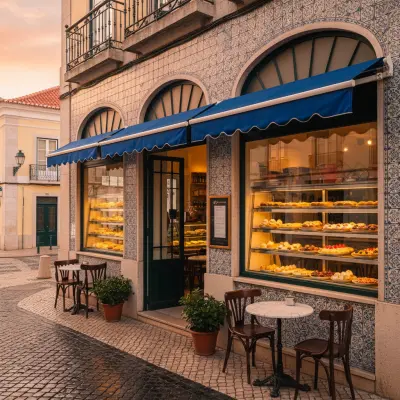
Pastelaria Gardy, on Rua de Santo António, is the obvious choice. Opens early, has tables on the street, 5 minutes on foot from the Arco da Vila. Order a galão and a custard pastry, or the pastéis de nata, which here are honest, not pretentious.
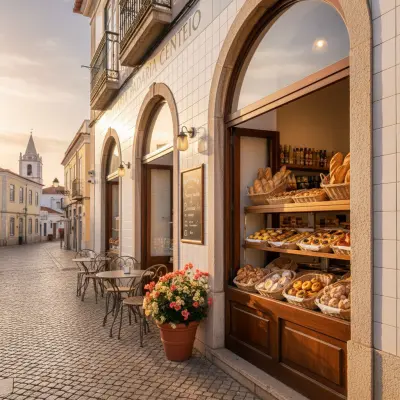
If you are heading to the Old Town from the north side, Pastelaria Padaria Centeio bakes bread fresh first thing in the morning, and has that proper bakery smell that justifies the detour. Simple coffee, locally produced sweets. Do not expect designed menus or latte art.
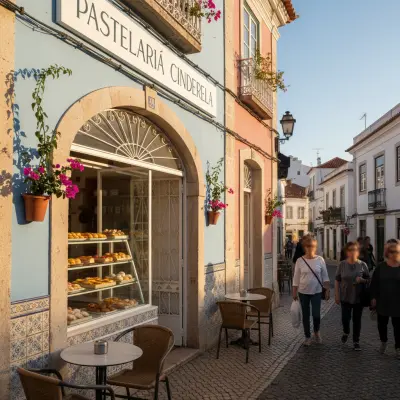
And if you are staying near the train station or the marina, Pastelaria Cinderela is the most discreet of the three. It is where Faro's civil servants have breakfast before heading into the ministries and town hall. That alone tells you everything about the price and the sincerity of the coffee.
Gear: what to bring, what to leave at home
For the Old Town, a camera with a 35mm lens or a 24-70mm zoom is enough. You do not need a telephoto. The alleys are narrow, the squares are small, and everything that matters is less than 30 metres from you.
For the Ria Formosa, yes, a telephoto is worth it, at least 70-200mm, if you want to catch birds or details on the islands. On the boat, bring a waterproof bag and a microfibre cloth, salt spray is treacherous.
Tripod: only useful for blue hour at the viewpoints (Santo António do Alto, Largo do Castelo). For everything else, it gets in the way more than it helps. In any case, low ISO, aperture f/8 to f/11 for landscape, and put a polarising filter in your bag for the Ria reflections.
When NOT to photograph Faro
August. Seriously. In August Faro is packed, the light is violent, and the heat makes carrying gear between 11am and 5pm impossible. If you can only go in summer, go in June or late September, when prices drop, tourists thin out, and the light starts to slant beautifully.
The best month to photograph Faro, in my opinion, is February. Yes, February. There is almond blossom in the surroundings, the Ria is empty of tourist boats, the cafés go back to being for locals, and the low Algarve winter light works miracles on Portuguese cobblestone. Bring a jacket. We are not in the Sahara.
Beyond Faro: context you will want
If you are staying a few days and want to understand what you are photographing, it is worth reading our piece on local culture in Faro, which explains the neighbourhoods, traditions, and why certain streets have certain types of facades. A photograph without context is just a postcard.
And if you want to expand the route, there are other Algarve towns with very different photographic profiles. Lagos, for example, has a completely different light and topography: cliffs, waves, and neighbourhoods with their own personalities. The Lagos neighbourhood guide is the natural companion to this article. And if you are travelling with kids and want a slower alternative, with a castle and a river instead of the Ria, read the honest family guide to Silves. Three towns, three lights, three different photographs.
The summary: a perfect one-day route
- 6:30am: Arco da Vila and Largo da Sé, before sunrise.
- 8:00am: Pastelaria Gardy. Galão, pastry, sit and breathe.
- 9:00am: Alleys north of the cathedral, with diagonal light.
- 11:00am: Stop. Go to the beach, eat lunch, rest. The light is no good.
- 5:30pm: Climb to the Santo António do Alto viewpoint.
- 7:00pm: Sunset at Largo do Castelo, view over the Ria.
- 7:45pm: Blue hour. Tripod. Old Town lit up.
- 9:00pm: Dinner in the Old Town. You earned it.
Faro is not Lisbon or Porto. You do not have 50 viewpoints. You have five or six good ones, and the key is being there at the right hour, with the right camera, after the right breakfast. Do that, and you take home photographs nobody else has. Get it wrong, and you take home the same ones that are already on Google Images. The choice is yours.