Edge of the Continent: A High-End Nature and Hiking Guide to Cascais
Discover the wild side of Cascais through cliffside trails, wind-swept dunes, and the Atlantic's culinary heritage. A guide for those seeking adventure and authenticity on the Portuguese coast.
The Geometry of Salt and Granite
There is an understandable tendency to associate Cascais exclusively with its aristocratic heritage, the 19th-century palaces, and the placid bays that once served as a refuge for European royalty. However, for those seeking a visceral connection with the elements, the true luxury of this town lies in its frontier with the untamed Atlantic. North of the Citadel, the landscape undergoes a chromatic mutation: the cerulean blue gives way to a deep, almost cobalt hue, and the fine sands are replaced by sharp limestone cliffs and imposing granite. This is the territory of the Sintra-Cascais Natural Park, a space where nature is not just a backdrop, but an active force dictating the rhythm of the days.
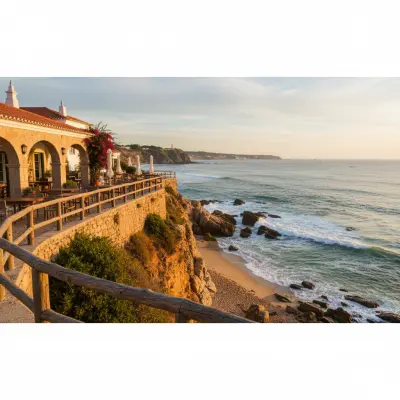
To begin exploring this facet, I recommend moving away from the commercial center and heading east, where the Paredão seawall connects Estoril to Cascais. At the start of this walk, the Miradouro da Azarujinha offers one of the most honest views of the coast. Here, one realizes the scale of erosion and how the small coves were carved by the sea over millennia. This viewpoint, wedged between amphitheater-shaped rocks, is the ideal spot to observe rod-and-reel fishermen who, with stoic patience, defy the spray in search of sea bream and sea bass. It is a subtle, almost poetic introduction to what follows.
The Route of Lighthouses and Abysses
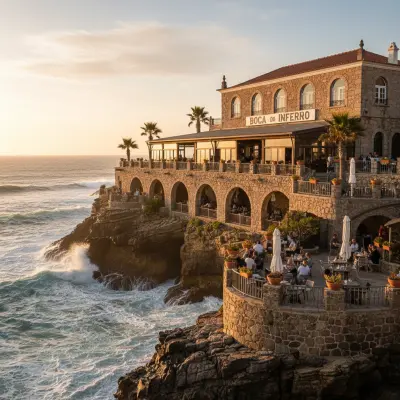
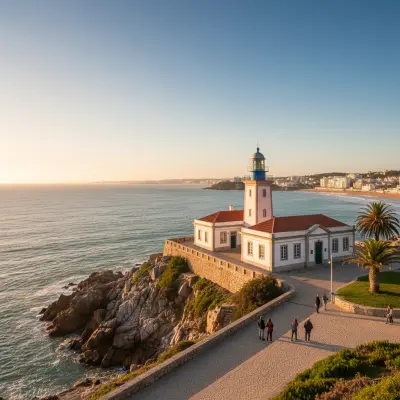
Heading west, the hike becomes more demanding and visually dramatic. Passing by the Marina, the Farol Museu de Santa Marta emerges as an indispensable aesthetic landmark. With its blue and white stripes, this lighthouse is not just a piece of functional architecture; it is a symbol of maritime safety on a historically treacherous coast. A few meters away, the abyss calls. Boca do Inferno (Hell’s Mouth) is the point where the limestone succumbed to the persistence of the waves, creating a cavernous cavity where the sound of the sea is amplified into a guttural roar. Avoid the peak tourist hours; arrive at dawn, when the morning mist still clings to the rocks and the only sound is water colliding with stone. It is an experience of isolation rare at this latitude.
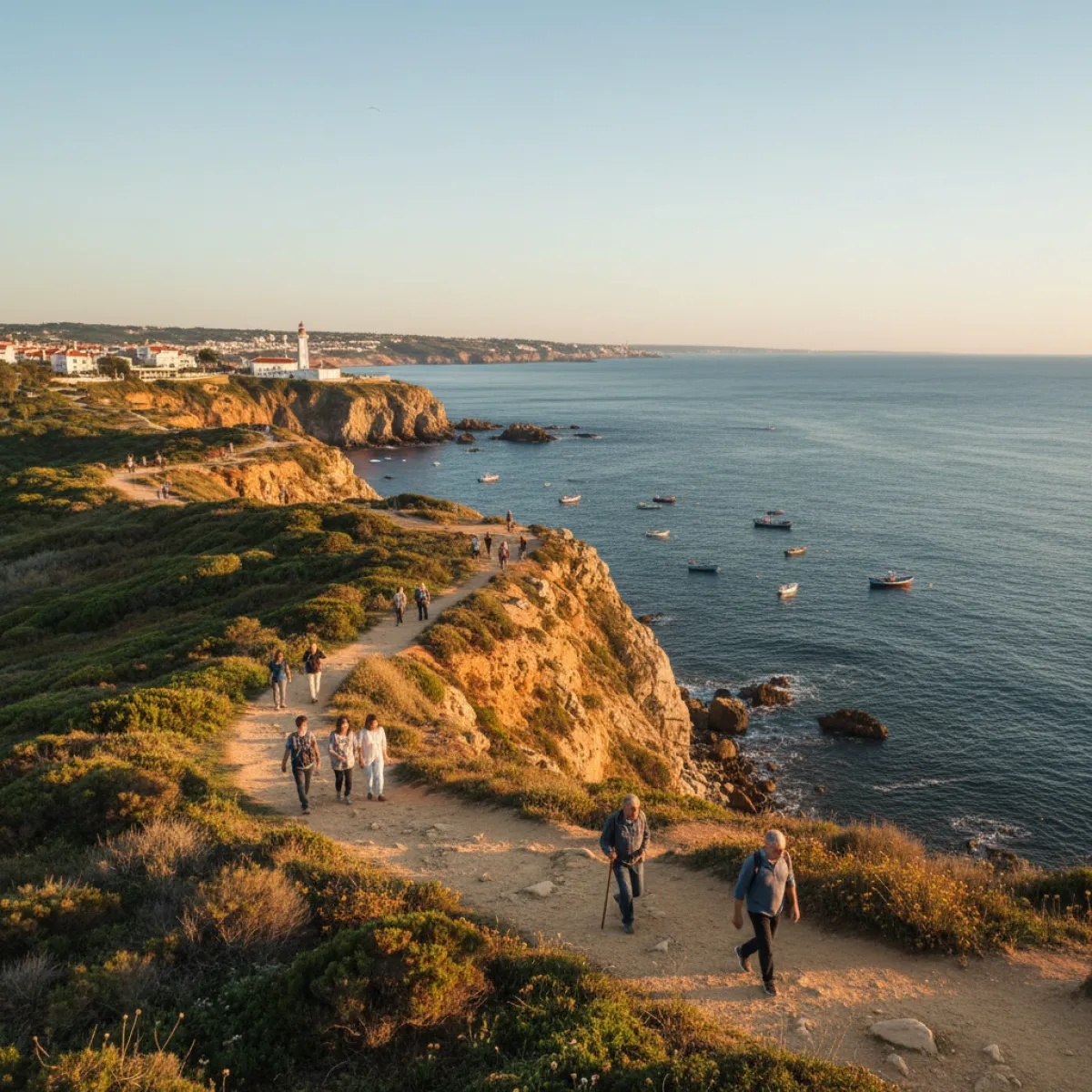
The route continues along the cycle path that stretches to Guincho. There are nearly nine kilometers of flat asphalt running parallel to the coast, but the real interest lies in the dirt trails that meander between the road and the sea. On these paths, the local flora reveals itself: juniper, sea thrift, and rockrose scent the air with a mixture of resin and saltpeter. This is the ideal terrain for a vigorous three-to-four-hour hike. The budget for this day is low in terms of costs, nature is free, but the physical investment is considerable. Wear footwear with good traction, as wet limestone can be as slippery as ice.
The Sanctuary of Guincho and Atlantic Adrenaline
Upon reaching Praia do Guincho, the landscape opens into a vastness of dunes and constant wind. This is not a place for passive sunbathing; it is a place for those who respect the power of the ocean. The swell here is consistent and powerful, attracting surfers from around the globe. If you have the ambition to face these waves, Surfing in Cascais: Mastering the Atlantic with Surf Cascais is the recommended starting point. The school operates with deep knowledge of local currents and bottom variations, essential on a beach where the sea can change its mood in minutes. A two-hour session costs approximately 40 to 50 euros, including the necessary technical equipment for the cold Atlantic waters (which rarely rise above 18 degrees, even in summer).
After physical exertion, the body demands a reward. Gastronomy in this part of Cascais moves away from urban sophistication and focuses on raw product. In Guincho, fish is king. Order the catch of the day grilled with nothing more than coarse salt and a drizzle of quality olive oil. If you prefer something more structured, the Seafood Rice served in the restaurants perched over the cliff is mandatory. However, for those wishing to take a bit of this knowledge home, the Authentic Cooking Class in Cascais: Traditional Flavors with Meals & Memories offers an immersion into fish and seafood preparation techniques, teaching how to identify freshness in local markets and respect the cooking time of each species. It is a way of understanding that the culture of Cascais is intrinsically linked to what the sea provides daily.
Ascending the Hills and the Crossing of Destinies
For the more experienced hiker, the adventure does not end at the coast. The Sintra hills, rising behind Cascais, offer trails through cedar forests and granite boulders covered in lichen. The transition from the maritime environment to the humid microclimate of the hills is abrupt and fascinating. You can explore the Sintra Neighborhood Guide: Discover Every Corner of the Enchanted Town to plan a foray that starts in Cascais and ends in the mystical crossroads of the neighboring town. Hiking from Cascais to the Peninha Sanctuary, for example, is a test of endurance that rewards the effort with a 360-degree view of the Tagus basin and Cabo da Roca.
Cascais is also the ideal logistical base for those wishing to explore the region without the pressure of staying in the capital. Through the Best Day Trips from Cascais: Unmissable Destinations, one can plan visits to fishing villages like Ericeira or the westernmost cliffs of the European continent. However, I recommend reserving at least one full day to simply get lost on the coastal trails. The best time to visit is during spring (May and June) or early autumn (September and October), when the light is softer, the wind less biting, and the August crowds have dissipated. Budget around 100 to 150 euros per day if including fresh fish meals and guided experiences; if you prefer the self-sufficiency of a backpack and hiking boots, Cascais is the most democratic luxury Portugal has to offer.