The Golden Hour in the Riviera: Where to Watch the Sun Set in Cascais
Discover the best spots to watch the sunset in Cascais, from the secluded Miradouro da Azarujinha to the maritime drama of Boca do Inferno. An essential guide to the Atlantic light, local rituals, and seafood gastronomy.
The Geometry of Atlantic Light
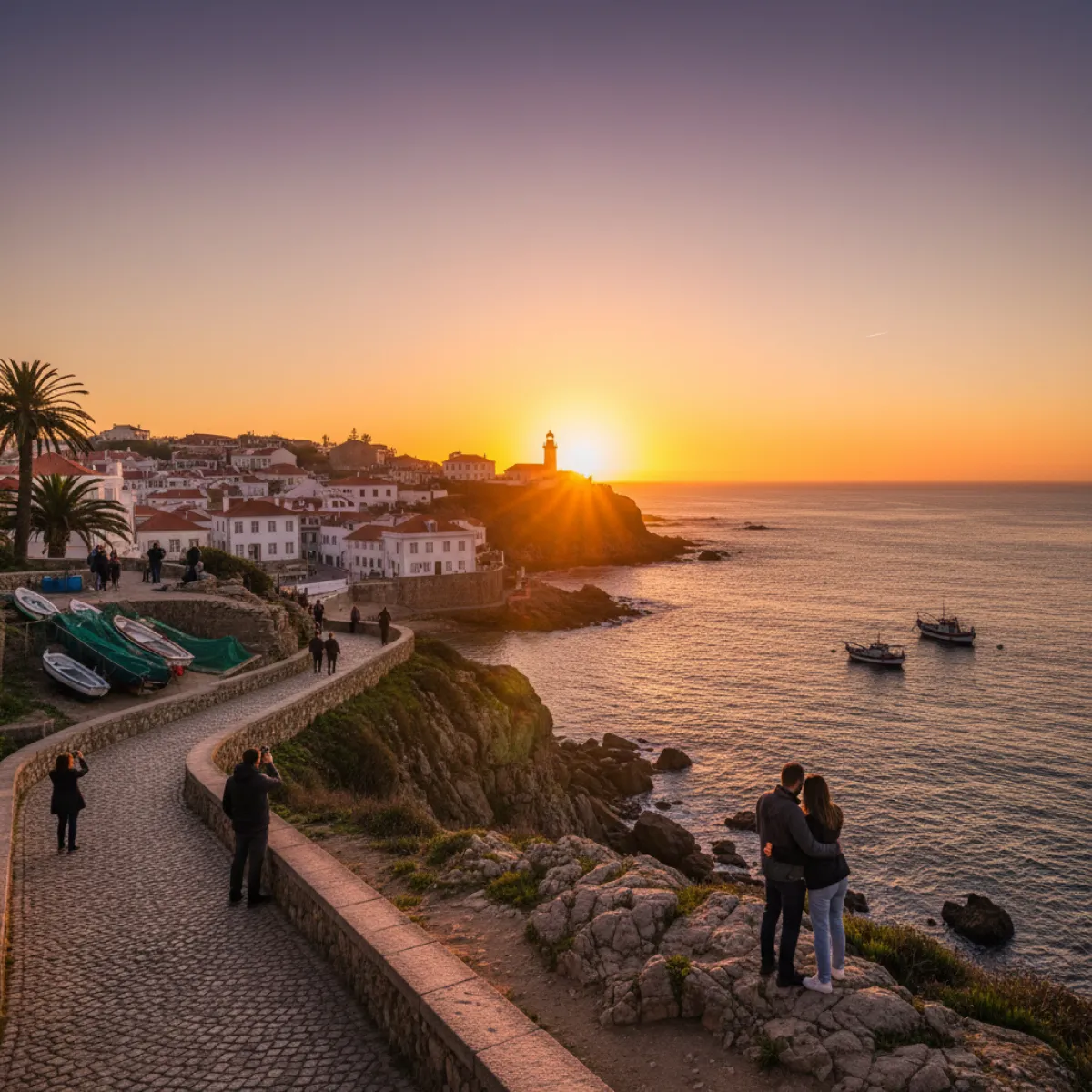
There is a specific quality to the light in Cascais that distinguishes it from Lisbon, just thirty kilometers away. While the capital bathes in a clarity reflected by the limestone of its hills and the mirror of the Tagus, Cascais faces the Atlantic directly, without filters. Here, twilight is not merely an astronomical event; it is a social institution, a timekeeper that dictates the pace of the terraces and the closing of the galleries. For those seeking the aesthetic rigor of the Portuguese coast, the sunset in this village is not a romantic postcard, but rather an exercise in observing nature in constant flux.
The geography of the Cascais line allows for an unusual variety of perspectives. We have the south coast, more protected, where the sun sets laterally over the horizon, and the west coast, where the land ends abruptly and the light becomes raw, almost violent. The choice of location depends entirely on one's mood: whether you seek the comfort of a chilled glass of white wine or the solitude of rocks battered by the sea.
The Natural Amphitheater of Azarujinha
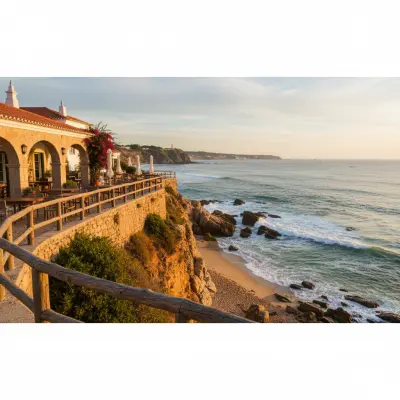
We begin at the eastern entrance of the village, in São João do Estoril. The Miradouro da Azarujinha is perhaps the best-kept secret of local residents who shun the crowds of the Bay. This small stone amphitheater overlooks a shell-shaped beach, surrounded by cliffs that retain the day's heat long after the sun goes down. It is the ideal vantage point to observe the beginning of the walk along the Paredão. The light here is soft, tinting the rocks in shades of ochre and terracotta.
For those visiting Azarujinha, the advice is to arrive thirty minutes before the official sunset time. Bring a book, or simply observe the fishermen who, indifferent to the chromatic spectacle, keep their lines in the water. There are no noisy bars here, just the rhythmic sound of waves against the rocks. It is a luxury of silence that has become rare on the Estoril line. The budget for this moment is zero, unless you decide to walk into the village afterward for a late dinner.
A Narrative of Rocks: Boca do Inferno and Santa Marta
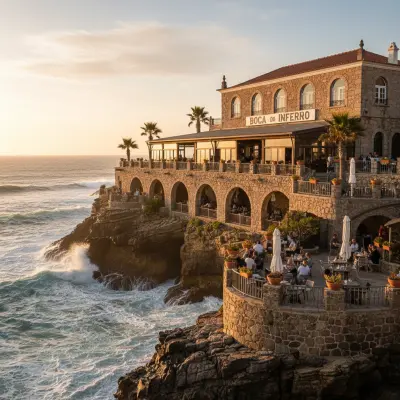
Moving west, the landscape becomes more dramatic. Boca do Inferno is the point where the architecture of the coast reveals itself in its most brutalist form. The cavities carved by the sea create a particular acoustics when the waves hit with force. At sunset, the sea mist—the famous 'maceira'—often filters the sun's rays, creating vertical beams of light that seem plucked from a Baroque painting. It is a place of contrasts: the dark gray of the limestone rocks against the electric orange of the sky.
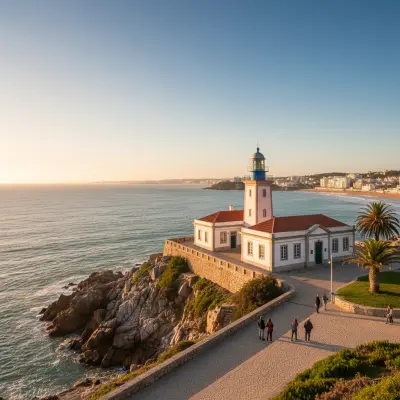
Just before this, we find the Farol Museu de Santa Marta. With its blue and white stripes, the lighthouse is an essential visual landmark. The small cove next to the museum offers one of the most photogenic angles of Cascais. Here, the light reflects off the calm water of the marina, creating a mirror effect that doubles the intensity of the sky. It is the perfect spot for those who appreciate the order and symmetry of naval architecture integrated into the natural landscape.
The Atlantic Ritual and Local Culture
For many, the sunset is inseparable from physical activity. On the beaches stretching toward Guincho, the end of the day is when surfers take advantage of the last light. Participating in Surfing in Cascais: Mastering the Atlantic with Surf Cascais allows you to experience this light transition from within the water, a perspective that no land-based viewpoint can replicate. The sensation of seeing the sun disappear behind the horizon line while waiting for the last set of waves is one of the most authentic experiences in the region.
This contact with the sea shapes the local identity. Cascais is not just a summer destination; it is a community with deep roots in fishing and navigation. To understand this connection, it is worth exploring the region's history, often eclipsed by the glitter of luxury hotels. A grasp of Local Culture in Lisbon: Traditions, Neighborhoods and the City's Soul provides valuable context, allowing you to draw parallels between life in the capital and the resilience of maritime traditions in Cascais.
Gastronomy and Tradition at the Table
When the light finally fades, attention turns to gastronomy. Sunset in Cascais calls for flavors that respect the sea. Avoid tourist menus with photographs of dishes at the door. Look for places where fish is treated with the respect it deserves—grilled only with salt, served with boiled potatoes and a drizzle of quality olive oil. An excellent way to dive into these traditions is through an Authentic Cooking Class in Cascais: Traditional Flavors with Meals & Memories, where you can learn to prepare classics like sea bass in salt crust or amêijoas à Bulhão Pato (clams in garlic and coriander sauce).
For a post-sunset dinner, budget around 40 to 60 euros per person if you are looking for a mid-to-high-range restaurant with fresh fish. If you opt for more traditional tascas in the historic center, you can dine for 20 to 25 euros. What to order? In summer, sardines are mandatory; the rest of the year, sole or turbot never fail.
Explorations Beyond the Village
While Cascais is the epicenter of this Atlantic light, its location allows for quick forays into other equally fascinating settings. Guincho, with its dunes and persistent wind, offers a wild sunset stripped of urban artifice. For those with more time, the Best Day Trips from Cascais: Unmissable Destinations often include the Sintra mountains, where the sun sets behind palaces and exotic vegetation, creating an atmosphere of Gothic mystery.
Sintra, in fact, deserves a dedicated visit to understand the difference between the light of the coast and the light of the mountains. The Sintra Neighborhood Guide: Discover Every Corner of the Enchanted Town helps navigate the village's narrow streets, where dusk arrives earlier due to the mountain's shadow, transforming the landscape into a scene of deep greens and grays.
Practical Advice for the Traveler
- The Wind: Never underestimate the 'Nortada'. Even on hot August days, the northwest wind can be cold at dusk. Always have a light jacket or a knit scarf handy.
- The Timing: In summer, the sun sets around 8:45 PM - 9:00 PM. In winter, it can be as early as 5:15 PM. Always check the exact time so you don't arrive late for the show.
- Transport: Walking is always the best option within the village. If heading to Guincho or Miradouro da Azarujinha, the Cascais shared bicycles ('MobiCasca') are ideal.
- Photography: The 'golden hour' in Cascais is short but intense. If you want to take photos, arrive early to find the right angle, especially at Boca do Inferno, where the best spots are taken quickly.
Cascais does not demand much from those who visit, but it rewards those who know how to wait. The sunset here is not to be consumed in a hurry; it is to be observed with the patience of one who knows that, tomorrow, the light will be slightly different, but equally rigorous in its beauty.