Cycling Arrábida: Routes for Every Level of Rider
Serra da Arrábida offers near-empty roads, climbs reaching 500 metres with 13% gradients, and turquoise beaches as your reward. From the gentle Setúbal-to-Figueirinha coast ride to the 90 km grand loop through Palmela and Sesimbra, there's a route for every pair of legs.
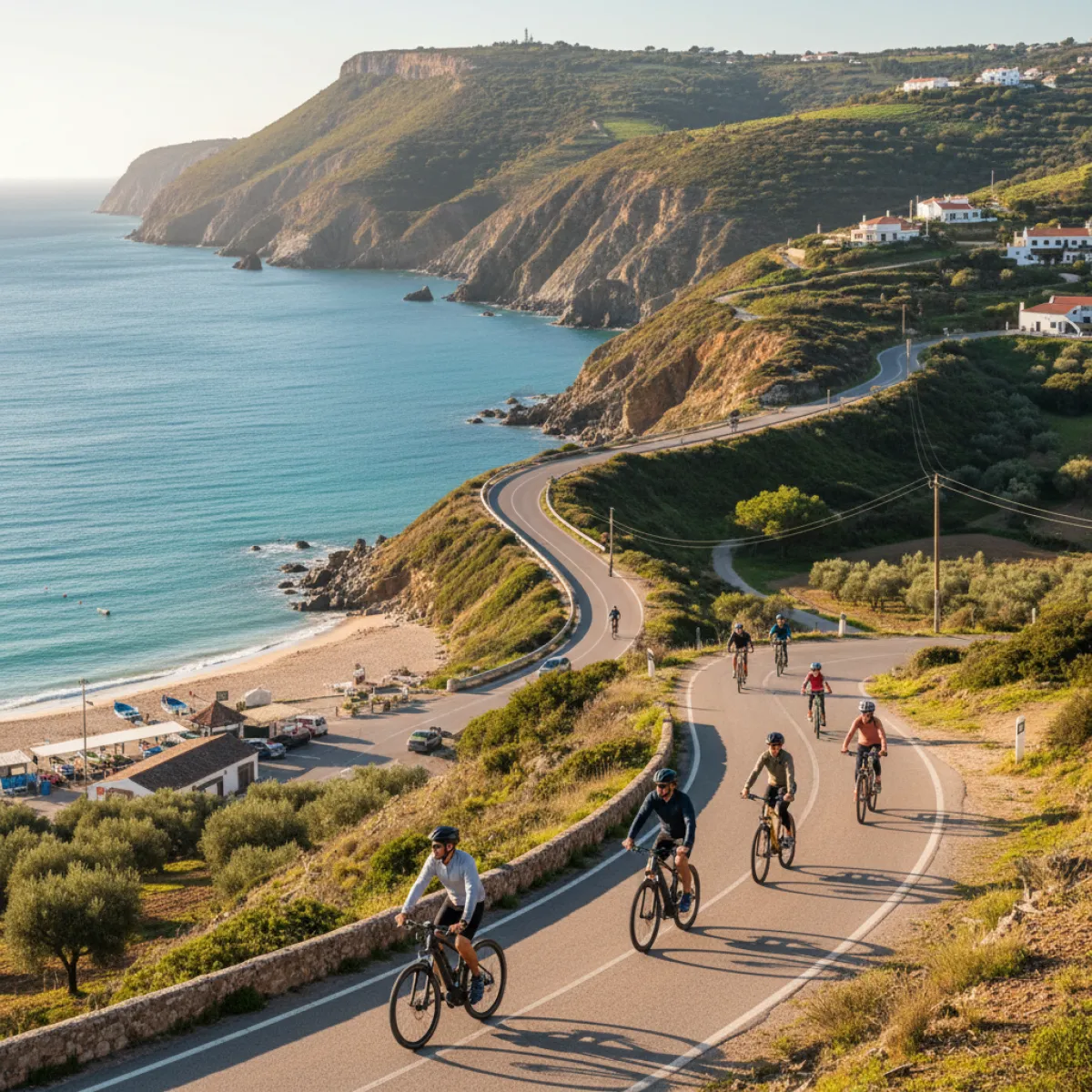
Serra da Arrábida might be the best open secret in cycling near Lisbon. Less than 40 km from Setúbal, you get roads that are practically car-free on weekdays, climbs that burn your legs, and descents with views of water so blue it looks fake. And you don't need to be a seasoned cyclist to ride here. There are routes for people who just learned to shift gears and routes for those who dream of grand tours.
Why Arrábida and Not Sintra or Cascais
Sintra has its charm, no question. If you haven't explored it, the neighborhood guide is worth a look. But for actual cycling, Serra da Arrábida is in a different league. The roads are emptier, the tarmac on the N379-1 is in great shape, and the scenery is unmatched. Past a certain elevation, you're riding between dense green hills and the Atlantic below. Cascais has pleasant bike paths, but they're flat and predictable. Arrábida has teeth.
Easy Level: The Coast from Setúbal to Figueirinha
If you're a beginner or just want a relaxed ride, the route from Setúbal to Praia da Figueirinha is perfect. It's about 10 km one way, on a coastal road that's relatively flat with gentle undulations. Set your own pace. No pressure.
Leave Setúbal along Avenida Luísa Todi and follow the coast. The road is wide and, outside of summer weekends, fairly quiet. Figueirinha is the first Arrábida beach you'll hit, and it works well as a turnaround point and reward. In warmer months, there are kiosks selling sandwiches and cold drinks. Lock up the bike, eat something, swim if the mood strikes.
This route works especially well early morning, before 9am, when the road is nearly empty and the low-angle light turns the mountains into something you won't forget. The return is the same way back. Total: about 20 km, with no climbs that'll scare anyone.
Practical tip
If you don't have your own bike, Setúbal has rental shops. Check locally for prices and availability, especially in summer. A basic road bike typically runs around €20-30 per day.
Intermediate Level: The N379-1 Circuit
This is where it gets fun for anyone with some base fitness. The N379-1, also called Estrada da Escarpa, is one of the most beautiful panoramic roads in Portugal. That's not opinion, that's consensus. The road winds through the mountains, climbs to about 500 metres above sea level, and offers views you'd normally need a helicopter to see.
The classic circuit starts in Setúbal, climbs the N379-1 towards Sesimbra, crosses the heart of the Arrábida Natural Park, and loops back. It's roughly 40-50 km depending on the exact route, with 600-800 metres of accumulated elevation gain.
The climbs come in two main blocks. The first, just after leaving Setúbal, hits gradients of 8-10% for just over 2 km. Nothing dramatic, but you feel it. The second block is tougher: about 3 km of steady climbing, with sections between 6% and 13%. This is where regular riders separate from occasional ones.
But the payoff is immediate. At the top, the view opens across the ocean, the Sado estuary, and on clear days, the Alentejo coast. It's one of those moments where you stop, breathe deep, and think: "worth every drop of sweat."
The descent to Portinho
Midway through the circuit, you can detour down to Praia do Portinho da Arrábida. The descent is spectacular, through Mediterranean scrub with turquoise water below. But fair warning: the climb back up includes a section at 16.9% gradient. If you go down, know you'll pay the price coming back. And it's worth every metre.
Near Portinho, Praia do Creiro is right next door. If you stop, make a point of seeing both. The water clarity is absurd, and on weekdays outside peak season you'll have the beach nearly to yourself.
Important note: The road Rua Círio da Arrábida, which provides access to some beaches, has faced traffic restrictions in recent years due to rockfall risk. Bicycles and two-wheeled vehicles have generally been permitted, but check the current situation before setting out. Conditions change from season to season.
Advanced Level: Setúbal, Palmela, Sesimbra and Back
For serious cyclists, the grand Arrábida loop is a full day in the saddle and one of the best road rides in central Portugal. The route links Setúbal to Palmela (with its vineyards and castle views), drops to Sesimbra through the mountains, and returns to Setúbal along the coast. That's 70-90 km with 1,000-1,200 metres of climbing.
The Guia de Percursos Cicláveis da Arrábida, published by the municipalities of Setúbal, Palmela, and Sesimbra, maps out 13 routes at four difficulty levels. For this tier, the toughest routes pass through areas like Vale de Barris and Estrada da Cobra, names that tell you everything about the terrain ahead.
The Palmela section is particularly rewarding for riders who enjoy pedalling through wine country. The region is one of the main wine-producing areas of the Setúbal Peninsula, and the road rolls gently between estates that have been making Moscatel for centuries. If you stop for lunch in Palmela, find a restaurant with a view over the valley. The local cooking is honest and generous: fried cuttlefish, lamb stew, Azeitão cheese.
Mountain biking: the off-road alternative
Serra da Arrábida also has mountain bike trails, though with restrictions inside the Natural Park. There are marked routes through scrubland and forest, but it's essential to respect park rules. Not all paths are open to bikes, and riding off authorised trails is prohibited. Check with the Arrábida Natural Park interpretation centre for current trail access.
The Big Summer Advantage: Car-Free Arrábida
For the past few years, the Arrábida O2 programme has restricted car access to Arrábida beaches during summer, typically from June to mid-September. This means the roads are even emptier for bikes. While cars sit in access car parks, you roll past on two wheels with a friendly wave. It's a huge advantage and one more reason to choose a bike over a car.
Free shuttle buses run for people wanting to reach the beaches without driving, but on a bike you have total freedom to stop wherever you want, whenever you want.
Before and After the Ride
Arrábida isn't just mountains and beach. If you have time, the spiritual hike to the Franciscan Convent gives you a different perspective of the mountains, on foot, among ruins and absolute silence. It's the perfect counterpoint to an intense day of riding.
And if the trip sparks an appetite for more discoveries in the Lisbon region, the guide to local culture in Lisbon is a solid starting point for the following day.
Practical Information
- Getting there: From Lisbon, take the A2 to Setúbal (40 minutes). By train, Fertagus runs to Pragal and CP connects to Setúbal in about an hour.
- Best time: March to June and September to November. Summer is doable, but 35°C heat doesn't mix well with 13% gradients.
- Water and supplies: Carry enough water. On the mountain, resupply points are scarce. In Setúbal and near the main beaches there are cafés and kiosks.
- GPS: The Guia de Percursos Cicláveis da Arrábida provides QR codes with GPS data and interactive maps. Look for the digital version online or at tourist offices in Setúbal, Palmela, and Sesimbra.
- Safety: Helmets aren't legally required for adults in Portugal, but wearing one is common sense, especially here. On the mountain descents, speeds get high and corners get tight. Extra caution on the way down.
Arrábida is one of those places you ride once and come back to. Not out of obligation, but because the combination of mountains, sea, and near-empty roads this close to Lisbon is genuinely hard to beat. Bring the bike. The road handles the rest.