Caminha Viewpoints: Where the Minho Meets the Atlantic
Caminha delivers the estuary, vinho verde vineyards, and the Atlantic within a ten-kilometer radius. This viewpoint guide tells you where to stop, when to arrive, and what light to expect for the best photographs in the Minho.
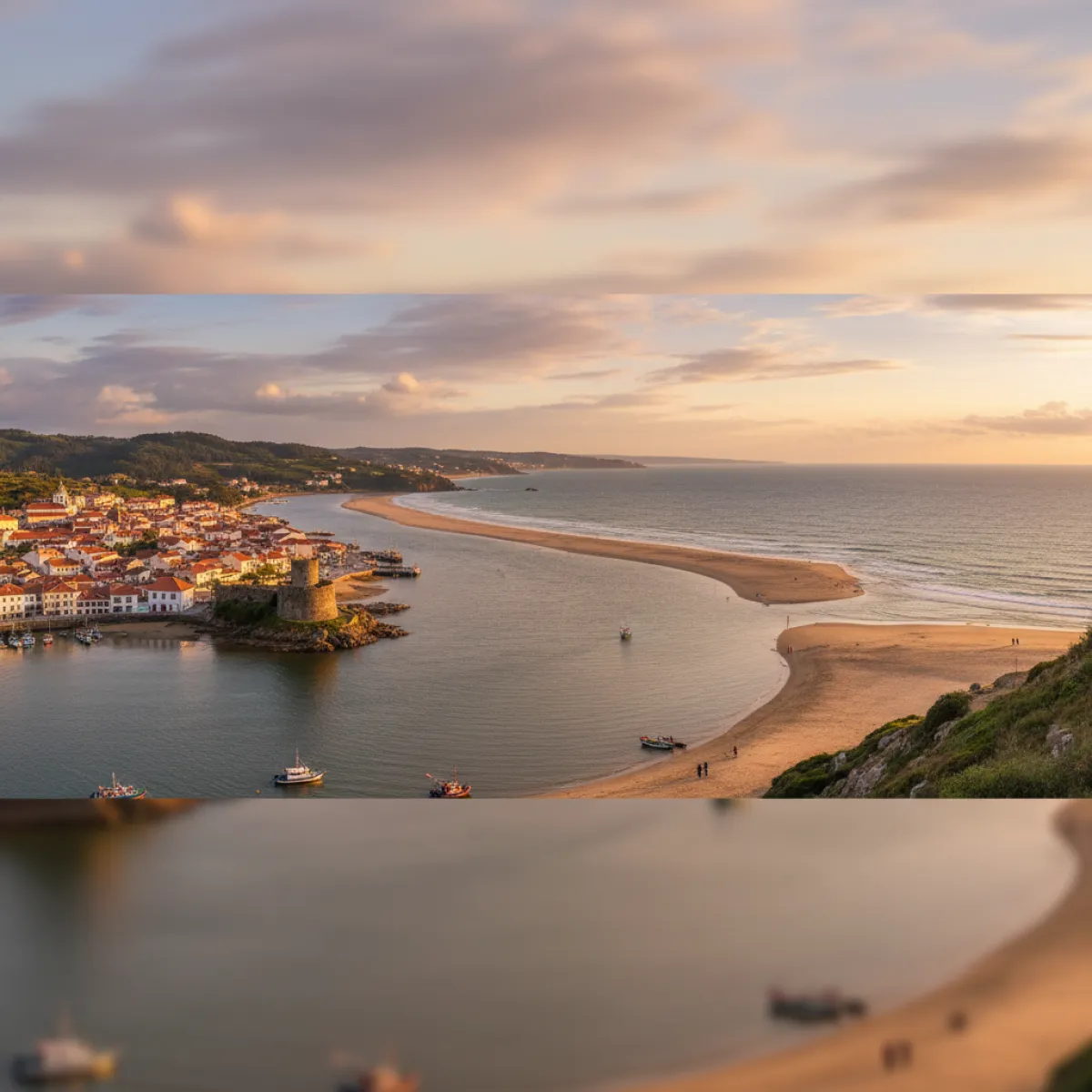
There's something Caminha does better than almost any town in northern Portugal: it gives you places to stop and look. Not viewpoints with commemorative plaques and paved parking lots. I'm talking about those spots where the path opens up, the pines step aside, and suddenly you have the Minho estuary in front of you, Spain on the other side, so close you can almost make out people on the Galician bank.
Caminha isn't the Douro. It doesn't have the dramatic terraces or the wine estates that appear on port bottles. But it has something the Douro doesn't: the line where the river ends and the ocean begins. On the right day, with the right light, that's worth more than any postcard from Pinhão.
The Ínsua Fort and the View That Justifies Everything
Let's start with the obvious, because sometimes the obvious is obvious for good reasons. The Forte da Ínsua sits on a small island in the middle of the estuary, and while it's not easy to visit, the best spots to photograph it are from the shore near Moledo beach. Get there early. At 7:30am in May or June, the low-angle light transforms the estuary water into a metallic surface and the fort appears to float. At noon, with the sun directly overhead, it's a forgettable photograph. In the morning, it's something else entirely.
From Moledo, walk north along the waterfront. There's a stretch, before you reach the rockier section, where you can see the fort, the mouth of the Minho, and on clear mornings, Monte de Santa Tecla on the Spanish side simultaneously. With a telephoto lens, you can compress the fort against the Galician mountains. If you only have a phone, don't worry: the natural composition is so strong it works regardless.
Monte de Santo Antão: The Viewpoint Nobody Promotes
This is my favorite, and almost nobody talks about it. Monte de Santo Antão is just a few kilometers from Caminha's center, accessible by car or on foot if you have the legs and willingness for an honest climb. At the top, there's a small chapel and a 360-degree panorama that includes the estuary, the ocean, the vinho verde vineyards in the valleys below, and on particularly clear days, the silhouette of the Cíes Islands off the Galician coast.
This is where the vineyards enter the conversation. They're not the Douro's terraces, but the traditional pergola-trained vinho verde vines covering the valleys between Caminha and Cerveira have their own kind of beauty. In May and June, when the vines are flowering, the green is almost excessive. Seen from above, the landscape looks like a quilt of agricultural plots, vineyards, and patches of eucalyptus which, yes, are an ecological problem but from this distance form an interesting pattern.
If you want to photograph the vineyards up close, descend from the hill via the secondary road through Vilarelho. There are plots with traditional pergola vines right along the roadside. Ask permission if you want to enter private land. Local farmers are generally friendly, but showing respect goes a long way.
Caminha's Quay in the Late Afternoon
It's not technically a viewpoint. It's a quay. But Caminha's waterfront, especially near where the smaller fishing boats dock, offers one of the best photographic compositions in town. In the late afternoon, the light comes from the west and illuminates the facades along the riverside, the boats reflect in the calm river water, and there's a natural depth of field that any photographer appreciates.
The trick is to avoid the more touristy section near the Clock Tower. Walk about 200 meters south, where the boats are rougher and the scene more authentic. If you want people in your shots, wait for the fishermen collecting their nets at the end of the day. It's not staged. It's the real rhythm of the town.
After your photo session, if you want to explore Caminha from a different angle, kayaking the Minho estuary puts you at water level, between Portugal and Spain. From a kayak, you see the town, the fort, and the mountains in a framing impossible to achieve from land.
The Road Between Caminha and Vila Nova de Cerveira
If you're driving, skip the highway. The N13 between Caminha and Vila Nova de Cerveira follows the Minho river and has at least three or four spots worth pulling over for. They don't have official names, they're not on Google Maps, but you'll recognize them: they're the road widenings with tire marks where others have stopped before you.
The best of these is roughly halfway, on an elevated curve overlooking a bend in the river with vineyards on both sides. In the morning, with low fog over the water, it looks like a Chinese painting. I'm not exaggerating. It's one of those moments when northern Portugal reminds you that you don't need to go to the Douro for a landscape that stops you in your tracks.
When to Go and What Light to Expect
The short answer: May and June, early morning or late afternoon. The longer answer depends on what you want to photograph.
- For the estuary and the Ínsua Fort: May mornings, between 7am and 9am. The morning mist over the water adds depth to images.
- For flowering vineyards: June, preferably after a few dry days. Vine flowers are subtle, but late afternoon sidelight picks them out against the green of the leaves.
- For the town and quay: any day between April and September, but the golden light from 6pm to 8pm in June is unbeatable.
- For Monte de Santo Antão panoramas: days with a north wind, when the atmosphere is clear. After rain, visibility can reach 80 to 100 kilometers.
Avoid August if you can. Not because of the light, which is fine, but because the town fills with summer visitors and you lose the authenticity of the scenes. September, on the other hand, is excellent: fewer people, lower light, and the vines already showing hints of yellow as harvest approaches.
Equipment and Practical Tips
You don't need expensive gear. A decent phone with HDR mode handles 90% of these situations. That said, if you own a camera with a 24-70mm lens, bring it. It's the most versatile lens for landscape photography with foreground elements.
A lightweight tripod is useful for foggy mornings when you'll want longer exposures. A polarizing filter cuts water reflections and saturates the greens of the vineyards. No filter? Use sunglasses as a cheap trick: hold them in front of your phone lens. It works better than it should.
For more serious photographers: a drone is fantastic at Monte de Santo Antão, but check ANAC regulations before flying. Caminha isn't in a restricted zone, but the estuary is a protected area with limitations.
Where to Stay in Caminha
Caminha has accommodation for every budget. Litos AL is a solid central option, close to the quay and the main points of interest. If you prefer something with more character, Donna Nega has the kind of personality that suits a photography trip: unpretentious but considered. For those traveling on a tighter budget or who prefer a social hostel atmosphere, Arca Nova Guest House & Hostel has private rooms and dormitories.
Stay at least two nights. One night isn't enough to catch both morning and late afternoon light, and you'll want time to explore without rushing. Landscape photography is an exercise in patience: sometimes the best image appears when you've already put the camera away and you're walking to get a coffee.
Beyond the Viewpoints
If Caminha hooks you and you have days to spare, the Minho region has more to offer. Barcelos, less than an hour away, makes a good complement: our Barcelos museums guide tells you which are worth your time and which you can skip, and if you're traveling with family, the Barcelos with kids guide has honest suggestions for those traveling with children.
But don't spread yourself too thin. Caminha deserves focused attention. A town that gives you the river, the sea, the vineyards, and the mountain within a ten-kilometer radius doesn't come along every day. And if photography serves as your excuse to look more carefully, all the better.