Caminha: Easter Sweets Worth the Detour North
In Lanhelas, a few kilometres from Caminha, the traditional sweet factory fires up the ovens at six in the morning during Easter week. Rosquinhas, cavacas, papudos, and trembling pão de ló, all handmade with recipes passed from mother-in-law to daughter-in-law. This is the guide for anyone serious about Easter pastry.
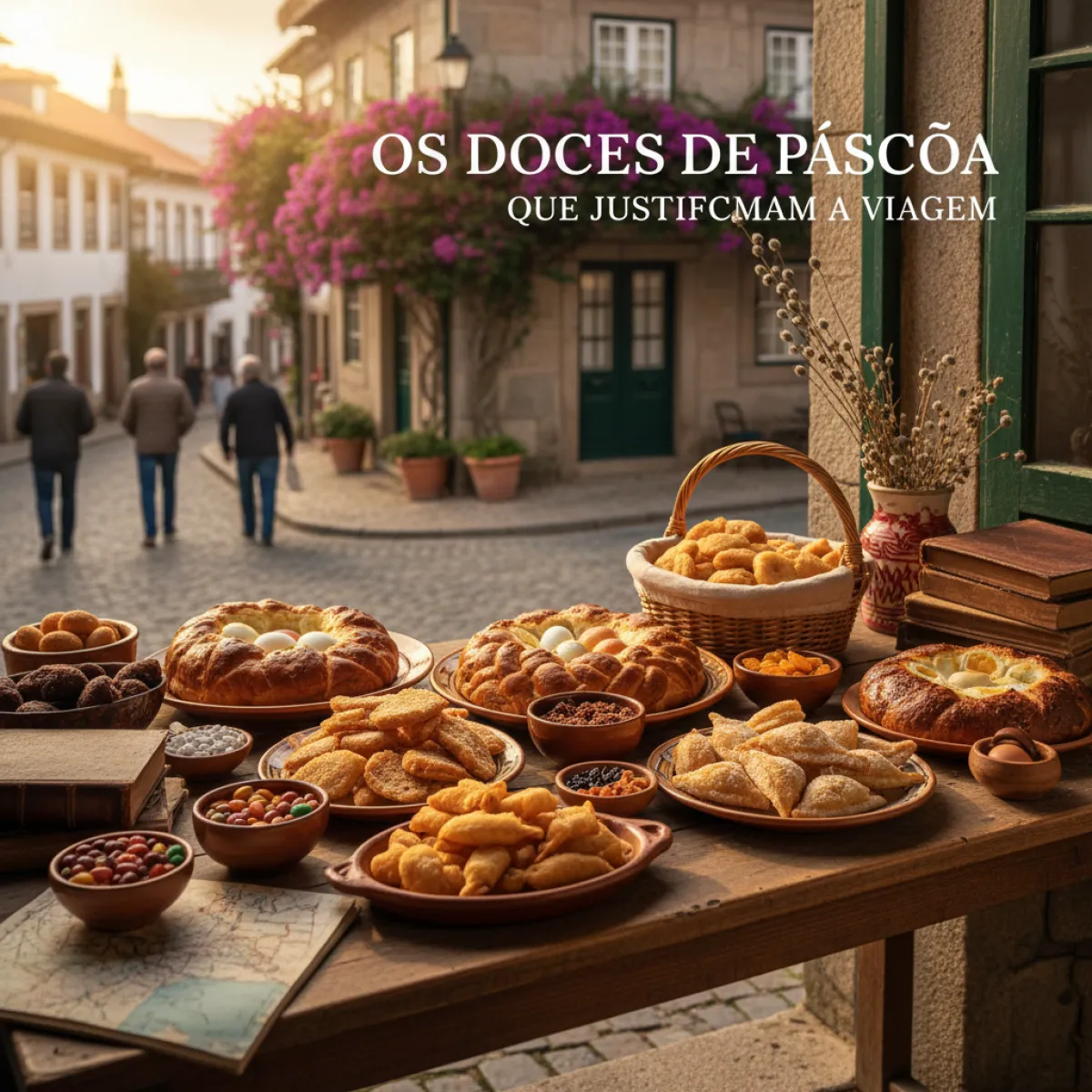
There's one thing Caminha does better than almost any other town in the Minho: sweets. Not the cellophane-wrapped, mass-produced kind you find at motorway service stations. Caminha's sweets, the real ones, the ones that matter, are made with recipes handed down from mothers-in-law to daughters-in-law, in ovens that never cool during the week before Easter, with a relationship to eggs and sugar that only centuries of convent tradition can explain.
At Easter, this town on the Minho estuary transforms. Pastry shop windows in the historic centre fill with folares decorated with boiled eggs, trays of pão de ló emerge from ovens with that tell-tale wobble that separates the good from the ordinary, and in Lanhelas, the parish that serves as the sweet-making epicentre of the municipality, production goes into overdrive to fulfil orders heading everywhere from Porto to the diaspora abroad.
Lanhelas: The Factory That Never Stopped
If Caminha is the town, Lanhelas is the workshop. The Fábrica de Doces Tradicionais de Lanhelas is one of those family operations that has outlasted everything, trends, supermarkets, the cult of convenience. The recipes came from the grandmother and mother of Salvador Cunha, who convinced his wife, D. Otília, to keep the family business alive. Today it's her daughter-in-law, Fátima Gonçalves, who carries it forward.
What comes out of there? Rosquinhas, cavacas, papudos, grades, white cakes. All by hand, except for the large mixer that beats the dough, everything else is done manually. Eggs, flour, sugar, and yeast. No preservatives, no shortcuts. In the weeks before Easter, production multiplies: pão de ló, Easter assortments, and dozens upon dozens of rosquinhas shipped wherever there's an emigrant from Minho missing home.
The cavacas deserve special attention. Of convent origin, these are light pastries covered with a generous layer of icing sugar that cracks at the first touch. In Lanhelas, they make them the way they've been made for generations, dry on the outside, with an interior that yields without being dense. If someone tells you the best cavacas come from Caldas da Rainha, bring them to Lanhelas first.
The Folar: Sweet or Savoury, But Always Essential
In the Minho, the Easter folar comes in both sweet and savoury versions, and both coexist on the same table without anyone finding it strange. The sweet folar is aromatic, cinnamon, anise, lemon zest, with boiled eggs embedded in the surface, half decoration, half ritual. It's the traditional gift from godparents to godchildren, and during Easter it's as compulsory as Sunday mass.
The savoury folar, more typical of the north, is a different beast entirely: it contains cured ham, chouriço, sometimes salpicão. It's essentially bread stuffed with the best of Minho's smoked meats, and if you find one in a Caminha bakery in the days before Easter, don't hesitate. It's the perfect breakfast before a morning of exploration, perhaps before kayaking the Minho estuary, when the tide is calm and Spain appears on the other side like a morning mirage.
Pão de Ló, Minho Style
Forget the dry, spongy pão de ló you may know from elsewhere. In Minho, pão de ló is moist, trembling, almost indecent in the centre. Three ingredients, eggs, sugar, flour, and the result depends entirely on who makes it. Too long in the oven and it becomes unremarkable. At just the right moment, it's the kind of thing that melts on your tongue and makes you close your eyes involuntarily.
In Caminha, pão de ló appears in full force at Easter, rivalling the folar as the mandatory presence on the table. In Minho tradition, it sometimes replaces it altogether. The best versions are homemade, sold by order or at the sweet fairs the municipality organises, like Caminha Doce, the traditional and convent confectionery fair held in the historic centre. If your visit coincides, it's a rare chance to try everything in one place.
The Sweets You Should Seek Out
Beyond the folar and pão de ló, the Easter table in Caminha and Minho includes other sweets worth your attention:
- Rosquinhas de Lanhelas, Ring-shaped sweet pastries, slightly crisp on the outside, that accompany coffee after Easter lunch. They're addictive. Don't buy fewer than half a dozen.
- Papudos, Typical of the region, these are puffy, light little cakes made from the same egg-and-sugar base. The name comes from the swollen appearance they take on in the oven.
- Arroz doce, Rice pudding dusted with cinnamon in patterns ranging from simple to artistic. It's the end-of-meal moment the whole family waits for, and in Minho it's made with a creaminess you won't find anywhere else.
- Leite-creme, Burned on top with a hot iron, with that caramelised sugar crust that cracks under the spoon. Another Easter staple of the Minho table.
- Telhas de amêndoa, Thin, curved, crunchy, studded with almond slivers. A specialty you'll find in the assorted boxes at Caminha's pastry shops.
Where to Taste and Where to Stay
For the Lanhelas sweets, go directly to the Fábrica de Doces Tradicionais in the parish itself. The pastry shops and confeitarias in Caminha's historic centre are your best bet for folar, pão de ló, and leite-creme, check locally which ones bake their own, because that makes all the difference.
If you want to turn this into an Easter weekend getaway, and you should, Caminha has good accommodation options. Litos AL is a solid choice in the town centre, a short walk from the pastry shops and main square. If you prefer somewhere with more character, Arca Nova Guest House & Hostel has a more relaxed vibe that suits flexible travellers. And Donna Nega is another well-positioned option for exploring the town on foot.
A Practical Easter Itinerary
Arrive on Good Friday if you can. That's when the pastry shops are at peak production and the windows are overflowing. Saturday is good for a trip to Lanhelas, just a few kilometres by car, and for loading the boot with assorted sweets you'll distribute to anyone who wasn't lucky enough to come with you.
On Easter Sunday, lunch is sacred: roast kid, potatoes, rice with offal, then the avalanche of sweets, arroz doce, leite-creme, pão de ló, rosquinhas. If you don't have family in Caminha to invite you in, look for restaurants in town offering an Easter menu. Check locally, because the best ones fill up early.
If you have more time, the municipality of Caminha offers plenty beyond the table. The Minho estuary is one of the most beautiful landscapes in northern Portugal, and a morning of kayaking between Portugal and Spain is the best way to earn the appetite you'll need for what comes next.
And if the trip extends south, the Minho region has much more to explore. A proper coffee in Barcelos makes an excellent excuse for a stop, and if you're travelling with family, the honest Barcelos guide for families is worth consulting for planning the rest of your itinerary.
The Truth About Convent Pastry
When people talk about Portuguese convent pastry, they think of Évora, Aveiro, Coimbra. And yes, those cities have tradition. But the Minho, and Caminha in particular, takes a different approach: less touristy, more domestic, more honest. Here, the sweets aren't in pretty boxes for tourists to photograph. They're on the kitchen table, wrapped in baking paper, offered by the neighbour or bought directly from the person who made them.
The origins are the same, convents, nuns, an abundance of eggs and sugar, but the scale is different. In Lanhelas, when Fátima and D. Otília open the oven at six in the morning during Easter week, they're not thinking about marketing or food tourism. They're doing what the family has always done, with the same hands and the same ingredients. And that, honestly, you can taste.
Caminha at Easter is this: a small town that takes its sweets seriously, with a tradition that doesn't need to sell itself because it never stopped being lived. Come for the pastry, stay for the estuary, return for both.