Arraiolos After Dark: Wine, Petiscos, No Rush
Arraiolos isn't just about carpets. In the late afternoon, the village comes alive with cabeça de xara petiscos, wines from Herdade das Mouras, and lamb ensopado worth the drive. An evening route for serious eaters.
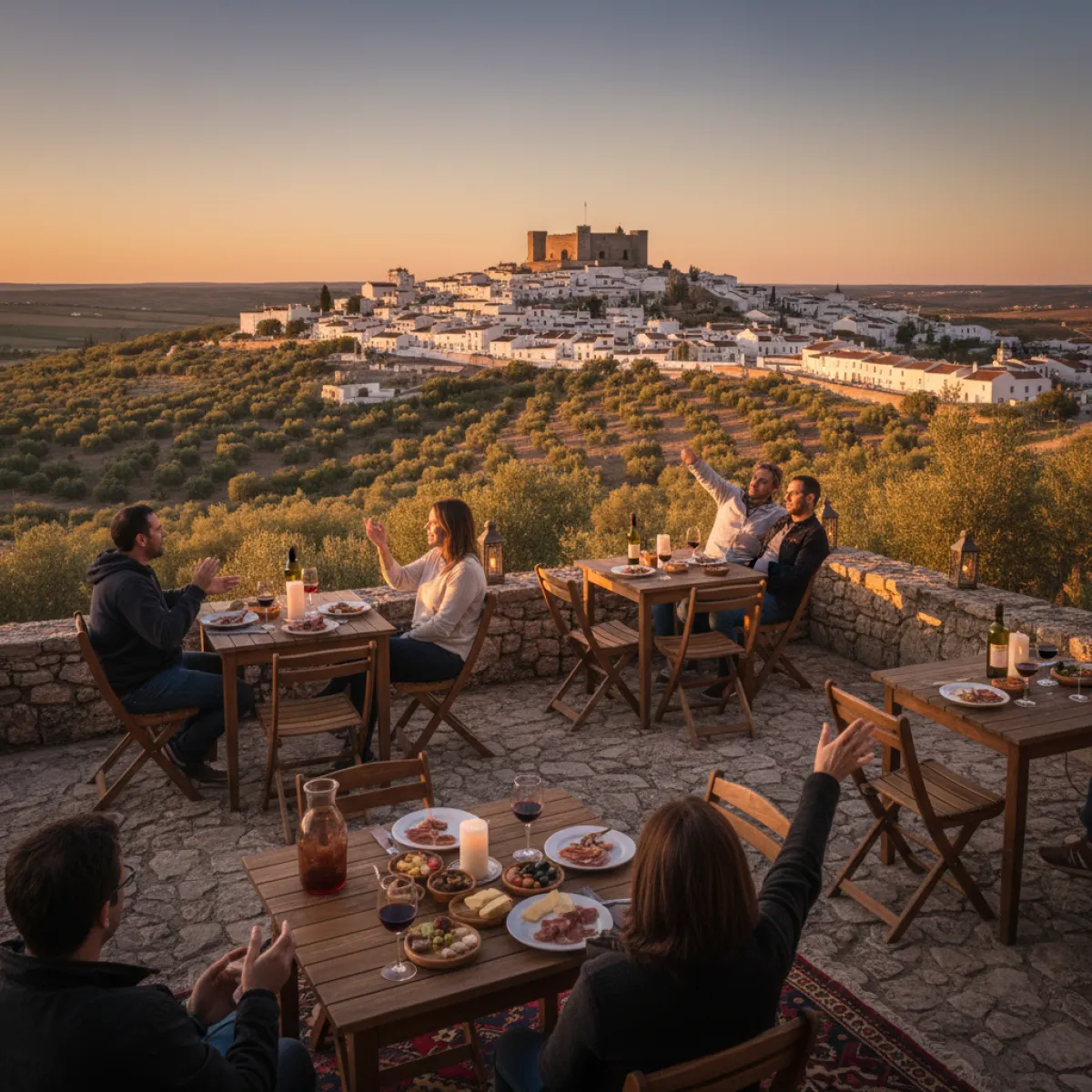
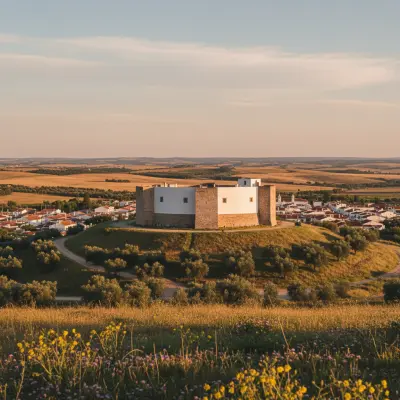
Arraiolos works best in the late afternoon. In the morning, sure, you climb up to Castelo de Arraiolos and take in the Alentejo plain stretching to the horizon. You wander the Praça do Município, admire the Manueline pillory, read something about carpets. But it's when the sun drops and the light turns honey-colored that the village wakes up to what really matters: eating, drinking, and doing both slowly.
This is an evening plan. Not a rigid itinerary with timestamps and mandatory reservations, but a logical sequence of stops for anyone who wants to explore the best of Arraiolos's food scene without falling into the traps of superficial gastronomic tourism. The Alentejo has plenty of restaurants coasting on regional reputation they haven't earned. Arraiolos, luckily, is small enough that there's nowhere to hide: either you cook well, or the whole village knows you don't.
First, some wine context
If you think Arraiolos is just about carpets, think again. The municipality is home to one of Europe's largest continuous vineyards, the Herdade das Mouras estate, producing full-bodied reds and surprisingly fresh whites under the Conde de Arraiolos and Mouras de Arraiolos labels. The dominant grape is Aragonez (known as Tinta Roriz in the Douro), but you'll also find strong Trincadeira and Alicante Bouschet, varieties that thrive in this dry heat.
If you want a proper tasting before dinner, Herdade das Mouras accepts visits, but book ahead. If not, don't worry: any decent restaurant in Arraiolos will have at least two or three local wines by the bottle, and probably a perfectly drinkable Alentejo house wine for under 10 euros.
5:30pm: Praça do Município, the warm-up
Start in the main square. There are a couple of cafés with terraces facing the Town Hall building and the Portuguese pavement tribute to Arraiolos carpets. Order a coffee or, if you're already in evening mode, a beer and some olives. Don't rush. In the Alentejo, rushing is a strategic error.
This is also the time to visit the Arraiolos Carpet Interpretive Center, if you haven't already. Or better yet, save a morning for a proper deep dive: the masterclass in Arraiolos rug weaving is a genuine immersion into the technique and history, led by people who actually master the craft. If you'd rather get hands-on with the wool, the workshop with local artisans lets you embroider a piece of carpet yourself and understand why each rug takes months to complete. But that's for tomorrow morning. Right now, the subject is food.
6:30pm: The petiscos round
Arraiolos doesn't have a petiscos scene like Lisbon or Porto, with specialized bars on every corner. What it has is better: tascas and restaurants where petiscos are what they've always been, food made to accompany conversation and wine, without the pretension of tasting menus.
República do Petisco, in the heart of the village, is the obvious spot and, in this case, the obvious spot is the right spot. It's a small space, no ceremony, where you eat well and share plates. The petiscos change with the season and the cook's mood, but there are Alentejo classics that show up regularly:
- Poejos with fresh cheese: so simple it seems impossible it's this good. Pennyroyal (an aromatic herb from the mint family) with fresh sheep's cheese and Alentejo bread. The kind of combination that only works when the ingredients are flawless.
- Cabeça de xara: not for everyone, but if you appreciate real charcuterie, this pressed pork head with spices is an Alentejo tradition worth trying.
- Cured cheeses from the region, generously sliced, with local honey.
Pair with a young red from Arraiolos, served slightly chilled. Yes, chilled red. In the Alentejo, when the thermometer passes 30°C, nobody drinks red at room temperature. Ask them to put the bottle on ice for 15 minutes. It's not heresy, it's common sense.
8pm: The real dinner
After petiscos, the mistake would be going to a restaurant and ordering a starter, a main, and a full dessert. The Alentejo is generous with portions, and if you've already had petiscos, your stomach deserves respect. My suggestion: pick one main course and one dessert. Nothing more.
O Alpendre is arguably the best table in Arraiolos for anyone wanting a complete meal with well-chosen wines. The wine list is carefully curated, with particular attention to regional producers, and the kitchen respects tradition without being lazy about it. The lamb dishes are consistently good, and the sericaia with Elvas plums is the right dessert to close the night.
If you prefer something more homestyle, O Pelourinho has that family restaurant energy where the owner's wife still runs the kitchen. The portions are enormous (consider yourself warned), the prices are honest, and the house wine does the job. Don't expect magazine-worthy decor. Expect food that tastes like the truth.
What to order (and what to skip)
At any Arraiolos restaurant, the strong suits are:
- Ensopado de borrego: the king of the Alentejo table. Tender lamb in a thick sauce with mint and garlic, served over bread slices that absorb everything. If it's on the menu, this is what you order.
- Açorda alentejana: the soup that isn't a soup. Bread, olive oil, garlic, cilantro, and a poached egg. Sounds minimal, but it's one of the most comforting dishes the Alentejo ever invented.
- Porco preto: any cut, any preparation. Alentejo black pork, raised on cork oak pastures and fed on acorns, is a completely different animal (literally) from industrial pork. Secretos, plumas, cheeks: everything works.
- Migas: the perfect side dish. Bread migas with olive oil, garlic, and sometimes asparagus or shredded pork.
Skip the fish dishes, unless the restaurant has a specific source. We're 130 km from the coast. It's not that there's no fresh fish, but this kitchen's vocation is clearly meat and cured meats.
10pm: Desserts and digestifs
Arraiolos's pastry tradition deserves its own paragraph, because it's distinctive. The sweet empadas of Arraiolos (nothing to do with meat pies) are a local specialty found in the village bakeries. The pastel de toucinho, made with lard, eggs, and sugar, is a convent sweet that makes no apologies for its caloric intensity. O Toucinho bakery and Manjerona grocery are local references for anyone wanting to take something home for the next day.
To finish, a medronho or a fig brandy. Alentejo digestifs are serious: don't drink them like water, because they aren't. A small glass, sipped slowly, while the night gets quieter and the square empties out.
Where to sleep (and what to do next morning)
The Pousada de Arraiolos, housed in the former Lóios Convent, is the most comfortable and characterful option. It's not cheap, but the quality of the building and the peace of the cloister justify the investment for a special night. If you prefer something more affordable, there are local guesthouses in the village center that work well for a night or two.
The next morning, before you leave, climb up to the castle early, when the light is low and the plain seems endless. And if you've caught the bug for exploring the Alentejo interior, the Upper Alentejo has surprises in store: Portalegre has its own food scene worth discovering, with tascas and restaurants where locals actually eat, well off the tourist circuits.
Practical notes
Arraiolos is about 100 km from Lisbon, just over an hour via the A6 motorway. From Évora, it's only 20 minutes. There's no practical public transport, so a car is essential.
If you're going to drink wine (and you should), designate a driver or stay the night. Alentejo roads after dark, with minimal lighting and wildlife, are not to be taken lightly.
Restaurants in Arraiolos fill up on weekends, especially Sunday lunch. For dinner, the pressure is lighter, but a quick phone reservation is never a bad idea. On weekdays, you'll rarely have problems.
A full dinner with wine for two runs about 40 to 60 euros, depending on the restaurant and the bottle you choose. This is the Alentejo: you eat a lot, and well, for very little. Enjoy it while it lasts.