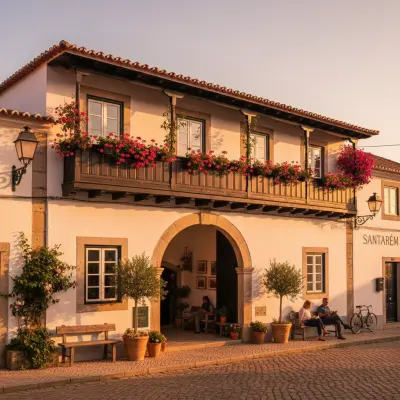
April Wildflowers Near Santarém: An Alentejo Field Guide
In April, the Alentejo plains become one of Europe's most underrated botanical spectacles, from wild orchids on the N370 roadside embankments to entire fields of poppies near the Alqueva reservoir. Santarém is the ideal base for exploring it all.
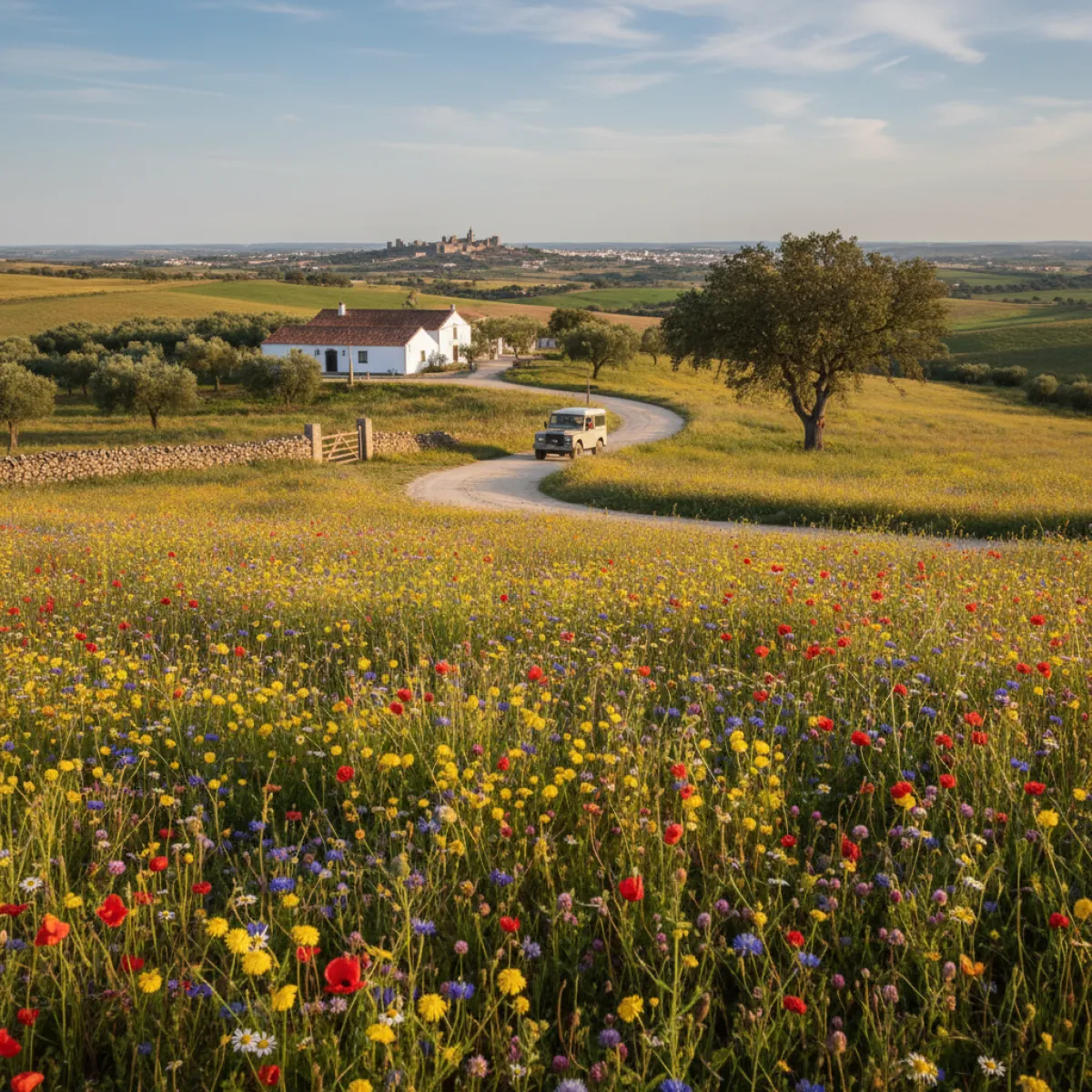
People call the Alentejo monotonous. Plains, cork oaks, silence. Those people have never been here in April. For three or four weeks, the exact timing depends on the March rains, the Alentejo becomes one of Europe's most spectacular botanical displays. And most visitors have no idea it happens.
The ideal starting point is Santarém, and that's not by accident. The Ribatejo capital sits on a plateau above the Tagus River, halfway between Lisbon and the Alentejo interior. From here, you're less than an hour's drive from the heart of the flowering plains. And at the end of the day, you come back to sleep with views over the river floodplain, which is not a bad deal.
What blooms and when
Let's get to it. In April, the Alentejo fields go through a succession of wildflowers that changes week by week. In the first two weeks, yellows and whites dominate: corn marigolds, chamomile relatives, and vast stretches of Chamaemelum mixtum that turn entire fields into golden carpets. By mid-month, the purples arrive, wild lavender, rosemary in bloom, and fields of Echium plantagineum (viper's bugloss) that paint whole hillsides violet.
The poppies show up toward late April and early May, creating those red-field photographs that look like they belong in a film. But a warning: the bloom depends heavily on rainfall. In a dry year, it can be subtle. In a good year, it's absolutely overwhelming.
The best routes for wildflowers
The road between Arraiolos and Évora (N370)
If you only have time for one route, make it this one. The N370 between Arraiolos and Évora cuts through cork and holm oak groves interspersed with open fields that turn into a colour mosaic in April. Pull over on the verges, there's space, and walk a few metres into the fields. You'll find wild orchids if you know where to look: Ophrys lutea (yellow bee orchid) and Serapias lingua are relatively common on the embankments along the road.
In Arraiolos, since you're there, visit the town. The Arraiolos carpets are famous, but the medieval castle on top of the hill, surrounded by flowering fields, is one of the most underrated views in the Alentejo.
Serra de São Mamede (Portalegre)
Serra de São Mamede, in the natural park of the same name, is the highest point in the southern Alentejo and has completely different flora from the plains. Here you'll find wild peonies (Paeonia broteri), an Iberian rarity that blooms in April and May. The park trails are well-marked and the Casa da Natureza in Portalegre has updated information about current blooms. Entry to the park is free.
Fields between Monsaraz and Mourão
The road linking Monsaraz to Mourão, along the Alqueva reservoir, is another exceptional route. The cereal fields flanking the road are frequently dotted with poppies and chamomile, with the lake as a backdrop. Monsaraz is an obvious tourist stop, but it deserves the visit, especially in late afternoon, when the tour buses have left and the medieval walls turn golden in the light.
How to plan the trip from Santarém
Santarém works as a logistics base for good reasons: it's on the A1 motorway (just over an hour from Lisbon), has a train station with frequent connections, and is considerably cheaper than Évora for accommodation. Santarem Hostel is a practical and affordable option if you'd rather spend your budget on a proper Alentejo lunch, which is the correct priority.
From Santarém to Arraiolos is about 100 km via the A6, just over an hour. To Évora, an hour and a half. To Monsaraz, two hours. There's no practical way to do these routes by public transport, you need a car. Renting one in Lisbon or Santarém is the way to go.
The ideal two-day itinerary
- Day 1: Santarém → Arraiolos (town visit and N370 fields) → Évora (late lunch and historic centre) → back to Santarém via A6.
- Day 2: Santarém → Estremoz (Saturday market if the timing works) → Monsaraz → Mourão (Alqueva fields) → return.
If you have more time, add Serra de São Mamede on a third day, it's further north, near Portalegre, and justifies a full morning of hiking.
What to eat along the way
April in the Alentejo is also the season for fresh aromatic herbs and wild asparagus. At regional restaurants, order açorda alentejana, the version with asparagus, if available, is mandatory. Migas with pork is the ultimate comfort dish. And sopa de cação (dogfish soup with coriander), at any local tasca that serves it, is one of the best fish soups you'll eat in Portugal.
In Santarém, the Ribatejo cuisine is different but equally strong. Look for sopa da pedra, legend has it that it was invented in Almeirim, right next door. Morcela de arroz (blood sausage with rice) and farturas at local markets are hard to resist.
Alentejo wines need no introduction, but a reminder: at most countryside restaurants, the house wine is surprisingly good and costs two or three euros per jug. Don't overthink it.
Photography tips
The best light for shooting wildflower fields is in the first two hours after sunrise and the hour before sunset. At midday, with the sun directly overhead, the colours wash out and the fields lose contrast. Bring a macro lens if you have one, wild orchids and the smaller field flowers deserve close-ups.
A trick: look for fields with montados (cork oak groves) in the background. The contrast between the dark green of the cork oaks and the yellows and purples of the flowers creates spectacular compositions without much effort. The abandoned windmills still found on some hilltops are another strong visual element.
Santarém as a gateway to more
The advantage of using Santarém as a base goes beyond proximity to the Alentejo. The city is strategically positioned for exploring several regions. If wildflowers are the main draw but you want to mix up your days, the Lisbon area offers very different possibilities, from exploring Lisbon's traditions and historic neighbourhoods to a day in Sintra, which is a world apart. The comprehensive Sintra neighbourhood guide is useful if you want to go beyond Pena and Regaleira.
For those with a car, Cascais is about ninety minutes away and works well as a launchpad for day trips along the coast. But let's be honest: if you're here in April, the Alentejo fields are worth more than any beach.
When exactly to go
The second and third weeks of April are, on average, the best window. But nature doesn't follow calendars. If March was very rainy, the bloom may come early. If it was dry, it may be delayed. The trick is to watch social media from Portuguese nature photographers, several post real-time updates on the state of Alentejo wildflower blooms.
One thing is certain: if you hit the right week, you'll understand that the whole "monotonous Alentejo" narrative is the talk of people who never left the motorway. The April fields tell a completely different story, and it's one of the best Portugal has to offer.