Albufeira's Festival Calendar: A Local's Honest Year-Round Guide
Eleven parishes, eleven calendars, and a town that feels like two. From the São Pedro sea procession to September's conventual sweets, this is Albufeira's year told by someone who doesn't grill sardines for Instagram.
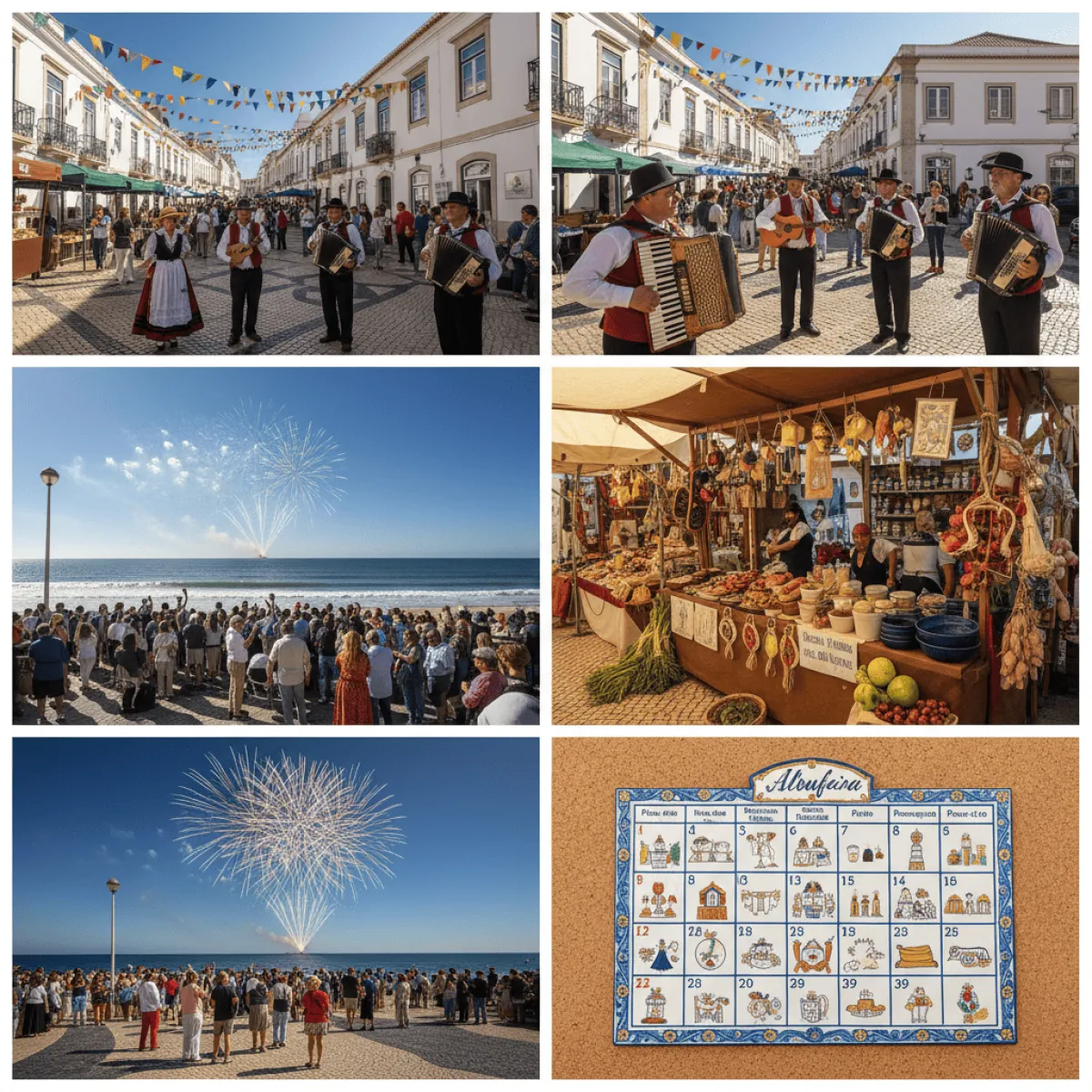
There are two Albufeiras. The first one, the one British package tours sell, lives between June and September, dances until 4am on the Oura strip, and seems to believe the Algarve was invented in 1986. The second one, the one worth knowing, opens the year with a Kings' procession through Paderne, closes it with cod baked on the streets of Guia, and in between serves grilled sardines on clay plates for a euro fifty each. This article is about that second Albufeira, organised around the only calendar that makes sense here: the calendar of festivals.
Honest disclaimer: the municipality has eleven parishes and each one prays to a different saint. Do not try to do everything. Pick two or three dates, book accommodation in advance (prices rise around 30% during the big festival weeks), and prepare to eat standing up, with paper napkins, to the sound of an out-of-tune accordion. That is the deal.
January to March: the Algarve nobody sees
Anyone arriving in Albufeira in January finds a town curled up on itself. Half the restaurants in the old town are closed for staff holidays, Fishermen's Beach has three people on it, and the cafes on Largo Eng. Duarte Pacheco only serve at the counter. It is the best time of year to actually talk to locals without rushing.
Kings' Day, 6 January, is still taken seriously inland. In Paderne, the medieval village twenty minutes by car from the centre, you get groups of singers going door to door asking for King cake and aguardente in exchange for sung verses. It is not staged for tourists. If you happen to be there, do not pull out your phone right away. Listen first. The kids sing badly and the grandparents sing worse, and that is precisely what makes the whole thing precious.
February brings Carnival, which in Albufeira is quieter than in nearby Loulé (twenty minutes away and infinitely louder), but more authentic. The parade goes down Avenida da Liberdade, there are the traditional matrafonas (men dressed as women in absurd outfits), there is rough political satire in rhyming verse, and there are chorizo rolls for two euros at street stalls. Go to the Sunday parade, have an Algarvian feijoada (the local version uses Portuguese cabbage and morcela blood sausage) at any cheap eatery in Guia, and head back to the hotel for a siesta. That is the schedule.
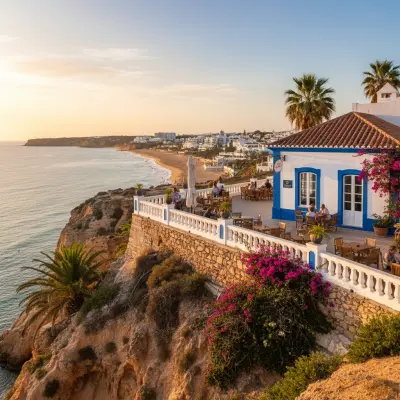
March is the month to discover the coast without crowds. Take advantage and book the e-bike tour along the coast with Bikesul, which at this time of year offers empty cliffs and low light, perfect for photographs. Stop at the Pau da Bandeira viewpoint to see Fishermen's Beach still without sun umbrellas: it is a very different image from the one on the postcards.
Easter: folar bread and roast kid
Easter in Albufeira is not the baroque spectacle of the North. Here it is domestic. Families exchange folar (the Algarvian version uses cinnamon and aniseed, more perfumed than the version from Trás-os-Montes), and there are well-attended masses at the Mother Church and at the Church of São Sebastião, the latter a small 18th-century jewel with a painted ceiling worth entering even outside of services.
On Easter Sunday, book a table at a traditional eatery for roast kid baked in a wood oven. Prices range from 18 to 22 euros per person, and most places only take reservations by phone, the old-fashioned way. To understand why Easter in the Algarve is a serious affair, take the Portuguese cooking class at MIMO Algarve: you will learn to cook xerém, seafood açorda, and, depending on the season, conventual desserts.
May and June: the explosion of the popular saints
If you have to pick a single moment to visit Albufeira, pick the first two weeks of June. That is when the town erupts in neighbourhood festivals, when the squares fill up with manjerico basil plants, and when that hackneyed image of Portugal, sardines grilling in the street, is literally the view from every corner.
Santo António (13 June)
Albufeira has its own Santo António, but it is not a smaller version of the Lisbon festival, it is a different thing. Celebrations concentrate in the old town and on a few squares in Guia. There are marches, there is the arraial (street party), there are communal sardine grills. Prices are honest: grilled sardine with bread and roasted pepper between 6 and 8 euros, a small draught beer for a euro fifty, house wine for three euros a glass. This is not magazine gastronomy, it is street food done well.
Advice from someone who has already made the mistake: do not have dinner at a restaurant on the night of the 12th. Buy from the street, sit on a kerb, and look around. The crowd is the main course.
São João (24 June) and São Pedro (29 June)
São João, in Albufeira, is celebrated more than you might think at first glance. People use the plastic squeaky hammers (an import from Porto that took root here), there are bonfires on some beaches, and there is an arraial at Largo Eng. Duarte Pacheco that runs deep into the night. But the true festival of the sea is São Pedro, patron saint of fishermen.
On 29 June, at Fishermen's Beach, there is a sea procession: boats from the fishing community, still active despite everything, take the saint's image out, pass along the coast, and return to the pier. To see this properly, head up to the Rua Latino Coelho viewpoint an hour before the procession. You get a panoramic view of the entire bay and it is always less crowded than Pau da Bandeira.
July and August: the infernal overlap (but with good moments)
In July and August, Albufeira gets more than 600,000 monthly overnight stays. That is a lot of people. Restaurant prices climb, car parks become impossible after 10am, and the Oura area turns into a British theme park best avoided unless you are 22 and have tolerance for early-2000s pop at high volume.
But there are reasons to come, even at peak. The main one is called the al-Buhera Festival, the historical recreation of Islamic Albufeira that takes over the old town for three or four days in August (the exact date changes every year, check the town council website). There is a Moorish market, falconry demonstrations, Andalusian-Arabic music concerts in patios, and a permanent smell of dates and spices. Free entry, food and drink paid at the stalls (budget 15 to 20 euros per person for a full meal).
The other summer event worth attention is the Seafood Festival in Olhos de Água, usually in late July. Small, with modest music programming, but with seafood platters at fair prices (langoustines at 15 euros, prawns at 12, percebes goose barnacles when available) that would cost triple at any marina restaurant.
On 15 August, it is the day of the patroness of Guia, Nossa Senhora da Guia. The parish of Guia, known for its piri-piri chicken (yes, it was born here, not in Lisbon and not in any fast food chain), fills up with people. Morning procession, communal lunch at midday (long shared tables, bring your own plate and cutlery if you want to participate properly), arraial at night.
To escape the heat and the chaos, take advantage of late afternoons at the Rossio viewpoint: the sea breeze comes up the street, the sun falls behind the western cliffs, and for ten minutes nobody remembers we are in high season.
September: the secret month
Ask any local when the best time to visit is, and the answer is unanimous: September. The sea hits its peak temperature for the year (22 to 23 degrees), the kids are back at school, the British are gone, and the golden end-of-summer light flatters everything, from skin to photographs.
September has two events worth holding on to. The first is the Conventual and Traditional Confectionery Fair, usually in the first or second week, in the old town. There are sweets only made here (fig morgados, Algarvian dom-rodrigos, little dried-fig cheeses), tastings at symbolic prices (between one and three euros per portion), and women in aprons explaining recipes with patience.
The second is the Harvest at Quinta do Francês, in Lagoa (fifteen minutes by car), open to the public on weekends in September. Algarvian wines, traditional grape stomping (yes, it is staged, but it is good staging), regional lunch included in the visit. Book ahead. It is not expensive, around 35 euros per adult, and it fills up.
Use September also to explore what is nearby. A good option is our honest guide to Silves for families, which gives you a full day at forty minutes from Albufeira (castle, English Factory museum, lunch by the river Arade).
October to November: chestnuts, magusto, and recovered silence
October brings back the Algarve of the Algarvians. Prices normalise, the light gets lower, and there is a sense of a town breathing deeply after months of holding its breath.
On 11 November, São Martinho is celebrated. In Albufeira, the magusto is traditionally small and family-oriented, but there are public bonfires in several squares, roasted chestnuts at three or four euros a cone, and água-pé (wine still in fermentation, sweet, smooth, treacherous) served in plastic cups in nearly every old-town tavern. Be careful, água-pé goes down playing and comes back crying.
Another event to note is the Sea Gastronomy Fair, in Olhos de Água, in late October or early November (the date moves, check locally). Small, two or three days, but with seasonal dishes you will not find at tourist restaurants: skate stew, dogfish soup, octopus done the Guia way (with boiled potato, not fried).
December: the nativity scene and the cod
December in Albufeira is almost clandestine. There is lighting in the centre, the big nativity scene at Largo Eng. Duarte Pacheco (not Vienna, but it has its charm), and small-scale Christmas markets in various squares. None of this compares to the German markets, of course, and anyone coming expecting glühwein will be disappointed.
But Christmas Eve and 31 December nights are interesting experiences for those wanting to escape houses full of family. Local restaurants serve consoada (boiled cod with potato, cabbage, and egg, drizzled with olive oil, simple and perfect) at prices between 25 and 40 euros per person, wine included. Book in advance, only a handful of places open on this night.
The official New Year is at Fishermen's Beach, with fireworks over the cliffs seen from the main viewpoint (arrive an hour early to get a spot). It does not have the scale of Funchal or Porto, but it is decent, lasts about twelve minutes, and the reflection on the yellow cliffs has a very particular aesthetic.
How to navigate all this without losing your mind
Five practical tips from someone who has made all the mistakes:
- Book accommodation three to six months in advance for the June and August festivals. Prices double during Santo António week.
- Do not rent a car just for the festivals. Use taxis or rideshare between parishes. Driving and looking for parking on a festival night is a quick way to ruin the trip.
- Eat on the street whenever possible. Festival stalls serve more honest, cheaper, and more authentic food than 90% of the tourist restaurants in the centre.
- Carry cash. ATMs at neighbourhood festivals are extremely rare. Always have 50 to 100 euros in small notes.
- Ask locals. Exact dates change, there are small festivals that do not make it into the tourist leaflets, and the only way to know is to ask at the corner cafe, to the gentleman drinking his 11am espresso.
If Albufeira leaves you wanting more, or if you want to understand the Algarve beyond the coast, read our guide to local culture in Faro or our Lagos neighbourhood guide. They are sister cities, with their own calendars, and together they paint a much more honest portrait of the Algarve than any glossy brochure.
The rest, do it the Algarvian way: slowly, in the shade, and with time for an espresso before the next plan.