24 Hours in Gerês: A Proper Local-Paced Itinerary
Charcoal-grilled posta barrosã, two-thousand-year-old Roman milestones, and the genuine silence of the one night you should spend in Gerês. A 24-hour itinerary at the pace of someone who knows the park, no rush, no checklists.
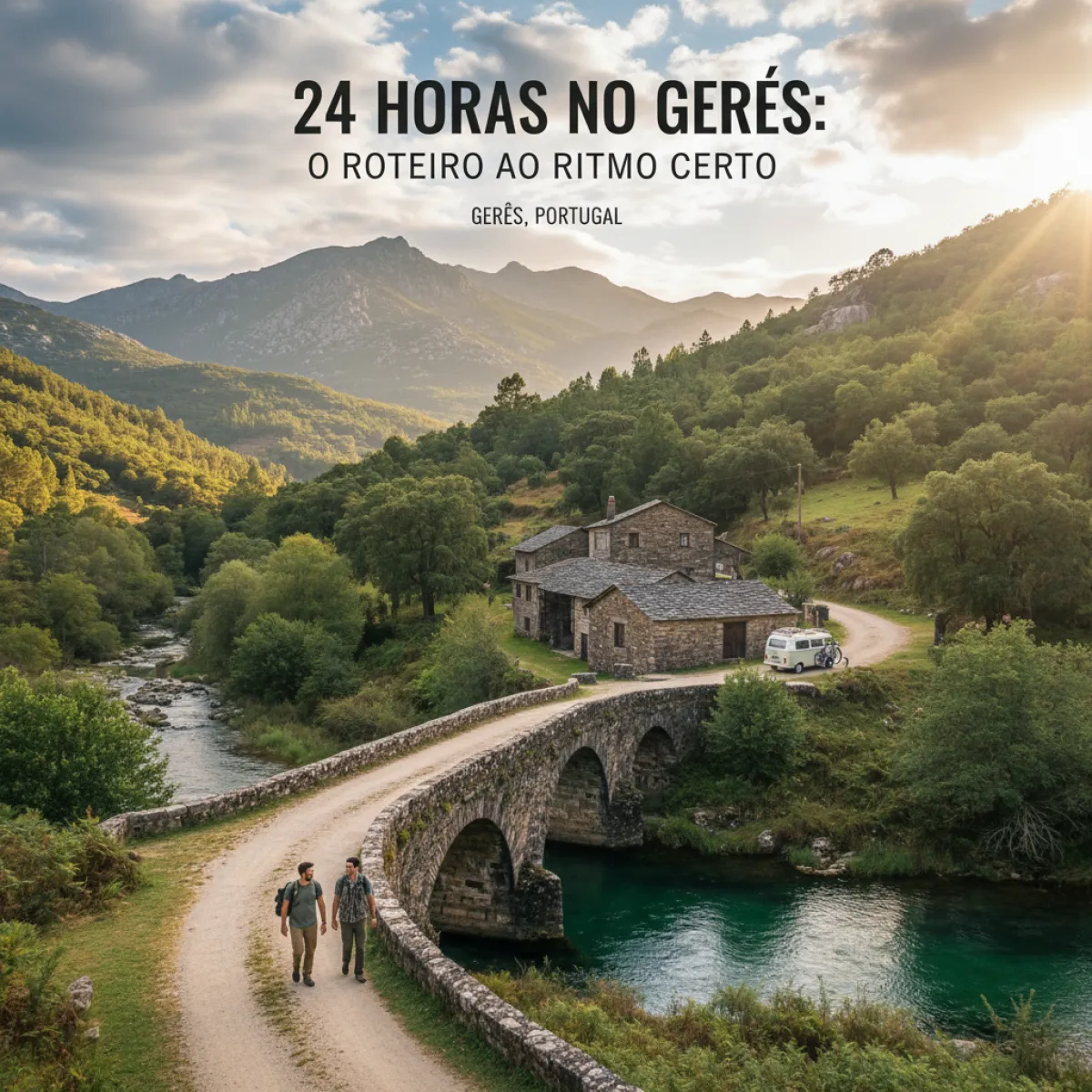
Twenty-four hours in Gerês isn't enough. Let's get that out of the way immediately, so nobody spends the day in a panicked sprint between waterfalls, trails, roast kid, and thermal baths like it's some kind of outdoor triathlon. The idea here is different: one day and one night at the pace of someone who actually knows Peneda-Gerês National Park, with stops that earn their place, and without the anxiety of a social media checklist.
Morning: coffee and granite before the crowds
Arriving in Vila do Gerês before nine in the morning changes everything. The village, which in summer becomes a car park by eleven, has a completely different character early on. The terraces along the main road are still being set up, the smell of fresh bread drifts from the bakeries, and the River Gerês, which runs through the village without much ceremony, flows without competing with portable speakers.
Have breakfast in the village. Nothing elaborate: a strong coffee and a slice of homemade cake at one of the cafés along the central road. I won't recommend a specific place because they rotate in quality, the trick is picking the one with cakes baked that day, not the ones that look like they've been there since Tuesday.
After coffee, drive up to Mata da Albergaria. It's about fifteen minutes from the village along the N308 toward Portela do Homem, at the Spanish border. This stretch of road is, by itself, one of the most beautiful in Portugal, ancient oaks forming a green tunnel over the tarmac, with the River Homem running alongside. Park near the bridge and begin hiking the Geira Romana, the ancient Via XVIII that connected Bracara Augusta (modern Braga) to Astorga in Spain. The route through Mata da Albergaria is relatively flat and follows Roman milestones, stones over two thousand years old, still standing, with legible inscriptions. This isn't a trail to rush. Take an hour, ninety minutes, whatever feels right. The point is to stop at the markers, read the inscriptions, and appreciate that you're walking on a literal highway of the Roman Empire.
A practical note: in summer (June to September), car access to Mata da Albergaria is restricted. There's a control system limiting the number of vehicles per day. Check conditions locally before you go, the rules have been changing year to year.
Mid-morning: Cascata do Arado (if you're up for it)
If the morning allows, detour to Cascata do Arado, about eight kilometres from Vila do Gerês, near the village of Ermida. The access is short, roughly two hundred metres from the road to the viewpoint, but the terrain is uneven and, when wet, slippery. Not the place for flip-flops.
The waterfall is genuinely impressive: the River Arado plunging through granite blocks at about 900 metres of altitude. If you want more adrenaline, canyoning on the Rio Arado is one of the best experiences you can have in Gerês, rappelling down waterfalls, jumping into natural pools, and the feeling of being inside the mountain rather than just looking at it. Several local companies run the activity; book ahead, especially in high season.
If canyoning isn't your thing, just go back to the viewpoint, sit on one of the granite blocks, and stay there for ten minutes doing nothing. Sometimes Gerês asks that of you.
Lunch: the most important meal of the day
I'm not exaggerating. In Gerês, lunch isn't a break, it's an event. And carne barrosã is the main reason.
The barrosã breed is indigenous to this region, raised on high-altitude pastures, and produces beef with a protected geographical indication that has no comparison with what you'll eat in the cities. Posta barrosã, a thick cut, grilled over charcoal, served with batata a murro (smashed potatoes) and arroz de feijão (bean rice), is the dish that defines this land.
In Vila do Gerês, Adega Regional is one of the most reliable addresses for this kind of cooking. Posta barrosã, cabrito assado (roast kid), papas de sarrabulho (a blood-and-meat porridge that sounds alarming but tastes extraordinary), all made without pretension. It's comfort food, heavy in the best way, and honestly served. Another classic is Restaurante Lurdes Capela, open for over sixty years, where the "pedaço", a breaded steak served with migas de broa (cornbread crumbs), cabbage, and honey, is the house specialty.
Two things to know about lunch in Gerês: arrive before half twelve, or prepare to queue. On weekends and holidays, lines at the door are the norm. Prices are fair for the quality, a full meal with house wine typically runs €15-25 per person, but check locally.
Afternoon: the viewpoint that justifies everything
After lunch, resist the urge to lie down under a tree (though that also has its merits). Instead, drive to Miradouro da Pedra Bela. It sits at about 800 metres altitude and offers a panoramic view over the Gerês valleys and part of the Albufeira da Caniçada, that blue-green mirror of water wedged between mountains that appears in every photograph of the region.
Access is by car, with a short walk at the end. Go in the late afternoon, when the light starts dropping and the valleys gain depth. It's one of those places where you understand why Gerês is Portugal's only national park, the scale of the landscape is simply different from anything else in the country.
If you want to stretch the afternoon, the road between Pedra Bela and Miradouro da Boneca passes through some of the most dramatic scenery in the region. You don't even need to leave the car, the road is the viewpoint.
Late afternoon: thermal baths or a beer (or both)
Back in Vila do Gerês, you have two options. If you want something more contemplative, the Termas do Gerês have been operating for centuries, the sulphurous thermal waters are known for their therapeutic properties, and the Parque das Termas, with its outdoor pools among ancient trees, is a civilised place to decompress. Check hours and prices on site, as they vary by season.
If you prefer something simpler, there are terraces in the village where a cold beer with a valley view solves the late afternoon without complications. Gerês doesn't demand that every moment be epic, sometimes a cold drink and the sound of the river is all you need.
Dinner: repeat the dose (no guilt)
Dinner in Gerês is, honestly, a second round of lunch. The gastronomic offering revolves around the same ingredients, barrosã beef, kid, cured meats, migas, and there's nothing wrong with that. If you had posta at lunch, order cabrito at dinner. Or the reverse.
An alternative for dinner is driving up to Ermida, a village a few kilometres from the main town, where smaller restaurants with a tavern feel serve equally good food with fewer people. I won't invent names, ask locally, because what's good one year can change the next.
Always pair with vinho verde from the region. Red if it's cold. White if it's warm. Don't overthink it.
Night: real silence
If you're staying overnight in the area, and you should, because doing Gerês as a day trip from Porto is a waste, the night offers something most Portuguese destinations can't: actual silence. No traffic, no music, nothing. If you step outside your accommodation and look up on a clear night, the stargazing is extraordinary. Light pollution here is minimal.
Accommodation ranges from hotels in the village to rural houses scattered across surrounding hamlets. Book ahead in summer; the rest of the year offers more flexibility.
Before you go: what else to explore
Twenty-four hours is an appetiser. If you have more time, the villages of Soajo and Lindoso, with their granite espigueiros (communal granaries raised on stilts), are worth a detour. Pitões das Júnias, further north, is one of the most isolated and authentic villages in the park, with the ruins of a medieval monastery hidden in a valley.
And if you're exploring the Minho further south, Barcelos deserves a stop. There are proper cafés worth seeking out, museums that earn their entrance fee (and others that don't), and if you're travelling with kids, there are family itineraries that dodge the usual traps.
Getting there and logistics
Vila do Gerês is in the municipality of Terras de Bouro, about 45 minutes from Braga and ninety minutes from Porto. A car is essentially mandatory, public transport to the village exists but is scarce and impractical for exploring the park. The N308, connecting Braga to Gerês, is the main road and is in good condition.
If coming from Porto, resist the temptation to go and return in the same day. Gerês deserves at least one night, preferably two. And don't try to see everything. Pick two or three spots, eat well, walk slowly. The park will be here next time.
