Viseu on Foot: Trails Ranked by Difficulty and Scenery
From the Ecopista do Dão to the Caramulinho summit, we ranked Viseu's surrounding trails by difficulty and scenery. Includes where to eat the best viriatos after a morning on the serra.
Viseu has a problem most Portuguese cities would envy: it's surrounded by landscape so good that choosing where to hike first feels like an actual dilemma. The Serra do Caramulo rising to the southwest, the Dão river threading between vineyards, granite plateaus stretching north, all within thirty minutes of the old town. And yet, most visitors stick to strolling around the Cava de Viriato and sitting at a café terrace on Praça da República.
That's not a plan. This is a plan.
I've spent weeks walking the trails around Viseu across different seasons and conditions. What follows is an honest ranking, not by popularity, but by what genuinely rewards the effort of your legs and the petrol to the trailhead.
Easy: Scenery Without the Suffering
Ecopista do Dão
Let's start with the obvious, because it's obvious for good reasons. The Ecopista do Dão follows the old railway line between Viseu and Santa Comba Dão for about 49 kilometres, but nobody's forcing you to do the whole thing. The prettiest stretch, and the most accessible, runs from Viseu towards Tondela, with the first 10 kilometres virtually flat, passing through restored tunnels and bridges over the river. The surface is paved, so it works for bikes, pushchairs, or anyone who'd rather not twist an ankle.
Best time? Autumn mornings, when mist rises off the river and the vineyards along the path start turning colour. Weekend mornings are peaceful; Sunday afternoons, less so. Bring water, there are no reliable fountains along the route.
Difficulty: 2/10. Scenery: 7/10. Easy doesn't mean boring.
Pavia River Walk
Shorter and more urban, this route along the river Pavia lets you walk without leaving the city. It follows the banks from Parque Aquilino Ribeiro towards the Fontelo area, through poplars and willows. About 5 kilometres return, with no slope worth mentioning. Ideal for late afternoon, when the low light turns the river into something that almost justifies posting on social media.
Difficulty: 1/10. Scenery: 5/10. Perfect for the day your legs say no but your head needs air.
Intermediate: Some Sweat, Plenty of Reward
Quatro Águas Trail (Caramulo)
This is where things get interesting. This circular route in the Serra do Caramulo, roughly 12 kilometres, takes you through rock formations, oak woods, and viewpoints over the Bestança valley that make you stop and go quiet for a few seconds, which, if you're hiking in a group, is a genuine achievement.
The trail is reasonably signposted, but keep an offline map on your phone. There are a couple of junctions where the markers are ambiguous, and getting lost in the Caramulo on a foggy day isn't the romantic adventure it sounds like. Total elevation gain is around 400 metres, nothing dramatic, but enough to feel your thighs the next day.
Difficulty: 5/10. Scenery: 8/10. If you only have time for one trail on this list, make it this one.
Santiago de Besteiros Loop
Less known than Quatro Águas, this 9-kilometre loop near Tondela (20 minutes from Viseu) passes through villages where granite dominates everything, houses, walls, grain stores. The opening climb is honest, but the plateau at the top offers views towards the Serra da Estrela that, on clear days, justify every drop of sweat.
If you're planning a week in central Portugal, this is the kind of detour that turns a competent itinerary into a memorable one.
Difficulty: 5/10. Scenery: 7/10. Bonus: you'll barely see other hikers.
Trails Around Canas de Senhorim
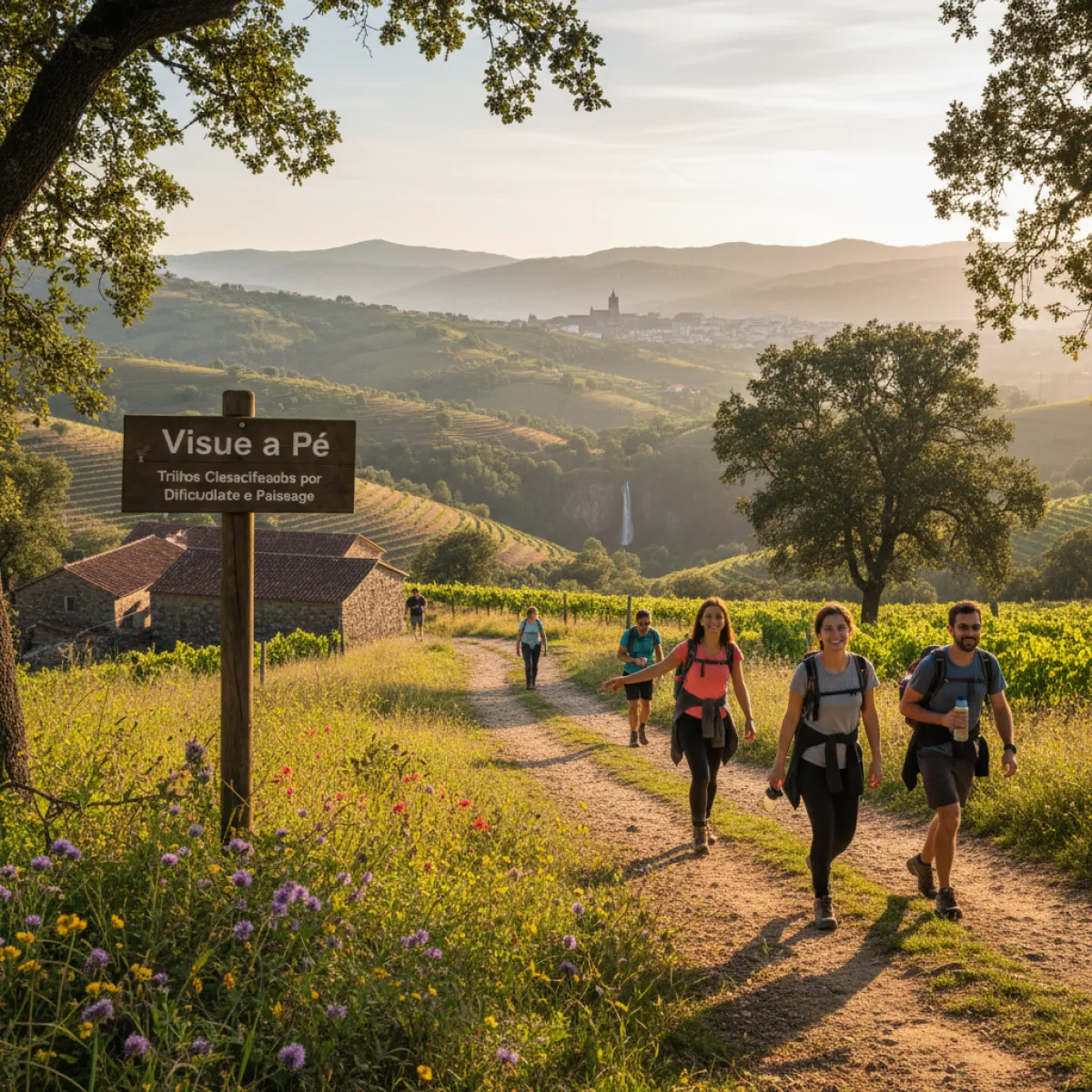
South of Viseu, the area around Canas de Senhorim and Santar offers walking routes between historic estates and Dão vineyards that are as beautiful as anything in the Douro, with a fraction of the visitors. Local trails run between 6 and 10 kilometres, passing 18th-century manor houses and working wine cellars. The terrain rolls gently, soft hills covered in terraced vines.
In the same area, if you're into experiences that combine gastronomy with culture, consider the Serra da Estrela cheese workshop at Casa da Ínsua, it's nearby and a smart way to spend the afternoon after a morning hike.
Difficulty: 4/10. Scenery: 7/10. Extra points for the quiet.
Hard: For Those Who Like Suffering With a View
Climb to Caramulinho
The highest point in the Serra do Caramulo at 1,075 metres, and the trail to get there isn't for everyone. There are several possible approaches, but the most rewarding starts from Guardão and climbs through dirt tracks and rock for about 6 kilometres (one way). The elevation gain is significant, around 500 metres, and the final 200 metres before the summit are exposed to wind, which in January means you'll question your life choices.
But at the top, on a clear day, you can see the sea. Literally. A blue strip of Atlantic appears on the western horizon, while to the east the Beira plateau extends until it fades from sight. It's one of the best natural viewpoints in central Portugal, and getting there on foot earns you the right to say so.
Difficulty: 7/10. Scenery: 9/10. Bring a windbreaker even in July.
Paiva Walkways (Day Trip)
Technically not in Viseu, it's in Arouca, about ninety minutes by car, but I'm including it because it's the trail everyone asks about and because, from Viseu, it makes an excellent full-day excursion. The 8 kilometres of wooden walkways suspended above the river Paiva are spectacular, no way around it. The difficulty comes less from distance and more from the endless stairs, thousands of steps, and the next day your legs will remind you of every single one.
Book tickets in advance (check prices and availability locally), especially between May and October. Start early to avoid the crowds and the heat.
Difficulty: 6/10. Scenery: 9/10. Touristy, yes. But for good reasons.
After the Trail: Where to Recover in Viseu
The best part of hiking around Viseu is coming back to Viseu. The old town is compact and generous to anyone arriving tired and hungry.
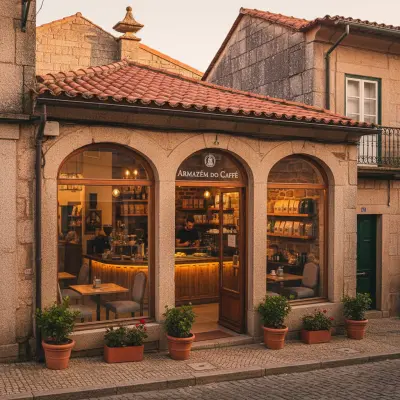
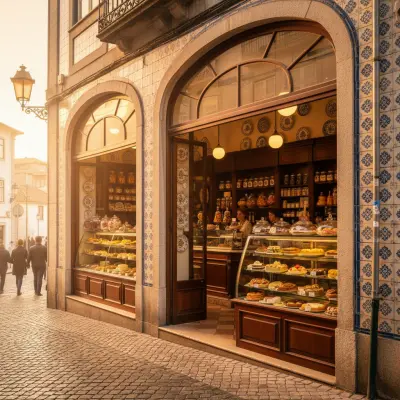
For a proper lunch after a morning on the serra, Armazém do Caffè is a solid choice, the space is handsome without being pretentious, and the kitchen handles regional products well. If you want something lighter, a decent coffee and a conventual pastry worth stopping for, Confeitaria Amaral is a local institution for good reasons. The viriatos (Viseu's signature pastries) are what you should order.
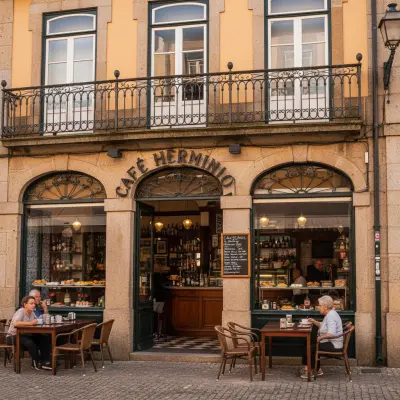
For the late-afternoon coffee, the one you drink slowly while watching the street with no hurry at all, Café Hermínio has the right vibe, relaxed, local, no Instagram filters on the décor.
Practical Tips for All Trails
- Most trails have no significant shade in summer. Sunscreen, a hat, and at least 1.5 litres of water per person are mandatory between June and September.
- Proper hiking shoes with grip for intermediate and hard trails. The ecopista is fine in trainers.
- Mobile coverage: reasonable on trails close to the city, patchy in the Serra do Caramulo. Download offline maps before heading out.
- No guides are required for any of these trails, but for the harder ones, hiking with company is sensible.
- Spring (March to May) and autumn (September to November) are the best seasons. Summer works if you start early; winter demands attention to fog and cold on the serra.
And if a rainy day pushes you indoors, Viseu has alternatives. The azulejo workshop with Mestre António Cruz is the kind of experience that works precisely because it's not outdoors, and you leave with something made by your own hands, which is more than most tourist activities can claim.
Viseu isn't the first city that comes up when you search "hiking trails in Portugal." But it should be. The landscape is the right scale, big enough to impress, small enough to cover on foot without needing to be an athlete. And at the end of the day, you return to an old town with real restaurants, cafés with history, and that rare quality the more famous cities have already lost: silence after dinner.