Setúbal Coffee Guide: Where to Drink Like a Local
In Setúbal, coffee isn't a lifestyle accessory; it's a rite of passage. Discover where to find the perfect 'Esse de Setúbal', the cheese tarts that rival Sintra's, and the market counters where fishmongers and caffeine addicts collide.
The Ritual of the Bica in the Shadow of Arrábida
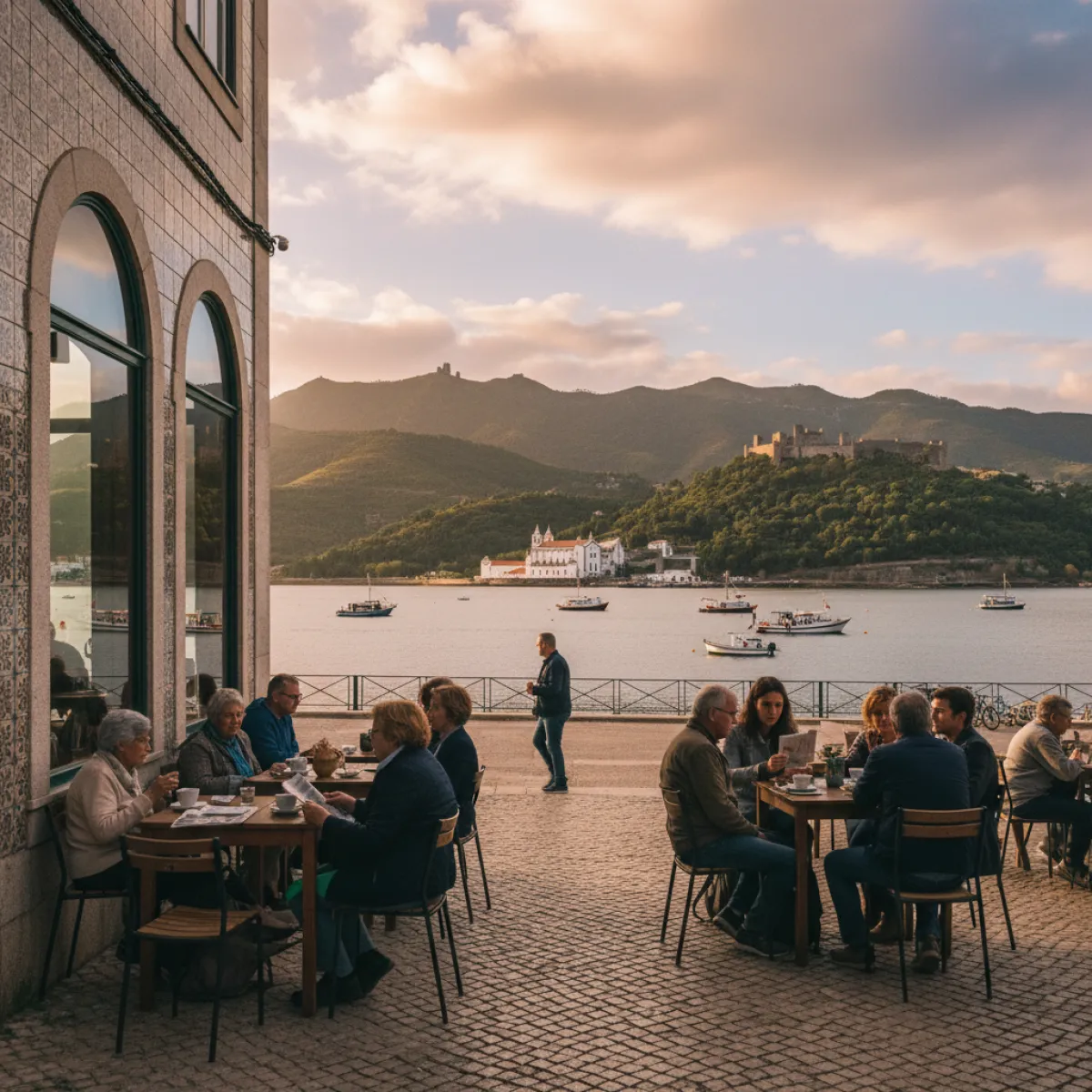
Forget the polished, avocado-toast-fuelled Lisbon brunch scene. Setúbal has no patience for it. Here, coffee is still a matter of survival, local politics, and a specific kind of blue-collar resistance to the gentrification that has already swallowed Cais do Sodré whole. Drinking a coffee in Setúbal is, first and foremost, an exercise in observation. It’s watching retired fishermen in the Troino district argue over the price of cuttlefish while the steam from the espresso machine veils the worn tiles of a nameless pastelaria.
If you’re looking for the city’s true pulse, start at Praça de Bocage. It is the beating heart, where the statue of the poet looks down with ironic disdain at the flutter of pigeons and tourists trying to decide where to sit. While local culture in Lisbon has become an export product, in Setúbal it still smells of boat diesel and salt spray.
Café Central: The Square’s Grandstand
Café Central isn’t the place where you’ll find specialty beans from Ethiopia with notes of bergamot. It’s where you order a bica—short, and perhaps 'escaldada' (in a hot cup) if that’s your kink—and an "Esse de Setúbal." This S-shaped biscuit, dry and hinted with lemon and cinnamon, is the litmus test for any self-respecting Setubalense pastry shop. At Central, the service is fast, sometimes brusque, but always efficient. The cost? Little more than a euro for the coffee. It’s a fair price for the best seat in town to watch life go by.
What to order: A bica and an Esse de Setúbal. If you’re hungry, the 'torrada' (toast) made with local 'carcaça' bread, dripping with butter, is non-negotiable. Skip the pre-made sandwiches in the display case; focus on what comes out of the toaster.
Mercado do Livramento: Coffee Amidst Fish and Tiles
They say it’s one of the best markets in the world, and they aren’t exaggerating. But forget the fish for a second. Head to the small counters at the back of the market, near the tile wall that depicts the history of the local fishing trade. Here, coffee is drunk standing up, leaning against the stainless-steel counter. This is where you hear the real Setúbal dialect. There is none of the pretension you find when taking day trips from Cascais, where everything feels designed for a Monocle editorial.
In the market, coffee serves as the vehicle for a Queijada de Setúbal. Unlike its Sintra cousin, which you can explore in our Sintra neighborhood guide, the Setúbal version is denser, less sweet, and has a more pronounced cheese flavour. It’s a small disc of pure energy.
490 Coffee: The Specialty Exception
For those who cannot go without a flat white or a V60, 490 Coffee on Avenida Luísa Todi is a necessary oasis. It’s a minimalist space that feels like it was teleported from Berlin but remains grounded. This is where the 'new' Setúbal meets: young creatives, digital nomads, and locals who have discovered that coffee doesn't always have to taste burnt. Prices are higher, but the quality justifies every cent. A cappuccino costs around €3.50—a fair price for the technique involved.
What to order: The filter coffee of the day. They rotate origins frequently. Pair it with one of their homemade cookies which, unlike most, aren't just flavourless sugar blocks.
Pastelaria de Viso: The Pilgrimage for the Original Biscuit
If you want the real "Esse," you have to leave the historic centre and climb up to the Viso neighbourhood. It’s a residential area with no major tourist attractions except this pastelaria. This is where many claim the original recipe lives. The vibe is a 1990s neighbourhood café, complete with football calendars and fluorescent lights. But the smell wafting from the oven at 8 AM is intoxicating. It’s proof that poetry is in the details: the sound of a metal tray hitting a marble counter and the steam rising from a fresh espresso.
Escaping to Arrábida
Once you’ve caffeinated, the logical path is the Arrábida Mountains. But beware: don't make the rookie mistake of trying to park at Praia da Figueirinha on a Sunday in August at 11 AM. It’s a recipe for disaster. Go early, take your coffee in a thermal cup, and watch the sun rise over the Sado.
For a coffee with a view, head to the mountain ridge before descending to Praia do Creiro. There are small kiosks where the coffee is basic, but the setting is world-class. If you prefer exclusivity (and the hike), Praia dos Galapinhos offers the clearest blue water in the region, though catering options are sparse. It’s the perfect spot for a thermos of coffee and the kind of silence only Arrábida provides when the tourists are still asleep.
Practical Tips for Surviving Setúbal
- Opening Hours: Most traditional pastry shops open at 7:00 or 7:30 AM. If you want fresh "Esses," that’s when you go.
- Prices: A coffee (bica) should cost between €0.70 and €1.20. If they ask for more, you’re in a tourist trap or at 490 Coffee.
- How to get there: The Fertagus train from Lisbon (Sete Rios or Entrecampos) is the most civilised option. Avoid driving if you plan to visit the beaches; the shuttle bus system from Setúbal works surprisingly well in summer.
- The Secret: Order a "garoto" if you want a coffee with a splash of milk, or a "galão" for the classic tall glass of milky coffee. But in Setúbal, the bica is king.
Setúbal doesn't apologise for being what it is. It’s a city of contrasts, where the luxury of Arrábida lives alongside the grit of the port. Its cafés reflect this: they are honest, direct, and, if you know where to look, unforgettable.