Kayaking Alto Rabagão in Montalegre: A Reservoir Guide
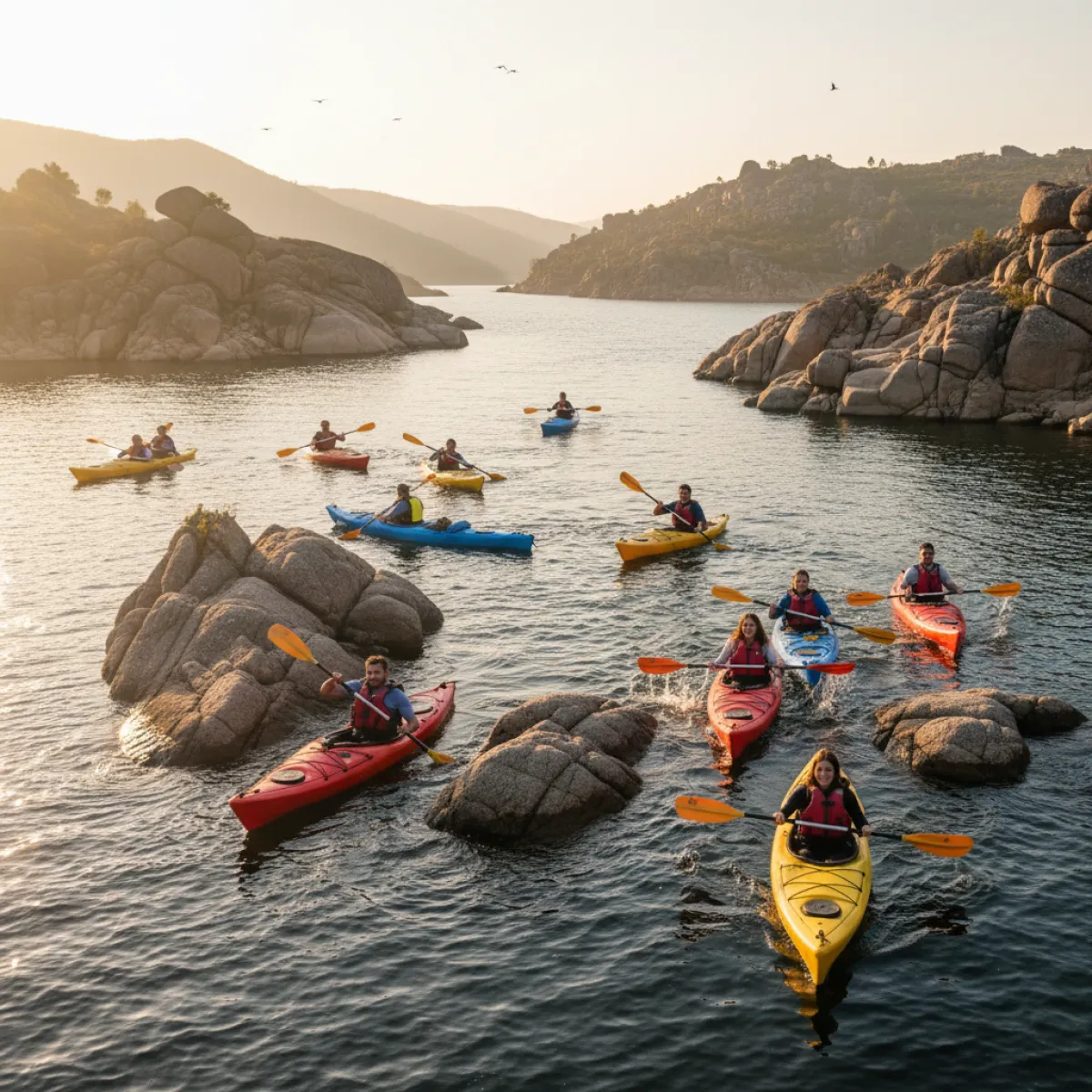
Two hours of kayaking on the Alto Rabagão reservoir for just €15, with CEITA Montalegre. Calm mountain water, views of granite villages like Vilarinho de Negrões, and the kind of silence you only find deep in Trás-os-Montes.
Trás-os-Montes is not where you expect to find great paddling. But the Alto Rabagão reservoir, created when they dammed the Rabagão river in 1964, turned a mountain valley into one of northern Portugal's most striking bodies of water. No waves, no tides, no tour boats. Just a vast mirror reflecting the Barroso mountains, and the kind of silence you have to earn by driving two hours from Porto.
The Provider: CEITA Montalegre
CEITA is the local adventure tourism operator, based in Friães, about 500 metres from the reservoir's shore. They run over 15 activities, from paintball to paragliding, but the kayak and SUP rental on the Alto Rabagão is their standout offering. They hold RNAAT licenses (163/2020 and 342/2026) and use FareHarbor for online bookings.
Pricing is straightforward and fair. Kayak or SUP rental costs €5 for 30 minutes, €8 for one hour, or €15 for two hours. If you want to try multiple activities, there is a Try All Pack for €25. They also offer snorkelling in the reservoir (€5 for 30 minutes, €7.50 for one hour, €10 for two hours), with surprisingly good visibility for inland water.
Contact: +351 937 819 067. Open daily 9am to 9pm. Book via ceita.pt or through their FareHarbor system.
What It Is Like on the Water
When you push off from the shore, the first thing you register is the quiet. No road noise, no buildings at the launch point. Just the surface of the water, which on a calm morning looks like polished slate reflecting the surrounding hills.
Book the two-hour option. Thirty minutes barely gets you out of the starting area. One hour lets you explore one arm of the reservoir but leaves you feeling like you missed the best part. Two hours gives you time to paddle slowly, stop, float, and reach sections where the shoreline is nothing but scrub and rock.
If you time it right, you can paddle toward Vilarinho de Negrões, a traditional granite village that sits on a narrow peninsula formed when the waters rose. The village was a finalist in Portugal's 7 Wonders competition in the Villages category. Seen from the water, with stone houses emerging from the shoreline and mountains behind, it is a view that stays with you. You cannot land everywhere along the shore, but seeing the village from that angle makes the paddle worthwhile.
When to Go
Go in the morning. Between 9am and 11am, the water is calmer, there is less wind, and the low-angle light creates reflections that transform the surface. Afternoons, especially in summer, can bring a breeze that changes the experience. Not badly, but it loses that meditative quality that makes this special.
For season, late spring (May and June) and early autumn (September) are best. Summer brings more visitors, and August can get busy. Winter? CEITA operates year-round, but Montalegre sits above 800 metres and January mornings are genuinely cold. Only for the committed.
What to Wear and Bring
- Clothes you can get wet. Even careful paddlers get splashed.
- Sunscreen and a hat. Water reflection amplifies UV, even on days that feel cool.
- A water bottle. Two hours of paddling dehydrates you faster than you expect.
- Old trainers or sandals with heel straps. No flip-flops.
- A dry bag for your phone if you want photos without risk.
- An extra layer to put on when you get out. Temperature drops quickly up here.
Before and After the Paddle
If you are spending the day in Montalegre, pair the kayak with a visit to the town itself. The medieval castle and mountain cooking deserve at least an afternoon. The smoked meats of the region are exceptional, and after two hours of paddling, a plate of Barrosã veal at a local restaurant hits differently.
For accommodation, Hostel Retiro do Gerês is within reach and keeps costs down. Staying overnight means you can do the early morning paddle without the rush of a day trip from Porto or Braga (both about two hours away).
The Barroso region has a cultural identity worth exploring beyond the water. The Celtic roots and local superstitions give context to what you see in the villages, and the smoked meat traditions and winter rituals explain why this corner of Portugal feels so different from the rest of the country.
Getting There
CEITA is at Bairro de Lamelas nº1, 5470-523 Friães, Montalegre. From Porto, take the A7 toward Chaves, then the N103 to Montalegre. About 2 hours. From Braga, the N103 direct route takes roughly 1h30. The final stretch uses well-maintained secondary roads. Parking is available at the site.
Is It Worth It?
Yes, if you want a water experience that has nothing in common with the Algarve coast or southern river trips. This is mountain water: cold, clean, surrounded by rough landscape. It is not an adrenaline activity. It is slow, quiet, and rewards those willing to pay attention. The price is hard to beat: €15 for two hours of kayaking on a reservoir with this kind of scenery is among the best deals in Portuguese outdoor tourism.
One note: confirm equipment availability directly with CEITA, especially in August or during holiday weekends. Kayak stock can run out when groups book ahead.