Whale Watching in the Azores: The Season of Giants Begins in Ponta Delgada
Experience the awe of whale watching in Ponta Delgada during the peak migration season. Learn how to spot Atlantic giants with Futurismo Azores Adventures.
The Awakening of the Atlantic Giants
As the first signs of spring reach the archipelago, the deep waters surrounding the island of São Miguel transform into one of the most significant migratory corridors on Earth. Between March and June, Ponta Delgada serves as the primary gateway for a wildlife encounter that rivals any African safari. While summer months focus on resident species like sperm whales and dolphins, spring offers the chance to see the true titans of the ocean: blue whales, fin whales, and sei whales.
Whale watching in the Azores is more than just a boat trip; it is an immersion into marine biology within one of the few global sanctuaries where these creatures are protected. The shift from a historic whaling industry to a sustainable observation model is a cornerstone of modern Azorean identity, with companies like Futurismo leading the way in conservation and research.
The Operator: Futurismo Azores Adventures
For a reliable and scientifically-grounded experience, we highlight Futurismo Azores Adventures. Based in the Portas do Mar complex in Ponta Delgada, their team consists of marine biologists and expert lookouts. Their operation is built on strict ethical standards, ensuring that every encounter follows international guidelines for animal welfare while providing guests with deep insights into the behavior of the species encountered.
The Step-by-Step Experience
The adventure begins at the Futurismo activity center for check-in and an essential briefing. This 20-minute session is led by a marine biologist who explains the species likely to be spotted, the biology of the Atlantic, and the safety protocols. You will learn about the "Vigias", land-based lookouts who sit in small towers along the coast, scanning the horizon with high-powered binoculars to guide the boats toward the whales.
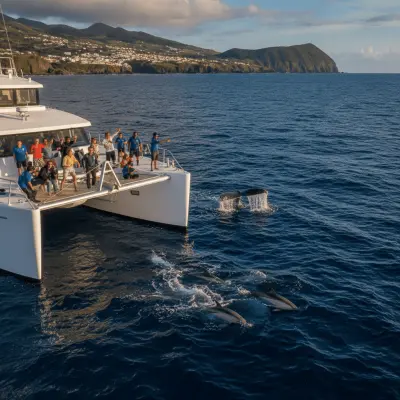
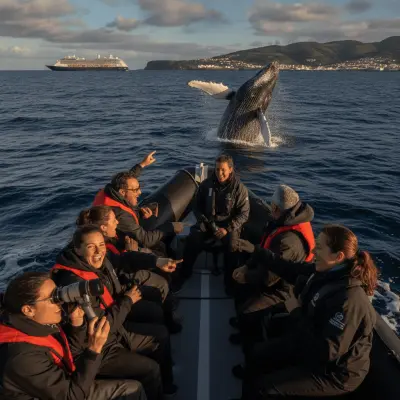
Passengers then choose between two types of vessels. The large catamarans offer stability, indoor seating, and restrooms, making them ideal for families or those prone to seasickness. The Rigid Inflatable Boats (RIBs) provide a more adrenaline-fueled ride, sitting low in the water for a closer perspective, though they require a bit more physical resilience against the ocean swells.
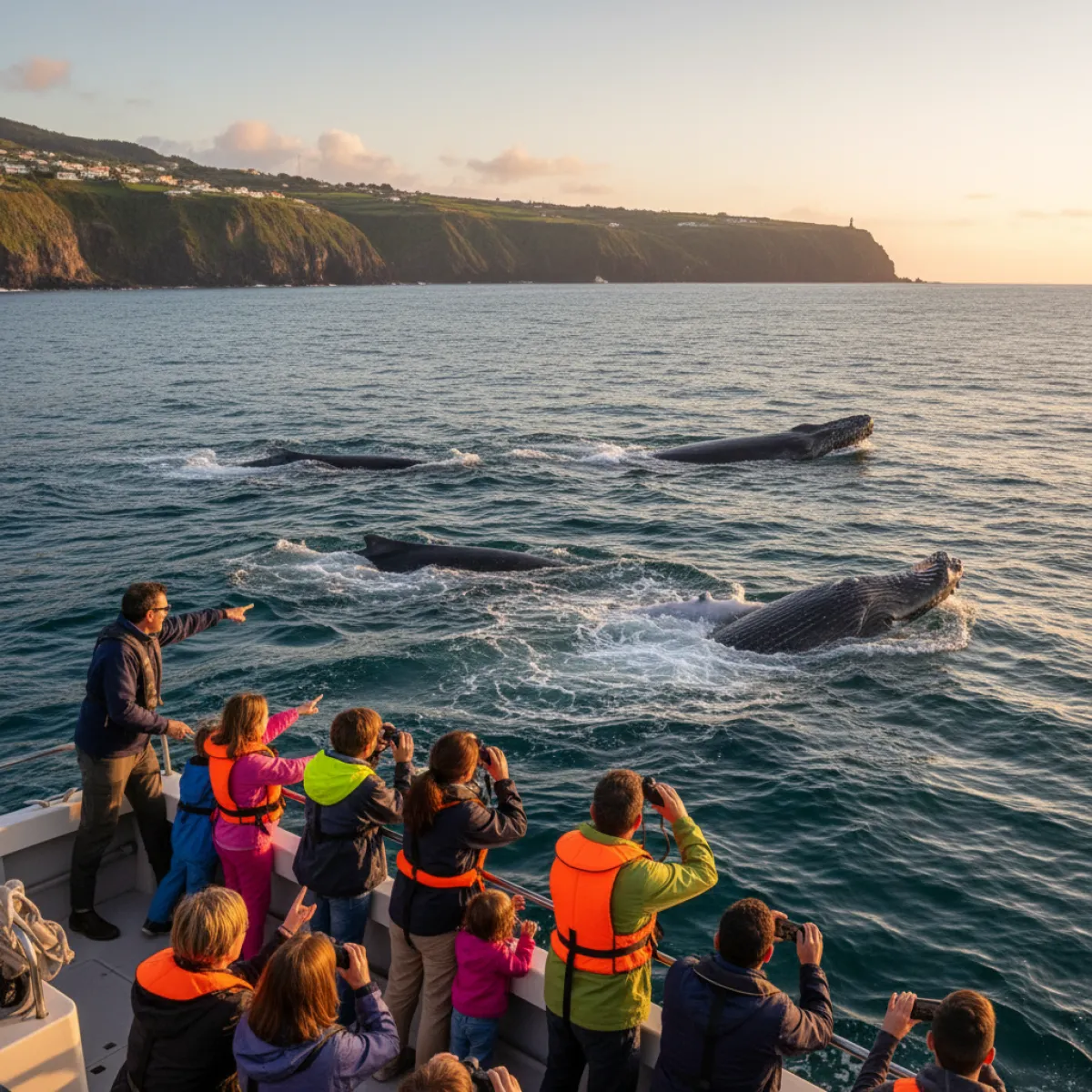
Once at sea, the excitement builds as the captain receives radio coordinates from the vigias. The approach is methodical. When a blue whale, the largest animal to ever live, is spotted, the boat maintains a respectful distance. The sight of a 30-meter-long shadow gliding beneath the surface, followed by a vertical blow that can reach nine meters high, is humbling. After several breaths, the whale often arches its back, showing its dorsal fin or even its massive tail (flukes) before diving back into the abyss.
Practical Tips for the Open Sea
The Atlantic climate is notoriously fickle. Even if Ponta Delgada feels warm, the wind chill and spray on a moving boat can be biting. Dressing in layers is the only way to stay comfortable. A waterproof windbreaker is essential, as is closed-toe footwear with non-slip soles.
If you are sensitive to motion, take a seasickness tablet at least 30 minutes before departure. A light breakfast is recommended, avoiding heavy or greasy foods will help your stomach settle during the journey. After three hours on the water, you will likely return with a significant appetite. You can explore options for where to eat in Ponta Delgada to refuel. For a deeper dive into local flavors, consider following our guide The Volcanic Plate: A Gastronomic Trek through Ponta Delgada, which explores the island's unique geothermal cooking methods.
Booking Details and Pricing
- Price: Adult tickets are approximately €70 for a half-day tour (3 hours). Children (4-12 years) are around €35.
- Schedule: Tours typically depart twice daily at 09:00 and 14:00, weather permitting.
- Location: Marina of Ponta Delgada, Portas do Mar.
- What to Bring: High-factor sunscreen (the water reflection is powerful), a reusable water bottle, a camera with a good zoom lens, and binoculars if you want a detailed view of the distant blows.
Remember that whale watching is an encounter with nature in its rawest form. While sightings are not guaranteed, the success rate in the Azores is incredibly high, often exceeding 95%. In the rare event that no cetaceans are spotted, most reputable operators, including Futurismo, offer a second trip for free, depending on availability.