Vinhais Smokehouse Trail: Where to Buy Alheira Direct
Vinhais holds six European smoked meat seals in a village of three thousand. An honest guide to what to buy direct from the producer, what it costs, and why the February Feira is spectacular and unbearable in equal parts.
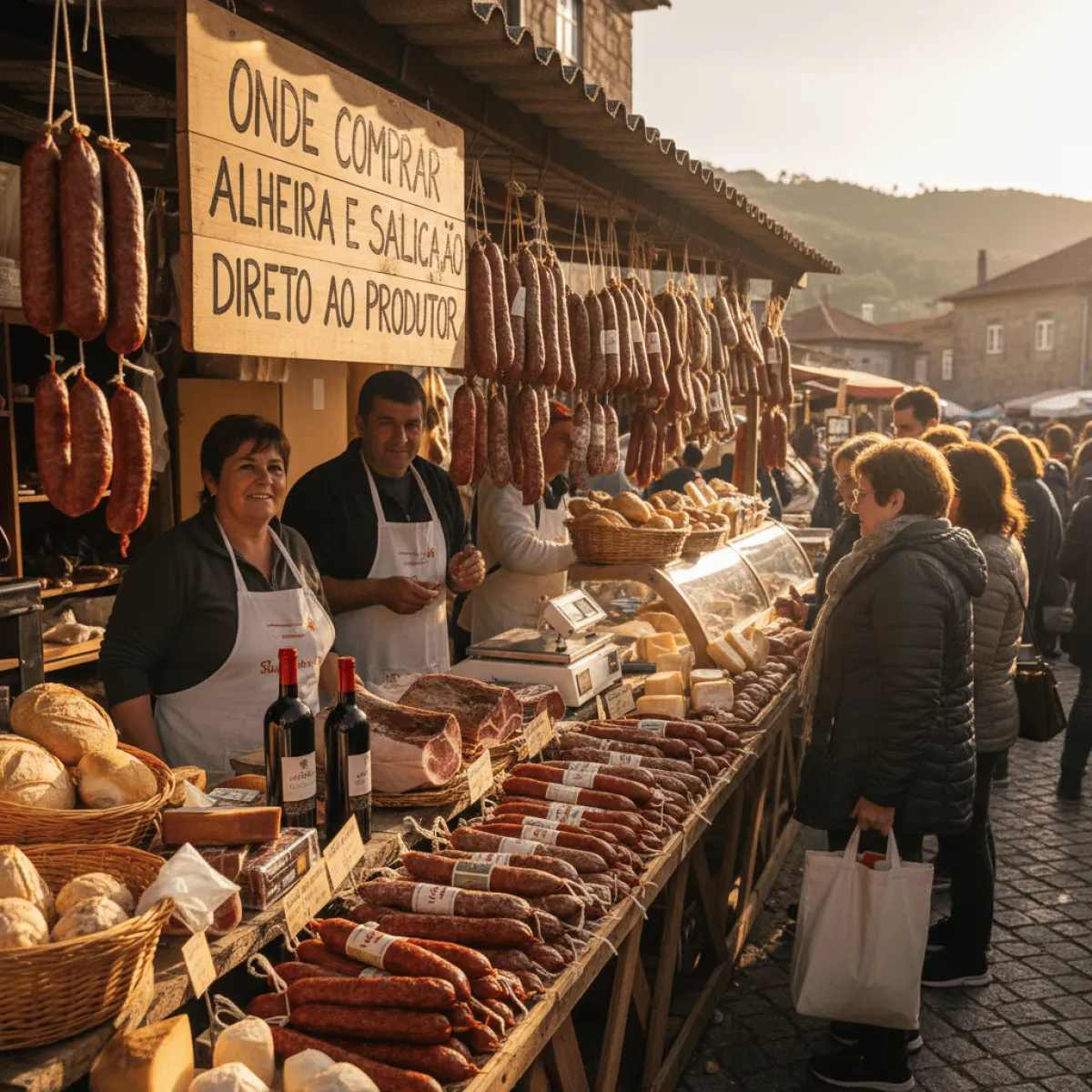
There's something nobody tells you about Vinhais until you arrive: the village smells of oak smoke before it smells of coffee. In February, during the Feira do Fumeiro, the smell is so dense it sticks to your jacket. But even on a regular Wednesday in May, just rolling down the car window at the edge of town tells you you're in serious smoked meat country, not the vacuum-packed kind that ends up on a Lisbon supermarket shelf.
Vinhais is, without much argument, the Portuguese capital of fumeiro (smoked sausages and cured meats). The town holds Protected Geographical Indication status for six different products: alheira, salpicão, butelo, chouriça de carne, chouriço azedo, and linguiça. Six European seals, in a municipality of just over three thousand inhabitants. This is bísaro pig country, animals raised in chestnut groves, fed on acorns and chestnuts, slaughtered between December and February. The geography does the work: at 700 metres altitude, on the Trás-os-Montes plateau, dry winter air cures meat slowly, without shortcuts. That slowness is what you're paying for.
Why come in person instead of ordering online
You can order Vinhais alheira online. You'll receive Vinhais alheira. But you'll miss the point: the producer opening the smokehouse door for you, explaining why this particular alheira has more bread and less meat (it was originally a Lent food, after all), letting you taste three different salpicões so you understand that the most expensive isn't always the best. None of that happens with a click.
The other reason is price. Bought directly from the producer, a kilo of bísaro salpicão typically runs 25 to 35 euros depending on the house and the season. The same product in a Lisbon delicatessen can hit 50. Traditional alheira sits at 12 to 18 euros a kilo at source. Do the maths: a trip to Vinhais pays for itself if you fill the boot.
How to get there (and when to come)
Vinhais sits on the A4 to Bragança, then west on IP4 and N103, about 30 minutes from Bragança. From Lisbon you're looking at five hours by car, from Porto a little over three. There's no train, no decent bus, and the public transport option is a disappointment. Drive. End of story.
The Feira do Fumeiro happens in February, traditionally over two weekends. It is spectacular and unbearable in equal parts: parking is impossible, queues at the famous stalls run an hour deep, hotels within a 40 km radius have been booked out for months. If you like the circus, book now. If you'd rather buy at your own pace and actually talk to producers, come any other time: November, March, May. The shops and smokehouses are open all year, and you'll have the producer to yourself.
One practical tip nobody mentions: bring a cool box and ice. Cured products travel fine, but if you buy fresh alheira to freeze at home (and you should, fresh frozen fries up better than fully cured), you'll want to keep the cold chain intact.
What to buy and what to ignore
Vinhais produces an absurd variety. You won't taste everything, and you shouldn't try. Here's the honest hierarchy:
- Alheira de Vinhais IGP: the essential one. Bread, mixed meats (pork, veal, chicken or game), pork fat, garlic, olive oil, paprika. Vinhais alheira is moister and less spicy than the Mirandela version. Pan-fry in a little oil, top with a fried egg, serve with smashed potatoes. Buy it fresh and freeze at home.
- Salpicão: a whole bísaro pork loin, marinated in red wine, garlic and paprika, then slowly smoked. The king of the lineup. Eat it sliced thin with rye bread and a glass of regional red. Don't make the mistake of cooking it.
- Butelo (or bucho) com cascas: pig stomach stuffed with rib, backbone and other bones, then smoked. Boiled with dried bean pods. A winter dish, brutal and glorious, indispensable if you're visiting between November and March.
- Chouriço azedo: the most original and the one fewest people outside Trás-os-Montes know. Made with bread, blood and vinegar, with a characteristic acidity. Buy one to try before committing to kilos.
- Chouriça de carne and linguiça: solid but not extraordinary. If suitcase space is tight, prioritise salpicão and alheira.
For a more detailed look at specific producers, historic houses and the smokehouse calendar, we put together a dedicated experience on buying Vinhais smoked meats like a local. Here we'll stick to the essentials: buy from the producer who opens the smokehouse for you. If a house only sees you at the counter and won't show you the curing chamber, walk on. The product might be fine, but you're missing the better half of the experience.
How to taste properly
Good Vinhais producers let you taste. Not a token cube of courtesy: a proper slice, a glass of red poured, a chair offered. It's a ritual, not a transaction.
Come hungry. Skip the big breakfast. Arrive around 10am, hit two or three houses by noon, and by lunchtime you'll have eaten half a kilo of mixed sausages and drunk enough wine to need a serious sit-down meal. That's the correct rhythm.
For lunch, stay in Vinhais. There are honest taverns serving Trás-os-Montes food without ceremony: posta à mirandesa, feijoada à transmontana, and almost always a daily set menu between 10 and 15 euros. Order chestnut soup if it's winter. It's a local dish most outsiders have never tasted, and it defines the cuisine of the plateau better than anything else.
Stretch your legs around town
Vinhais isn't a museum town. It's a working frontier village with a modest centre and a more interesting history than the appearance suggests. Before or after the shopping, an hour-long walk is worth the time.
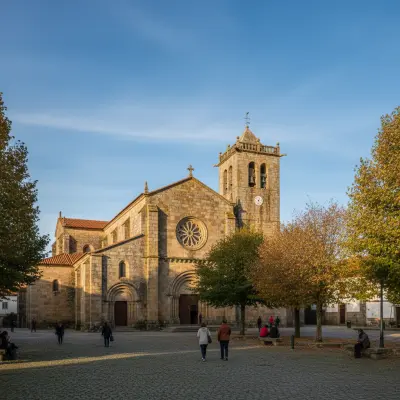
The obvious stop is the Igreja Matriz de Vinhais, also known as the Igreja de Santo António. Part of the former Convent of São Francisco, with a baroque façade and a gilded woodwork interior that surprises anyone expecting a generic parish church. Opening hours are irregular: if you find it locked, ask at the parish office or the tourist information desk, they often open it on request.
There are also remains of the medieval castle on the upper edge of the village, with decent views over the Tuela river valley, and the Parque Biológico de Vinhais, which is closer to a Montesinho Natural Park interpretation centre than a zoo. Worth the entry if you've got kids or care about Iberian wildlife. Otherwise, stick to the castle and the church.
Where to sleep
Hotel options in Vinhais are limited, and that's part of the appeal, but it forces some planning. There are a couple of three-star hotels in the centre, decent but lacking charm, in the 50 to 70 euros per night range. For something better, look to rural tourism scattered across the surrounding villages: Quintela, Soeira, Travanca. Restored granite houses with fireplaces, generally 70 to 120 euros, almost always with a generous breakfast included.
In February, during the Feira, forget it. Book six months ahead or stay in Bragança and commute. Bragança has more rooms, more nightlife (relative, mind you: this is still Trás-os-Montes), and sits 30 minutes away.
How to combine with the rest of Trás-os-Montes
Vinhais works well as a base or as a stop on a longer northeast loop. Don't come just for an afternoon: it's a waste.
To the east, Bragança and Montesinho Natural Park. To the west, Barroso and Montalegre, another smoked meat country with a different personality. If you're visiting in January or February, the detour is worth it to see the Montalegre plateau under frost and mist with a winter photography itinerary. The rest of the year, there's a Montalegre route that runs from the medieval castle to the Carvalhelhos castro and the mountain kitchen that easily fills a full day.
To the south, following the Tua river down, you reach Mogadouro and the Mirandese plateau. If you're travelling between May and July, with long evenings and warm days, time your arrival for sunset at one of the viewpoints: we put together a guide to the best Mogadouro viewpoints for evening photography in June that holds up across most of the summer.
An honest four-day itinerary out of Porto: day 1, drive up to Vinhais, lunch and afternoon shopping for fumeiro; day 2, Montesinho Natural Park and Bragança; day 3, drop down to Mogadouro and sleep there; day 4, return via the Douro Internacional. Five hours of driving total, spread over four days, with big landscapes and bigger meals. You don't need more.
What to take home (and how to transport it)
For a couple living in Lisbon or Porto, an honest haul from a Vinhais trip looks something like this: two whole salpicões (about 1.5 kg), two kilos of fresh alheira to freeze, a butelo if it's the season, half a kilo of chouriço azedo for experimentation, and maybe a Trás-os-Montes goat cheese from the shop next door. That comes to 150 to 200 euros, lasts months in the freezer, and makes any improvised dinner better for the rest of the year.
Transport: cool box, dry ice if you can manage it, or at minimum frozen gel packs. Cured products survive hours at room temperature without issue, but fresh alheira wants cold. If you're driving home the same day, no drama. If you're sleeping over, ask the hotel or rural house to keep the bags in their fridge: most will, no problem, just give them a heads-up.
Final note: don't buy from the first place you see at the edge of town with flashing signs. The best smokehouses in Vinhais don't shout in advertising. They have a queue of local cars at the door. If you spot a Bragança or Mirandela number plate leaving a shop with a heavy bag, walk in. That's the best quality seal there is.