Vinhais: Smoked Sausages and Wolf Country in the North
In a town where you smell the smokehouse before you spot the castle, Vinhais brings together two things rarely found on the same itinerary: cured smoked sausage and semi-wild Iberian wolves. This is Trás-os-Montes at its rawest.
Vinhais is the kind of place people describe as "near Bragança" and then spend forty minutes on the road proving otherwise. That already tells you something about this town: it is not a stopover, it is a destination in its own right. And it is a destination built, broadly, on two things you rarely find sharing a brochure: cured smoked sausage and the Iberian wolf. One is centuries-old winter cooking from the region's smokehouses, the other is a predator most Portuguese people have only ever seen on a nature documentary. Vinhais has both, a few kilometers apart, and that combination says a lot about the character of Trás-os-Montes: unpretentious, practical, no fuss.
A town you could walk in twenty minutes, but shouldn't
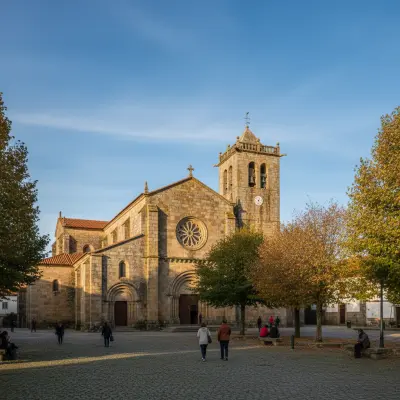
The historic center of Vinhais sits across two hills, with the ruins of a medieval castle on one and the rest of the town sliding down the slope. It is small enough to see everything before lunch, which would be a poor use of your time. The Igreja Matriz de Vinhais, also known as Igreja de Santo António, is the obvious landmark: a sober facade, a gilded interior worth the five-minute stop, and an elevated position that gives one of the best free views over the town's rooftops. No ticket booth, no gift shop at the door. It is a church that still functions as a church, and that alone tells you plenty about how little tourism has scaled up here.
Climb up to the castle afterward. Don't expect an Óbidos or a Marvão, with intact walls and a luxury pousada tucked inside. Expect worn stone, silence, and the sense that nobody else made the same climb that day. That is the experience, not a problem to fix.
Smoked sausage: the practical reason to come to Vinhais
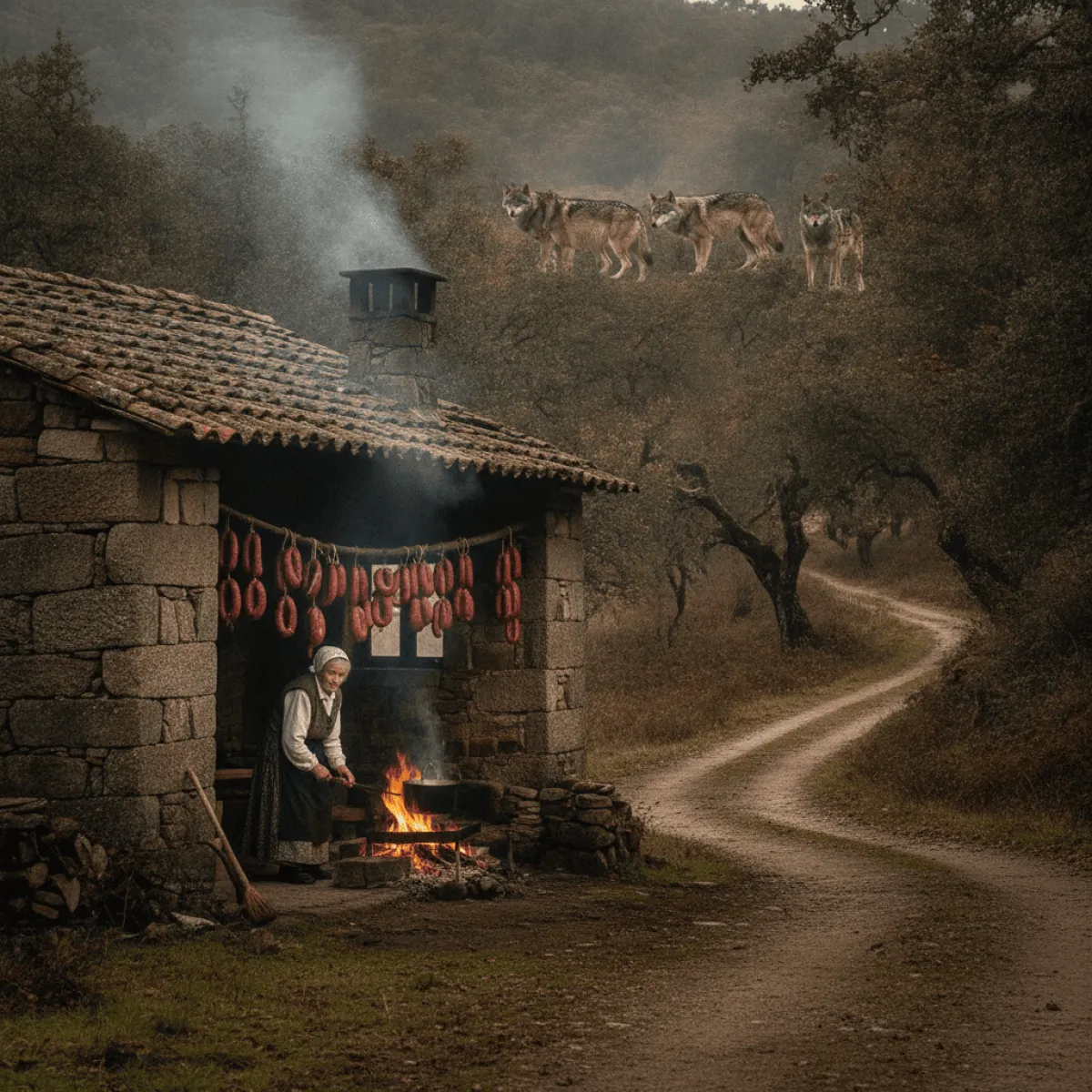
Trás-os-Montes has lived off cured, smoked pork products for generations, and Vinhais rightfully claims a spot among the region's best producers. The long, dry winters of the Trás-os-Montes plateau create ideal conditions for slow-smoking sausages over wood fire, a process still carried out in many private homes and small production units scattered across the municipality. Alheira, chouriça, salpicão, linguiça: if you like cured sausage, this is serious territory, and it is worth timing a visit around a fumeiro fair if you are traveling in winter, when production and sales peak.
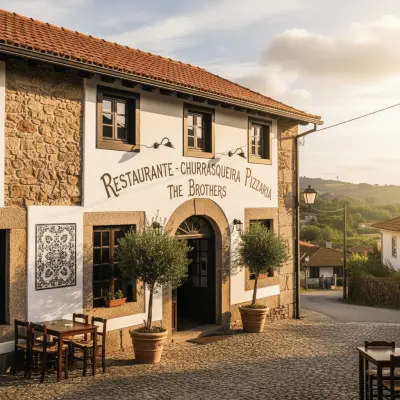
For an uncomplicated meal, Restaurante-Churrasqueira Pizzaria The Brothers gets the job done: straightforward grilled food, no frills, the kind of place you eat at after a full day outdoors without needing to parse a menu in three languages. It is not fine-dining Trás-os-Montes cuisine, it is food that fills you up and does not pretend otherwise.
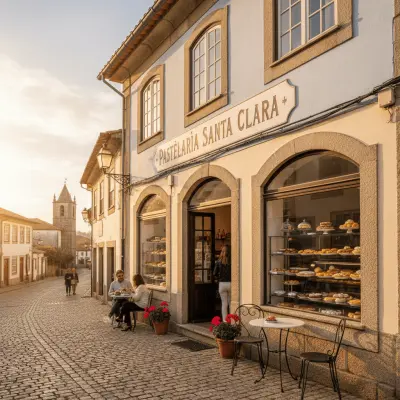
For breakfast or a mid-afternoon break, stop at Pastelaria Santa Clara. No excessive romance here: it is a small-town pastry shop, with a counter of convent sweets and well-pulled coffee, the sort of place that exists to serve the daily life of locals, not to look good in photographs. That is exactly why it is worth stepping inside.
The wolves nobody sees, except here
The main reason Vinhais now shows up on nature photography and wildlife tourism itineraries is not the castle, it is the Iberian wolf. The Parque Biológico de Vinhais keeps a population of wolves in semi-freedom, in an area large enough for the animals to behave naturally, far from the stress of a conventional zoo enclosure. The experience of photographing the Iberian wolf at Parque Biológico de Vinhais is built specifically for visitors who want more than a quick glance: timing built around morning or late-afternoon light, when the wolves are most active, and access to observation points that a standard visit does not offer.
Worth being honest about this: the Iberian wolf is elusive by nature, even in semi-freedom, and patience matters as much as your camera gear. Those who rush in, snap two photos, and leave usually walk away frustrated. Those who set aside real time, sit still, and let the animal appear on its own terms come away with stories worth telling for years. For most visitors, this is likely the closest they will ever get to an Iberian wolf, in Portugal or anywhere else.
Clay, hands, and an experience still to be verified
Trás-os-Montes has a long pottery tradition, and Vinhais is no exception: the region has produced utilitarian black and glazed clay pieces for centuries, many of them used in the same smokehouse kitchens mentioned above. There is also a pottery class in Vinhais that promises a hands-on introduction to the craft, but, as the name itself flags in our listings, it is not yet verified. If it interests you, check locally before building a trip around it: availability, schedule, and price may vary, and your best bet is to call directly or ask at the Vinhais tourist office.
Getting there, staying, and building out the trip
Vinhais has no train station, and bus connections from Bragança or Chaves are limited, so a car is essentially mandatory. From Bragança it is around 40 minutes via the IP4/A4 and then the N103, a road with good views over the plateau that is worth the drive on its own. Coming from Lisbon or Porto, plan for a full day of travel, which means Vinhais works better as part of a broader Trás-os-Montes itinerary than as a standalone weekend trip.
This is where it pays to combine destinations. Anyone into night landscape photography and bare plateau scenery will find fertile ground in Montalegre in Winter: A Photography Itinerary on the Plateau, which shares with Vinhais that same hard, horizontal light so typical of the northern interior. For those who want to see the other side of Barroso, beyond the usual rural tourism routes, Montalegre Beyond Barroso: Castle, Castro and Mountain Kitchen is a natural follow-on after Vinhais, with hillforts, a castle, and mountain cooking that is just as unpretentious. And if the trip continues further east toward the Spanish border, Mogadouro at Sunset: June Viewpoints on the Plateau maps out some of the region's best vantage points for travelers passing through in peak summer.
As for sleeping, Vinhais has limited options, mostly rural tourism houses and scattered local guesthouses in town and the surrounding villages. Don't expect chain hotels. Book ahead, especially if your visit lines up with a fumeiro fair or another local event, because the small number of beds in a town this size fills up fast.
When to go
Winter is the most authentic season to experience Vinhais: it is when the smoked sausages are being produced and sold, when local fairs happen, and when the Trás-os-Montes landscape shows its rawest face, with low fog and dry cold. It is also the toughest season for driving on secondary roads, so check conditions before setting out. Spring and early autumn offer a more comfortable balance: mild temperatures, countryside either green or golden depending on the timing, and still far from the crowds that fill the coast in summer.
Vinhais will not win over anyone looking for nightlife or modern museums. But for those who want to understand how life is actually lived in the Trás-os-Montes interior, somewhere between a string of sausages hanging in a home smokehouse and a wolf crossing a clearing at dawn, this is one of the few places in Portugal where both realities still sit this close together.