Vila Real de Santo António: Museums Worth Your Time
Two museums in Vila Real de Santo António are worth your time, one is worth fifteen minutes, and the rest you can skip guilt-free. The best museum in this Pombaline town is the town itself: open twenty-four hours, no ticket counter.
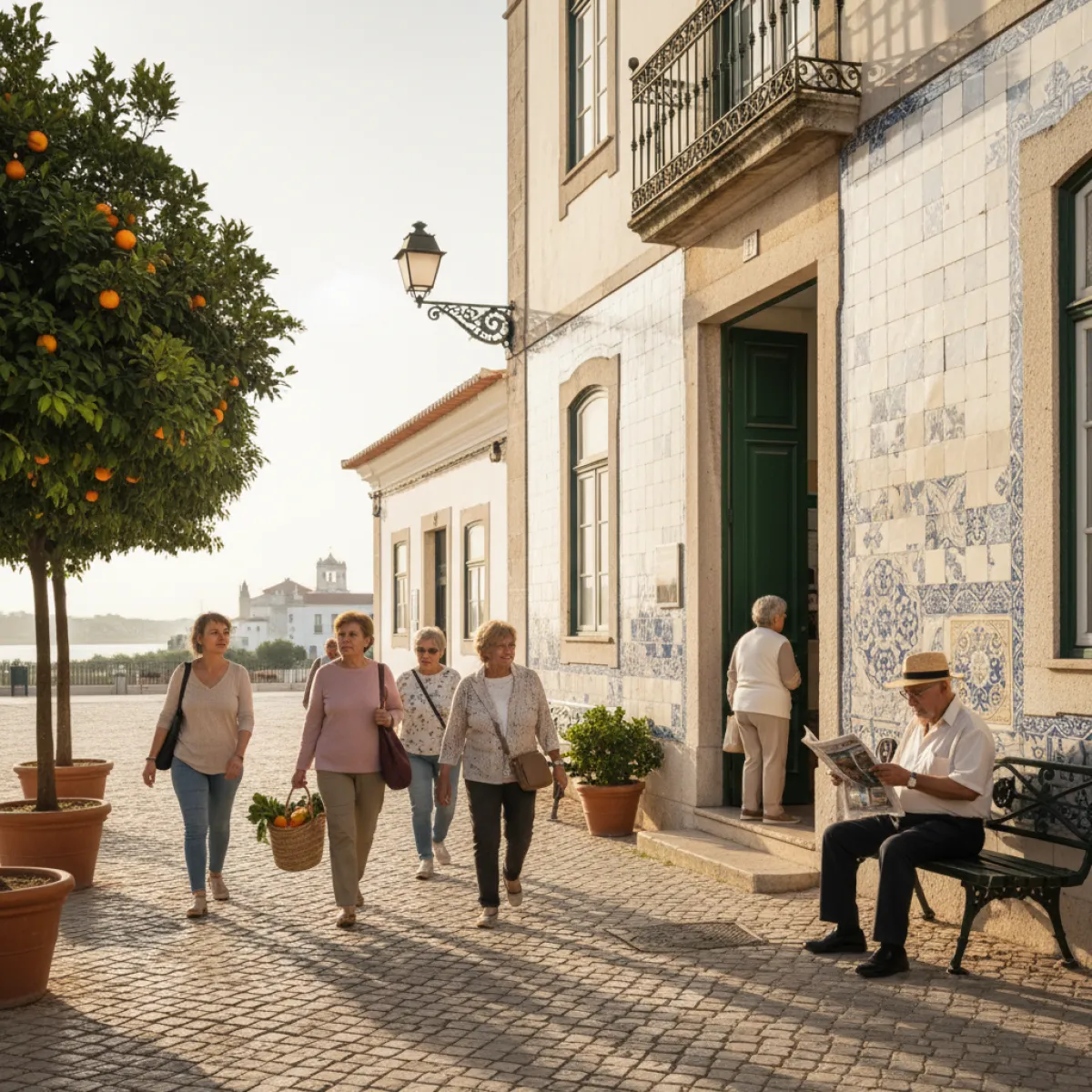
Let's be honest: nobody comes to Vila Real de Santo António for the museums. People come for the Guadiana river, for Monte Gordo beach, for the ferry crossing to Ayamonte, and for that urban chessboard the Marquis of Pombal had drawn up in 1774, after the earthquake wiped Santo António de Arenilha off the map. And that's exactly the point: the city is the museum. The rest, the buildings with plaques and ticket counters, ranges from genuinely interesting to frankly skippable.
I spent more time than I should have wandering in and out of the small cultural institutions of this southeastern corner of the Algarve, and arrived at a simple conclusion: two are worth your time, one is worth fifteen minutes if you're passing through, and the rest can be skipped without an ounce of guilt. Here's the honest guide, with addresses, schedules to confirm locally (because they change more than they should be allowed to), and what's actually worth seeing.
The context: why this town has more museums than its size warrants
Vila Real de Santo António has roughly 19,000 inhabitants and a double identity. On one hand, it's a Pombaline town, orthogonal, planned with ruler and set square as a miniature version of downtown Lisbon. On the other, it's the historical centre of the tuna canning industry in southern Portugal, with factories that employed half the population through the twentieth century and that today stand silent, converted, or in controlled ruin.
This double inheritance, Enlightenment urbanism plus working-class memory, justifies the museums that exist here. It doesn't justify all of them. There are institutions that seem to exist because someone, in an office in Faro, decided that every municipality should have its little museum nucleus, regardless of whether it has a collection, a narrative, or any visitors. I'll be candid about which is which.
The museums worth your time
Centro Cultural António Aleixo
Start here. António Aleixo, the popular poet born in Vila Real in 1899, is the most important name this town produced, and this cultural centre, set in a Pombaline building on Praça Marquês de Pombal, is where the city pays him his proper dues. Aleixo wrote short, ironic quatrains, devastating in their simplicity: rough English translation, "So nobody could see he was poor / He kept himself clean and shaved; / And he died of so much hunger / Like an abandoned dog."
The space alternates temporary exhibitions of Algarve artists with permanent material on Aleixo, including manuscripts, photographs, and recordings. Entrance is free or symbolic (confirm locally, it's changed in recent years). Allow forty-five minutes, read the quatrains slowly, and you'll grasp that this town has a literary backbone no tourist board glossy can translate.
Museu de Arqueologia e Etnografia Manuel Cabanas
Manuel Cabanas was a wood-engraver and typographer who spent decades documenting Algarve life in carved wood. The museum, dedicated to him and to local ethnography, has a curious collection that includes his original matrices, typographic presses, and a section on daily life in the Eastern Algarve before mass tourism: fishing tools, agricultural implements, basketwork. It's not big. It doesn't need to be.
What makes this museum interesting is the coherence of the curation. There's none of that "they dumped here whatever was left over" feeling that plagues so many Portuguese ethnographic museums. There's a narrative thread: manual labour, life on the river, life on the sea. Walk out and you'll look at the town differently.
Worth a quick stop
Marim Environmental Education Centre (Castro Marim)
Technically it's in Castro Marim, about ten minutes by car, but any reasonable Vila Real itinerary includes a detour to the Sapal Nature Reserve. The interpretive centre is honest, didactic, more useful for families with kids than for adult travellers. Fifteen minutes inside, then head out to the trails: it's in the salt pans, with pink flamingos in the distance and the easterly wind pushing the smell of the marsh towards you, that the magic actually happens.
Take advantage of being in Castro Marim for the good part of the day: a craft beer tasting at Senescal Brewery, which is a serious microbrewery, with IPAs and stouts brewed locally. Pay the five to seven euros for a glass, stay an hour, and you'll realise the inland Algarve has more to offer than the tourist leaflet admits.
The museums you can skip without remorse
I won't name names to avoid creating editorial enemies, but there are at least three spaces in and around Vila Real that call themselves museums and that, in practice, are poorly lit rooms with dusty display cases and labels in comic sans. If you see a sign advertising a "museum nucleus" with no further information, and the building isn't open with people walking in and out, assume the worst and keep moving.
The ticket money (usually between two and three euros) is better spent on a galão and an almond tart at Pastelaria Veneza, which has been open in the Pombaline centre for decades and which, yes, is a cultural institution in its own right.
The real museum: the Pombaline town itself
Set aside a morning to walk the Pombaline grid without going inside anything. Start at Praça Marquês de Pombal, with the central obelisk from 1776 and the low buildings of whitewash and stone. Notice how everything is on a human scale: nothing rises above three storeys, the streets are exactly the width for a horse-drawn carriage, the black-and-white checkerboard pavement repeats like an obsessive pattern.
Walk down Rua Teófilo Braga to Avenida da República, which runs parallel to the Guadiana. Late morning, sit at one of the riverside cafés, order an imperial, and watch the ferries crossing to Ayamonte. The crossing costs about two euros per person, takes fifteen minutes, and is one of the most underrated things in the Algarve. Spain on the other side, twenty minutes door to door, with tapas at half the Portuguese price for lunch.
What else to do in the area
For those staying several days, and you should stay at least two, there's life beyond the museums. The Cacela Velha viewpoint is where the municipality shows its best face: a tiny village on top of a cliff, looking out over the Ria Formosa and the sandbank where you find the best oysters in the south. Go late afternoon, near sunset, and bring a jacket if it's spring. The wind here is constant.
Another experience I recommend without reservation is the sunset boat tour on the Guadiana. It leaves the marina, heads upriver toward the border, and shows you this frontier landscape from the right angle: from the water. Prices usually run around thirty to forty euros per person. Confirm locally for seasons and times, which shift depending on the river flow and the wind.
Where to sleep, where to eat, how to get around
For uncomplicated lodging, in a central area at a reasonable price, The Sun Hostel is the most sensible option. Dorm beds from twenty-something euros, private rooms in the sixty to eighty range depending on the season, a decent shared kitchen, and five minutes on foot from the river and the main square. It's not a boutique hotel, and that's a good thing: it's a functional, clean hostel with staff who can answer questions about the region without reciting the town hall brochure.
For food, avoid the tourist restaurants on Avenida da República with menus in five languages and laminated photos. Head up to the parallel streets, look for the places where workers eat lunch at one in the afternoon, order the dish of the day. Expect to pay ten to fifteen euros for a full meal with a drink. Order tuna whenever it's available: this is the municipality whose history is literally made of canned tuna, and the tradition of grilled tuna steak with onions on top hasn't disappeared.
For getting around: the town can be walked end to end in an hour. To reach Cacela Velha or Castro Marim, rent a car (there are stands by the train station) or catch the Vamus buses, which serve the area with predictable schedules on weekdays and more spaced-out times on weekends. The Algarve train line ends precisely at Vila Real de Santo António, which means you can arrive from Lisbon in about four hours with a change at Faro. It's the most civilised way to get there.
For those who want more cultural Algarve
If this article sparked interest in the cultural side of the Algarve, the real one, not the postcard version, we've written other guides on similar themes. Our piece on local culture in Faro goes deeper into Eastern Algarve traditions. For a family alternative, the honest family guide to Silves approaches Moorish heritage from a different angle. And if you prefer the urban side and distinct neighbourhoods, the Lagos neighbourhood guide shows how the region changes character entirely from one town to the next.
The verdict
Vila Real de Santo António is not a town for a museum marathon. It's a town for sitting at a café on Avenida da República with a book of Aleixo's poems, for catching the ferry to Spain and being back for dinner, for climbing up to Cacela Velha at the end of the day. The Centro Cultural António Aleixo and the Manuel Cabanas Museum are worth your time. Most of the others aren't. And there's no shame in skipping them: the best museum in this town is the Pombaline grid itself, and that one is open twenty-four hours, no ticket counter, no schedule, no excuses.