Torres Vedras on Foot: Bean Tarts, Trenches, and Real Life
Forget the tourist traps. In Torres Vedras, history smells of wine and freshly baked bean tarts, set against the backdrop of the fortifications that stopped Napoleon and streets where Carnival is a satirical religion.
The Destination the Highway Hides
For most travelers, Torres Vedras is merely a blue sign on the A8 motorway, a brief interruption on the way to the surf breaks of Ericeira or the medieval walls of Óbidos. This is a classic mistake of those who confuse speed with arrival. Torres Vedras doesn't reveal itself to those passing by at 120 km/h; it demands you park your car near the Municipal Market and face the wind, which blows here with an almost Atlantic conviction, to understand what makes this city the beating heart of the Oeste region. Don't expect the manicured, museum-like quality of some historic towns. Torres is a city of work, of wine, and of a resistance that, two hundred years ago, redrew the map of Europe. Walking here is to stumble upon history without the sanitized filter of mass tourism.
The Historic Core: From the Castle to the Table
Start at the top. The Castle of Torres Vedras isn't one of those romantic reconstructions where every stone is in place. It’s a robust structure, scarred by centuries of sieges and the dust of time. The ramparts offer the best perspective over the Sizandro valley and the urban grid sprawling below. From here, the strategic importance of this hill is undeniable. Within the perimeter, the Church of Santa Maria do Castelo displays a Manueline portal that survived the 1755 earthquake, a stark reminder that the city's roots go deep, long before the Napoleonic wars made it famous.
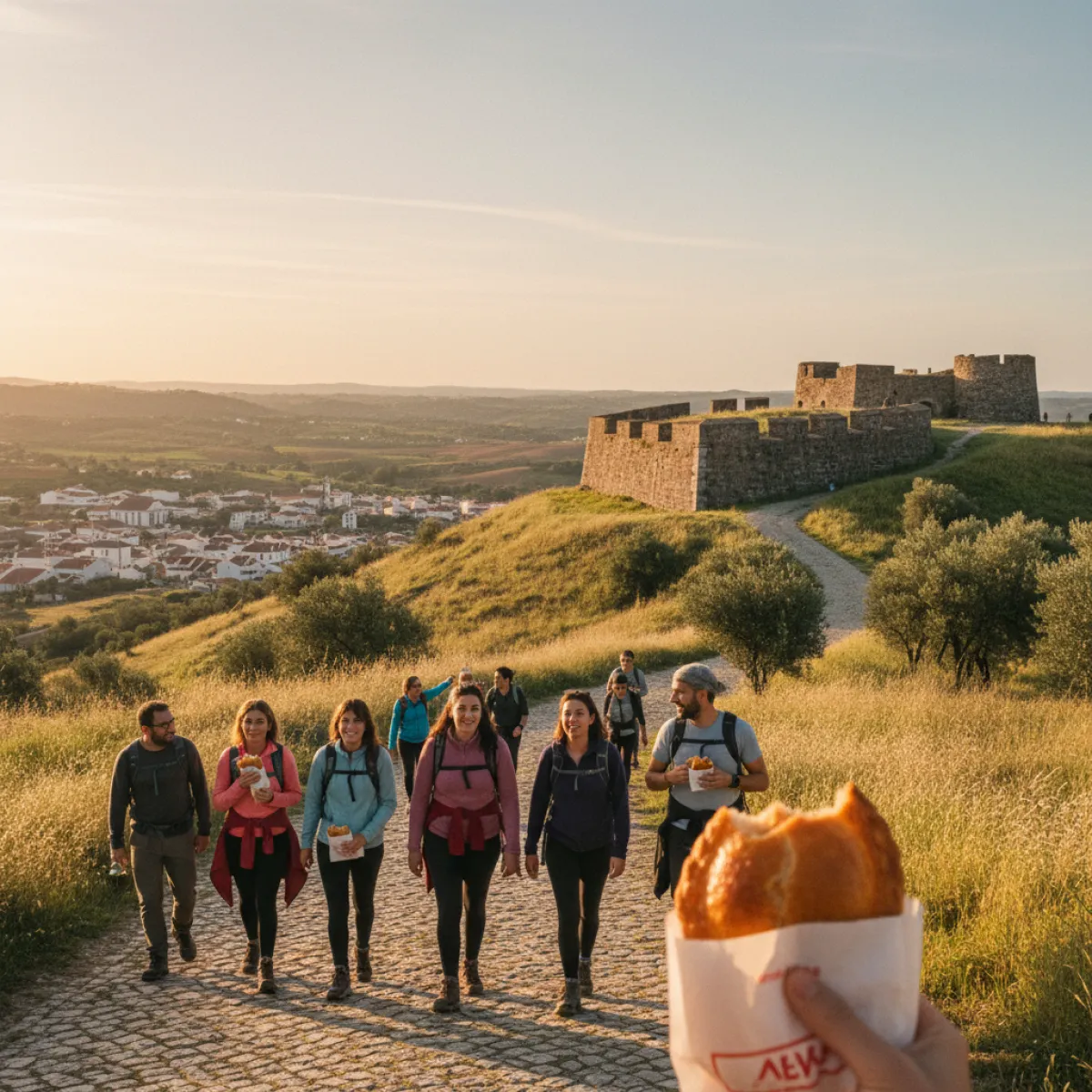
Descending towards the Praça do Município, the scene shifts to the human scale of local commerce. Forget the shopping malls on the outskirts. The real pulse of the city is found on Rua Serpa Pinto. This is where the scent of sugar and almonds begins to dominate the air. To speak of Torres Vedras without mentioning the Pastel de Feijão (Bean Tart) is like visiting Rome and ignoring the Pope, only the tart is far more democratic. Head to Fábrica Coroa. It’s not just a bakery; it’s an institution. The tart must have a crisp, almost brittle crust, hiding a dense interior where beans and almonds create a texture that defies the lightness of the more common pastéis de nata. It costs about €1.20 and is worth every calorie. Pair it with a short espresso (a "bica") and watch the locals discuss the harvest or the upcoming Carnival.
Water and Stone: Chafariz dos Canos
A short walk away, the Chafariz dos Canos is an essential stop. This 14th-century Gothic fountain isn't just a monument; it was, for centuries, the city's guarantee of survival. The structure, with its pointed arches, has a sobriety that commands respect. It’s a place that invites a pause before heading to the Convento da Graça, now converted into the Municipal Museum. If you want to understand the Lines of Torres Vedras, the defensive system that stopped Napoleon’s troops, this is the place. It’s not just maps and uniforms; it’s the story of how an entire population sacrificed everything, burning crops and abandoning homes, to ensure the French did not pass. This narrative of resilience makes the Local Culture in Lisbon: Traditions, Neighborhoods and the City's Soul feel, at times, a bit more performance-based, whereas here the weight of history is palpable and devoid of useless adornment.
The Path and the River
Torres Vedras is also a gateway for those seeking something more than asphalt. The city is part of the The West Coast Camino: Pilgrimage Through Torres Vedras, a route that attracts pilgrims fleeing the crowded Central Camino. It’s a walk of silences, crossing vineyards that produce some of the best white wines in the Lisbon region. The clay-limestone soil and maritime influence give Torres wines a freshness and acidity you won't find in the heavy reds of the south. Order a local Arinto at one of the small bars in Praça da República; it’s the West Coast in a glass.
For those who prefer the water to the dirt path, the Sizandro River offers a different perspective. While the city turned its back on the river for years, recent redevelopment of the banks has returned the Sizandro to the people. If you have the time and the inclination, Kayaking the Sizandro River in Torres Vedras: What to Expect is a great way to see how nature weaves into the agricultural landscape. The river snakes towards the sea, passing under ancient bridges and through dense reed beds. This experience contrasts sharply with the Best Day Trips from Cascais: Unmissable Destinations, where luxury and cosmopolitanism take center stage. In Torres, luxury is space, silence, and the authenticity of a region that doesn't feel the need to mask itself for tourists, except, of course, during Carnival.
The Spirit of the Matrafona
One cannot write about the neighborhoods of Torres without mentioning Carnival. It is the event that defines the city's identity. Unlike the glitz of Rio or even the parades of southern Portugal, the Carnival of Torres Vedras prides itself on being the "most Portuguese in Portugal." The historic center transforms. The figure of the Matrafona, men dressed as women with a deliberate, hilarious lack of grace, is the ultimate symbol of local irreverence. If you visit outside the Carnival season, look for the Carnival Monument in Praça da República. It’s a tribute to the political and social satire that runs through the veins of the people here. It’s a spirit found differently in the Sintra Neighborhood Guide: Discover Every Corner of the Enchanted Town, though Sintra’s magic is mystical while Torres’ is purely satirical and earthy.
Practical Guide for the Explorer
- Getting there: From Lisbon, the fastest option is the express bus (Rápida Verde) departing from Campo Grande. The journey takes about 45 minutes and costs roughly €6. The train on the Linha do Oeste is slower (about 1.5 hours) but offers an unbeatable view of the countryside.
- What to eat: Beyond the Bean Tart, look for Arroz de Polvo (Octopus Rice) or Bacalhau à Assis in the traditional restaurants downtown. The DOC Torres Vedras wine is non-negotiable.
- When to go: Summer is windy, which is a relief on hot Portuguese afternoons. Carnival (February/March) is for those who love crowds and organized chaos. Spring and Autumn are ideal for hiking the forts and vineyards.
- Costs: Torres Vedras is significantly cheaper than Lisbon or Cascais. A full lunch in a traditional restaurant will set you back between €12 and €18.
Walking through Torres Vedras is an exercise in discovering layers. There is the Roman city, the Gothic one, the one of military resistance, and the contemporary one trying to balance progress with the preservation of its agricultural traditions. It’s a city that smells of damp earth and burnt sugar, where the wind never lets you forget the sea's proximity. If you’re looking for the real Portugal, without filters, pull off the A8 and climb to the castle. The view is worth the detour.
