The Ultimate Guide to Albufeira’s Best Beaches: Beyond the Neon
Discover the sophisticated and natural side of Albufeira through its most iconic beaches. From the Salgados dunes to the vibrant cliffs of Praia da Falésia, this guide explores the geology, culture, and gastronomy of Europe’s most dramatic coastline.
Redefining the Albufeira Coastline
Albufeira often suffers from a reductionist reputation. For many, the name conjures images of neon lights, frenetic nightlife, and a brand of mass tourism that seems to have eclipsed the soul of the former fishing village. However, one only needs to venture a few kilometers from the urban center to discover one of the most diverse and visually dramatic coastlines in Europe. Albufeira’s 30 kilometers of littoral are a study in Southern European geology: from the expansive dune-backed sands in the west to the iconic ochre limestone cliffs in the east.
This guide isn’t merely about where to lay your towel; it’s about how to experience this coast with the depth it deserves. It is an invitation to observe the changing light upon the crags, to understand the traditions that still resist within the fishing harbors, and to discover that Algarvian sophistication often resides in the simple perfection of a grilled sardine at exactly the right moment.
The Wild West: Salgados and Galé
We begin at the western fringe, where the landscape opens up and cliffs give way to a delicate dune system. Praia dos Salgados is a territory of transition. Here, the sea meets the Salgados Lagoon, one of the Algarve’s most significant sites for birdwatching. It is the perfect sanctuary for those seeking silence. There is no protection from the rocks here, which means the wind can be persistent, but the sense of space is unparalleled. For nature enthusiasts, I highly recommend a morning walk along the wooden boardwalks; between October and March, one can spot flamingos and spoonbills wading in the brackish waters.
Immediately adjacent, Praia da Galé marks the beginning of a geological shift. It is a beach of two halves: Galé West, flat and expansive, and Galé East, where the first rock formations begin to emerge from the sand like abstract sculptures. This area hosts some of the region’s most refined culinary offerings, including Michelin-starred establishments that capitalize on the area's serenity. If you plan a long lunch, seek out the spots that honor the tradition of the cataplana, the emblematic Algarvian seafood stew steamed in a hammered copper vessel.
The Limestone Sculptures: São Rafael and Coelha
As we move eastward, the topography rises. Praia de São Rafael is perhaps Albufeira’s most photogenic cove. The rocks here have been carved by erosion into fantastic shapes, arches, grottoes, and sinkholes that invite exploration. The contrast between the turquoise water and the orange-hued stone creates a color palette reminiscent of an Impressionist painting. It is an excellent spot for snorkeling, particularly around the rocky islets that shelter the bay.
Neighboring Praia da Coelha requires a short hike through a trail lined with ancient olive and carob trees. This restricted access ensures the beach maintains a more private character. The sandy area is small, encased between high cliffs that offer natural shelter on windy days. It is in these hidden inlets that one understands the true essence of the Algarve coast: the intimate relationship between the land and the ocean.
The Urban Heart: Tradition and Resilience
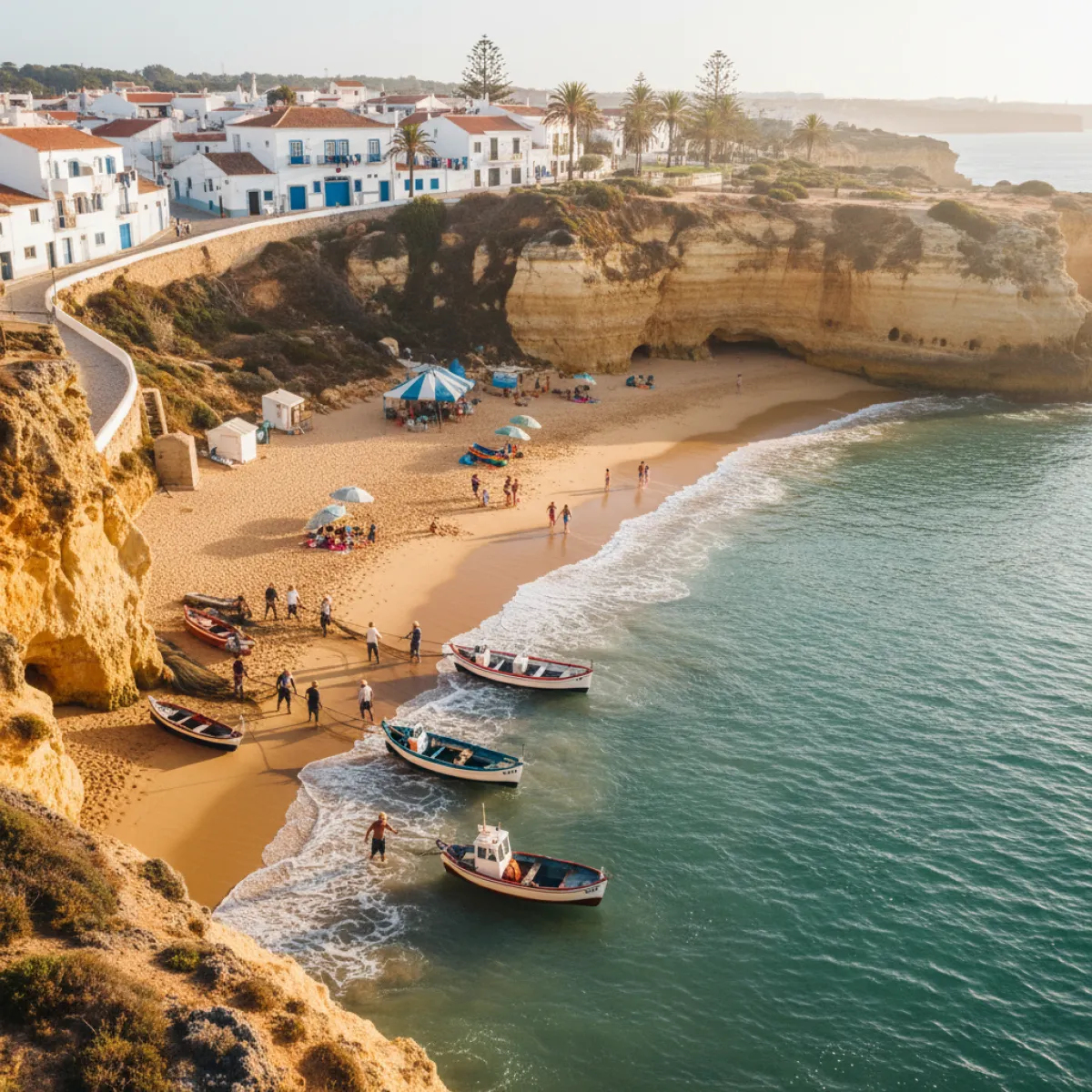
Reaching Albufeira’s Old Town is an exercise in historical rediscovery. Praia do Peneco, accessed via a tunnel bored through the rock, offers a unique perspective on the white-washed houses perched on the cliffside. Next to it, Praia dos Pescadores keeps the city's spirit alive, even if the fishing boats have mostly migrated to the modern marina. Walking these sands at dusk is to immerse oneself in the Local Culture in Albufeira: Traditions, Festivals and the Algarvian Soul, where you realize that despite the tourism, local identity remains steadfast.
For those desiring a more active exploration of these central cliffs, the Albufeira E-Bike Tour with Bikesul: Cliffs, Beaches and Old Town is an exceptional choice. It allows you to traverse the cliff-top paths connecting the various coves, offering panoramic views that are inaccessible by car, all without the exhaustive physical toll of the midday sun.
The Chromatic East: From Oura to Falésia
Moving past the bustling Oura district, we enter a territory of more exclusive enclaves. Praia de Santa Eulália and Praia da Maria Luísa are renowned for their pine groves that descend almost to the shoreline, providing natural shade and a resinous scent that mingles with the salt air. These beaches are ideal for those seeking high-quality services and calm, sheltered waters.
Finally, we reach Praia da Falésia. Stretching for nearly six kilometers, it is consistently ranked among the world’s most impressive beaches. What makes it unique are the high, linear cliffs composed of alternating layers of sand and clay in shades of white, yellow, and intense crimson. At sunset, the cliffs appear to catch fire, creating a visual spectacle that justifies the journey alone. It is the definitive location for long seaside walks, connecting the village of Olhos de Água to the sleek Vilamoura marina.
Gastronomy as an Extension of the Sea
A visit to Albufeira’s beaches is incomplete without the culinary component. While grilled fish is the undisputed king of the terrace, there is room for a deeper exploration of regional flavors. For those looking to bring Algarvian expertise home, the Portuguese Cooking Class at MIMO Algarve, Albufeira offers an immersion into the techniques and ingredients that define the local Mediterranean diet, from the nuanced use of olive oil to the delicate handling of shellfish.
This culinary sophistication reflects the Algarve's evolution, honoring its roots while embracing a contemporary edge. It is a philosophy seen throughout the region. To understand how this balance manifests in neighboring cities, it is worth consulting the Lagos Neighborhood Guide: Discover Every Corner of This Algarve Gem or exploring the Local Culture in Faro: Traditions and Experiences of the Authentic Algarve, each offering its own character and equally distinct shorelines.
Practicalities for the Discerning Traveler
- When to visit: May, June, and September offer the ideal balance of warmth and manageable crowds. July and August are vibrant but require advanced bookings for everything from beach loungers to dinner tables.
- Budget: Expect to pay between €20 and €35 for a fresh fish lunch at a mid-range beach restaurant. Dinner at more exclusive venues can easily exceed €70 per person.
- Transport: While the Old Town is walkable, a car or an e-bike is essential for reaching the more remote coves like Coelha or the western dunes of Salgados.
- What to order: Don't overlook the 'conquilhas à Bulhão Pato' (clams with garlic and coriander) and, for dessert, the 'Dom Rodrigo', a rich concoction of egg threads and almonds.
Albufeira is a city of sharp contrasts. If you choose the right beaches and allow yourself to explore its geological and cultural secrets, you will find its appeal extends far beyond the common tourist tropes. This is a coastline that rewards curiosity and a keen eye for detail.
